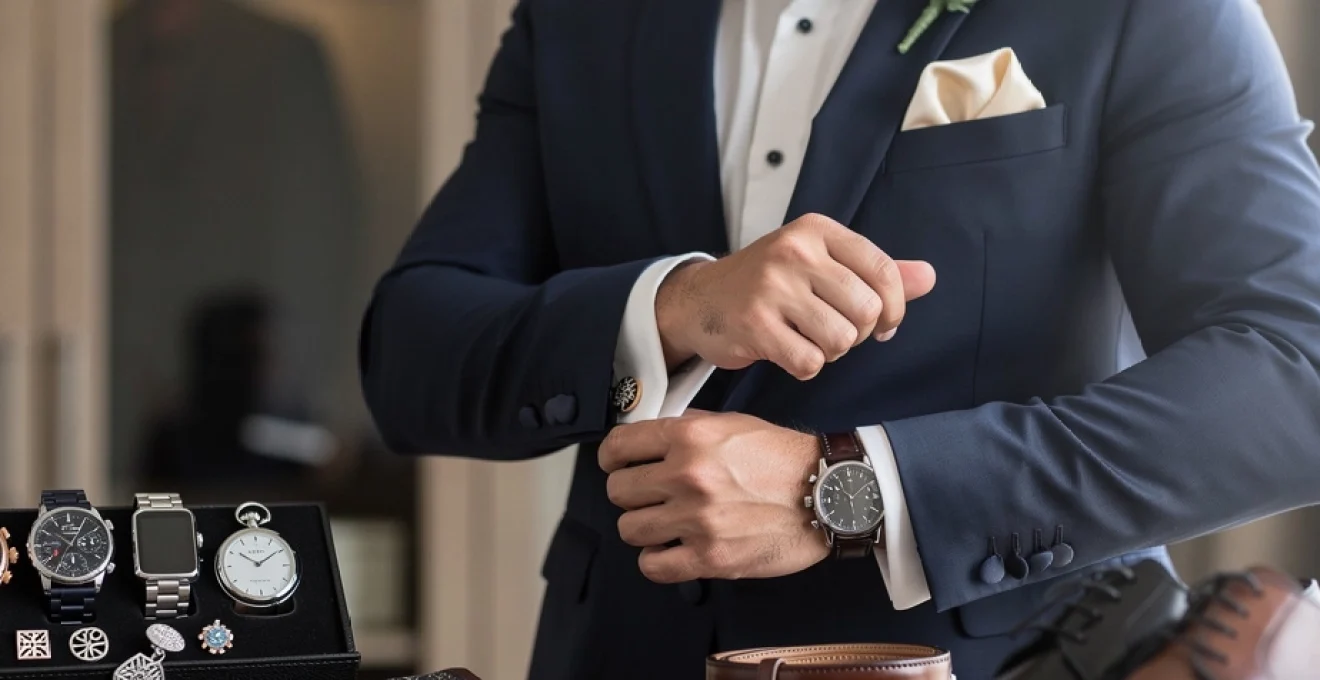
The wedding day represents one of life’s most significant milestones, where every detail contributes to creating an unforgettable experience. While the bride traditionally commands attention, the modern groom increasingly recognises that impeccable styling extends far beyond a well-fitted suit. Discerning accessories serve as the defining elements that transform a standard formal ensemble into a sophisticated statement of personal style and attention to detail.
Today’s grooms understand that exceptional accessories function as more than mere embellishments—they represent investments in quality craftsmanship, personal expression, and lasting memories. From precision-engineered timepieces to bespoke cufflinks featuring precious metal artistry, these carefully selected details create visual impact whilst demonstrating refined taste. The difference between good and extraordinary lies in understanding how each element contributes to the overall aesthetic harmony of your wedding day appearance.
Timepiece selection: mechanical movements and swiss complications for distinguished grooms
The selection of a wedding timepiece transcends mere functionality, representing a profound statement of personal values and aesthetic sensibilities. Horological excellence becomes particularly significant on your wedding day, where the chosen watch will appear in countless photographs and serve as a permanent reminder of this momentous occasion. Contemporary grooms increasingly appreciate the intricate craftsmanship behind mechanical movements, understanding that a quality timepiece represents both artistic achievement and practical investment.
Swiss watchmaking traditions offer unparalleled precision and reliability, with complications such as moon phases, perpetual calendars, and minute repeaters adding layers of sophistication to your wrist presence. The weight and feel of a quality mechanical watch provides tactile reassurance during potentially nerve-wracking moments, whilst the visual impact creates immediate recognition among those who appreciate fine craftsmanship. Consider how your timepiece choice reflects your personality—are you drawn to classical elegance or modern innovation?
Patek philippe calatrava and Jaeger-LeCoultre reverso: Investment-Grade wedding watches
Investment-grade timepieces like the Patek Philippe Calatrava represent the pinnacle of horological artistry, featuring hand-finished movements and precious metal cases that appreciate in value over time. The Calatrava’s clean dial design and ultra-thin profile complement formal wedding attire without overwhelming other accessories, whilst its legendary reliability ensures generational longevity. Jaeger-LeCoultre’s Reverso offers unique versatility through its reversible case design, originally developed for polo players but now celebrated for its Art Deco aesthetic and dual-face functionality.
These timepieces command significant investment—typically ranging from £15,000 to £50,000—but provide exceptional returns through both emotional value and potential appreciation. The manufacturing precision involves hundreds of individual components assembled by master craftsmen, with finishing techniques passed down through generations of Swiss artisans. Your wedding watch becomes a future heirloom, carrying forward family traditions whilst marking the beginning of your own legacy.
Omega speedmaster professional and tudor black bay: heritage chronographs for modern ceremonies
Heritage chronographs offer compelling alternatives for grooms seeking proven reliability with historical significance. The Omega Speedmaster Professional, famously worn during moon landings, provides space-age credibility combined with timeless design elements that photograph beautifully against formal wedding attire. Its manual-wind movement and distinctive tachymeter bezel create visual interest without compromising elegance, whilst the relatively modest thickness ensures comfortable wear throughout lengthy wedding celebrations.
Tudor’s Black Bay series delivers Swiss quality at more accessible price points, typically ranging from £2,500 to £4,000, making luxury timepieces attainable for broader audiences. These watches feature robust manufacturing standards derived from Rolex heritage, incorporating modern materials like titanium and ceramic alongside traditional precious metals. The snowflake hands and distinctive hour markers create immediate brand recognition whilst maintaining versatility across different wedding styles and formality levels.
Apple watch series 9 hermès and TAG heuer connected: smart luxury integration techniques
Smart luxury timepieces represent the convergence of traditional craftsmanship with modern connectivity, offering practical benefits for tech-savvy grooms without sacrificing aesthetic appeal. The Apple Watch Series 9 Hermès edition features hand-crafted leather straps and exclusive watch faces that maintain luxury
credentials while seamlessly syncing notifications, health data, and even discreet reminders for your speech. Similarly, the TAG Heuer Connected combines a robust Swiss-made case with high-resolution digital dials inspired by the brand’s mechanical icons, allowing you to switch from a classic Carrera-style face for the ceremony to a sportier chronograph display for the reception. The key is to curate your digital watch face and strap combination so that, at a glance, it reads as a refined wedding watch rather than a fitness tracker.
To integrate smart luxury watches into a formal groom outfit, prioritise premium leather or metal bracelets over silicone straps and opt for minimalist, analogue-style faces with subdued colour palettes. Disable distracting alerts during the ceremony—airplane mode or focus modes ensure you aren’t glancing at your wrist every time a message arrives. If you already own a mechanical heirloom piece, you might even reserve the smart watch for the morning preparations and reception, then change into the traditional watch for the vows and formal portraits, capturing both aspects of your lifestyle without compromising elegance.
Vintage rolex submariner and cartier tank: estate pieces with provenance documentation
Vintage icons like the Rolex Submariner and Cartier Tank bring an additional layer of depth to your groom accessories by connecting your wedding day to decades of design history. A well-preserved Submariner offers rugged sophistication with its rotating bezel and luminescent indices, pairing surprisingly well with everything from a midnight-blue tuxedo to a more relaxed linen suit. The Cartier Tank, with its rectangular case and Roman numerals, epitomises understated Parisian elegance and sits discreetly beneath a shirt cuff, making it ideal for more formal or black-tie weddings.
When choosing a vintage wedding watch, provenance documentation is critical. Request original papers, service records, and, where possible, the sales receipt or warranty card, as these not only validate authenticity but can significantly influence long-term value. Work with a reputable dealer who offers certification and servicing by qualified watchmakers; a pre-wedding service will ensure water resistance, timekeeping accuracy, and strap integrity. By investing in a vintage Submariner or Tank with well-documented history, you are not just buying a watch—you are acquiring a piece of wearable heritage that can be passed down as a tangible reminder of your wedding day.
Bespoke cufflink craftsmanship: precious metal engineering and gemstone setting techniques
Among groom accessories, cufflinks occupy a unique position: small in scale yet immense in impact. The right pair of cufflinks can subtly echo your wedding colours, reference your family history, or introduce a discreet element of sparkle that photographs beautifully. High-end cufflink craftsmanship combines precious metal engineering with advanced gemstone setting techniques, ensuring both aesthetic refinement and mechanical reliability. A well-made pair will glide smoothly through French cuffs, sit flat against the wrist, and remain secure throughout a full day of handshakes, toasts, and dancing.
As with timepieces, leading jewellery houses invest heavily in design innovation and quality control, from metal alloy composition to the precision of clasps and hinges. While mass-market options are plentiful, bespoke or luxury cufflinks offer superior finishing—hand-polished surfaces, sharp engravings, and robust mechanisms that resist loosening over time. Consider how your cufflinks will interact with other groom accessories such as your watch, tie bar, and wedding band; coordinated metals and complementary design motifs will create a cohesive, curated appearance.
Tiffany & co. platinum cufflinks: hand-engraved monogramming and family crest integration
Tiffany & Co. platinum cufflinks are an exemplary choice for grooms who value timeless design and exceptional materials. Platinum’s natural whiteness, density, and hypoallergenic properties make it ideal for heirloom pieces that will be worn for decades. The brand’s classic oval or rectangular designs provide ample surface area for hand-engraved monogramming, enabling you to incorporate initials, intertwined wedding dates, or even subtle symbols meaningful to you and your partner. Skilled engravers use traditional burins to carve crisp, deep lines that catch the light without appearing ostentatious.
For families with established heraldry, integrating a family crest into your cufflink design creates a powerful narrative link between past and future. Tiffany’s bespoke services can adapt existing crest artwork into miniature relief engravings, preserving key elements such as shields, animals, and motto banners while simplifying overly complex details for legibility at small scale. When planning this level of customisation, allow at least eight to twelve weeks lead time prior to the wedding to accommodate design approval, engraving, and quality checks. The result is a pair of cufflinks that not only elevate your groom outfit but also serve as living emblems of your shared lineage.
Cartier diamond-set cufflinks: brilliant-cut stone selection and prong setting methods
For grooms drawn to discreet luxury, Cartier diamond-set cufflinks offer a sophisticated way to introduce sparkle without veering into ostentation. The maison typically uses brilliant-cut diamonds for maximum light return, carefully matching stones for colour, clarity, and carat weight so that each cufflink reflects light identically. Industry data shows that well-cut diamonds can appear up to 20% brighter than poorly cut stones of the same size, reinforcing why craftsmanship matters more than raw carat count for wedding accessories.
The security and aesthetics of diamond cufflinks depend heavily on the chosen setting method. Prong settings elevate stones slightly above the metal surface, allowing more light to enter while creating a subtle three-dimensional effect that photographs well in close-up shots. Bezel settings, by contrast, encircle the diamond with metal for enhanced protection, making them ideal if you anticipate an active reception or plan to wear the cufflinks frequently after the wedding. When trying on diamond cufflinks, move your wrists naturally under different lighting conditions; you should notice a refined shimmer rather than distracting flashes, ensuring that the focus remains on you and your partner rather than on your accessories alone.
Montblanc heritage collection: mother-of-pearl inlay and rose gold vermeil applications
Montblanc’s Heritage cufflink collection demonstrates how alternative materials can inject depth and nuance into groom accessories. Mother-of-pearl inlay offers an iridescent surface that shifts subtly between soft whites, silvers, and pastel tones, echoing details such as shirt buttons, bridal jewellery, or the sheen of a silk tie. Each inlay is individually cut and polished, meaning no two pairs are identical—a discerning choice if you value uniqueness. When paired with a crisp white French cuff, the effect is refined yet quietly expressive.
Many designs in this collection feature rose gold vermeil, a thick layer of rose gold plated over sterling silver for an opulent appearance at a more accessible price than solid gold. The warm pinkish hue works particularly well with navy, charcoal, and deep green suits, as well as with brown or oxblood leather shoes and belts. If your wedding band or watch includes rose gold accents, Montblanc Heritage cufflinks can act as the unifying element that ties all your metals together. To preserve the finish, store them in a dedicated case after the event and avoid harsh cleaning chemicals—gentle polishing with a soft cloth is usually sufficient.
Custom signet ring conversion: transforming heirloom pieces into functional accessories
Many families possess heirloom signet rings that carry emotional significance but may not align perfectly with contemporary style preferences. A skilled jeweller can convert a signet ring into a pair of cufflinks, transforming a rarely worn piece into a functional accessory you’ll proudly display on your wedding day. This process typically involves carefully removing or replicating the engraved face of the ring and mounting it on custom-made cufflink backs, preserving the original crest, initials, or symbolism.
Thinking about this kind of transformation? Begin by consulting a specialist who can assess the structural integrity and metal composition of the original ring. In some cases, it may be advisable to create moulds and cast new cufflink faces in matching metal to protect an especially fragile heirloom. Document the process with photographs and written notes; these details will enrich the story when you eventually pass the cufflinks down to future generations. By reimagining a signet ring as part of your groom accessories, you weave personal history directly into your wedding attire in a way that feels both modern and deeply authentic.
Pocket square artistry: silk weaving techniques and presidential fold variations
A pocket square is one of the most visually impactful groom accessories, occupying prime real estate at the chest and appearing in almost every portrait. High-quality silk weaving techniques distinguish luxury squares from budget alternatives, affecting not only how they look but also how they drape and hold folds. Fine silk twill, for instance, offers a subtle diagonal texture and enough body to maintain structured folds, while satin weaves deliver a glossy finish ideal for evening or black-tie weddings. Hand-rolled edges, often associated with Italian and French craftsmanship, provide a soft, rounded contour that elevates even the simplest white square.
The classic Presidential fold—a flat, rectangular line of fabric peeking just above the pocket—is the foundation for formal pocket square styling. Variations include showing a slightly deeper band of silk for bolder colour impact, or offsetting the square so that a contrasting hand-rolled edge frames the pocket like a fine border. For more relaxed ceremonies, you might introduce gentle asymmetry by allowing one corner to rise marginally higher than the others, creating a “soft Presidential” look that retains polish while hinting at personality. As a practical tip, always practise your chosen fold with the exact square you plan to wear; different fabrics behave like different types of paper, and what holds in cotton may collapse in ultra-light silk.
Boutonnière composition: floral architecture and pin placement mechanics
The boutonnière sits close to your face and features prominently in candid and formal photographs, making it one of the most important groom accessories to get right. Thoughtful floral architecture ensures the arrangement looks balanced from all angles, with a primary focal bloom supported by secondary elements such as greenery, berries, or small accent flowers. Florists often use wiring and floral tape to reinforce stems, creating a compact structure that resists wilting and maintains its shape throughout the day. Choosing hardy blooms—spray roses, ranunculus, or even succulents—reduces the risk of drooping in warm weather or during an extended reception.
Equally crucial is the pin placement mechanics. The boutonnière should sit on the left lapel, near or over the buttonhole, with the flower facing slightly outward and upward. A long, thin pin is inserted from behind the lapel, angled upward through the stems and back into the fabric to secure the arrangement invisibly. For heavier designs, a second pin can be used in a cross pattern for added stability. If your jacket lacks a functional buttonhole or supporting thread on the reverse, ask your tailor or florist in advance for reinforcement options; a few hidden stitches can make the difference between a boutonnière that stays crisp and one that tilts downward by the time you reach the reception.
Collar hardware specifications: collar bars, pins, and chain integration systems
Collar hardware—bars, pins, and chains—adds an unmistakably dapper edge to your groom ensemble, subtly lifting the knot of your tie and creating elegant curvature in the collar points. These accessories originate from early 20th-century menswear, yet they feel refreshingly modern when paired with a slim, well-tailored suit. Technically, collar devices work by joining the two collar points beneath the tie knot, pushing the tie forward and ensuring consistent separation between the points throughout the day. This mechanical support is particularly useful during long events, where body heat and movement can otherwise cause collars to collapse.
Before incorporating collar hardware, verify that your shirt is compatible. Some dress shirts are designed specifically for collar bars, with small stitched eyelets in each collar point, while others may require a clip-on or slide-through mechanism. Metal choice should echo your other groom accessories—if your cufflinks and watch are in yellow gold, a silver collar bar will look discordant. As with any specialised accessory, practise fastening and unfastening before the wedding; fumbling with unfamiliar hardware minutes before the ceremony is an avoidable source of stress.
Brooks brothers golden fleece collar bars: proportional sizing and shirt compatibility
The Brooks Brothers Golden Fleece collar bar is a classic option for grooms favouring a transatlantic Ivy League aesthetic. Typically crafted in gold-tone or sterling finishes, these bars come in specific lengths—often around 5 to 6 cm—to suit standard collar spreads. Proportional sizing is essential: a bar that is too short will pull the collar points inward unnaturally, while one that is too long may cause them to flare awkwardly. When in doubt, bring your preferred dress shirt to the boutique or tailor and test the bar in situ to confirm the ideal length.
Shirt compatibility is another key consideration. Golden Fleece bars are usually designed for shirts with dedicated bar holes, allowing the bar ends to pass cleanly through the fabric without visible damage. If your chosen wedding shirt lacks these, you may opt for a variant with small clips that hug the collar edges instead of piercing them. Ensure that the collar height and stiffness can support the added tension of the bar; lightweight, unstructured collars may buckle, undermining the sharp, architectural line you’re trying to achieve. When correctly matched, however, a Golden Fleece collar bar creates a sculpted tie knot that instantly elevates your overall look.
Vintage art deco collar pins: geometric design elements and period-appropriate styling
Vintage Art Deco collar pins introduce a distinctive historical flair, combining streamlined geometry with decorative detailing such as engraving, enamel, or onyx inlays. These pieces often feature geometric design elements—chevrons, sunbursts, and stepped motifs—that align beautifully with similarly styled cufflinks or tie bars. Because original Art Deco accessories were produced in smaller runs, sourcing a well-preserved pin can take time; however, the resulting uniqueness makes it a compelling centrepiece among your groom accessories.
When styling an Art Deco collar pin, consider the overall period-appropriate balance of your outfit. A slim, peak-lapel tuxedo or a double-breasted suit in midnight blue or charcoal will complement the pin’s vintage character more effectively than an ultra-modern, ultra-skinny silhouette. You might echo the pin’s geometric motifs in your cufflinks or in a subtle jacquard pattern on your tie, creating a cohesive visual story without tipping into costume. As always, moderation is key: allow the collar pin to act as your primary statement piece, keeping other accessories more restrained to avoid visual competition.
Chain collar accessories: weight distribution and formal wear integration protocols
Chain-style collar accessories—where a decorative chain links two small bars or clips beneath the tie knot—offer a softer, more fluid alternative to rigid bars. Proper weight distribution is crucial so that the chain drapes gracefully without pulling one side lower than the other. High-quality designs use balanced end pieces and finely calibrated chain thickness to achieve a gentle curve that frames the tie knot. Test the accessory in front of a mirror while moving your head; the chain should maintain its line rather than twisting or snagging on the tie fabric.
In terms of formal wear integration, chain collars work exceptionally well with semi-formal and cocktail attire, and can even be incorporated into black-tie looks if the metal matches your studs and cufflinks. For a tuxedo, a discreet gold or platinum chain paired with a black silk bow tie strikes the right note of sophistication. To avoid over-accessorising, skip a tie bar when wearing a collar chain; both serve as focal points in the neck area, and using them together risks clutter. Treated with this level of restraint, a chain collar accessory becomes a distinctive hallmark of your groom style rather than a distraction.
Leather goods engineering: belt construction and shoe coordination principles
High-quality leather goods underpin many of the most important groom accessories, from belts and shoes to watch straps and even brief glimpses of leather suspenders. The engineering behind these pieces—tanning processes, stitching methods, and sole construction—directly affects comfort, appearance, and longevity. Full-grain leather, derived from the outermost layer of the hide, offers superior durability and develops a rich patina over time, whereas corrected-grain or synthetic alternatives may crack or discolour more quickly. For a day as long and emotionally charged as a wedding, investing in well-made leather items pays dividends in both confidence and practicality.
When it comes to belt construction, look for features such as single-piece leather straps, neatly finished edges, and solid metal buckles with clean plating. A stitched perimeter (rather than glued) indicates better craftsmanship and improved resistance to stretching. In highly formal settings—especially with a tuxedo—grooms often forgo belts entirely in favour of side adjusters or braces, maintaining a clean waistband line. If your suit does require a belt, keep the width proportional to your trouser loops (typically 2.5–3.5 cm) to avoid visual imbalance, and choose a simple, polished buckle that does not compete with your watch or cufflinks.
Shoe coordination follows a few timeless principles that anchor your entire outfit. Leather colour should harmonise with your belt and, ideally, with any visible leather on your watch strap; black shoes with a black belt suit black-tie and ultra-formal weddings, while deep brown or oxblood can work beautifully with navy or grey suits for semi-formal ceremonies. Pay attention to shoe style as well: sleek Oxfords or wholecuts pair best with traditional tuxedos, whereas brogues, derbies, or even dress boots can complement rustic barn weddings or outdoor celebrations. Break your shoes in at least two weeks before the event to soften the leather and confirm fit; nothing undermines a carefully curated groom look faster than discomfort etched across your face during the first dance.
Finally, consider how your leather groom accessories will age beyond the wedding day. With proper care—regular cleaning, conditioning, and the occasional professional resole—a premium pair of shoes or a well-constructed belt can accompany you to anniversaries, career milestones, and formal events for years to come. In this way, each scuff and crease becomes part of a broader narrative, echoing the philosophy behind all truly exceptional groom accessories: they are not just adornments for a single day, but enduring companions on the journey that follows.