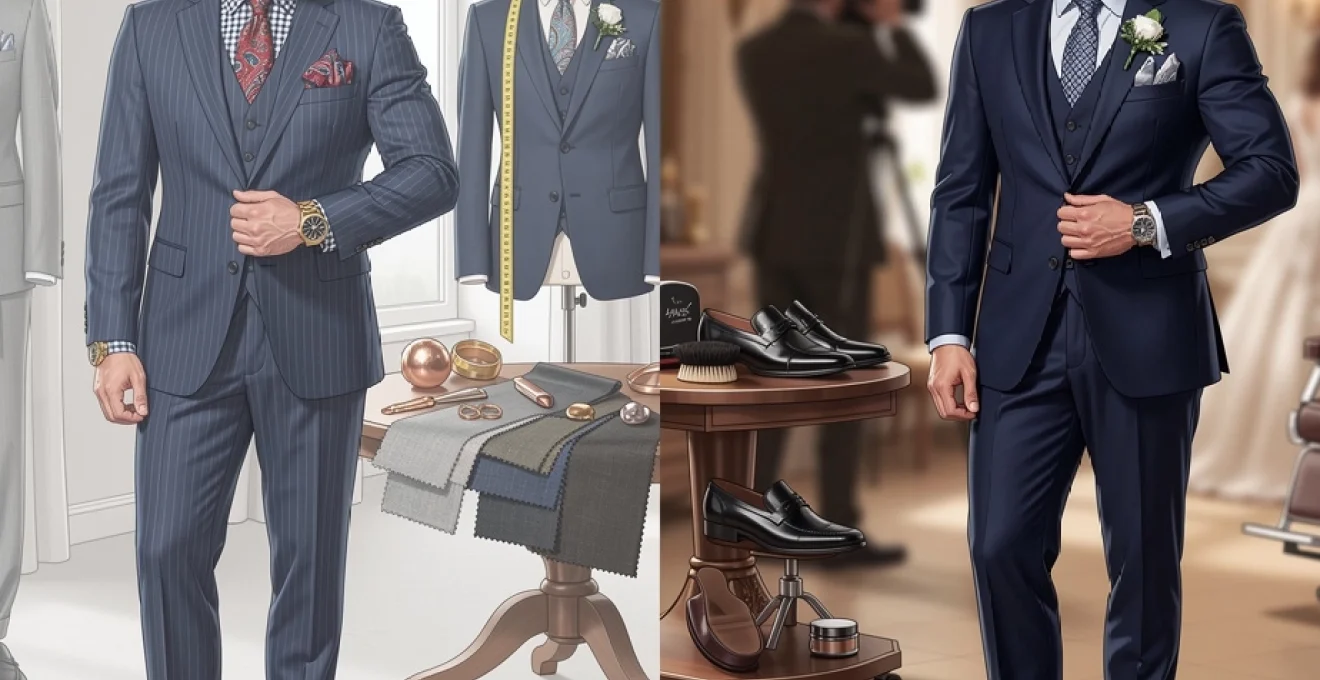
Your wedding day represents one of the most photographed and memorable moments of your life, yet countless grooms inadvertently sabotage their appearance through preventable styling errors. While brides typically spend months perfecting every detail of their look, many grooms approach their wedding attire with casual indifference, leading to regrettable choices that become permanently etched in wedding photographs. The modern groom faces unprecedented pressure to match the sophistication of contemporary wedding aesthetics whilst maintaining masculine elegance and personal authenticity.
Understanding the fundamentals of formal menswear extends far beyond simply donning a suit and tie. The art of wedding styling encompasses precise tailoring, strategic colour coordination, thoughtful accessory selection, and meticulous grooming protocols. Each element contributes to creating a cohesive, polished appearance that complements the bride whilst allowing the groom to express his individual style. Professional wedding photographers consistently report that poorly dressed grooms can diminish the overall visual impact of wedding imagery, making proper styling education essential for any discerning gentleman.
Formal wear sizing and tailoring fundamentals for wedding day excellence
The foundation of impeccable wedding attire lies in achieving perfect fit through professional tailoring. Many grooms underestimate the transformative power of proper alterations, assuming that off-the-rack garments will suffice for their special day. This fundamental misconception leads to the most common and visually jarring wedding styling mistakes: ill-fitting jackets that bunch at the shoulders, trousers that pool excessively at the ankles, and shirt sleeves that disappear beneath jacket cuffs.
Professional suit measurements: chest, waist, and trouser length precision
Professional suit fitting requires precise measurements across multiple body points to ensure optimal drape and comfort. The chest measurement should allow for approximately two inches of ease, enabling comfortable movement whilst maintaining a tailored silhouette. Waist suppression varies according to body type and style preference, but should never create pulling or strain across the button stance. Modern grooms often request excessive tapering, resulting in restricted movement and an unflattering hourglass effect.
Trouser length presents particular challenges for wedding styling, as the break must accommodate both standing photographs and seated ceremony positioning. The classic single break remains the most versatile option for wedding photography, allowing the trouser to gently kiss the shoe whilst avoiding excessive pooling. Contemporary no-break styling can appear modern but risks exposing sock during seated positions, creating potential visual disruptions in ceremony photographs.
Bespoke tailoring vs Off-the-Rack alterations timeline management
Timing represents the most critical factor in achieving impeccable wedding day tailoring. Bespoke suiting requires minimum eight-week lead times, including multiple fittings and potential adjustments. This timeline accommodates the complex construction process whilst allowing for weight fluctuations and style refinements. Many grooms discover too late that rushed tailoring produces inferior results, compromising both fit and finish quality.
Off-the-rack alterations demand different timeline considerations but require equal attention to detail. Basic alterations including sleeve shortening, trouser hemming, and waist adjustments typically require two to three weeks for quality execution. Emergency alterations often result in visible construction flaws, including uneven hems, puckered seams, and improper proportions that photograph poorly under professional lighting conditions.
Wedding suit fabric selection: wool weight and seasonal considerations
Fabric selection significantly impacts both comfort and photographic appearance throughout extended wedding celebrations. Summer weddings demand lighter wool weights between 9-11 ounces, providing breathability whilst maintaining structural integrity. Heavier fabrics exceeding 13 ounces become uncomfortable during warm weather celebrations, leading to visible perspiration and wilted appearances in photographs.
Seasonal fabric considerations extend beyond weight to include fibre composition and weave structure. Tropical wool blends offer superior moisture management for outdoor ceremonies, whilst traditional worsted wools provide classic elegance for church weddings. Linen blends create relaxed sophistication for destination weddings but wrinkle significantly throughout extended wear periods.
Morning coat and white tie dress code requirements
Formal daytime dress codes require specific garment combinations that
formal wear novices frequently misunderstand. Morning dress, appropriate for formal daytime weddings, typically comprises a morning coat with peaked lapels, matching or contrasting waistcoat, and striped or plain formal trousers in a complementary tone. The coat should close cleanly at the waist and sweep gently away over the hips; any pulling at the button or flaring over the seat signals incorrect sizing or poor alteration work.
White tie remains the most formal evening dress code and carries non-negotiable requirements. A true white tie ensemble consists of a black tailcoat, white piqué waistcoat, white piqué bow tie, high-waisted trousers with brace buttons, and a stiff-front formal shirt with detachable collar. In this context, novelty accessories, coloured bow ties, and low-cut waistcoats undermine the formality of the look. If your invitation specifies white tie, treating the dress code casually will be immediately obvious to sartorially aware guests and will look incongruous in elegant venue surroundings.
Colour coordination and pattern mixing techniques for groom styling
Once the fundamentals of fit and fabric are secure, sophisticated colour coordination elevates a groom’s wedding suit from adequate to exceptional. Poor colour choices represent one of the most common groom style mistakes, particularly when outfits clash with the bride’s palette or overall wedding styling. Mastering basic colour theory and pattern mixing allows you to complement the bridal party without appearing either anonymous or overpowering.
Complementary colour theory: matching bride’s palette without overshadowing
Effective wedding colour coordination begins with understanding where your outfit sits in relation to the bride’s attire. Your objective is to complement, not compete. If the bride has chosen an ivory gown with warm champagne accents, cool, stark whites and aggressive jet-black contrasts near your face can appear harsh in joint portraits. Instead, consider soft white shirts, mid-tone navy suits, or warm charcoal that echoes the undertones of her ensemble.
Applying simple complementary colour theory helps maintain visual harmony. Rather than perfectly matching your tie to the bridesmaids’ dresses, select a tone within the same colour family that is one or two shades deeper or lighter. This creates subtle coordination without appearing overly “matchy-matchy” or costume-like. Ask your photographer or stylist which hues work best under the planned lighting conditions; a tie that looks rich indoors may blow out under strong midday sun.
Paisley, pinstripe, and check pattern combinations with solid accessories
Pattern mixing offers an opportunity for refined individuality, but it is also where many grooms overcomplicate their wedding outfit. The safest approach pairs one dominant pattern with otherwise solid elements. If your suit features a subtle Prince of Wales check, keep the shirt plain and introduce character through a textured but solid tie and pocket square. Combining multiple bold patterns—such as a large paisley tie atop a strong windowpane suit—can create distracting visual noise in high-resolution wedding photographs.
For grooms who favour patterned neckwear, treat the tie as the focal point and allow other elements to support it. A fine pinstripe suit in navy pairs beautifully with a restrained paisley tie in burgundy or forest green, anchored by a crisp white shirt. Likewise, a micro-check shirt can work beneath a solid suit when balanced with a simple grenadine or satin tie. When in doubt, follow the “two solids, one pattern” rule to maintain elegance and prevent your wedding photos from feeling visually cluttered.
Seasonal colour psychology: navy vs charcoal vs light grey selection
Colour carries psychological weight, particularly in formal menswear. Navy suits project reliability and modern confidence, making them ideal for contemporary hotel or city weddings. Charcoal grey conveys formality and gravitas, better suited to evening ceremonies, historic venues, or more traditional religious services. Light grey, by contrast, communicates ease and approachability, working beautifully for spring garden weddings or outdoor daytime celebrations.
Season and setting should guide your choice between these classic shades. In bright summer light, heavy charcoal can appear stark and highlight perspiration, whereas mid- to light-grey fabrics photograph softly and reflect heat. Conversely, in dim winter interiors, a pale suit may wash out against dark wood panelling or candlelit backdrops. Considering not just how a colour looks in a mirror, but how it will interact with venue tones and natural light, prevents one of the most overlooked groom style mistakes: selecting the right suit in the wrong colour.
Metallic accent integration: gold, silver, and rose gold hardware balance
Metallic accents may seem minor, yet mismatched hardware can subtly undermine an otherwise impeccable groom look. Watches, cufflinks, tie bars, belt buckles, and even eyeglass frames contribute to an overall metal “story.” A common error is combining yellow-gold cufflinks with a silver watch and rose gold tie bar, resulting in a jumbled, unintentional effect. You would not mix three types of wood stain in a single piece of furniture; metal tones benefit from the same coherence.
The most polished approach is to select one dominant metal family and maintain it across visible accessories. If your wedding bands are yellow gold, consider echoing that tone in your cufflinks and tie bar, even if your watch remains more neutral. For cooler palettes—navy suits, grey ties, and ivory gowns—silver or white gold often feels harmonious. Rose gold works particularly well with warm complexions and earthy colour schemes but should be introduced sparingly to avoid appearing overly trend-driven in long-term photographs.
Accessory selection errors: watches, cufflinks, and pocket squares
Accessories provide some of the most memorable finishing touches to groom styling, yet they are also responsible for a disproportionate number of wedding day mistakes. Oversized sport watches paired with formal tuxedos, novelty cufflinks that distract in close-up ring shots, and perfectly matched tie-and-pocket-square sets all signal a lack of understanding of classic menswear principles. The objective is refinement, not decoration for decoration’s sake.
A formal wedding watch should be slim, understated, and ideally on a leather strap that complements your shoes and belt. Large diving bezels, rubber straps, or digital displays appear incongruous with a three-piece suit or tuxedo and will be impossible to ignore in wrist-focused photographs. Cufflinks should feel considered yet subtle—think simple knots, monograms, or classic onyx rather than cartoon characters or obvious brand logos. These pieces are closer to the camera than you might expect; tasteful restraint ages far better than novelty.
Pocket squares present another frequent misstep. The pre-packaged, perfectly matching tie-and-square sets commonly sold with rental suits rarely look sophisticated. A pocket square should complement your tie, not duplicate it. For most grooms, a white linen or cotton square in a simple TV fold or puff remains the most timeless and bride-complementary choice. This small rectangle of fabric draws the eye towards your face and softens the transition between dark lapels and shirtfront; keep it crisp, clean, and free from overcomplicated folds.
Grooming protocol mistakes: hair styling and facial hair maintenance
Even the most meticulously tailored wedding suit can be undermined by neglected grooming. Yet many grooms treat haircuts and beard trims as last-minute tasks, resulting in sharp lines, visible irritation, or styles that do not have time to settle. Your goal is to look like the best version of yourself, not an experiment. Think of grooming as the frame to a painting: if it clashes, the artwork suffers.
Schedule your haircut approximately five to seven days before the wedding to allow edges to soften and the style to fall naturally. A same-day cut can leave harsh outlines and expose pale skin that has not yet caught the sun, which can be particularly noticeable around the neckline in outdoor photos. If you wear facial hair, book a professional beard shape a few days prior, then maintain the lines at home with minimal interference. Radical style changes—shaving off a long-term beard or growing one in the weeks before—almost always read as jarring in wedding albums.
Skin care also deserves attention in the weeks leading up to the ceremony. Introducing new products the night before is a recipe for redness and breakouts. Instead, adopt a simple routine of cleansing, gentle exfoliation, and moisturising at least a month in advance. On the day itself, blotting papers, a light mattifying product, and lip balm can make a significant difference under strong photographic lighting. Remember: excessive shine on the forehead or nose can be more distracting in photos than a slightly imperfect tie knot.
Footwear selection and care: oxford, derby, and loafer appropriateness
Wedding footwear is often an afterthought, yet your shoes anchor your entire silhouette and influence posture, gait, and comfort across long ceremonies and receptions. The wrong shoe style—or a poorly maintained pair—can introduce a jarring note at the bottom of otherwise refined wedding attire. Scuffed toes, chunky casual soles, or trainers paired with formal suiting draw the eye for all the wrong reasons, especially in full-length portraits.
For most formal weddings, closed-lacing Oxford shoes in black or dark brown represent the gold standard, particularly with tuxedos or dark three-piece suits. Derbies, with their open lacing, offer slightly more comfort and suit semi-formal or daytime events where the dress code is less rigid. Loafers can work at summer, destination, or more relaxed ceremonies but should be sleek, leather-soled, and free from heavy embellishment. As a rule, the more formal the dress code and venue, the more structured and understated your shoes should be.
Preparation and care matter just as much as style selection. Break in new shoes gradually in the weeks before your wedding to avoid blisters and stiffness during the event. Invest in a professional polish or take time to achieve a clean, high-shine finish yourself; dull or dusty leather will stand out in contrast to a pristine suit. Finally, match belt and shoe leather in both colour and finish where possible, and avoid rubber soles so thick that they visually “weigh down” the bottom of your outfit in photos.
Photography considerations: posture, expression, and movement awareness
Even flawless styling can be diminished if you are unaware of how your suit behaves in motion and under the lens. Professional photographers often note that many grooms seem uncomfortable in formalwear, leading to hunched shoulders, clenched jaws, and awkward pocket-stuffing habits. Remember that your wedding suit is a tool designed to help you look your best; learning how to move and stand in it is as important as choosing the right fabric or colour.
Posture has an immediate effect on how your tailoring reads on camera. Standing tall with shoulders gently back, chest open, and weight evenly distributed allows the jacket to drape cleanly and elongates your frame. Shoving both hands deep into trouser pockets, by contrast, collapses the front of the jacket and exaggerates creasing at the waist. Practise relaxed hand positions—one hand lightly in a pocket, fingers resting along the trouser seam, or gently holding your lapel—to avoid looking stiff or uncertain in posed shots.
Expression and micro-movements also matter more than many grooms anticipate. A genuinely relaxed smile photographs far better than a forced grin held for too long, so do not be afraid to blink, reset, and re-engage between frames. When walking for candid photos, take natural, shorter strides to prevent your jacket from flying open excessively or your trousers from riding up. Consider doing a brief “test shoot” in your full outfit—either with your photographer or simply on a smartphone—to identify any recurring issues, such as gaping collars, pulling buttons, or accessories that shift out of place. Addressing these details in advance ensures your carefully chosen wedding style translates perfectly into the images you will keep for a lifetime.