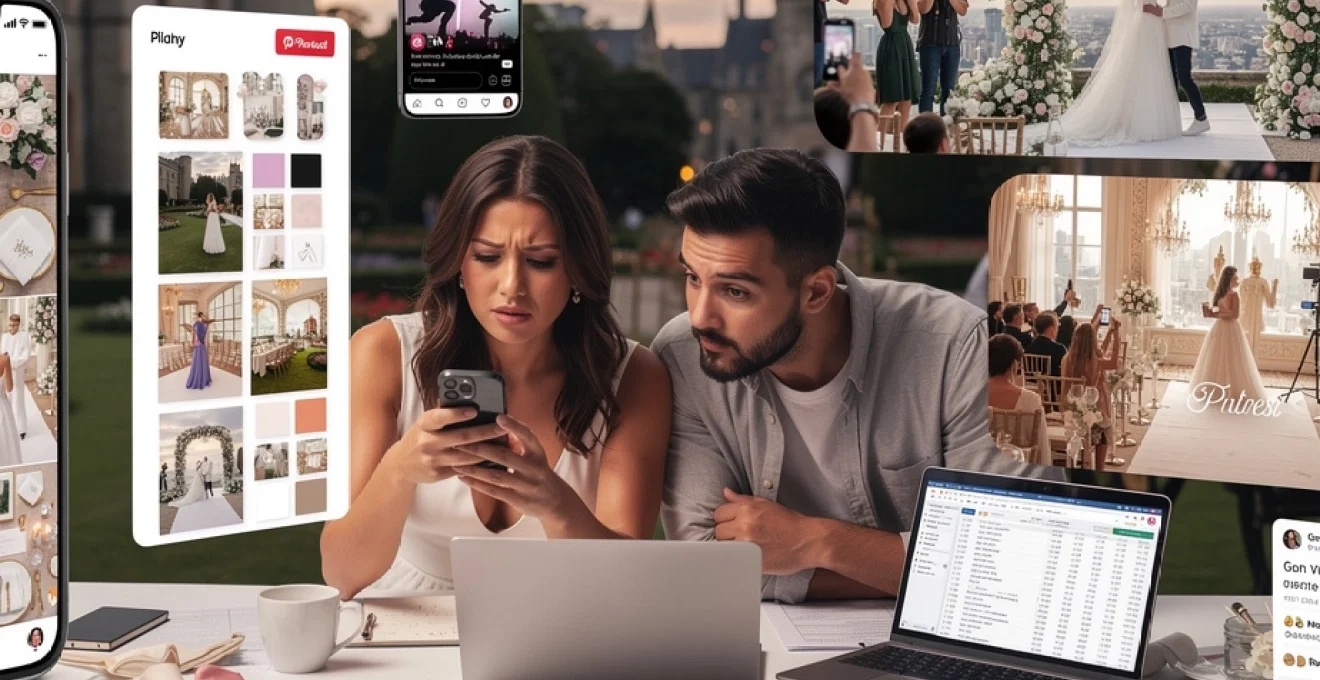
Social media platforms have fundamentally transformed the wedding industry, creating unprecedented expectations and pressures for modern couples. From Instagram’s picture-perfect aesthetic demands to TikTok’s viral trend culture, digital platforms are reshaping how couples envision, plan, and execute their special day. The rise of wedding content creators charging upwards of £3,000 for smartphone documentation reflects a broader cultural shift where weddings are no longer private celebrations but carefully curated social media experiences. This transformation has created a new landscape where authenticity meets performance, forcing couples to navigate between personal meaning and public presentation.
The influence extends far beyond simple inspiration gathering. Today’s engaged couples face mounting pressure to create “Instagrammable” moments whilst managing the complex interplay between traditional wedding values and contemporary digital expectations. The emergence of specialised wedding content creators, as seen in Norfolk where Beth Denman’s Social Scenes has sparked a 586% increase in searches for similar services, demonstrates how profoundly social media has altered wedding documentation and experience sharing.
Instagram-driven wedding aesthetic trends and visual storytelling demands
Instagram has become the primary catalyst for wedding aesthetic evolution, with couples increasingly prioritising visual elements that translate well to the platform’s highly curated environment. The platform’s emphasis on high-quality imagery has elevated expectations for wedding photography, floral arrangements, and venue styling to unprecedented levels. Modern couples often select vendors based on their Instagram presence, seeking professionals who can deliver content that meets the platform’s visual standards.
The concept of the “Instagrammable wedding” has emerged as a driving force in wedding planning decisions. Couples now consider camera angles, lighting conditions, and backdrop opportunities when selecting ceremony and reception venues. This shift has led to increased demand for unique architectural features, dramatic natural settings, and spaces that offer multiple photogenic opportunities throughout a single celebration.
Pinterest wedding board curation and mood board psychology
Pinterest has revolutionised wedding planning by transforming inspiration gathering from magazine clippings to digital mood boards. The platform’s visual search capabilities allow couples to discover global trends and create comprehensive style guides that influence every aspect of their celebration. Wedding planners report that couples now arrive at consultations with meticulously curated Pinterest boards containing hundreds of images, creating detailed visual briefs that were previously difficult to articulate.
The psychological impact of Pinterest’s infinite scroll feature has created what industry professionals term “inspiration overload.” Couples often struggle to narrow down their vision when presented with endless possibilities, leading to decision fatigue and budget inflation as they attempt to incorporate multiple trending elements into their celebrations.
Tiktok viral wedding trends and Micro-Content expectations
TikTok’s influence on wedding culture has introduced rapid trend cycles and micro-content expectations that demand constant innovation. Viral wedding trends can emerge overnight, with couples feeling pressure to incorporate the latest dance routines, reveal techniques, or ceremonial elements to create shareable moments. The platform’s algorithm rewards novelty and engagement, pushing couples toward increasingly elaborate or unconventional wedding elements.
The rise of wedding-specific TikTok content has created new categories of wedding entertainment and documentation. Couples now budget for TikTok creation time during their timeline, scheduling specific moments for content capture that can be immediately shared with their online communities. This real-time sharing expectation has fundamentally altered the traditional wedding day flow.
Instagram stories wedding documentation and Real-Time sharing pressure
Instagram Stories has created expectations for real-time wedding documentation that extends beyond professional photography and videography. Guests now assume they can share immediate updates from weddings, creating pressure on couples to design their celebrations with social media sharing in mind. This includes considerations for branded hashtags, share-worthy moments, and guest etiquette around digital sharing.
The temporary nature of Stories content has paradoxically increased sharing frequency, with wedding guests and couples posting multiple updates throughout the celebration. This constant documentation requirement has led some couples to hire dedicated social media managers for their wedding day, ensuring consistent and high-quality content across all platforms.
Hashtag marketing impact on wedding vendor selection
Wedding vendor discovery has shifted significantly toward hashtag-driven marketing strategies. Couples increasingly find photographers, planners, and other vendors through hashtag searches rather than traditional referral methods. Vendors who effectively utilise platform-specific hashtags
like #londonweddingphotographer or #barnweddingideas are more likely to appear in couples’ discovery feeds. This shift has levelled the playing field for newer vendors who may not have established word-of-mouth networks but have a strong visual brand and smart hashtag strategy. At the same time, it has increased pressure on suppliers to produce a constant stream of social-ready content, turning every wedding into both a job and a marketing opportunity. For couples, the upside is greater choice and transparency; the downside is the temptation to choose vendors based more on their feed than on fit, values, or service quality.
Influencer wedding culture and celebrity matrimonial benchmarking
Influencer wedding culture has created a new benchmark for what a “successful” wedding looks like online. Instead of comparing their day only to friends’ and family celebrations, couples now measure themselves against celebrity weddings and viral influencer events that often involve six-figure budgets and brand sponsorships. This phenomenon, sometimes called “celebrity matrimonial benchmarking,” subtly raises expectations for styling, entertainment, and documentation – even when a couple’s budget and priorities are very different.
Because these high-profile weddings are crafted as content-first experiences, they often prioritise spectacle and narrative arcs designed to perform well on social media. As viewers, we see the highlights reel but not the compromises, stress, or financial weight behind the scenes. The result is a skewed perception of what is “normal” or achievable, which can leave couples feeling that anything less than cinematic drone shots and multiple outfit changes is somehow inadequate. Understanding this distortion is essential if you want your wedding expectations to stay grounded in your own values rather than someone else’s brand strategy.
Kardashian-style wedding production values and budget inflation
Kardashian-style weddings epitomise the fusion of reality TV, influencer culture, and luxury wedding production. Multi-day events, custom-built venues, designer collaborations, and professional lighting rigs have turned their nuptials into global media spectacles. While very few couples can – or want to – replicate this scale, the imagery from these weddings circulates endlessly on Instagram, TikTok, and Pinterest, subtly nudging expectations upwards for décor, gowns, and guest experiences.
This trickle-down effect shows up in requests for flower walls, monogrammed dance floors, outfit changes, and branded wedding logos, even at modestly sized celebrations. Industry surveys suggest that couples are increasingly willing to stretch or exceed their initial wedding budget after spending time on social media, with décor and photo-worthy details being the main culprits. Here, social media acts like a magnifying glass on luxury trends: what begins as aspirational inspiration can quickly become perceived as a baseline standard, leading to budget inflation and financial pressure.
Royal wedding emulation trends and windsor castle inspirations
Royal weddings, from William and Kate to Harry and Meghan, continue to set global templates for ceremony style and etiquette. Televised to millions and endlessly dissected online, these events fuel trends in long-sleeved bridal gowns, cathedral-length veils, formal church ceremonies, and classic floral arrangements. Pinterest and Instagram feeds fill with imagery of Windsor Castle processions and St George’s Chapel arches, inspiring couples to emulate elements of that traditional grandeur.
Of course, few venues offer the architectural drama of a royal chapel, but couples emulate the essence through stately homes, historic barns, and heritage properties. Florists report increased demand for “royal-inspired” bouquets and arches, while planners see more interest in formal processions and traditional vows. The key challenge lies in translating royal-scale inspiration into realistic, personal versions that suit a couple’s story and budget, rather than staging a pale imitation of Windsor Castle for the sake of photos alone.
Youtube wedding vlogger content creation expectations
YouTube has given rise to a generation of wedding vloggers who document their planning journey and wedding day in long-form video. These vlogs provide an intimate, behind-the-scenes view of supplier meetings, budget decisions, dress fittings, and the emotional highs and lows leading up to the celebration. For couples watching, this can be incredibly helpful – almost like having a digital big sister guiding you through each step.
However, this visibility also reshapes expectations around documentation. Instead of a single highlights film, many couples now envision cinematic trailers, full ceremony recordings, speeches edits, and even “day in the life” style films shot from multiple angles. Some also feel pressure to perform for the camera, narrating their emotions or staging “reaction shots” because that is what they have seen online. If you are planning your own wedding, it is worth asking: do you want your day to feel like a YouTube episode, or would you rather allow content to emerge more organically?
Micro-influencer wedding sponsorship and brand integration pressure
Micro-influencers with modest but engaged followings (often between 10,000 and 100,000 followers) are increasingly offered discounts or sponsorships in exchange for featuring brands in their wedding content. This can range from gifted bridal accessories to sponsored venues, hair and makeup, or even honeymoon stays. On the surface, it looks like a dream scenario – a more affordable wedding in exchange for a few posts and tags.
In practice, however, this brand integration can alter the emotional tone of the day. Couples may feel obliged to capture specific shots, share real-time stories, or include product mentions in speeches to satisfy contractual agreements. The wedding becomes part celebration, part marketing campaign. Even non-influencer couples feel this pressure indirectly, as they see sponsored weddings online and begin to question whether their own day should “do more” from a content and brand-collaboration perspective. Protecting the personal, intimate core of the celebration becomes an active choice rather than a given.
Digital wedding planning platforms and social commerce integration
Beyond social media platforms themselves, dedicated digital wedding planning tools have transformed how couples research, book, and manage vendors. Sites like The Knot, WeddingWire, Zola, and Honeyfund combine planning checklists, budgeting tools, and social features with powerful recommendation algorithms. At the same time, Instagram Shopping, Facebook Marketplace, and other social commerce tools have made it possible to move from inspiration to purchase in a single tap.
These digital ecosystems are convenient and time-saving, but they also shape expectations. When algorithms are constantly surfacing “top-rated” venues or trending décor, it can feel as though certain choices are objectively better than others. In reality, the “best” option is the one that aligns with your priorities, not just the one that has the most five-star reviews or sponsored placements. Understanding how these systems work helps you use them as tools rather than letting them silently dictate your wedding vision.
The knot and WeddingWire algorithm-driven vendor recommendations
Platforms such as The Knot and WeddingWire rely heavily on algorithms to recommend wedding vendors based on your location, budget range, and stated preferences. These algorithms factor in review scores, response rates, listing completeness, and sometimes paid advertising status, then surface a curated list of “best matches.” For time-poor couples, this feels like a personalised shortcut through an overwhelming marketplace.
However, algorithm-driven vendor recommendations can also create a feedback loop where already popular suppliers become even more visible, while newer or niche vendors struggle to break through. Just as important, couples may assume that algorithmically ranked options are inherently superior, when in fact they may simply be the most optimised for the platform. To keep expectations realistic, it can help to treat these recommendations as a starting point rather than a final verdict and to supplement them with independent research, conversations, and gut instinct.
Facebook marketplace wedding resale economy and sustainability trends
Facebook Marketplace has quietly become a thriving secondary market for wedding décor, attire, and signage. Couples resell everything from centrepieces and neon signs to gently used dresses and artificial flower installations, often at a fraction of their original cost. This has boosted the visibility of sustainable wedding practices, as more people realise that a stylish celebration does not necessarily require brand-new, single-use décor.
From an expectations perspective, the resale economy can be freeing. Couples see that beautiful items have a life beyond a single day, which can ease the pressure to cling to every physical memento. It can also shift priorities toward reusability, rental options, and minimalist design. On the flip side, endless scrolling through bargain finds may tempt you to add “just one more” décor element because the price is low, which can clutter both your aesthetic and your budget if you are not careful.
Zola and honeyfund social registry sharing mechanisms
Platforms like Zola and Honeyfund have revolutionised wedding registries by integrating them directly with social and digital planning tools. Instead of a simple list of household items, couples can now curate experiences, honeymoon contributions, subscriptions, and even charity donations, all presented through a sleek, shareable interface. These registries are often linked from wedding websites and shared via social media, making gifting feel more transparent and interactive.
As these tools grow, they raise the bar for how “thoughtful” and “on-brand” a registry should be. Couples feel encouraged to tell a story through their registry – reflecting their travel style, design preferences, or shared hobbies. Guests, in turn, may feel pressure to contribute at a certain level when they see publicly visible goals and progress bars. Being clear about your values (for example, prioritising experiences over objects, or keeping contribution amounts private) helps ensure that digital registries serve your relationships rather than shaping them.
Instagram shopping tags for wedding dress and décor purchases
Instagram Shopping has shortened the distance between “I love this look” and “I just bought it.” Bridal boutiques, décor brands, and independent designers tag products directly in their posts, allowing couples to tap through and purchase dresses, veils, signage, and tableware in a few clicks. For time-pressed couples, this is incredibly efficient, especially for smaller items and finishing touches.
Yet instant shopping can also distort expectations about fit, quality, and practicality. A wedding dress or décor piece that looks flawless in a square, colour-graded Instagram image may feel very different in real life, under venue lighting, or in motion. To avoid disappointment, it is wise to treat tagged products as starting points for research rather than impulse buys, especially for big-ticket items. Think of Instagram as the glossy catalogue and your in-person try-ons and samples as the reality check.
Fomo-induced wedding feature escalation and comparison culture
If social media is the stage, then FOMO – fear of missing out – is often the script driving wedding feature escalation. Couples scroll through endless reels of sparkler exits, champagne towers, personalised neon signs, and drone-firework displays, and begin to feel that their own plans are too simple. Each new feature starts to feel less like an optional extra and more like a requirement to avoid disappointment or judgment.
This comparison culture can quickly turn a meaningful celebration into a checklist of trending features. Like adding more toppings to a pizza until you can no longer taste the base, adding trend after trend can drown out the core of your day: the ceremony, the vows, and the people. One practical way to counteract this is to choose three to five “hero moments” that matter most to you – perhaps a live musician, a late-night snack, or handwritten vows – and let everything else play a supporting role. By consciously defining what success looks like for your wedding, you can enjoy online inspiration without feeling ruled by it.
Wedding photography evolution and social media content creation requirements
Wedding photography has evolved from a primarily print-focused craft to a hybrid discipline that must perform across albums, large-format prints, and social media feeds. Couples now expect both timeless, high-resolution images and vertical, phone-friendly content ready for Instagram Stories and TikTok. This has expanded the photographer’s role from image-maker to content creator, often in partnership with dedicated social media videographers or wedding content creators working on smartphones.
Many photographers offer social media “sneak peeks” within 24–48 hours, alongside traditional longer delivery timelines for full galleries and films. Some also collaborate with wedding content creators on the day, coordinating timelines so that candid, behind-the-scenes footage complements the formal photo set rather than competing with it. For couples, the key is to clarify expectations in advance: do you want a content creator in addition to a photographer and videographer? How quickly do you expect preview images? Agreeing on these points ensures that your team can capture both the fast-paced needs of social media and the enduring images you will treasure for decades.
Gen Z wedding values transformation through social media exposure
Gen Z couples, many of whom grew up with smartphones in hand, bring a distinct set of values to wedding planning – values heavily informed by social media but not entirely dictated by it. Yes, they are highly fluent in trends, filters, and formats, but they are also more likely to prioritise authenticity, inclusivity, and sustainability than previous generations. In this sense, social media acts not only as a pressure source but also as a classroom, exposing them to diverse wedding traditions, LGBTQ+ celebrations, eco-conscious planning, and budget-transparent conversations.
We see this in the growing popularity of micro-weddings, elopements, plant-based menus, second-hand dresses, and charitable registries, all widely shared and normalised online. Gen Z couples are more comfortable challenging traditions that do not resonate with them, from skipping certain formalities to writing their own vows or walking down the aisle together. They may still love a beautifully curated feed, but many are just as interested in sharing the honest, unfiltered moments – the tears, the mishaps, the behind-the-scenes laughter. As this generation continues to redefine what a “successful” wedding looks like, we can expect social media to shift from a one-dimensional highlight reel toward a more nuanced, value-driven narrative of love, commitment, and community.