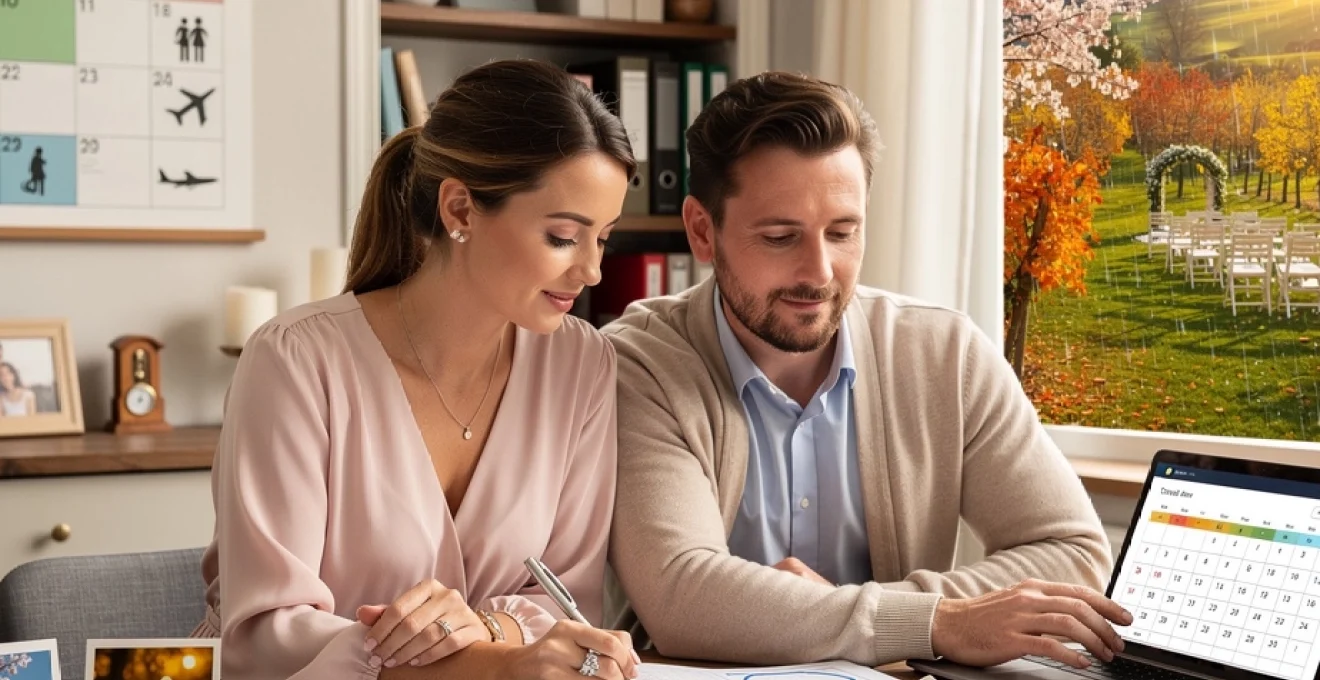
Selecting your wedding date represents one of the most pivotal decisions in your entire planning journey, setting the foundation for every subsequent choice from venue availability to guest attendance patterns. The date you choose will influence not only the atmosphere and aesthetics of your celebration but also determine budget allocations, vendor availability, and the overall experience for you and your loved ones. With wedding venues booking up to two years in advance and seasonal variations affecting everything from floral availability to catering costs, strategic date selection becomes essential for creating your dream celebration whilst managing practical considerations effectively.
Seasonal wedding date planning: peak vs Off-Peak venue availability analysis
Understanding the dynamics of peak and off-peak wedding seasons fundamentally shapes your venue selection options and budget requirements. The wedding industry operates on clearly defined seasonal patterns, with summer months commanding premium pricing whilst winter periods often present significant cost savings opportunities. Peak season typically encompasses May through September, during which venue availability becomes severely limited and pricing reaches annual highs. Conversely, off-peak periods from November through March offer enhanced flexibility and substantial financial advantages for couples willing to embrace alternative seasonal themes.
Spring wedding advantages: march to may booking strategies
Spring weddings present an optimal balance between seasonal beauty and cost-effectiveness, offering couples the charm of blooming landscapes without peak summer pricing pressures. March through May represents a transitional period where venues begin implementing higher rates whilst still maintaining some flexibility in availability. The natural renewal associated with spring creates stunning photographic opportunities with cherry blossoms, daffodils, and fresh greenery providing elegant backdrops without requiring extensive floral arrangements.
Booking strategies for spring celebrations should focus on securing dates by October of the preceding year, as popular venues experience increased demand from couples seeking alternatives to expensive summer weddings. Weather unpredictability remains the primary consideration, requiring contingency planning for both indoor and outdoor ceremonies. However, the moderate temperatures and longer daylight hours create comfortable conditions for guests whilst enabling extended celebration periods.
Summer peak season challenges: june to august premium pricing
Summer weddings command the highest prices across all vendor categories, with venue costs increasing by 30-50% compared to off-peak periods. The intense competition for Saturday dates during June through August creates booking windows extending 18-24 months in advance for prestigious venues. Premium pricing affects not only venue hire but extends to photography, catering, entertainment, and accommodation costs as suppliers capitalise on peak demand.
Despite the financial implications, summer celebrations offer unparalleled advantages including reliable weather patterns, extended daylight for photography, and enhanced outdoor venue options. The challenge lies in balancing your vision for a summer celebration against budget constraints and availability limitations. Early booking becomes absolutely critical, with many couples securing their preferred summer dates immediately following engagement announcements.
Autumn wedding benefits: september to november vendor flexibility
Autumn presents exceptional opportunities for couples seeking the perfect compromise between seasonal beauty and vendor availability. September through November offers the stunning visual appeal of changing foliage whilst maintaining reasonable pricing structures and enhanced vendor flexibility. The harvest season aesthetic naturally complements wedding themes, providing rich colour palettes and seasonal produce options for catering menus without requiring extensive decorative investments.
Vendor flexibility during autumn months enables couples to negotiate more favourable terms whilst accessing premium suppliers who may be fully booked during peak summer periods. Temperature variations require careful consideration for outdoor ceremonies, but the dramatic lighting conditions and natural scenery create extraordinary photographic opportunities. Many venues offer autumn-specific packages combining seasonal elements with competitive pricing structures.
Winter ceremony considerations: december to february cost savings
Winter weddings represent the most significant cost-saving opportunities, with venues offering reductions of 40-60% compared to peak season rates. The festive atmosphere during December provides natural decorative elements through existing holiday installations, whilst January and February present blank canvases for creative seasonal themes. Intimate celebrations benefit particularly from winter settings, with cosy indoor environments fostering close connections amongst guests.
Practical considerations include shorter daylight hours affecting photography schedules and potential weather disruptions impacting guest travel arrangements. However, the availability of premium venues and vendors creates opportunities for upgrades and enhanced service levels within standard budgets. Winter wedding themes can incorporate dramatic elements like candlelit ceremonies, rich fab
rics, velvet textures, and deep jewel tones whilst still maintaining cost efficiencies.
Guest availability optimisation through strategic date selection
Beyond the romance of seasons and aesthetics, choosing the ideal wedding date also requires strategic consideration of your guests’ availability. A beautifully planned celebration loses impact if your closest friends and family cannot attend due to clashes with holidays, work commitments, or travel constraints. By taking a structured approach that considers public holidays, school terms, corporate calendars, and international travel requirements, you can significantly increase attendance and reduce last-minute cancellations.
Holiday weekend impact: bank holiday and religious festival analysis
Bank holidays and religious festivals can both enhance and complicate your wedding date selection. On one hand, long weekends often make it easier for guests to travel, especially if you are planning a destination wedding or a multi-day celebration. On the other hand, public holidays generally push up accommodation prices and may clash with existing family traditions or religious observances, reducing availability for some guests.
When assessing holiday weekends, consider the demographics and cultural backgrounds of your guest list. For example, Easter, Christmas, Diwali, Eid, Passover, and major national celebrations often come with long-standing family plans that guests may be reluctant to change. Conducting a brief consultation with key invitees can help you gauge whether a specific bank holiday wedding will be welcomed as a bonus celebration or seen as a logistical burden.
School term scheduling for family-friendly wedding dates
If a significant proportion of your guest list includes parents with school-aged children, aligning your wedding date with the school calendar becomes crucial. Term time weddings may require guests to arrange childcare or seek permission for term-time absences, both of which can limit who is realistically able to attend. Conversely, school holidays offer more flexibility but may clash with pre-booked family trips, particularly during the summer break.
A practical approach is to review your local school term dates at least a year in advance and identify “shoulder periods” such as the first or last weekend of a holiday. These dates often deliver a balance between flexibility and affordability, as travel and accommodation costs tend to be lower than in the peak mid-holiday window. For a truly family-friendly wedding date, you might also time your celebration to avoid exam seasons such as GCSEs and A-levels in the UK, when older children and teachers face significant time pressures.
Corporate calendar integration: avoiding peak business periods
For couples or guests working in finance, law, hospitality, healthcare, or education, peak business periods can heavily restrict annual leave options. Choosing a wedding date during end-of-quarter reporting, year-end audits, or major industry events can make it difficult for essential guests to take time off. This is particularly relevant for weekday weddings, where even a short absence might be challenging.
To integrate the corporate calendar into your wedding planning, identify any known “blackout” periods for you and your inner circle, such as fiscal year-end or major conference seasons. Sharing a small selection of potential dates with your VIP guests before confirming your venue can help ensure that your chosen wedding date aligns with realistic leave allowances. Think of this as synchronising multiple diaries in advance rather than discovering conflicts after deposit payments have been made.
International guest considerations: visa processing and travel requirements
If you are expecting international guests, the ideal wedding date must also account for visa processing times, flight availability, and seasonal travel trends. Peak tourism seasons can push up flight prices dramatically and shorten booking windows, placing additional financial pressure on guests who are travelling long-distance. Furthermore, some countries experience lengthy visa processing periods, particularly during summer or around major global events.
To support your overseas guests, aim to confirm your wedding date at least 10–12 months in advance when long-haul travel is involved. Providing clear information on local airports, recommended arrival dates, and suggested accommodation options will help them plan efficiently. For guests travelling from regions that require visas, sending digital invitations or “save the date” notices early can assist them in gathering documentation and scheduling embassy appointments without stress.
Venue-specific booking windows and advance reservation strategies
Every venue type operates on its own booking rhythm, which means your ideal wedding date may be significantly influenced by how early you are prepared to commit. High-demand estates, boutique hotels, and iconic city venues often release weekend dates 18–24 months ahead, with prime Saturdays in May to September disappearing first. More flexible venues, such as restaurants, barns, or local halls, may have shorter booking windows but can still fill quickly for popular seasons.
To navigate this, begin by ranking your preferred venues into “must-have” and “nice-to-have” categories. For your top-tier options, contact the events team as soon as you have a rough timeframe and be prepared with two or three potential date ranges rather than a single fixed day. This increases your chances of securing a space that meets your capacity, budget, and style requirements without endless back-and-forth or disappointment.
Some couples choose to reverse the traditional order and let the venue dictate the exact date within a particular month or season. This approach is particularly effective when working with a tight budget, because midweek and off-peak dates often come with attractive discounts or inclusive packages. If you are open to a Thursday ceremony or a winter weekend, you may find that previously out-of-reach venues suddenly become attainable within your financial plan.
Weather pattern analysis for outdoor wedding date selection
Weather may be the most unpredictable factor in wedding planning, yet understanding typical climate patterns can dramatically improve your chances of a comfortable and visually stunning celebration. For couples dreaming of an outdoor ceremony, marquee reception, or garden party, analysing historic weather data is as important as choosing flowers or table settings. While you cannot control the elements, you can choose a wedding date that statistically aligns with milder conditions and then plan robust contingencies for any surprises.
Regional climate data: UK seasonal weather forecasting
In the UK, weather variability is a defining characteristic, but long-term Met Office data provides useful trends that you can incorporate into your date selection. Late spring (May) and early autumn (September) often show a balance of moderate temperatures and relatively lower rainfall compared to early spring or late autumn. July and August typically deliver the warmest days, yet they can also bring sudden thunderstorms and higher humidity, particularly in southern regions.
When reviewing climate information for your chosen area, focus on three main indicators: average temperature, expected rainfall, and daylight hours. For example, a rural marquee wedding in the north of England in April may require more robust heating and flooring solutions than an August celebration in the South West. Treat weather research as you would a risk report: it does not promise a specific outcome, but it equips you to make an informed and realistic choice about your wedding date.
Contingency planning for marquee and garden party venues
Outdoor-focused venues such as marquees, tipis, vineyards, and private gardens require a more detailed weather contingency plan than traditional indoor spaces. Even during the most statistically favourable months, you should assume that rain, wind, or an unexpected temperature drop is possible. Investing in features such as solid flooring, sidewalls, heaters, and well-lit pathways can transform a potentially damp or chilly evening into a cosy and atmospheric celebration.
Think of your contingency planning as a form of event insurance: you hope not to need it, but you will be thankful it is there if conditions change. For example, having both a covered ceremony option and an open-air plan allows you to make a final decision 24–48 hours before the wedding date based on reliable short-term forecasts. Communicating any potential plan B to suppliers and the venue team in advance ensures that everyone can pivot smoothly without visible disruption on the day.
Indoor-outdoor hybrid venue weather risk assessment
Hybrid venues that offer both indoor and outdoor spaces provide an ideal middle ground for couples who love the idea of an outdoor wedding but want to minimise weather risk. Country houses with attached gardens, hotels with terraces, and barns with courtyard areas allow you to adapt the flow of the day according to live conditions. A drinks reception might begin outside in sunshine and then transition indoors for dining, speeches, and evening celebrations.
When assessing such venues, pay close attention to how easily guests can move between spaces, particularly older relatives or families with small children. Covered walkways, accessible entrances, and flexible room layouts all help to maintain comfort regardless of weather changes. During your site visit, ask the coordinator to walk you through their bad-weather protocol for your chosen wedding date and season; their experience with previous weddings at different times of year will be one of your most valuable planning resources.
Anniversary date significance and personal milestone integration
While logistical and financial considerations are vital, many couples ultimately choose a wedding date that holds deep personal or symbolic meaning. Aligning your ceremony with an existing anniversary, the date you first met, or the day of your engagement can create a powerful emotional anchor for future celebrations. Each year, your wedding anniversary then serves as a reminder not only of your marriage but of key milestones in your shared journey.
Some couples also honour family heritage by selecting a date connected to their parents’ or grandparents’ weddings, or to the birthday of a loved one who has passed away. This approach can transform your chosen wedding date into a quiet tribute, weaving your own story into a broader family narrative. When integrating personal milestones, however, it is wise to check with close relatives that sharing or echoing a significant date will be welcomed rather than emotionally challenging.
If you are drawn to a specific number pattern or want a date that is easy to remember, you might also explore numerological or astrological significance. While not everyone places weight on these systems, they can add a sense of ceremony and intention to your choice, much like choosing a meaningful piece of jewellery. The key is to balance symbolic importance with practical realities: a beautifully significant date that falls midweek during exam season or on a major public holiday may require extra planning to ensure the people who matter most can attend.
Budget allocation timeline: financial planning for wedding date decisions
Your wedding date is closely intertwined with your financial planning, influencing everything from deposit deadlines to seasonal pricing for suppliers. Setting the date early allows you to create a realistic savings roadmap, allocate funds across key categories, and avoid last-minute compromises. Think of the date as the cornerstone of your wedding budget strategy; once it is fixed, you can work backwards to determine when each payment will be due and how much you need to set aside each month.
Peak-season weekend dates typically require higher deposits and faster decision-making due to intense demand, especially for venues, photographers, and entertainment. Off-peak or weekday dates often come with lower minimum spends and more flexible payment terms, giving you more breathing room to spread costs. If your ideal wedding date falls in an expensive period, you may decide to extend your engagement by six to twelve months to build a larger financial cushion.
A structured budget allocation timeline might begin with securing the venue 12–24 months before the wedding date, followed by key suppliers such as photography, catering, and music 9–18 months ahead. Floristry, décor, attire, and stationery usually follow in the 6–9 month window, with final balances commonly due 4–6 weeks before the big day. By mapping these milestones against your chosen date, you can clearly see when spending will peak and adjust your savings or guest numbers accordingly.
Ultimately, the most suitable wedding date is one that aligns with your emotional priorities, respects your guests’ realities, and sits comfortably within your financial means. By combining seasonal research, guest availability analysis, venue booking strategies, weather planning, personal symbolism, and a clear budget timeline, you give yourselves the best possible foundation for a celebration that feels both meaningful and manageable.