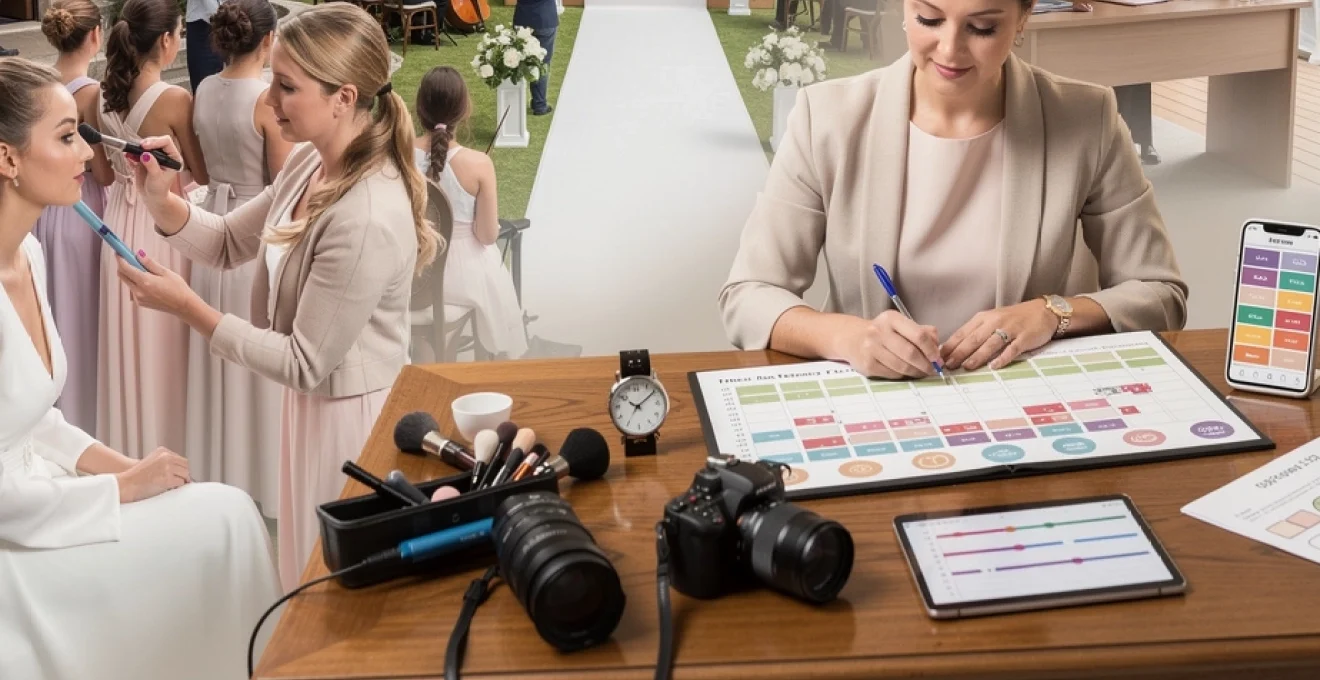
Creating a comprehensive wedding timeline stands as one of the most crucial elements in orchestrating a seamless celebration. A well-structured schedule serves as the backbone of your entire wedding day, ensuring that every precious moment unfolds naturally whilst keeping stress levels to an absolute minimum. Professional wedding planners consistently emphasise that couples who invest time in developing a detailed timeline experience significantly smoother celebrations, with vendors working in perfect harmony and guests feeling comfortable throughout the festivities.
The intricacies of wedding timeline planning extend far beyond simply noting ceremony and reception times. Modern weddings involve complex coordination between multiple vendors, intricate photography schedules, and carefully choreographed transitions that require meticulous attention to detail. Understanding these nuances can transform your wedding day from a potentially chaotic experience into an elegantly orchestrated celebration that flows effortlessly from morning preparations through to the evening’s final dance.
Pre-ceremony timeline architecture for traditional church and registry office weddings
The foundation of any successful wedding timeline begins with understanding the fundamental differences between venue types and their specific requirements. Traditional church weddings typically demand more extensive preparation time due to formal protocols, while registry office ceremonies offer greater flexibility but require precise coordination with civil authorities. The pre-ceremony phase generally spans six to eight hours before your actual ceremony time, encompassing everything from morning preparations through to the processional moments.
Professional wedding coordinators recommend establishing your ceremony time first, then working backwards to create a comprehensive morning schedule. This reverse-engineering approach ensures that every essential element receives adequate time allocation whilst building in necessary buffer periods for unexpected delays. The morning timeline should account for venue access restrictions, vendor arrival schedules, and the natural rhythm of preparation activities that contribute to a relaxed, enjoyable experience.
Bridal party preparation scheduling with professional hair and makeup teams
Hair and makeup scheduling represents one of the most time-sensitive aspects of wedding day preparation. Professional beauty teams typically require between 45 minutes to 90 minutes per person, depending on the complexity of desired styles and the number of services requested. The bride usually receives the longest appointment, often requiring two to three hours for complete hair, makeup, and touch-up services.
Optimal scheduling involves starting with bridesmaids and mothers approximately four to five hours before the ceremony, progressing through the bridal party in reverse order of importance. This approach ensures that the bride’s appearance remains fresh for photographs and the ceremony itself. Many professional makeup artists recommend appointing a designated coordinator within the bridal party to manage timing and ensure everyone remains on schedule throughout the preparation process.
The key to successful bridal preparation lies in creating a relaxed atmosphere where timing feels natural rather than rushed, allowing for spontaneous moments and genuine emotions to emerge organically.
Photography session allocation for getting ready and first look moments
Professional wedding photographers typically arrive two to three hours before the ceremony to capture authentic preparation moments. The getting-ready photography phase requires strategic timing to document meaningful interactions whilst avoiding disruption to hair and makeup services. Photographers often work in two locations simultaneously when couples prepare separately, requiring careful coordination of timing and logistics.
First look sessions have gained tremendous popularity, offering couples private moments together before the ceremony whilst maximising photography time. These sessions typically occur 60 to 90 minutes before the ceremony, allowing sufficient time for couple portraits and family photographs. The emotional impact of first look moments often produces some of the most treasured wedding photographs, making proper timing allocation essential for capturing these irreplaceable memories.
Vendor coordination timeline for florists, musicians, and ceremony officials
Vendor coordination requires establishing clear arrival and setup schedules that accommodate each professional’s specific requirements. Florists typically need access to ceremony and reception venues two to four hours before events begin, depending on the complexity of arrangements and the size of installations. Musicians often require 60 to 90 minutes for equipment setup and sound checks, particularly for outdoor venues where acoustic conditions may vary.
Ceremony officials appreciate receiving timeline copies well in advance, allowing them to coordinate their arrival with other vendors and understand the overall flow of events. Registry office ceremonies often involve stricter scheduling requirements due to multiple bookings throughout the day, making precise timing coordination absolutely essential for avoiding delays or complications.
Guest arrival management and seating coordination
Effective guest arrival management begins with clearly communicating your ceremony start time and recommended arrival window on your invitations and wedding website. For traditional church weddings, guests should be encouraged to arrive 30–45 minutes before the scheduled start to allow time for parking, seating, and any pre-ceremony music. Registry office weddings, which often run to stricter schedules, may require a tighter 20–30 minute arrival window to avoid lobby congestion and overlap with other ceremonies.
On the day itself, appoint ushers or groomsmen to act as front-of-house hosts. Their role includes welcoming guests, directing them to cloakrooms and restrooms, and guiding them to appropriate seating zones (for example, families, elderly guests, or those with mobility needs). For larger guest numbers, consider a simple seating protocol—such as reserved front pews for close family and clearly marked rows—to prevent confusion or last-minute reshuffling just as the processional is about to begin.
In churches, your ushers should be familiar with any specific customs, such as traditional sides for each family or reserved choir stalls. In registry offices, coordinators often call guests through in batches, so it helps if your ushers know who counts as immediate family or special guests. Building five to ten minutes of “settling time” into your wedding timeline here is invaluable; like a buffer in a train timetable, it absorbs inevitable minor delays so your processional can still start smoothly and on time.
Ceremony duration calculations and processional timing mechanics
Accurately estimating your ceremony duration is fundamental to creating a realistic wedding timeline. Most Anglican and civil ceremonies in the UK last between 20 and 60 minutes, depending on readings, hymns, and any added personal elements. Your officiant or registrar will usually be able to give you a precise timing estimate once you confirm your order of service. From there, you can layer in the processional, recessional, signing of the register, and any musical interludes.
When planning your wedding day schedule, treat the ceremony as the fixed anchor: everything before it works backwards from the processional start time, and everything after it works forwards from the expected finish time. It’s helpful to create a mini-ceremony breakdown in five-minute blocks, noting when each component happens. This not only keeps your wedding timeline realistic, it also gives your musicians, photographer, and videographer clear cues so they can anticipate key moments rather than react to them.
Anglican wedding service structure and traditional vow timing
An Anglican wedding service follows a well-defined structure, which makes timing easier to predict. A typical Church of England ceremony with two hymns, one reading, and no communion usually runs for 35–45 minutes from the first notes of the processional to the final blessing. If you add extra readings, more music, or a full Eucharist, this can extend the service to 60 minutes or more, and your wedding day timeline should reflect that.
The processional itself generally lasts three to six minutes, depending on the length of the aisle and the size of your bridal party. Traditional vows and ring exchanges usually take around five to ten minutes, including the legal declarations and the giving and receiving of rings. The signing of the register (or schedule, under updated UK legislation) often takes a further ten minutes, especially if you’re incorporating staged photographs during this time. Building in at least five extra minutes as a contingency for each of these elements helps prevent knock-on delays to your reception.
Many couples underestimate the time it takes for congregation movements, such as standing for hymns or repositioning for communion. Think of these as “transition moments” in your timeline—they may only last a minute or two each, but together they add up. By mapping these transitions, you ensure your wedding ceremony timeline remains realistic and you avoid the stress of feeling rushed through what should be a deeply meaningful experience.
Civil ceremony frameworks and registrar requirements
Civil ceremonies in registry offices or licensed venues tend to be shorter and more streamlined, typically running between 20 and 30 minutes. The core legal elements—the declaratory words, contracting words, and signing of the schedule—take only around ten minutes, but readings, personal vows, and music choices will extend the total duration. When planning a civil wedding timeline, most registrars advise allowing 30 minutes from start to finish to avoid overlap with the next couple.
Registrars also work to strict schedules and often conduct several weddings in a single day, so punctuality is crucial. You will usually be required to meet with the registrar separately before the ceremony—often 10–15 minutes each—to confirm your details and finalise any personalised wording. This pre-ceremony interview should be factored into your morning wedding timeline, with the couple arriving at least 30 minutes before the official ceremony start time.
Another important consideration is venue turnaround time: if your civil ceremony and reception share the same space, staff may need 15–30 minutes after the ceremony to rearrange furniture. In these cases, your wedding day schedule should include a dedicated transition period, perhaps paired with a drinks reception in an adjacent area. By aligning your registrar’s requirements with your venue’s logistics, you’ll avoid bottlenecks and keep your celebration flowing smoothly.
Music cue integration with processional and recessional movements
Music acts as the invisible conductor of your ceremony, signalling to guests when to stand, when to sit, and when a key moment is about to unfold. To integrate music cues seamlessly into your wedding timeline, you’ll need a detailed order of service that specifies exactly when each piece begins and ends. For example, you might schedule one piece for the seating of guests, another for the processional, a soft instrumental track during the signing of the register, and a final upbeat piece for the recessional.
For live musicians, such as an organist, string quartet, or soloist, build in at least 10–15 minutes before guest arrival for tuning and sound checks, particularly in older churches where acoustics can be unpredictable. If you’re using recorded music, appoint a reliable person—often the venue coordinator or a trusted friend—to manage the playlist and volume levels. Provide them with a written cue sheet showing track names, start points, and what visual signal to expect (for instance, “start track 2 when the registrar nods”).
As you refine your wedding ceremony timeline, think of each musical element as a chapter marker in a book. The processional music should be long enough to cover the entire walk, with a clear plan for how and where to fade the track if needed. The recessional, meanwhile, should begin the moment you turn to walk back up the aisle, creating a joyful, energetic transition into your post-ceremony celebrations without any awkward silence.
Photography coverage positioning during exchange of rings and declarations
Strategic photographer positioning during the ceremony is essential to capturing the exchange of rings, vows, and declarations without disrupting the service. Most experienced wedding photographers will speak with your officiant in advance to understand any restrictions, such as no flash photography or limited movement during prayers. This conversation should be factored into your pre-ceremony coordination, ideally taking place 20–30 minutes before guests begin to arrive.
For Anglican and civil weddings alike, the most important moments—vows, ring exchange, first kiss, and signing of the register—usually happen at the front of the ceremony space. Your photographer will typically work from the aisle or side aisles during these key points, stepping in briefly at pre-agreed moments. To support this, your wedding timeline can include short cues such as “pause after ring exchange for 3–5 seconds” so your photographer has time to capture clean, well-composed images.
If you have a videographer as well, it’s helpful to coordinate where tripods or static cameras will be placed so they don’t appear prominently in your photographs. Think of your ceremony space like a small stage: every camera position should be intentional and agreed in advance. By integrating photography coverage into your ceremony timing, you’ll ensure those once-in-a-lifetime moments are beautifully documented without compromising the reverence of the occasion.
Reception transition logistics and guest flow management systems
The transition between ceremony and reception is one of the most delicate phases of your wedding timeline. Handled well, it feels effortless and celebratory; handled poorly, it can create confusion, long waits, and stress for both you and your guests. The key is to think of guest flow as you’d think of traffic management—clear routes, helpful signage, and enough “lanes” to prevent bottlenecks.
For church weddings where the reception is at a different venue, build at least 45–60 minutes into your wedding day schedule for travel, post-ceremony congratulations, and a confetti exit. Your ushers or master of ceremonies should be ready to guide guests towards transport, making announcements about coach departure times or parking options. For on-site receptions at the same venue, a 60–90-minute drinks reception is usually ideal, allowing time for group photos, couple portraits, and canapés without guests feeling rushed or bored.
To keep the reception timeline realistic, map out where each activity will happen and how guests will move between spaces. For example, you might have confetti and hugs outside the ceremony doors, then direct guests to a garden or bar area for drinks while the reception room is prepared. Clear signposting, a visible order-of-the-day board, and occasional announcements from your MC work together like wayfinding in a well-designed building, ensuring everyone knows what’s happening and where they should be.
Finally, schedule a 15–30-minute window for seating guests for the wedding breakfast. It always takes longer than you think for people to locate their table, store bags and coats, and settle in. If you plan to make a grand entrance as newlyweds, build this into the same slot in your wedding timeline and coordinate with your DJ or band so your entrance track starts at precisely the right moment.
Evening entertainment scheduling and vendor handover protocols
As your wedding day moves into the evening, the focus of your timeline shifts from formalities to celebration. This is where entertainment, lighting, and late-night catering combine to create atmosphere and energy on the dance floor. A realistic evening wedding timeline ensures there are no long pauses once dinner is over, while still giving guests time to relax and reconnect between key moments such as the first dance, cake cutting, and live performances.
Equally important is the behind-the-scenes handover between day-time and evening vendors. Your planner or venue coordinator should oversee a structured handover protocol, confirming that speeches are complete, the cake is ready, and the room layout suits dancing and evening entertainment. Think of this as passing the baton in a relay race: the smoother the handover, the more seamless your evening feels from a guest’s perspective.
DJ equipment setup and sound check allocation windows
Professional DJs typically require 60–90 minutes for equipment load-in, setup, and sound checks, particularly if they’re providing their own lighting and microphones. Wherever possible, schedule this to happen before guests enter the reception space—either during your ceremony, during the drinks reception, or while guests are being seated for dinner. This avoids the distraction of visible cables, loud test tracks, or equipment being wheeled through the room mid-meal.
Your wedding timeline should include a dedicated sound check window, ideally 30–45 minutes before speeches or the first dance. During this time, your DJ can test music levels across the room, ensure microphones are working, and confirm cue points for your chosen songs. If your ceremony or drinks reception is in the same room, work with the venue to identify a discreet time (for example, while guests move to another area for photos) so testing doesn’t interrupt the atmosphere.
Providing your DJ with a copy of your full wedding day timeline is essential. Mark out key moments—entrance, cake cutting, first dance, last dance—and include approximate times as well as the specific tracks you’d like played. This transforms your DJ from a background service provider into an active partner in managing the energy and pacing of your evening entertainment.
Live band performance slots and stage preparation requirements
Live bands add incredible energy to a reception, but they also introduce additional timeline considerations. Most wedding bands perform in two or three sets of 40–60 minutes, with short breaks in between for playlists or DJ sets. Your evening wedding timeline should therefore include clear performance windows—for example, one set immediately after the first dance, a second set after evening food, and a final set leading into the last dance.
Stage preparation and sound checks for a full band can take 90–120 minutes, especially if they are bringing their own PA system, lighting, and backline equipment. Ideally, this setup happens before guests enter the reception area, but in some venues it must happen during the wedding breakfast. In that case, coordinate tightly with your venue so load-in is quiet and unobtrusive, and schedule a short, final sound check while coffee is being served or guests step outside for fresh air.
Many bands also need a secure green room or changing area, plus a hot meal and soft drinks according to their contract. Including these details in your wedding timeline—“band meal served at 19:30 in the side room” for example—ensures they are well looked after and ready to deliver their best performance when their first set begins.
First dance choreography and special performance timing
The first dance is often the emotional bridge between the formalities of the day and the party that follows. Whether you’ve choreographed a routine or prefer a simple, natural sway, scheduling it correctly in your wedding timeline is crucial. Many planners recommend starting the first dance within 15–30 minutes of dinner finishing and speeches concluding, once guests have refilled their drinks but before the energy in the room dips.
If you’ve been taking dance lessons, allow a few extra moments beforehand to compose yourselves and ensure your DJ or band has the correct version of your track. You might also choose to invite parents or the wedding party onto the floor partway through the song—plan the exact cue with your entertainment team so they can make a smooth announcement. Think of your first dance as the “grand opening” of your dance floor; once it’s over, you want your DJ or band to move straight into an upbeat track that encourages everyone else to join in.
For couples including additional performances—such as a father–daughter dance, a surprise song, or cultural dances—map them out visually in your evening schedule. Spreading these moments throughout the night, rather than clustering them all together, helps maintain momentum and gives guests multiple highlights to look forward to.
Evening guest arrival integration and late-night catering service
Many UK weddings include a second wave of evening guests who join after the wedding breakfast. To integrate them smoothly into your wedding timeline, set a clear arrival window—often 19:30–20:00—and communicate what they can expect (for example, “evening guests arrive from 7:45pm, cake cutting and first dance at 8:30pm”). This not only helps guests plan transport, it also ensures they arrive in time for key moments rather than missing them entirely.
Your venue’s front-of-house team or an usher should be on hand to welcome evening guests, direct them to cloakrooms, and point out the guest book, photo booth, or bar. If your ceremony took place earlier in the day, consider looping a small slideshow of images so evening arrivals can get a glimpse of what happened earlier. From a guest flow perspective, it often works well to schedule cake cutting shortly after evening guests arrive, followed by the first dance, so everyone feels instantly included.
Late-night catering—whether that’s a full evening buffet, pizza, or simple bacon rolls—should be timed around 2–3 hours after the wedding breakfast finishes. This gives guests time to build up an appetite again without feeling overfed. Include a 30–45-minute serving window in your wedding schedule, noting where food will be available so your DJ or MC can announce it. Well-timed evening food acts like refuelling during a marathon: it keeps energy high and guests happily dancing until the very end.
Contingency planning frameworks for weather disruptions and vendor delays
Even the most meticulously planned wedding timeline needs a safety net. Weather changes, traffic jams, and minor technical issues are all part of real life, and building contingency plans into your schedule is the best way to keep your day feeling calm and in control. Think of contingencies as shock absorbers in your wedding planning—they don’t stop bumps from happening, but they dramatically soften the impact.
For outdoor ceremonies or drinks receptions, always create a Plan B that is just as clearly thought-out as your ideal scenario. This includes reserving an indoor space, confirming with your florist how arrangements will be moved if needed, and adjusting your photography plan for alternative locations. Decide in advance—often 24–48 hours before the wedding—who will make the final call on switching plans based on the forecast, and at what time that decision must be locked into your wedding timeline.
When it comes to vendor delays, build buffer zones into high-risk parts of the day. For example, allow extra travel time between church and reception venues, and avoid scheduling critical moments back-to-back without a margin. Sharing your full wedding day schedule with all key suppliers at least two weeks in advance also reduces the risk of misunderstandings. If a delay does occur, your planner or designated coordinator can then reshuffle minor elements—such as moving couple portraits to golden hour—without guests ever realising there has been a change.
Finally, accept that a “realistic wedding timeline” is not about enforcing perfection, but about creating enough structure and flexibility for the day to unfold gracefully. By anticipating where things might go off track and preparing calm, considered responses, you give yourself the freedom to stay present in each moment—knowing that, whatever happens, your day will still flow beautifully from “I do” to last dance.