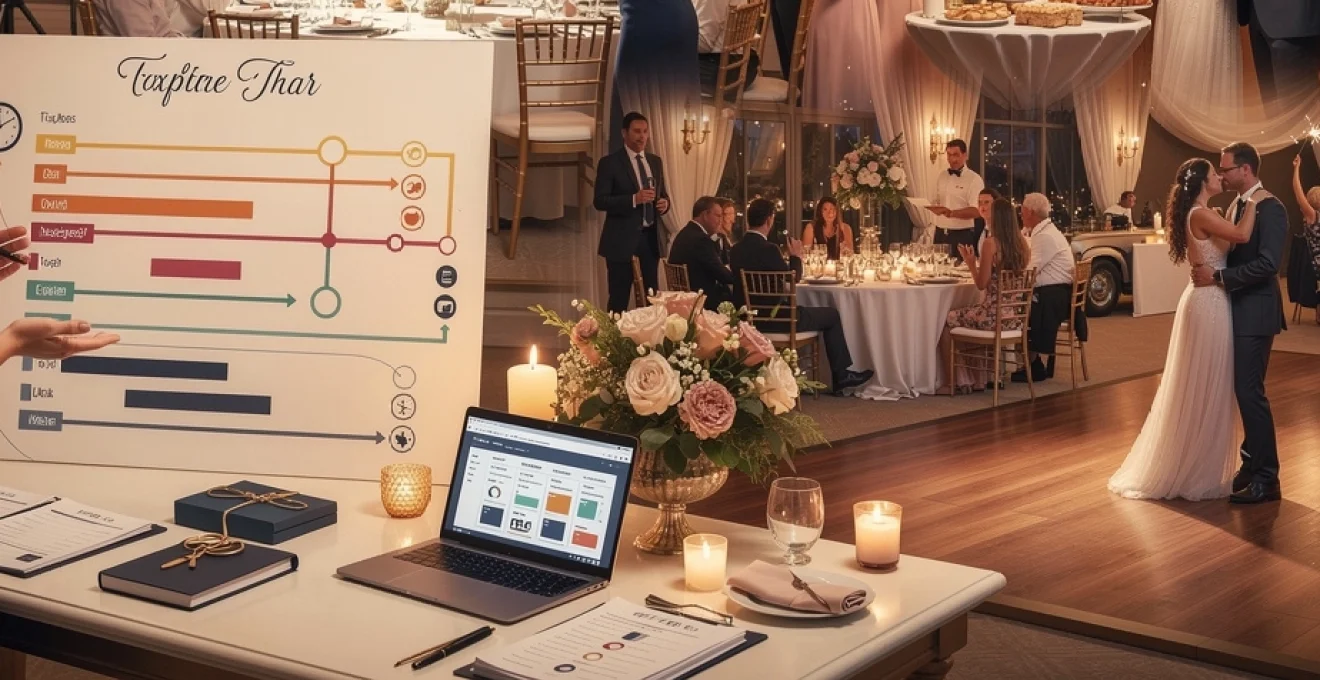
Your wedding reception represents one of the most significant celebrations you’ll orchestrate in your lifetime, yet its success hinges almost entirely on meticulous timeline planning. A well-structured reception timeline transforms what could be a chaotic, stressful event into a seamless celebration where you actually enjoy every moment alongside your guests. According to recent wedding industry surveys, approximately 73% of couples identify timeline mismanagement as their primary regret when reflecting on their wedding day. The difference between a reception that flows effortlessly and one that feels rushed or disjointed often comes down to how thoroughly you’ve planned each segment, allocated appropriate durations, and communicated expectations to your vendors and guests. When you invest time in crafting a comprehensive reception timeline, you’re essentially building the framework that allows spontaneity, emotion, and celebration to flourish within a structured environment.
Pre-reception timeline planning: establishing your reception framework
Before you can orchestrate individual reception elements, you must establish a solid foundational framework that accounts for your venue’s constraints, vendor requirements, and guest experience. This preliminary planning phase determines whether your reception timeline will be realistic or aspirational, achievable or frustratingly ambitious. Start by confirming your venue’s absolute hard stop time, as this non-negotiable endpoint works backwards to inform every other timing decision you’ll make. Most venues impose strict conclusion times between 11:00 PM and midnight, with premium charges for extensions that can exceed £500 per hour in many locations.
Your ceremony conclusion time serves as the natural starting point for reception planning, creating the first domino in your timeline sequence. If your ceremony ends at 2:30 PM, for instance, and your venue requires vacation by 11:00 PM, you’re working within an eight-and-a-half-hour window. However, this doesn’t translate to eight-and-a-half hours of guest-facing celebration time. Subtract vendor setup periods, room turnovers, and cleanup allocations to determine your actual reception duration. Industry professionals recommend planning for approximately five to six hours of active reception time, which aligns with guest attention spans and energy levels whilst preventing the event from feeling either rushed or exhaustingly prolonged.
Calculating accurate duration allocations for each reception segment
Each reception component requires specific time allocations based on guest count, service style, and entertainment format. Cocktail hours typically consume 60 to 90 minutes, though this duration should extend if you’re conducting family photographs during this period. Wedding breakfast service spans anywhere from 90 minutes for a plated three-course meal with 80 guests to nearly three hours for buffet-style service with 150 attendees. Research from leading catering companies indicates that each additional 50 guests adds approximately 20-25 minutes to overall meal service duration, a calculation you must factor into your planning.
Dancing and evening entertainment generally occupies two-and-a-half to three hours, allowing sufficient time for your first dance, parent dances, general dancing, and any additional entertainment segments you’ve planned. When calculating these durations, always err on the side of generosity rather than optimism. Events invariably take longer than anticipated, particularly when human behaviour and emotion enter the equation. Guests take longer to transition between spaces, speeches extend beyond allocated timeframes, and unexpected moments create beautiful delays that you’ll want to accommodate rather than rush through.
Coordinating vendor arrival times and technical setup requirements
Your vendors require staggered arrival times that align with setup complexity and their role in your reception timeline. Photographers typically arrive 30 to 45 minutes before cocktail hour commencement to capture venue details, décor arrangements, and early guest arrivals. Meanwhile, your DJ or band often needs 60 to 90 minutes for equipment setup, sound checking, and lighting configuration, particularly in venues without dedicated technical infrastructure. Florists and decorators may require access several hours before guest arrival, whilst caterers need kitchen access at least two to three hours prior to service commencement.
Create a vendor arrival schedule that prevents congestion whilst ensuring everyone has adequate preparation time. If your cocktail hour begins at 3:00 PM, schedule your DJ arrival for 1:30 PM, photographer for 2:15 PM, and confirm that caterers have kitchen access from noon onwards. This staggered approach prevents the chaotic “vendor traffic jam” that
prevents people tripping over cables or rushing critical sound checks five minutes before your grand entrance.
Share this master vendor schedule with your planner, venue coordinator and all suppliers at least two weeks before the wedding reception. Ask each vendor to confirm in writing that the timings work for them, and adjust if multiple suppliers require the same access point or power source at the same time. Treat this schedule like an orchestra score: every vendor knows exactly when to “come in”, which keeps your wedding reception timeline running smoothly from the very first song to the final farewell.
Building buffer time into your master timeline document
Even the most carefully prepared wedding reception timeline will encounter minor delays, which is why buffer time is non-negotiable. Build 5–10 minute cushions between key transitions—such as moving guests from cocktail hour to the wedding breakfast, or from dessert to the dance floor—so that small overruns do not cascade into major schedule disruptions. Think of these buffers as shock absorbers in your reception framework, absorbing unexpected moments without derailing the flow.
Industry planners typically recommend adding at least 15 minutes of unprogrammed time per hour of reception activities. For example, if speeches are scheduled for 30 minutes between courses, block out 40–45 minutes in your master document. You can always “gift back” time to your guests in the form of an extra dance set or a relaxed mingling period if everything runs on schedule. Without this flexibility, you may find yourself cutting beloved traditions—such as a bouquet toss or sunset portraits—because the evening has run away from you.
Document these buffer periods explicitly rather than assuming they will magically appear. Label them as “flex time” in your schedule so your DJ, caterer and photographer understand these are not blank spaces to be filled with extra activities or spontaneous speeches. When everyone recognises these buffers as part of the intentional design of your wedding reception timeline, they will help protect them rather than unintentionally erode them.
Synchronising ceremony conclusion with reception commencement
The handover between ceremony and reception is one of the most delicate timing points of your entire wedding day. If the gap is too long, guests become restless and hungry; if it is too short, you may feel rushed through congratulations and family photographs. As a rule of thumb, aim for your cocktail hour or drinks reception to begin within 15–30 minutes of your ceremony conclusion, allowing just enough time for a confetti toss, quick hugs and a smooth transition to the next space.
When ceremony and reception are held at separate locations, build realistic travel time into your wedding reception schedule and then add at least 15 minutes as a contingency. Traffic, parking and guests unfamiliar with the area can all cause delays, and you do not want half your guest list arriving late to the first round of canapés. Communicate key timings on your invitations and again on the day—through signage or your master of ceremonies—so guests know exactly when cocktails, dinner and dancing will begin.
Work closely with your photographer and celebrant to align expectations about post-ceremony photos. If you are planning an extended portrait session off-site, consider offering an extended cocktail hour for your guests, or scheduling some couple portraits later in the evening during sunset. The aim is to keep your guests feeling hosted and cared for while you capture those once-in-a-lifetime images.
Cocktail hour orchestration and guest transition management
Your cocktail hour (or drinks reception) is the bridge between the formality of the ceremony and the celebration of the evening. A smooth, well-timed cocktail hour sets the tone for the rest of your wedding reception timeline, easing guests into the party while you complete essential photos and take a breath. Rather than thinking of it as “dead time”, treat this segment as a curated experience with intentional pacing and clear transitions.
The ideal duration for a cocktail hour is 60–90 minutes, depending on how many formal photos you need and whether your venues are on one site. Less than 60 minutes can feel rushed, especially for older guests; more than 90 minutes risks guests becoming hungry or overindulging before dinner. Ask yourself: what do we want our guests to be doing, hearing and tasting during this period? Designing your drinks reception with those sensory experiences in mind makes the timing decisions far easier.
Designating specific timing for receiving line or informal greetings
One of the biggest timeline challenges is finding time to greet every guest personally without sacrificing your own enjoyment. A traditional receiving line at the entrance to the reception can take 20–40 minutes for 100–150 guests, so it needs to be placed carefully within your overall wedding reception schedule. If you choose this format, position it at the transition into the wedding breakfast so guests can greet you as they move to their seats, keeping the line flowing naturally.
Many modern couples prefer informal greetings during cocktail hour instead. In this scenario, plan a dedicated 20–30 minute window where you and your new spouse move deliberately through the crowd, rather than being pulled in every direction all evening. Ask your planner or an usher to gently steer you so you do not spend the entire hour with one group of friends. This approach feels more relaxed while still ensuring most guests receive a personal hello.
Whichever format you choose, account for greeting time as a specific element in your wedding reception timeline rather than assuming it will “just happen”. Otherwise, you risk eating into your portrait session or delaying dinner service because you are still making your way through a crowd of enthusiastic relatives. By assigning this task a clear time slot, you protect both your guest experience and the rest of your carefully planned schedule.
Coordinating photography sessions during guest mingling period
The cocktail hour is prime time for formal family portraits, bridal party photos and some of your couple portraits, but these sessions must be tightly coordinated to avoid overrunning. Share a detailed photo list with your photographer in advance, prioritising the groupings that matter most and estimating how long each will take. On average, allow 2–3 minutes per small group photo and 5–7 minutes for large family groupings, then build that total into your drinks reception timeline.
To keep things moving, designate one or two members of the bridal party as “photo wranglers”. Armed with the group list, they can locate relatives in the bar area and bring them to the photography spot at the right moment, rather than the photographer having to search for missing uncles while everyone waits. This simple step can save 15–20 minutes, which is valuable time you can spend mingling or enjoying a quiet moment together.
Consider splitting your portrait time into two shorter sessions: core family and wedding party photos during cocktail hour, followed by a brief golden-hour session just before sunset. This structure lightens the load on the drinks reception, gives you a chance to slip away from the crowd later, and often results in more romantic, flattering images. Crucially, it also ensures your guests are not left waiting too long before they see you in the reception space.
Scheduling canapé service rotations and bar service commencement
Food and drink timings during cocktail hour have a direct impact on guest mood and energy levels throughout the evening. Ideally, bar service should begin within five minutes of guests arriving at the reception area, with servers circulating with welcome drinks for those who prefer not to queue. Canapés or light snacks should start circulating within 10–15 minutes, especially if there is more than a two-hour gap between ceremony and wedding breakfast.
Work with your caterer to plan canapé rotations in waves rather than as a one-time burst. For a 90-minute drinks reception, you might schedule three waves of canapés at 10, 35 and 60 minutes in, ensuring that latecomers are still offered something to eat and that guests do not peak too early on alcohol alone. Clearly noting these service points in your wedding reception timeline helps your catering team prepare hot items at the right moments and maintain consistent quality.
If you are incorporating a signature cocktail, decide whether it will be available only during the cocktail hour or throughout the evening. Limited-time offerings create a sense of occasion but require tight timing so guests actually have the opportunity to enjoy them. As with every other aspect of your reception schedule, clear communication between you, your planner and your caterer is the difference between a polished, professional experience and a disjointed one.
Grand entrance choreography and initial reception protocols
Your grand entrance is the moment your wedding reception officially “starts” in the eyes of your guests, so its timing and choreography deserve careful thought. Typically, guests are invited to take their seats 15–30 minutes before the entrance, with background music signalling the transition from cocktail hour to dinner. Once most guests are seated and settled, your toastmaster, MC or DJ can build anticipation with a brief announcement before introducing the wedding party and, finally, the newlyweds.
When should this happen in your overall wedding reception timeline? For a 2:30 PM ceremony with a 3:00–4:00 PM cocktail hour, a 4:15–4:30 PM grand entrance works well, flowing naturally into the wedding breakfast. Some couples choose to incorporate their first dance immediately after entering, capitalising on the excitement in the room, while others prefer to save that moment for later in the evening once guests have eaten. Either option can work; the key is to coordinate with your DJ or band so lighting, music cues and announcements align perfectly.
During this initial reception segment, you may also wish to include a brief welcome speech or blessing before the first course is served. Allow 5–10 minutes for these remarks and make sure speakers understand they are offering a warm welcome, not delivering the full formal speeches yet. This small, structured touch helps guests feel anchored in the evening and signals that the rest of the wedding reception timeline is unfolding according to plan.
Structuring your wedding breakfast service timeline
The wedding breakfast (or main meal) is usually the longest continuous segment of your reception and has the greatest potential to throw your wedding reception timeline off course if not managed carefully. Service speed depends on guest numbers, menu complexity and staffing levels, so it is essential to consult closely with your caterer or venue. In general, allow 90–120 minutes for a three-course plated meal with up to 120 guests, and up to 150 minutes for larger guest counts or buffet service.
When planning your wedding breakfast schedule, think of it as a rhythm of “serve–enjoy–speak”. Each course creates a natural pause where speeches, toasts or entertainment can take place without guests feeling rushed or left waiting hungrily. By aligning your speech timings with the meal flow, you reduce downtime and keep the energy in the room warm and engaged.
Timing first course service relative to guest seating completion
One of the simplest ways to keep your wedding reception timeline running smoothly is to separate “doors open” from “first course served”. If guests are invited to find their seats at 4:15 PM, for example, schedule first course service for 4:45 PM, not 4:30 PM. That 30-minute window accounts for guests locating escort cards, settling at their tables and any brief welcome announcements, without waitstaff hovering awkwardly with plates.
Ask your MC or DJ to make a clear announcement when it is time for guests to move to the dining area, and consider a gentle reminder five minutes before you plan to be seated. Much like boarding a plane, guests move faster when they know the doors are metaphorically closing. Once you and your partner are seated, give the catering team a clear signal to begin service so that every table receives their course within a similar window.
If you are hosting a buffet or family-style service, build extra time into your timeline for guests to move through the food stations. A good rule is to allow 10–15 minutes per 50 guests to visit the buffet, especially if there are multiple stations or dietary options. Staggering table release—rather than allowing everyone to rush the buffet at once—keeps the line moving and avoids bottlenecks.
Allocating intervals between courses for speech delivery
Deciding when to schedule speeches is both a logistical and emotional choice. From a timing perspective, many planners now recommend distributing speeches between courses rather than clustering them all at the end of the meal. For example, you might have a brief welcome and toast before the starter, the maid of honour and best man between main course and dessert, and a final thank-you toast just before coffee.
This structure offers two key advantages for your wedding reception timeline. First, it prevents a single, 45-minute block of speeches that leaves guests restless and delays the start of dancing. Second, it gives your speakers a clear slot to aim for, reducing the temptation to run over their allocated time. As a guideline, aim for 5–7 minutes per speech, with a total speech time of 25–35 minutes across the entire meal.
Of course, if your culture or personal preference favours all speeches in one go, you can still achieve a smooth flow by anchoring them to a specific point—such as after the main course plates have been cleared but before dessert is served. In this case, ensure there are drinks on the table and that guests have had a chance to stretch briefly before the speeches begin.
Coordinating table service staff rotations with toastmaster cues
The most seamless receptions feel as though food, speeches and music are all moving in perfect harmony. Behind the scenes, this harmony is achieved through tight coordination between your catering team and your toastmaster or MC. Share a copy of your detailed wedding reception timeline with both parties and agree on clear hand signals or verbal cues for when it is time to pause or resume service.
For example, you might agree that no plates will be cleared once a speech has started, to avoid distracting clattering and movement. Similarly, staff should not serve a new course while a toast is in progress, when guests will want their hands free to raise glasses. Your toastmaster can give a discreet nod to the head waiter when a speech is wrapping up so the kitchen knows when to send the next course.
Think of this coordination like a relay race: the baton (guest attention) is passed smoothly from kitchen to speaker to band and back again. When everyone knows exactly when their “leg” begins and ends, your wedding reception timeline remains on track and your guests experience an uninterrupted, polished flow of service.
Positioning cake cutting ceremony within meal service flow
The cake cutting is both a photo opportunity and a subtle signal about where guests are in the evening timeline. Traditionally positioned between the end of the meal and the start of dancing, it can also be integrated during dessert or coffee service to avoid a hard stop in the festivities. Many modern couples opt to cut the cake just after speeches, while guests are still seated and the photographer is present, allowing the catering team to portion and plate it as part of the dessert course.
From a timing perspective, allow 10–15 minutes for the cake cutting moment, photos and a brief announcement. If you prefer not to halt the party later, consider a slightly more low-key cake cutting during the latter part of the wedding breakfast, with your DJ announcing it as a photo moment rather than a formal ceremony. This approach keeps your wedding reception timeline compact and frees up more of the evening for dancing.
Alternatively, if your cake is a major design feature and you want it to anchor the transition into evening entertainment, schedule the cutting immediately before your first dance. Guests can gather around the dance floor, enjoy the spectacle, then remain in place as the lights dim and your DJ or band moves straight into your opening song. This creates a natural, emotionally satisfying arc without lengthy pauses.
Evening entertainment transitions and dance floor activation
The shift from dinner to dancing is where your wedding reception truly comes alive, and the timing of this transition can make or break the atmosphere. Aim to open the dance floor no later than 60 minutes after the end of the wedding breakfast; waiting longer risks guests drifting to the bar, heading outside or even leaving early. Your goal is to carry the warmth and emotion of the speeches straight into an energetic, celebratory dance set.
To achieve this, build a clear sequence into your wedding reception timeline: final speech or toast, cake cutting (if planned for this stage), a short room reset if required, then your first dance. Coordinate closely with your DJ or band so they are ready to start the music the moment your venue signals that the space is safe and set for dancing. Avoid long gaps with house lights fully up, which can cause the energy in the room to drop.
Scheduling first dance timing for maximum guest engagement
When should you schedule your first dance for maximum impact? Most planners recommend placing it within 15–20 minutes of opening the evening reception, once evening guests have arrived but before too many people have drifted outside. For a wedding where dinner ends around 7:00 PM, a 7:45–8:00 PM first dance works well, giving guests time for a comfort break and a fresh drink while still feeling very much “in” the party.
Consider your photographer’s coverage when fixing this time. If their package ends at 9:00 PM, you will want your first dance no later than 8:15 PM to allow time for dance floor photos afterwards. Additionally, brief your DJ or band to invite other couples to join you on the floor halfway through your song or immediately after it ends, rather than letting the moment fizzle out. The aim is to use your first dance as a catalyst that fills the dance floor, not as an isolated performance that leaves everyone unsure what to do next.
For couples nervous about dancing alone, a short first dance—90 seconds to two minutes—followed by a high-energy crowd-pleaser is often the perfect compromise. This structure respects the emotional significance of the moment while keeping the momentum of your wedding reception timeline firmly pointed towards celebration.
Programming DJ or band set progressions throughout evening
Effective evening entertainment is about pacing as much as playlist. Work with your DJ or band to design set progressions that mirror the natural energy curve of your guests: an upbeat opener to fill the floor, a slightly more mixed middle section, and a big, memorable finale in the last 30–45 minutes. Sharing your detailed wedding reception timeline helps your entertainment team decide when to schedule slower songs, when to introduce any special dances, and when to build towards those sing-along anthems that everyone will remember.
As a rough guide, a four-hour evening reception might be structured into three main sets of 60–70 minutes each, with 10–15 minute mini-breaks where background music plays while guests refresh their drinks. Use those breaks strategically for low-disruption activities such as opening the evening buffet, organising a sparkler line-up or inviting guests to sign a guest book. This way, every minute supports the flow of your wedding reception rather than fragmenting it.
Remember that your DJ or band is reading the room in real time, so treat your schedule as a framework rather than a rigid script. If the dance floor is packed and the energy is high, it may make sense to delay a planned bouquet toss or group photo by 10 minutes rather than interrupting the momentum. Leave some flexibility around non-essential elements so the entertainment can breathe naturally.
Coordinating evening guest arrival with food station openings
If you are inviting additional evening guests, their arrival is another key timing point to weave into your wedding reception timeline. Aim for them to arrive 30–60 minutes before your first dance so they can greet you, grab a drink and feel part of the build-up rather than slipping in halfway through the main event. Ask your DJ or MC to welcome them with a brief announcement, making them feel included without disrupting the flow.
Evening food—whether a grazing table, street-food truck or traditional buffet—should open once guests have danced for a while and their energy needs a top-up. For a reception beginning at 7:30 PM, a 9:30–10:00 PM food service works well, helping guests recharge for the final dance sets and offsetting alcohol intake. Coordinate service times with your entertainment schedule so that opening the food stations coincides with a slightly more relaxed musical set, encouraging a natural rotation between dance floor, bar and buffet.
Clear communication is vital here too. Signage, brief announcements and even a small “evening schedule” sign can help guests understand when food will be served, reducing queues and constant questions. When guests know what to expect, they relax into the experience—and your carefully planned wedding reception timeline feels effortless.
Final hour coordination and reception conclusion protocols
The final hour of your wedding reception is your chance to close the evening with intention rather than simply letting it fade out. Many couples underestimate how quickly this last segment passes; between conversations, final photos and last rounds at the bar, it is easy to lose track of time. Building a clear structure for this period into your wedding reception timeline ensures you enjoy those last precious moments instead of rushing through logistical details.
Think about the emotional journey you want to create: a gradual build towards a climactic last dance, followed by a joyful, orderly farewell. Work backwards from your venue’s strict end time—often 11:00 PM or midnight—to determine when the last song should play, when the bar should call last orders and when guests should begin moving towards exits or transport. Sharing this structure with your venue and DJ means everyone is working towards the same, smooth conclusion.
Timing last dance announcements and venue clearance notifications
The last dance is more than just another song; it is the moment that signals to your guests that the formal part of the celebration is drawing to a close. To avoid a jarring cut-off, ask your DJ to announce that the final 15–20 minutes of music are beginning, perhaps inviting guests to request a favourite track during this mini “finale” set. Then, 5–10 minutes before your hard stop time, they can announce the last dance, encouraging everyone to join you on the floor.
From a practical standpoint, schedule your last dance at least 10 minutes before the venue’s mandated finish time. If the venue requires guests to be out by 11:00 PM, plan your last song for 10:45–10:50 PM, giving enough time for applause, quick goodbyes and guests beginning to filter out. Meanwhile, your venue team can start subtle closing tasks—such as turning up house lights slightly or closing secondary bars—so the transition feels natural rather than abrupt.
Coordinate bar last orders with this timing as well. A last-call announcement 20–30 minutes before the end—ideally between penultimate and final music sets—ensures guests are not queuing at the bar during your final dance. When these cues are aligned, your wedding reception timeline concludes on a high note, both emotionally and logistically.
Orchestrating sparkler send-off or grand exit sequences
If you are planning a sparkler send-off, confetti tunnel or classic car departure, these elements must be carefully slotted into your final-hour schedule. Allow at least 15–20 minutes to gather guests, distribute sparklers or props, brief everyone on safety and arrange them into position. It is often most efficient to schedule this 20–30 minutes before the official end time, using it as a visual climax before guests begin to disperse.
To avoid chaos, assign two or three responsible members of the wedding party to manage the logistics under the guidance of your planner or photographer. They can help shepherd guests outside, organise them into two lines and ensure sparklers are lit in sequence rather than all at once. Think of this like directing a mini film scene: the smoother the coordination, the more magical the results in your photos and memories.
If you prefer to keep the dance floor full until the very last minute, consider staging a “mock exit” earlier in the evening when your photographer is still present. You can then quietly slip back into the party or retire to a private room while guests continue celebrating. Either way, building this moment into your wedding reception timeline ensures it feels cohesive rather than tacked on.
Coordinating transport departures and venue handover procedures
The very last layer of your wedding reception timeline involves the unglamorous but essential tasks of transport and venue handover. Start by confirming your coach, taxi or shuttle pick-up times based on your venue’s closure time, allowing a 10–15 minute window for guests to gather their belongings and move to the pick-up point. Share these times clearly with guests in advance—on your wedding website, invitations or a small schedule sign at the reception—so no one is surprised when the lights come up.
Behind the scenes, clarify with your venue who is responsible for collecting décor items, gifts and personal belongings at the end of the night. Many venues require all items to be removed within 30–60 minutes of the reception ending, while others allow collection the following morning. Build this into your master schedule and assign a trusted friend or family member to oversee it if you do not have a planner.
Finally, ensure your key vendors know exactly when they need to be out of the space and where to leave hired items such as cake stands, linens or lighting equipment. When transport timings, vendor load-out and venue handover are all aligned within your wedding reception timeline, you can leave your celebration hand-in-hand, confident that every detail—onstage and backstage—has been thoughtfully managed.