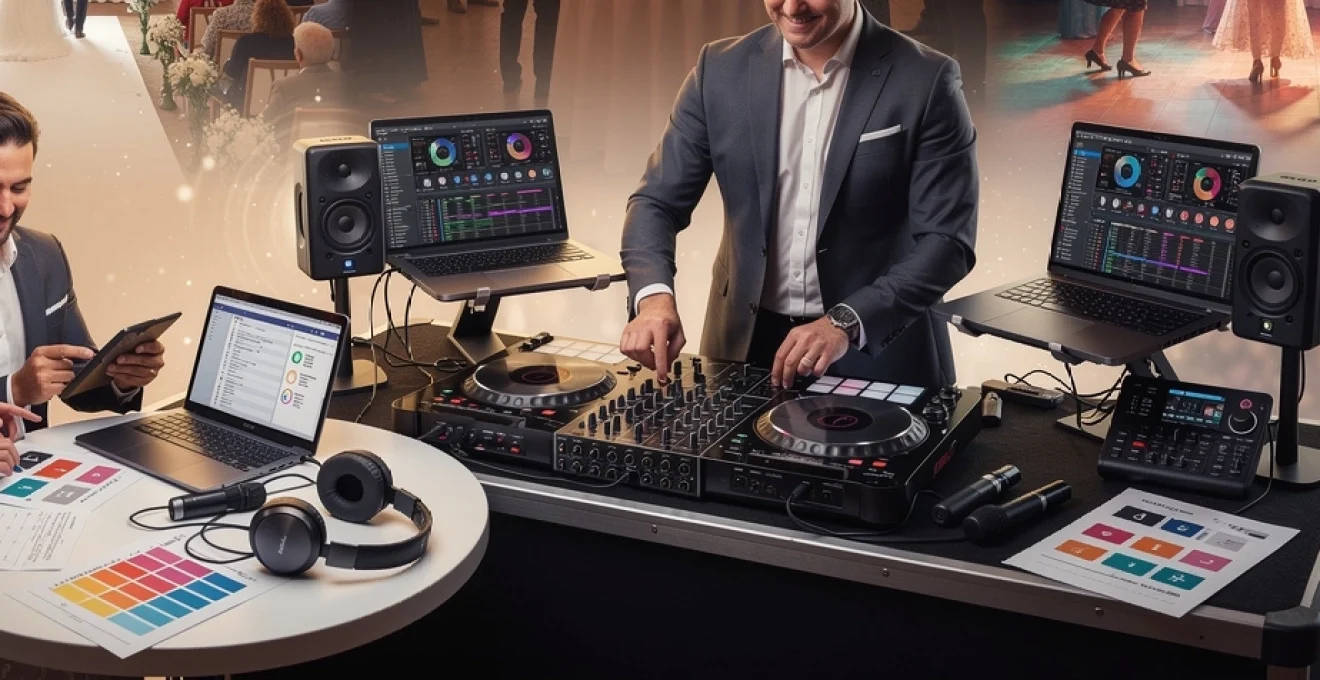
Your wedding day soundtrack serves as the invisible thread weaving through every precious moment, transforming ordinary celebrations into unforgettable experiences. Creating the perfect playlist requires more than simply compiling your favourite songs—it demands strategic planning, demographic awareness, and technical precision. Professional wedding DJs understand that music sets the emotional tone for each phase of your celebration, from the intimate ceremony processional to the high-energy reception finale.
The art of wedding playlist curation extends far beyond personal preferences, encompassing venue acoustics, guest demographics, and seamless flow management. Modern couples face the challenge of balancing their musical identity with the diverse tastes of multi-generational audiences, while navigating technical requirements and licensing considerations that ensure flawless execution.
Pre-wedding musical planning and timeline coordination
Successful wedding playlist creation begins months before your special day, requiring careful coordination between your musical vision and logistical realities. Professional wedding planners recommend starting your musical planning process at least six months in advance, allowing sufficient time for detailed collaboration with your chosen DJ or band. This timeline enables thorough venue assessment, guest demographic analysis, and comprehensive playlist development that addresses every moment of your celebration.
The foundation of exceptional wedding music lies in creating a comprehensive timeline that maps specific songs to ceremonial moments. Your timeline should include precise timing for processional sequences, unity ceremonies, cocktail hour transitions, and reception phases. This detailed approach ensures seamless flow between different celebration segments while maintaining the emotional arc you envision for your day.
Professional DJs emphasize that the most successful weddings feature playlists with deliberate pacing and strategic song placement, creating natural energy peaks and valleys throughout the celebration.
Guest demographics analysis for genre selection
Understanding your guest demographics forms the cornerstone of effective playlist curation, as successful wedding music must resonate across generational and cultural boundaries. Analyse your guest list to identify age ranges, cultural backgrounds, and musical preferences that will influence your song selection strategy. This analysis typically reveals the need for multi-generational programming that spans decades of popular music while respecting diverse cultural traditions.
Consider creating a guest demographic breakdown that includes percentages of attendees in different age brackets—teenagers, twenty-somethings, middle-aged guests, and senior family members. Each demographic brings distinct musical memories and dance floor preferences that skilled DJs can leverage to maintain consistent engagement throughout your reception.
Venue acoustics assessment and sound system requirements
Venue acoustics significantly impact how your carefully curated playlist translates into actual guest experience, making professional sound system assessment crucial for optimal results. Different venue types—from intimate garden settings to grand ballrooms—require specific audio configurations and song selection adjustments. Outdoor venues may struggle with bass-heavy tracks, while indoor spaces with high ceilings might need volume adjustments for acoustic balance.
Professional sound engineers recommend conducting venue walkthroughs to identify potential acoustic challenges such as echo points, dead zones, or noise restrictions that could affect your playlist delivery. This assessment influences both equipment requirements and song selection, ensuring your chosen tracks perform optimally in your specific environment.
Spotify premium and apple music playlist management tools
Modern streaming platforms offer sophisticated playlist management tools that streamline the collaborative playlist creation process for engaged couples and their musical teams. Spotify Premium and Apple Music provide features like collaborative playlists, offline downloading, and crossfade settings that enhance professional playlist preparation. These platforms enable real-time collaboration between couples, family members, and professional DJs, facilitating comprehensive song collection and organization.
The collaborative playlist feature allows multiple users to contribute song suggestions while maintaining organized categorization by ceremony phase or energy level. Professional DJs often request access to these collaborative playlists weeks before the event, enabling them to preview tracks, identify potential technical issues, and prepare seamless transitions between songs.
ASCAP and PRS licensing requirements for public performance
Wedding venues and professional DJs must comply with music licensing requirements that govern public performance of copyrighted materials, making ASCAP and PRS licensing essential considerations for your playlist planning. These performing rights organizations collect royalties on behalf of songwriters and publishers when their music is played publicly, including wedding celebrations. Understanding licensing requirements protects you from potential legal complications while ensuring fair compensation for musical artists.
<p
While couples are rarely responsible for securing these licenses directly, it is wise to confirm that your venue and DJ hold current coverage with organizations such as ASCAP, BMI, SESAC, or PRS for Music in the UK. Clarifying this early in your planning timeline avoids last‑minute restrictions on your wedding playlist and ensures that all parts of your day—from the ceremony prelude to the last dance—can be legally soundtracked. When in doubt, ask your venue for written confirmation of their music licensing and share this information with your DJ or band so everyone operates within compliant guidelines.
Ceremony musical architecture and processional sequencing
The wedding ceremony is where your musical planning becomes deeply personal, translating your relationship story into a curated soundscape. Rather than treating ceremony music as an afterthought, it helps to design a clear “musical architecture” that supports each ritual, cue, and transition. Think of the ceremony playlist as a score for a short film: each piece should guide emotions, manage timing, and subtly direct guest focus. When structured with intention, your ceremony soundtrack can move effortlessly from quiet anticipation to joyful celebration.
Professional wedding DJs and live musicians often divide the ceremony into distinct musical phases: prelude, processional, unity or symbolic rituals, vows and ring exchange, and recessional. Assigning specific tracks—or at least specific styles—to each phase makes communication with your DJ far more precise. It also helps you avoid awkward silences, abrupt song endings, or lyrics that clash with key moments. This deliberate ceremony planning lays the groundwork for a cohesive wedding playlist that feels curated rather than improvised.
Prelude ambient soundscaping techniques
The prelude usually begins 20–30 minutes before the ceremony, as guests arrive, find their seats, and settle in. Your prelude music should act as an atmospheric “welcome,” subtly setting the tone without overpowering conversation. Many couples opt for instrumental versions of popular songs, light acoustic covers, or classical pieces to create a gentle, cohesive sound bed. Think of this as the musical equivalent of soft lighting—it should make people feel comfortable and emotionally primed, but never distracted.
To create an effective prelude soundscape, choose a narrow range of tempos and complementary genres so the mood feels consistent from one track to the next. You might, for example, programme a sequence of piano covers, then build towards slightly more recognizable melodies as the ceremony start time approaches. Ask your DJ to use smooth crossfades and controlled volume levels so arrivals, last‑minute seating, and vendor coordination all happen against a calm, polished soundtrack. Well‑planned prelude music can also help mask background noise from nearby roads, kitchens, or setup teams, keeping the focus on your guests’ experience.
Bridal party processional tempo synchronisation
The processional is one of the most photographed and emotionally charged parts of the day, making tempo and structure critical. Rather than selecting songs purely on lyrics or popularity, consider how the rhythm will support comfortable walking speed and confident posture. Most wedding planners recommend processional tracks in the 60–80 BPM range, which align naturally with an unhurried walking pace. If the song is too fast or too slow, bridal party members may feel rushed or awkward, which can show in photos and video.
For larger bridal parties, many couples choose one song for the wedding party and a separate piece for the bride or partner’s grand entrance. Your DJ can mark cue points—specific time stamps—so each group begins walking on a meaningful musical phrase, such as the start of a chorus or a key instrumental motif. Providing a rough headcount and aisle length allows your DJ to estimate how long each segment should last and to plan discreet fade‑outs if a song runs longer than needed. This level of tempo synchronization prevents jarring stops and ensures that the processional feels cinematic rather than improvised.
Unity ceremony and ring exchange musical bridges
Unity rituals—such as candle lighting, sand ceremonies, or handfasting—benefit from subtle musical “bridges” that sustain emotion while you focus on the symbolism. These segments are typically brief, lasting one to three minutes, so shorter instrumental pieces or loop‑friendly tracks work best. Lyrics can sometimes compete with spoken readings or officiant commentary, so many couples opt for instrumental film scores, soft piano, or acoustic guitar. The goal is to support the moment without stealing attention from the ritual itself.
For vows and ring exchanges, consider whether you want complete silence, soft underscoring, or music only during pauses. Silence can be powerful, especially in intimate ceremonies, but outdoor venues or very large spaces may benefit from a low‑level instrumental bed to keep the atmosphere cohesive. Communicate clearly with your officiant and DJ regarding cues: when should music fade down, cut out, or swell? By treating these unity moments as intentional musical bridges rather than “dead space,” you maintain narrative flow and keep guests emotionally engaged.
Recessional crescendo and guest transition management
The recessional marks the emotional release of the ceremony, so this is the perfect place for an upbeat, celebratory track. Many couples choose songs with clear, joyful openings so the first notes hit as they turn to walk back down the aisle. A BPM in the 90–120 range usually works well here, allowing for an energetic but still graceful exit. Unlike the processional, where restraint can be useful, the recessional is an opportunity to showcase your personality and kick‑start the party atmosphere.
After your own exit, your DJ or musicians should keep the energy consistent while guests follow you out, mingle, or transition to a receiving line or cocktail area. This is where “transition management” becomes essential: a short sequence of two to four celebratory tracks can guide guests toward the next location without the need for constant announcements. If your cocktail hour is in a different space, work with your DJ to coordinate volume levels so the music subtly leads people in the right direction. When done well, the recessional and immediate post‑ceremony playlist bridge the emotional gap between solemn vows and social celebration.
Cocktail hour atmospheric programming and flow dynamics
Cocktail hour music often serves as the connective tissue between ceremony and reception, giving guests time to decompress, socialize, and reset emotionally. The best cocktail hour playlists maintain a sense of celebration while allowing for conversation at normal volumes. Think of this phase as a “musical warm‑up”: energy should be higher than the ceremony but not yet at full dance‑floor intensity. Many professional DJs curate eclectic mixes of Motown, soul, indie, jazz, or acoustic pop to create a sophisticated yet approachable vibe.
To design the perfect wedding playlist for cocktail hour, start by clarifying the atmosphere you want: chic lounge, garden party, retro soul bar, or laid‑back beach gathering. A consistent aesthetic, even across different genres, helps guests feel the event has a curated identity rather than a random shuffle. You can also use cocktail hour to feature deeper cuts and personal favourites that might not work on a crowded dance floor. Communicate any “must‑play” artists or eras to your DJ so they can weave them in while still maintaining smooth flow dynamics.
Transition points during cocktail hour are just as important as song choices. If photos or formal group shots run long, your DJ may need to extend this segment without making it feel repetitive. Building a playlist that gradually increases in tempo and familiarity over 45–90 minutes gives them flexibility to adapt in real time. As dinner call‑time approaches, more recognizable tracks or sing‑along classics can gently nudge guests to finish drinks and move toward their seats. This careful programming ensures that by the time you make your grand entrance, the room already feels warm, connected, and ready to celebrate.
Reception dance floor curation and energy management strategies
The reception is where your wedding playlist must perform at its highest level, balancing personal taste, crowd expectations, and time constraints. A well‑structured reception set is a bit like a DJ‑driven story arc: it should build, peak, and resolve without exhausting guests too early. Rather than simply dumping all your favourite high‑energy songs into one long list, think in terms of waves of intensity and genre clusters that appeal to different subsets of your guest demographic. This approach keeps the dance floor rotating organically while maintaining overall momentum.
Many professional DJs divide the reception into key phases: grand entrance, dinner and toasts, first dance and special dances, open dancing, late‑night “bangers,” and last dance. For each phase, you can specify a few anchor songs or styles while leaving room for your DJ to read the room and adjust in real time. Remember the “less is more” principle: providing 20–25 songs per hour of dancing offers guidance without boxing your DJ into a rigid sequence. Clear communication about songs you love, songs you dislike, and non‑negotiable cultural or family favourites gives your DJ a strong framework to work within.
First dance song selection and audio engineering considerations
Your first dance is one of the most memorable musical moments of the night, but practical considerations are just as important as emotional ones. When choosing your first dance song, consider length, tempo, and arrangement. Many couples find that three to three‑and‑a‑half minutes is ideal—long enough for photos and emotional impact, but not so long that you feel exposed. If your dream song runs five or six minutes, ask your DJ to create a custom edit that maintains the key verses and chorus while trimming extended intros or instrumental breaks.
From an audio engineering perspective, high‑quality source files (preferably lossless or high‑bit‑rate digital tracks) ensure that subtle details of your first dance song translate clearly over the sound system. Your DJ should perform a level check earlier in the day so the volume, EQ, and any reverb settings work with your venue’s acoustics. If you are choreographing your first dance, share the exact version, timecodes, and any planned dips or spins so your DJ can hit fades and cue points accurately. Treat this moment like a micro‑performance: the combination of song choice, technical clarity, and precise timing will make it feel cinematic rather than improvised.
Multi-generational dance floor programming from motown to contemporary pop
A successful reception playlist encourages guests from ages 8 to 80 to share the same dance floor at different points in the evening. One proven strategy is to start open dancing with multi‑generational crowd‑pleasers—classic Motown, disco, and early pop hits—before gradually layering in contemporary tracks. Songs from artists such as Stevie Wonder, Earth, Wind & Fire, or Whitney Houston often bridge generational gaps, as both parents and younger guests recognize and enjoy them. By programming these early, you signal that the dance floor is open to everyone, not just your peer group.
As the night progresses, your DJ can experiment with genre blocks—short runs of 3–5 songs from related styles such as 90s R&B, 2000s pop‑punk, or current chart‑toppers—depending on crowd reaction. Sharing guest demographics in advance helps your DJ estimate which decades and styles will resonate most. For example, a guest list dominated by late‑20s and early‑30s friends will likely respond well to 2000s nostalgia, while a more family‑heavy reception may call for country line dances or classic rock sing‑alongs. The art lies in weaving these pockets of nostalgia into a coherent flow, rather than jumping chaotically between eras.
Peak hour energy maintenance using BPM progression techniques
Once the dance floor is full, the challenge shifts from sparking energy to sustaining it. Professional DJs often rely on BPM progression—gradually increasing or modulating tempo across a series of songs—to keep energy levels high without causing fatigue. Think of it like guided interval training: brief surges of intensity followed by slightly lower‑tempo but still engaging tracks. This allows guests to recover between “anthem” moments while staying on the floor, rather than retreating to their seats.
In practical terms, this might mean starting a dance block around 95–105 BPM, slowly climbing to 120–128 BPM for peak tracks, and then easing back down before the next surge. Seamless beat‑matching, key matching, and well‑timed transitions prevent jarring shifts that could empty the floor. Giving your DJ freedom to adjust based on live feedback—cheers, singing along, or guests crowding the edge of the dance floor—results in a more organic, responsive experience. When BPM progression is used thoughtfully, the evening feels like one continuous, exhilarating mix rather than a disjointed playlist.
Last dance selection and venue closure protocols
The last dance offers a final opportunity to imprint an emotional memory on your guests, so it deserves as much attention as your first dance. You can choose to end on a high‑energy anthem that keeps everyone jumping until the lights come up, or a slow, romantic ballad that draws guests into a circle around you. Some couples even pair two final songs: one collective sing‑along followed by a private last dance while guests exit. Whichever route you choose, communicate it clearly to your DJ and venue so they can coordinate lighting, bar closure, and announcements.
Venue closure protocols also influence your last song strategy. Many venues have strict cut‑off times for amplified music, often with fines for overruns, so your DJ will need to time the final track and fade‑out precisely. Discuss whether you want the DJ to make a “last song” announcement in advance to encourage guests onto the floor. If you have an after‑party planned, your last dance can act as a musical bridge, hinting at the different vibe to come—perhaps transitioning from a classic love song into the first track of your late‑night playlist as guests move to the next location.
Technical audio setup and professional DJ collaboration framework
Even the most carefully curated wedding playlist will fall flat if the technical audio setup is inadequate or poorly coordinated. Early in the planning process, clarify who is responsible for providing speakers, microphones, mixers, and backup equipment. Many professional wedding DJs bring full sound reinforcement systems tailored to your guest count and venue layout, but they need accurate information about room size, outdoor vs. indoor placement, and power availability. Asking your DJ to conduct a site visit, or at least review detailed floor plans, helps prevent surprises on the wedding day.
A strong collaboration framework with your DJ should include a pre‑event consultation, a detailed music questionnaire, and a shared timeline document. During your consultation, outline key musical moments, must‑play and do‑not‑play lists, and any cultural or religious requirements. Providing a clear chain of communication—typically between the DJ, planner, and venue coordinator—ensures that announcements, special dances, and audio cues for speeches happen seamlessly. Consider scheduling a final run‑through one to two weeks before the wedding to confirm names, pronunciations, and order of events.
Think of your DJ as both a music specialist and a live event director—when you share information early and often, they can choreograph sound around every key moment.
Redundancy is another crucial element of professional audio planning. Inquire about your DJ’s backup strategies: do they carry secondary laptops, extra cables, spare microphones, and alternative power options? What happens if streaming services fail or the venue’s Wi‑Fi is unreliable? The most experienced professionals will arrive with offline copies of all critical tracks and contingency plans for unexpected issues. When you combine robust technical preparation with open communication, your wedding playlist is far more likely to sound exactly as you imagined.
Digital playlist distribution and real-time request management systems
In the era of music streaming and smartphones, digital tools can enhance both pre‑wedding planning and on‑the‑night engagement. Many couples now share their wedding playlist, or highlights from it, with guests via platforms like Spotify or Apple Music in the weeks leading up to the event. This not only builds anticipation but also helps align expectations about the general musical vibe. Post‑wedding, the same playlist becomes a digital keepsake that you and your guests can revisit on anniversaries or while traveling.
Real‑time request management has also evolved beyond scribbled notes on napkins. Some DJs use QR codes placed on tables or near the DJ booth that link to a simple form or request portal, allowing guests to submit song ideas without constantly approaching the decks. You can agree in advance on ground rules—for example, the DJ will prioritize requests that fit your approved genres and avoid anything on your do‑not‑play list. This system offers a balance between guest participation and curated control, ensuring that surprise requests do not derail your carefully considered energy flow.
When building your digital playlist ecosystem, consider privacy and licensing. Public playlists can be discovered and followed by anyone, which is ideal if you want to share your wedding soundtrack widely. Private or unlisted playlists may be better if some song choices are deeply personal or tied to specific memories. Either way, make sure your DJ has offline access to all critical tracks, rather than relying solely on streaming during the event. With thoughtful use of digital tools, you can create a cohesive experience that starts long before your wedding day and continues long after the last dance ends.