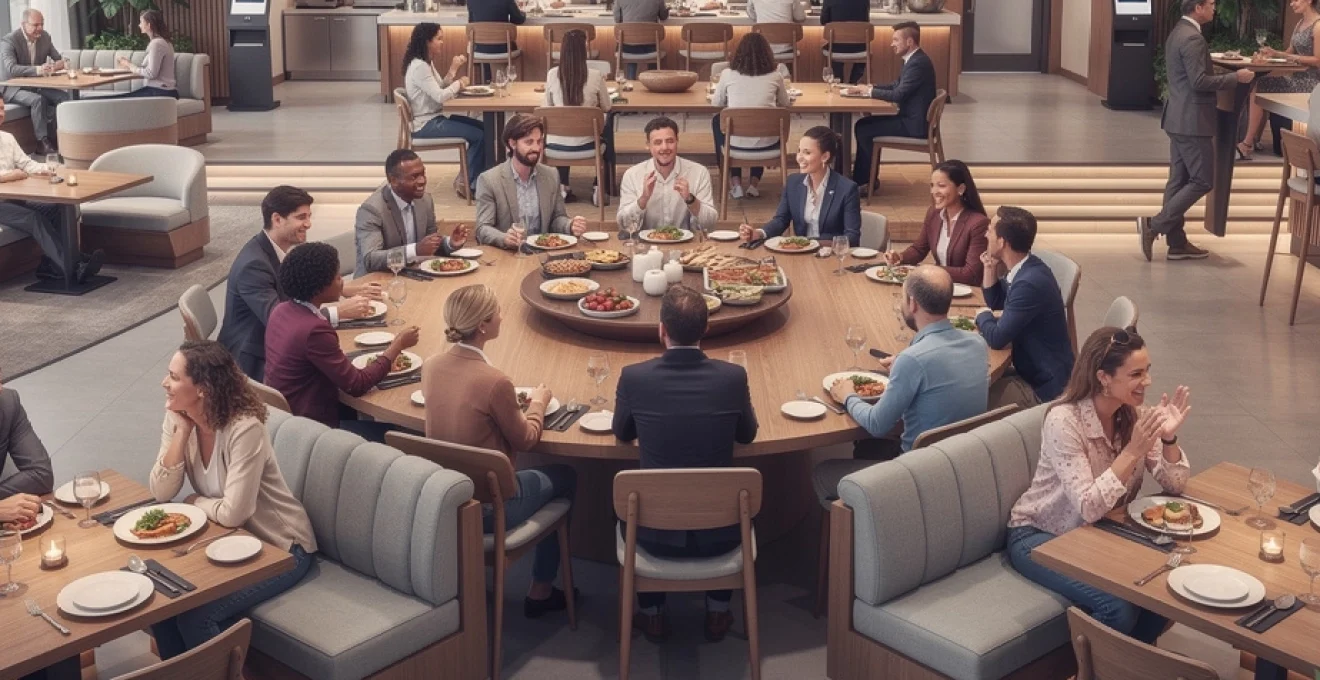
Creating an environment where guests naturally connect and engage requires more than simply arranging chairs around tables. The strategic design of seating plans has become a sophisticated discipline that combines psychological principles, architectural expertise, and hospitality industry best practices to foster meaningful human connections. Whether you’re planning a corporate event, wedding reception, or restaurant layout, understanding how spatial arrangements influence social dynamics can transform ordinary gatherings into memorable interactive experiences.
Research consistently demonstrates that physical proximity and seating configurations significantly impact communication patterns, with studies showing that strategic placement can increase interaction rates by up to 62.5%. The challenge lies not merely in fitting the maximum number of people into a space, but in creating arrangements that naturally encourage dialogue, collaboration, and relationship-building among participants.
Psychology-based seating arrangements for enhanced social dynamics
Understanding the psychological foundations of human interaction provides the blueprint for designing effective seating arrangements. The science behind spatial behaviour reveals that people’s comfort levels, communication patterns, and willingness to engage are deeply influenced by their physical positioning relative to others. This knowledge becomes particularly valuable when creating environments that must balance intimacy with accessibility.
Proxemics theory application in restaurant layout design
Proxemics theory forms the cornerstone of effective seating design, establishing that different distances create distinct interaction zones. Intimate distance ranges from direct contact to 18 inches, making it suitable only for close relationships or family-style dining arrangements. Personal distance, spanning 18 inches to 4 feet, creates the ideal zone for most social dining experiences, allowing comfortable conversation without intrusion.
Social distance, extending from 4 to 12 feet, works effectively for business meetings or larger group discussions where formality is required. Understanding these zones enables designers to create seating arrangements that naturally support the intended level of interaction. For example, placing chairs 2.5 to 3 feet apart at round tables optimises the personal distance zone for comfortable conversation flow.
Edward hall’s personal space zones in dining environments
Hall’s research into territorial behaviour reveals how different cultures and individuals require varying amounts of personal space to feel comfortable. In dining environments, this translates to specific spatial requirements that must be considered when designing seating plans. Cultural sensitivity becomes particularly important in diverse settings where guests may have different comfort levels with proximity.
The application of Hall’s zones suggests that successful seating arrangements must provide flexibility within each space category. Banquette seating, for instance, allows individuals to adjust their positioning slightly while maintaining the overall seating structure. This adaptability proves crucial in creating environments where all guests feel comfortable, regardless of their personal space preferences.
Social facilitation principles through strategic table positioning
Social facilitation theory demonstrates that people perform better and engage more actively when they feel appropriately observed and supported by their peers. Strategic table positioning leverages this principle by creating sight lines that encourage positive social pressure without creating anxiety. Visibility without surveillance becomes the key balance point in effective seating design.
Circular and U-shaped arrangements naturally support social facilitation by ensuring most participants can see each other without requiring dramatic head movements. This visibility encourages active participation while maintaining comfort levels. Research indicates that when people can make eye contact with at least 60% of other attendees without strain, engagement levels increase significantly.
Mehrabian’s communication model integration in seating configuration
Mehrabian’s research showing that 55% of communication is body language, 38% is tone of voice, and only 7% is actual words, has profound implications for seating design. Arrangements that optimise visual and auditory connections enable guests to receive the full spectrum of communication cues. This understanding drives the preference for arrangements that avoid having guests sit with their backs to each other or strain to maintain visual contact.
The integration of this communication model suggests that successful seating plans must prioritise clear sight lines and acoustic considerations. Multi-sensory accessibility becomes essential, ensuring that guests can fully engage with both verbal and non-verbal communication elements throughout their interaction experience.
Architectural space planning techniques for interactive dining
Architectural space planning transforms theoretical psychological principles into practical, functional seating arrangements. The physical environment plays a crucial role
in translating these abstract concepts into tangible spatial decisions. By manipulating circulation paths, sight lines, and furniture geometry, architects and planners can choreograph how guests move, see, and ultimately interact within a dining room. The goal is to design a seating plan that not only looks cohesive on paper, but also feels intuitive and socially inviting in real life.
Circular seating configurations using banquette systems
Circular and semi-circular banquette systems are among the most effective architectural tools for encouraging interaction. Unlike linear rows, curved seating subtly guides guests toward one another, increasing face-to-face orientation and shared eye contact. In restaurants and event spaces, circular booths create micro-communities, where small groups can converse easily without feeling exposed to the entire room.
From a space planning perspective, circular banquettes also help soften hard edges and break up long, rectangular floor plans. They can be positioned along perimeter walls or around central columns to turn otherwise awkward architectural elements into social anchors. When you combine these with well-placed pendant lighting and central tables sized for 4–6 people, you create zones where conversation naturally flows and group cohesion is strengthened.
Community table implementation with shared dining surfaces
Community tables leverage the principle that shared surfaces foster shared experiences. Long, communal tables act as social bridges, connecting individuals who might otherwise dine alone or in small, isolated groups. In practice, this layout works especially well in casual restaurants, pop-up concepts, and networking-focused events where spontaneous conversation is encouraged.
To design community tables that genuinely support interaction, pay close attention to table width and seat spacing. A width of 36–42 inches typically offers enough depth for comfortable dining while keeping guests close enough for easy conversation across the table. Seat spacing of approximately 24 inches per person maintains personal comfort while subtly nudging guests into the personal distance zone that supports natural dialogue. Strategically placing these community tables near visual interest points—such as an open kitchen or feature wall—can further stimulate conversation starters.
Open kitchen concepts with counter seating integration
Open kitchens with counter seating transform the act of dining into a participatory experience. By visually and physically connecting guests to culinary activity, these layouts create a continuous feedback loop between chefs and diners. Counter seating along the kitchen line invites guests to converse not only with each other, but also with staff, breaking down traditional front-of-house/back-of-house barriers.
From a design standpoint, the counter must balance ergonomic comfort with operational efficiency. A counter height of 40–42 inches combined with stools at 28–30 inches creates a friendly ratio for both seated guests and working chefs. Staggering stools slightly and leaving 6–8 inches between each seat allows enough personal space while preserving a sense of shared participation. This configuration is particularly powerful in tasting menu restaurants and chef’s table concepts, where interaction is a core part of the brand experience.
Multi-level dining platforms for visual connectivity
Multi-level dining platforms introduce vertical layering that enhances both visibility and perceived intimacy. By elevating some seating zones and lowering others, designers can give guests clear sight lines across the room while still creating distinct social pockets. This is especially effective in larger restaurants, food halls, and event venues where a single flat plane can feel impersonal or overwhelming.
Thoughtful level changes—such as a raised platform for communal tables or a sunken lounge zone—allow you to modulate interaction intensity. Elevated sections near performance areas or open kitchens support shared experiences, while slightly recessed corners can house more private, low-interaction seating. The key is to maintain accessible circulation routes, with ramps or gentle steps, so all guests can move fluidly between zones and experience different levels of engagement throughout their visit.
Hospitality industry seating layout methodologies
Within the hospitality industry, seating layouts must satisfy a complex set of requirements: operational efficiency, guest comfort, brand identity, and revenue optimization. Successful operators treat their floor plans as living systems that can be adjusted over time based on observed guest behavior. By segmenting spaces into distinct interaction zones and selecting furniture types that match each zone’s purpose, you can design a seating plan that consistently encourages the right kind of social interaction for your concept.
Restaurant zoning strategies for different interaction levels
Effective restaurant zoning starts with recognizing that not all guests seek the same kind of social engagement. Some prefer energetic, high-interaction environments, while others gravitate toward quieter, more private settings. A well-designed seating plan reflects this by mapping the room into zones with clearly defined interaction levels, from vibrant communal areas to calm, tucked-away corners.
One practical approach is to position high-interaction zones—such as bar seating, community tables, and open-kitchen counters—closer to entrances and circulation paths where natural movement and ambient noise are higher. Meanwhile, low-interaction zones with smaller tables, booths, or semi-enclosed niches can be placed further from traffic corridors. By using subtle visual cues such as lighting intensity, ceiling height changes, and acoustic treatments, you guide guests to the area that best matches their social comfort without explicit instructions.
Bar seating arrangements with high-top communal tables
Bar areas have long served as social hubs, and their seating arrangements can significantly amplify or limit interaction. High-top communal tables adjacent to the bar counter create natural gathering points where guests feel comfortable joining others, even when arriving alone. The elevated height changes the social dynamic, encouraging shorter stays and more fluid conversations compared with traditional dining tables.
For maximum impact, align high-top tables in loose clusters rather than rigid rows, allowing small groups to form and re-form throughout the evening. Providing a mix of bar stools with and without backs caters to different comfort preferences while maintaining visual openness. When combined with well-considered lighting and sound levels, these bar seating layouts help you design a seating plan that organically supports networking, casual conversation, and a lively atmosphere.
Family-style service areas with large format tables
Family-style service thrives on the act of sharing—both food and conversation. Large format tables designed for platters and shared dishes inherently invite guests to interact as they pass plates, serve one another, and coordinate portions. This cooperative behavior increases micro-interactions that might not occur in individually plated service formats.
To support this, tables should be deep and sturdy enough to hold multiple serving dishes without crowding diners. Rectangular tables of 36–40 inches in width work well, paired with seating for 6–10 guests depending on room size. Positioning these tables in semi-enclosed zones or at the heart of the dining room can reinforce the feeling of a shared feast. The result is a seating plan that encourages interaction around the table while still integrating seamlessly into the overall restaurant layout.
Lounge seating clusters using modular furniture systems
Lounge seating clusters offer a more relaxed alternative to traditional table-and-chair configurations. Using modular furniture systems—such as movable sofas, ottomans, and low tables—you can create flexible social islands that adapt to different group sizes and event formats. This is particularly beneficial in hotel lobbies, cocktail lounges, and hybrid café-bar concepts where the same space must support everything from solo work to group gatherings.
Designing these clusters requires a balance between openness and definition. Grouping furniture into small, semi-circular or L-shaped arrangements encourages face-to-face conversation while leaving clear pathways around and between clusters. Because modular elements can be reconfigured quickly, staff can adjust layouts throughout the day in response to demand, ensuring your seating plan continues to encourage interaction as use patterns evolve.
Technology integration for dynamic seating management
As hospitality operations become more data-driven, technology has emerged as a powerful ally in designing and managing interactive seating plans. Digital floor plan tools, reservation systems, and real-time analytics allow you to move beyond static layouts and toward dynamic, responsive seating strategies. Rather than guessing which configurations encourage interaction, you can measure, test, and refine your approach over time.
Modern reservation platforms with visual floor plans let hosts assign guests to specific zones based on stated preferences—such as “quiet table” or “bar seating”—and real-time capacity. Sensors and occupancy-tracking tools provide insight into which areas fill first, how long guests stay at different table types, and where bottlenecks occur. Armed with this data, you can make informed decisions about where to add communal tables, how to resize lounge clusters, or when to reorient bar seating to better support social dynamics.
Case studies from leading interactive dining establishments
Some of the world’s most engaging dining venues treat their seating plans as core components of the experience, not afterthoughts. For example, chef’s table restaurants often place a single counter around an open kitchen, ensuring every guest has a direct line of sight to the culinary action and to fellow diners. This layout blurs the boundary between performance and participation, turning a meal into a shared narrative.
In contrast, progressive food halls and market-style venues frequently rely on a mix of communal tables, bar counters, and flexible lounge seating to support a wide range of social behaviors. Guests can choose to engage in high-energy communal zones near live cooking stations or retreat to quieter corners with smaller tables. By analyzing dwell times and repeat visitation patterns, operators at these venues continually refine their seating strategies to keep interaction levels high without compromising comfort.
Measurement metrics for seating plan effectiveness assessment
Designing a seating plan that encourages interaction is only the first step; assessing its effectiveness is what allows you to improve over time. To move beyond subjective impressions, you can track a set of quantitative and qualitative metrics that reflect how well your layout supports social engagement. Think of these as the equivalent of a dashboard for your dining room’s social health.
Key metrics might include average table occupancy time, percentage of seats filled in high-interaction zones versus low-interaction zones, and the frequency of group bookings at communal tables. You can also gather qualitative feedback through post-visit surveys that ask guests about noise levels, comfort, and perceived opportunities to interact. When analyzed together, these data points reveal whether your seating plan is achieving its goals—or where subtle adjustments in table spacing, zoning, or furniture type could unlock richer social dynamics.