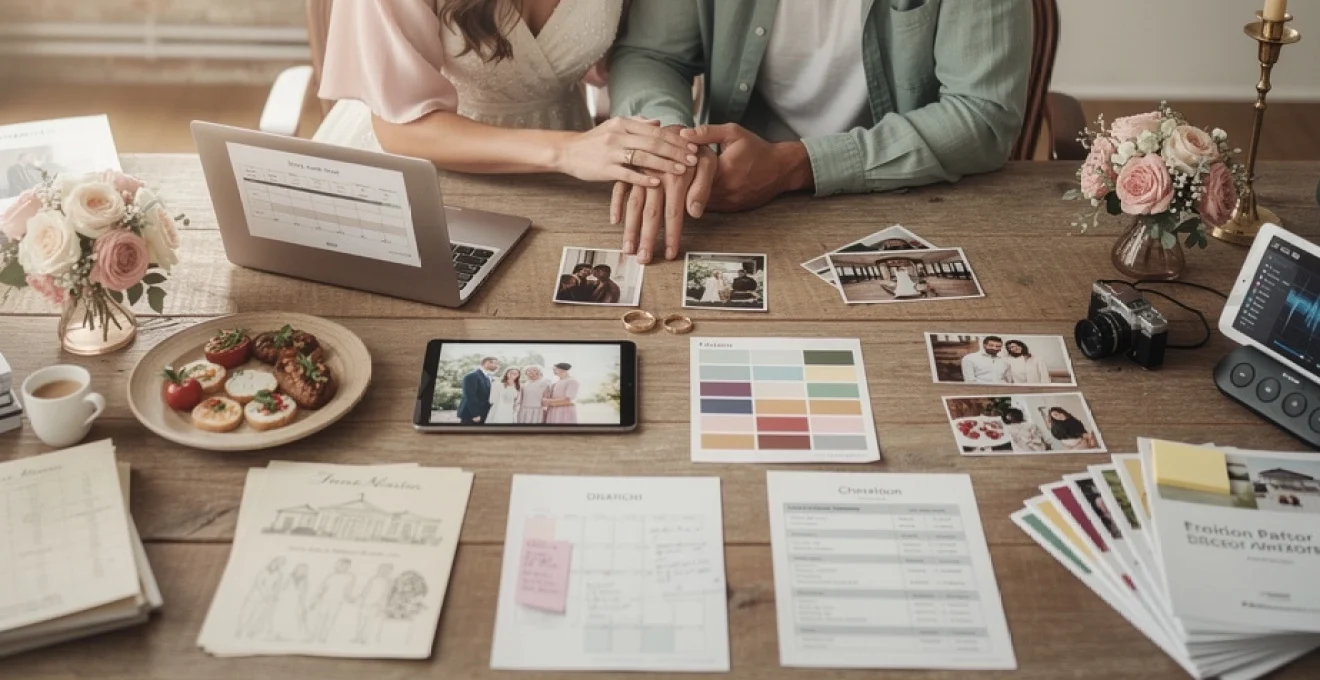
Wedding planning can quickly transform from an exciting milestone into an overwhelming maze of decisions, expectations, and mounting pressure. Research from the American Psychological Association indicates that 96% of couples experience significant stress during wedding planning, with many losing sight of what truly matters: celebrating their love and commitment. The modern wedding industry generates over £10 billion annually in the UK alone, often pushing couples toward elaborate celebrations that prioritise appearance over authentic experience.
Understanding what genuinely matters during your wedding requires a systematic approach that filters out societal noise and focuses on your core values and relationship priorities. This evidence-based framework will help you navigate the complex landscape of wedding planning whilst maintaining focus on elements that create lasting memories and meaningful experiences rather than fleeting Instagram moments.
Pre-wedding priority assessment and value alignment framework
Establishing clear priorities before diving into wedding planning prevents decision fatigue and ensures every choice aligns with your fundamental values as a couple. Priority assessment serves as your North Star throughout the planning process, helping you distinguish between genuine necessities and marketing-driven wants that often masquerade as essentials.
Core values identification using the schwartz theory of basic human values
The Schwartz Theory identifies ten universal human values that motivate behaviour and decision-making. For wedding planning, focus on identifying which values resonate most strongly with your relationship: security, tradition, benevolence, universalism, self-direction, stimulation, hedonism, achievement, power, and conformity. Couples who prioritise tradition might emphasise ceremony rituals and family involvement, whilst those valuing self-direction may focus on personalised, unconventional celebrations.
Consider creating a values hierarchy together, ranking these elements by importance to your relationship. This exercise reveals potential conflicts early—perhaps one partner values achievement (impressive venue, extensive guest list) whilst the other prioritises benevolence (intimate gathering, charitable donations). Recognising these differences allows for meaningful discussions about compromise and shared vision.
Guest list optimization through dunbar’s number principles
Dunbar’s Number suggests humans can maintain approximately 150 stable social relationships, with closer circles of 5 intimate bonds, 15 close friends, and 50 meaningful connections. Applying this research to wedding planning provides a scientific framework for guest list decisions, moving beyond arbitrary numbers or venue capacity constraints.
Start with your innermost circles—those 5-15 people whose absence would fundamentally change your wedding experience. These individuals form your non-negotiable guest list. The remaining invitations should reflect the next tier of meaningful relationships rather than social obligations or reciprocal invitations. This approach typically results in more intimate, engaging celebrations where genuine connections flourish rather than superficial social theatre.
Studies show that weddings with 75-100 guests report higher satisfaction rates among couples, with increased opportunities for meaningful interactions and reduced logistical complexity.
Budget allocation matrix based on maslow’s hierarchy of wedding needs
Adapting Maslow’s hierarchy to wedding planning creates a logical framework for budget allocation. Foundation needs include venue, catering, and legal requirements—elements ensuring your wedding actually happens. Safety needs encompass insurance, weather contingencies, and reliable suppliers who won’t leave you stranded.
Social needs involve creating atmosphere for meaningful connections: comfortable seating, appropriate music, and sufficient refreshments. Esteem needs might include professional photography, personalised details, and elements reflecting your unique story. Self-actualisation appears in truly personal touches that express your authentic selves as a couple.
| Hierarchy Level | Wedding Elements | Budget Percentage |
|---|---|---|
| Foundation | Venue, Catering, Legal | 60-70% |
| Security | Insurance, Contingencies | 10-15% |
| Social | Music, Comfort, Atmosphere | 15-20% |
Rather than treating this budget allocation matrix as a rigid rule, use it as a sanity check when decisions feel overwhelming. If you are debating a costly decor upgrade while still worrying about food quality or weather backup plans, the hierarchy reminds you to secure foundation and security needs first. This way, you focus wedding spending on what guests actually feel—comfort, flow, and hospitality—before investing in elements that are nice to have but not essential to a meaningful celebration.
Timeline management using critical path method (CPM) for wedding planning
The Critical Path Method, commonly used in project management, can be adapted to keep your wedding planning focused and realistic. Instead of treating every task as equally urgent, CPM helps you identify dependencies—tasks that cannot start until others are complete, such as sending invitations after confirming the venue and finalising the guest list. By mapping tasks and their order, you avoid last-minute bottlenecks that create unnecessary stress in the final weeks.
Begin by listing all major planning tasks, from venue booking and supplier contracts to dress fittings and menu tastings. Estimate approximate timeframes and highlight activities with no flexibility, such as legal notice periods or venue payment deadlines. The “critical path” is the chain of tasks that directly influence your wedding date; if any of these are delayed, the entire project timeline is at risk. Prioritising these core tasks allows you to let go of perfectionism around non-critical details, such as favour packaging or playlist fine-tuning.
Think of CPM as the skeleton of your planning process: once it is stable, you can safely add creative muscles and aesthetic details without fear of collapse. Many couples find that once the critical tasks are scheduled and spaced realistically, they instantly feel calmer and more in control. This structured approach reinforces the central theme of focusing on what truly matters during your wedding—experiences and logistics that protect your peace, not just what looks impressive on paper.
Venue selection criteria and atmospheric psychology
Your venue is the physical container for every emotion, interaction, and memory on your wedding day. Rather than viewing it as just a backdrop for photos, consider how it will feel to move through the space for 10–12 hours. Environmental psychology research shows that lighting, acoustics, layout, and crowding significantly influence mood, perceived intimacy, and social behaviour. A beautiful venue that feels echoey, cramped, or hard to navigate can dilute even the most thoughtful design details.
When visiting venues, pay attention not only to aesthetics but to how your body responds: do you instinctively relax, or feel slightly tense and overstimulated? Notice noise levels, natural light, and how guests might flow from ceremony to drinks to dinner to dancing. A venue that supports easy movement and natural conversation does more to enhance your wedding than elaborate decor ever will. In essence, you are choosing not just a location, but an atmosphere that will shape the emotional tone of your day.
Location significance assessment through place attachment theory
Place attachment theory explores the emotional bonds people form with specific locations, often linked to memories, identity, and a sense of belonging. Applying this to wedding planning invites you to ask a powerful question: why this place? A venue with personal meaning—where you first met, a city you built your life in, or a family home—can add a deeper emotional layer that no designer installation can replicate. Guests often feel this resonance too, even if they do not know the full backstory.
However, emotional significance should be balanced with practical considerations. A childhood village church may hold deep sentimental value, but if it requires complex travel for most guests, you may need to supplement it with clear logistics and transport. When shortlisting venues, rate each option not only by cost and aesthetics, but also by its emotional relevance to your story as a couple. Choosing a place that reflects your journey anchors the day in authenticity and helps you stay connected to what truly matters when decisions become overwhelming.
Think of location choice as the “setting” in a novel: it does not have to be grand, but it should be coherent with the story you are telling. A small, meaningful venue where you feel grounded often supports a more relaxed, joy-filled experience than a show-stopping space chosen purely for prestige. When in doubt, choose the venue where you can most clearly imagine yourself laughing, crying, and being fully present—not just posing.
Capacity planning using proxemics and social distance principles
Proxemics, the study of human use of space, highlights how physical distance affects comfort and interaction. In wedding terms, this means that guest count and room size are not just logistical issues; they directly influence atmosphere. A room that is too large for your guest list can feel sparse and awkward, while an oversubscribed venue can create crowding, noise fatigue, and stress. The aim is to match your guest numbers to a space that feels full and lively, yet still allows for natural movement.
Social distance principles suggest different “zones” of comfort: intimate distance for close relationships, personal space for friends and family, and social distance for acquaintances. When planning seating and layouts, think about how these zones will play out. Can close family sit within comfortable proximity to you during the ceremony and dinner? Are there quieter pockets for older guests or those who prefer conversation over dancing? Thoughtful capacity planning ensures that guests are not only accommodated, but emotionally comfortable.
Ask venues for realistic capacity figures for different layouts, not just maximum numbers. A space that “fits 150” for a standing reception may only comfortably host 90–100 for a seated meal with a dance floor and band. When you align guest count with proxemic comfort, you create an environment where people can connect easily, stay longer, and genuinely enjoy the celebration—far more valuable than squeezing in extra distant acquaintances out of obligation.
Seasonal weather impact analysis and contingency planning
Weather is one of the biggest sources of pre-wedding anxiety, yet also one of the least controllable variables. Instead of fixating on forecasts, approach weather like a risk manager: identify likely seasonal patterns, assess their impact, and create calm, practical contingencies. For example, a summer wedding might require shade, hydration stations, and lighter menus, while a winter celebration may need efficient cloakrooms, cosy lighting, and clear communication about outdoor temperatures and footwear.
When viewing venues, ask specific questions about their bad-weather plan: where will the ceremony move if it rains, how quickly can layouts be flipped, and what are the implications for decor and photography? A good venue will have tested solutions, not improvised last-minute fixes. Build small redundancies into your budget—such as marquee sidewalls, heaters, or parasols—so you can adapt confidently rather than react in panic.
Think of your weather plan as an umbrella: you hope not to need it, but having it lets you walk into the day with far less tension. Once you have a robust contingency, make a conscious decision to stop obsessively checking long-range forecasts. Your energy is better spent on being emotionally present and excited than on variables you cannot change. Guests remember how cared for they felt in the conditions you had, not whether the sky matched your Pinterest board.
Accessibility compliance standards under equality act 2010
Creating an inclusive wedding is not only a legal consideration in many jurisdictions, but also a reflection of your values as a couple. Under the Equality Act 2010 in the UK, venues and suppliers have a duty to make reasonable adjustments so that people with disabilities are not placed at a substantial disadvantage. For your wedding, this translates into practical questions about step-free access, accessible toilets, parking, seating options, and clear signage.
During venue visits, imagine the experience from the perspective of guests with mobility challenges, sensory sensitivities, or neurodivergent needs. Are there long distances between ceremony and reception spaces? Is there adequate lighting and sound management for those who find noise overwhelming? Simple adjustments—such as reserving quieter areas, providing printed schedules, or arranging priority seating—can dramatically improve comfort and reduce anxiety for many guests.
Embedding accessibility into your planning is another way of focusing on what truly matters during your wedding: people feeling welcome, respected, and able to participate fully. Rather than treating accessibility as an afterthought, include it in your initial checklist when comparing venues and suppliers. This proactive approach not only supports compliance with the Equality Act 2010 but also aligns your celebration with your wider values of kindness, inclusivity, and genuine hospitality.
Photography and videography investment strategy
Once the music fades and the flowers are gone, your photos and video become the primary way you revisit your wedding day. This is why so many couples cite cutting corners on photography or videography as a major regret. An effective investment strategy starts by recognising that you are not simply buying images; you are safeguarding your memories and the ability to share your story with future generations. In this sense, professional documentation sits high on the “esteem” and “self-actualisation” levels of your wedding needs.
Begin by clarifying what you value most: is it candid documentary coverage, cinematic film, family portraits, or printed albums you can hold years from now? Different photographers and videographers excel in different styles—editorial, documentary, fine art, or hybrid. Review full galleries and complete films rather than highlight reels, as these show how consistently a supplier captures real moments under varied lighting and timeline pressures. You want a professional who can adapt calmly when things run late or the weather shifts, not just someone who produces pretty images when conditions are perfect.
From a budget perspective, consider allocating a clear, protected percentage for photo and video early in the planning process. It is often wiser to simplify decor or reduce non-essential extras than to compromise drastically on experienced documentation. Think of it like commissioning an artist to paint your most important day; you want someone whose work you trust enough to relax in front of the camera. A photographer or videographer who helps you feel at ease will capture more genuine expressions, making your wedding gallery feel alive rather than staged.
Finally, remember that presence on the day is part of this strategy too. Consider an “unplugged ceremony” or at least discourage guests from stepping into the aisle with phones and tablets. This not only improves the visual quality of your images but also allows everyone to witness key moments with their own eyes. Your future self will thank you for choosing a team and an environment that prioritises real emotion over a sea of screens.
Catering decision framework and guest experience design
Catering is one of the clearest ways your wedding budget directly affects guest experience. People remember whether they were well fed, had enough to drink, and felt cared for throughout the day. A thoughtful catering framework goes beyond menu choices to consider timing, flow, and accessibility. Ask yourself: how do you want guests to feel at each stage—welcomed, relaxed, energised, satisfied?
Start by mapping the day from a guest’s perspective: arrival, ceremony, drinks, meal, speeches, and evening celebration. Identify where hunger or long gaps might appear and work with your caterer to bridge them with canapés, grazing tables, or late-night snacks. Well-timed food and drink prevent dips in energy and help maintain a joyful, social atmosphere. In many cases, a simpler menu served generously has far more impact than an intricate, tiny-portion tasting that leaves guests hungry.
Dietary requirements management through inclusive menu planning
Inclusive menu planning is both a practical necessity and a signal of respect. With rising numbers of guests following vegetarian, vegan, gluten-free, or allergy-conscious diets, assuming that “the kitchen will sort it” is no longer enough. Gather detailed dietary information early, ideally with your RSVPs, and share it clearly with your caterer, including cross-contamination risks and religious requirements such as halal or kosher options.
Work with your caterer to design a menu where dietary-friendly dishes are as delicious and thoughtfully presented as the main options. Nobody should feel like an afterthought with a plain salad while others enjoy a carefully crafted meal. Where possible, build flexibility into the menu—for example, mains that can be easily adapted or sides that are naturally inclusive. Clear labelling on buffets and dessert tables further reduces anxiety and allows guests to relax and enjoy themselves.
Managing dietary requirements well sends a powerful message: you have thought about each person as an individual, not just a seat at a table. This is exactly the kind of detail that shapes how people remember your wedding. Rather than obsessing over napkin colours, channel that energy into ensuring everyone can eat safely, comfortably, and joyfully.
Service style selection: plated vs buffet vs family style analysis
The way food is served has a significant impact on atmosphere, pacing, and social interaction. Plated service offers structure and elegance, with predictable timing and minimal movement around the room. It is ideal if you have complex speeches, a tight schedule, or guests who may find carrying plates challenging. However, it can sometimes feel more formal and limit conversation across the table if courses are rushed.
Buffet or station-style service introduces more flexibility and choice, which can be especially helpful with varied dietary needs. Guests can choose portion sizes and explore different dishes, but queues and crowding need careful management. This style often suits more relaxed, social weddings where mingling is encouraged and timelines are looser. Family-style service—where large platters are shared at the table—sits between the two, encouraging conversation and a sense of communal celebration, though it requires adequate table space and thoughtful dish selection.
When deciding between plated, buffet, or family-style service, return to your core values and the feel you want for your wedding day. Do you envision a refined, quietly elegant dinner or a lively, conversational feast? There is no single “right” choice; there is only the option that best supports the emotional tone and guest experience you care about most. Discuss these dynamics with your caterer—they can advise on what works best for your venue, guest count, and timeline.
Local supplier integration and sustainable sourcing practices
More couples are increasingly mindful of the environmental and community impact of their wedding choices. Integrating local suppliers and sustainable sourcing into your catering plan is a powerful way to align your celebration with your values. This might include working with caterers who prioritise seasonal produce, local farms, and ethically sourced ingredients, or choosing wines and beers from regional producers.
Sustainability also encompasses waste reduction. Ask caterers about their portion planning, composting or recycling practices, and options for donating surplus food where regulations allow. Small switches—such as minimising single-use plastics, opting for filtered water instead of bottled, or simplifying menu items that create excessive waste—can collectively make a meaningful difference without compromising guest experience.
Ultimately, sustainable and local choices add another layer of significance to your day: you are not only celebrating your relationship, but also supporting the wider community and environment that surround it. When your wedding decisions reflect your broader values, you are more likely to feel proud of the day long after it ends, rather than looking back with a sense of excess or regret.
Entertainment and ceremony personalisation techniques
Entertainment and ceremony design are two of the most direct ways to make your wedding feel uniquely yours. Rather than asking, “What do weddings usually have?”, flip the question to, “What do we genuinely enjoy, and how can that be woven into the day?” When you prioritise personal meaning over tradition for its own sake, guests experience a celebration that feels authentic rather than generic.
Ceremony personalisation can include customised vows, readings from literature or music that reflects your relationship, or symbolic rituals drawn from your cultural or spiritual backgrounds. Work with your officiant to shape a structure that feels comfortable and grounded rather than rushed or overly performative. A well-paced ceremony with space for emotion—pauses, smiles, deep breaths—often resonates far more deeply than a perfectly choreographed but hurried sequence.
For entertainment, think in terms of energy arcs throughout the day. Live musicians during the ceremony or drinks reception can create warmth and intimacy, while a band or DJ later sets the tone for the party. You might also incorporate interactive elements that reflect your personalities: a quiz about your love story, a live painter, board-game corners, or a quiet lounge for conversation. The goal is not to cram in as many activities as possible, but to choose a few meaningful touches that invite connection.
Consider your guests’ diversity too—age ranges, mobility, cultural backgrounds—and ensure there is something for everyone. A dance floor is not the only marker of a successful evening; often, the most memorable weddings offer multiple ways to engage, from dancing to talking to simply watching the scene unfold. By designing entertainment and ceremony elements around your shared values and genuine interests, you keep the focus firmly on what truly matters during your wedding: connection, joy, and a celebration that feels like an extension of who you are.
Stress management and mindfulness integration during wedding planning
Even with the best frameworks, wedding planning can still feel intense. The goal is not to eliminate all stress—that would be unrealistic—but to manage it so it does not overshadow your engagement. Integrating simple mindfulness practices into your planning process helps you stay connected to each other and to the real purpose of the day. Think of mindfulness as the emotional counterpart to your spreadsheets and timelines: it keeps your inner world as organised as your logistics.
Start with small, regular check-ins as a couple. Once a week, set aside 20–30 minutes to talk about wedding plans only during that time, then consciously set the topic aside. This prevents it from spilling into every conversation and dominating your relationship. During these check-ins, ask not just “What do we need to do?” but also “How are we feeling about this?” Noticing resentment, anxiety, or pressure early allows you to adjust plans, delegate tasks, or revisit priorities before burnout sets in.
Simple grounding techniques—such as a few deep breaths before vendor calls, short walks after planning sessions, or a brief meditation on the morning of your wedding—can significantly improve your ability to stay present. Many couples also find it helpful to appoint a “wedding day guardian”: a trusted friend, planner, or coordinator whose role is to handle small issues so you are shielded from unnecessary decisions. This is not indulgent; it is a practical strategy to protect your emotional bandwidth.
Finally, give yourselves permission to let go of perfection. Remind each other that a meaningful wedding is not defined by flawless execution but by how you felt and who you shared it with. When small things go off-script—and they will—treat them as part of the story rather than signs of failure. By combining clear priorities, structured planning, and intentional rest, you create the conditions for a wedding day that feels calm, connected, and truly focused on what matters most: the beginning of your married life together.