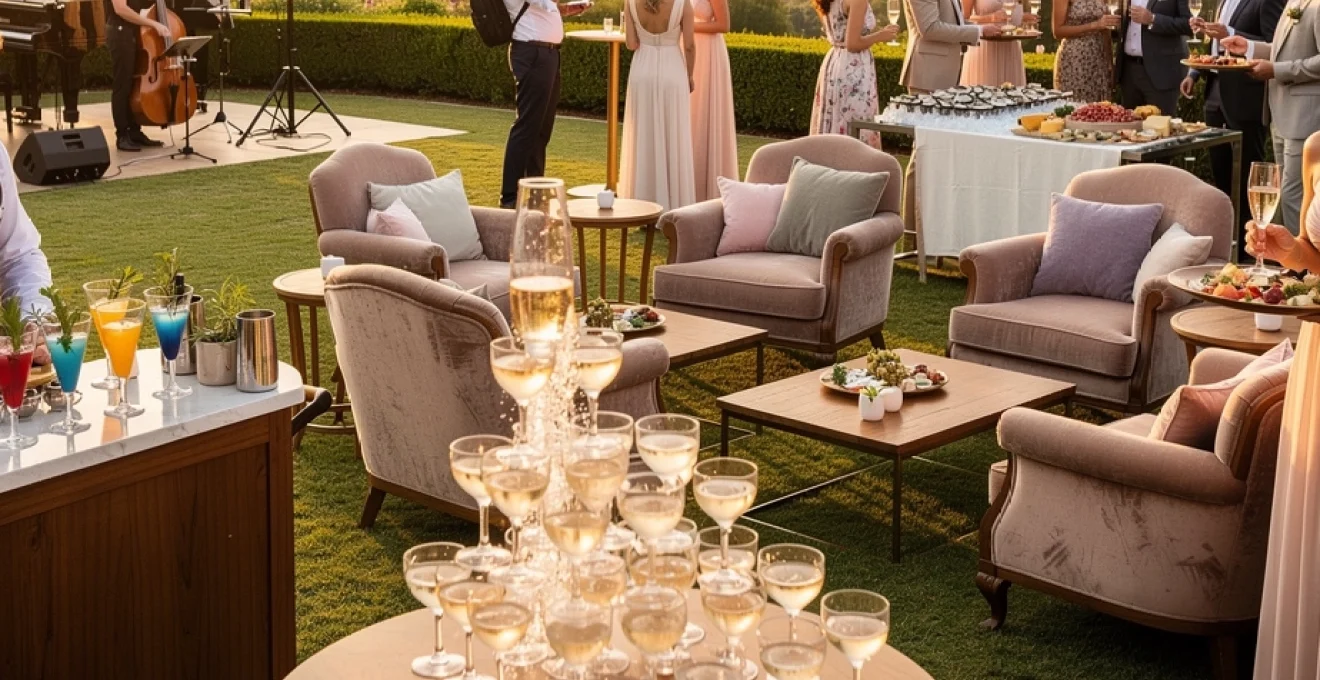
The wedding cocktail hour has evolved from a simple transitional period into one of the most anticipated moments of modern wedding celebrations. This sophisticated interlude between ceremony and reception offers couples an invaluable opportunity to craft an unforgettable experience that reflects their personality whilst keeping guests thoroughly entertained. Whether you’re planning an intimate garden gathering or a grand ballroom affair, mastering the art of cocktail hour orchestration requires careful attention to timing, beverage selection, culinary presentation, spatial design, and entertainment programming. The success of this seemingly brief window can significantly influence the overall perception of your entire wedding day, setting the tone for the festivities that follow and creating those candid, joyful moments that become cherished memories for years to come.
Strategic timeline planning for cocktail hour flow and guest experience
The foundation of any successful cocktail hour rests upon meticulous timeline planning that accounts for multiple simultaneous activities. When you design this transitional period, you’re essentially choreographing a complex dance involving guest arrivals, photography sessions, venue transitions, and entertainment changeovers. The secret lies in creating seamless flow that feels effortless to your guests whilst ensuring every technical element operates like clockwork behind the scenes.
Optimal duration frameworks: 60-90 minute service windows
Industry experience demonstrates that cocktail hours function most effectively within the 60 to 90-minute timeframe. Anything shorter leaves guests feeling rushed and potentially hungry, whilst extending beyond 90 minutes risks diminishing energy levels before the main reception begins. A standard 75-minute window provides the perfect balance, allowing adequate time for guest mingling, drink service, canapé circulation, and entertainment appreciation without creating awkward lulls in activity. Consider your ceremony end time carefully: if you conclude vows at 3:00 PM, scheduling cocktail hour from 3:15 PM to 4:30 PM accounts for immediate post-ceremony congratulations whilst positioning your reception dinner service at an ideal early evening hour.
Coordinating photography sessions during golden hour transitions
One of the most significant advantages of cocktail hour scheduling involves creating protected time for essential couple and family portraits without making guests wait awkwardly. Strategic coordination with your photographer ensures you capture those precious golden hour shots whilst your guests remain thoroughly entertained. If your venue offers multiple spaces, position cocktail hour in a garden terrace or separate lounge area, physically distancing the social gathering from your photography locations. This geographical separation prevents curious guests from inadvertently wandering into frame whilst providing you with the focused time needed for those spectacular sunset portraits that will grace your album’s most prominent pages.
Managing guest arrival patterns and reception line integration
Not all guests will transition from ceremony to cocktail hour simultaneously, and your timeline must accommodate staggered arrival patterns. Some attendees will linger in the ceremony space admiring floral arrangements or chatting with other guests, whilst others will immediately proceed to the cocktail area. Build a 15-20 minute buffer into your timeline to accommodate this natural flow variation. If you’re planning a traditional receiving line, position it strategically at the cocktail hour entrance rather than immediately post-ceremony. This approach allows guests to proceed at their own pace whilst ensuring you greet everyone personally without creating bottleneck congestion at the ceremony exit.
Synchronising band changeovers and DJ equipment transitions
Entertainment transitions represent one of the most commonly overlooked technical challenges in cocktail hour planning. If you’ve hired different performers for cocktail hour and reception (perhaps an acoustic guitarist for cocktails and a full band for dancing), coordinate equipment changeover during dinner service rather than during cocktail hour itself. Sound checks and equipment setup create distracting noise that undermines the sophisticated ambience you’re working to establish. Discuss technical requirements with your venue coordinator weeks in advance, ensuring adequate power supply, appropriate staging areas, and clear changeover protocols that won’t interrupt the guest experience during these critical transitional moments.
Beverage service design: signature cocktails and bar station configuration
The beverage programme represents the cornerstone of cocktail hour success, transforming a standard drinks reception into a memorable tasting experience. Modern couples increasingly view bar service as an opportunity for creative expression, moving beyond basic wine and beer offerings to craft bespoke cocktail experiences that tell their love
story. Think of your cocktail hour bar as both a functional service point and a storytelling device: every drink, garnish, and vessel should quietly communicate something about your journey as a couple, the wedding location, or the overall design aesthetic you’ve chosen.
Crafting bespoke signature cocktails with personalised garnish elements
Designing one or two signature cocktails for your wedding cocktail hour is one of the most effective ways to create a cohesive and memorable experience. Begin by identifying flavour profiles you and your partner genuinely enjoy—whether that’s citrus-forward, herbaceous, floral, smoky, or spirit-forward—and work with your caterer or mixologist to translate these into balanced, crowd-pleasing recipes. Naming the drinks after meaningful moments, such as “First Date Fizz” or “Seaside Spritz,” adds an instant conversational hook for guests and reinforces the narrative of your day.
Personalised garnish elements elevate these bespoke cocktails from pleasant to unforgettable. Consider dehydrated citrus wheels stamped with your monogram, mini clothespins holding tiny love notes, or herb sprigs clipped with branded cocktail picks matching your stationery suite. For a cohesive visual impact, ensure your glassware, garnishes, and napkins follow the same colour palette as your wedding design. Importantly, balance creativity with practicality: garnishes should be easy to handle, not obstruct sipping, and quick for bar staff to assemble so service remains smooth even at peak times.
To accommodate different preferences and manage consumption, pair each signature cocktail with a complementary alcohol-free variant that mirrors its flavour profile. For example, a gin-based elderflower spritz can be reimagined with alcohol-free botanical spirits, ensuring non-drinkers feel equally included in the celebration. Clear, attractive signage describing ingredients, flavour notes, and whether a cocktail is low- or zero-alcohol helps guests make confident choices and reduces repeated questions at the bar.
Mobile bar cart placement for maximum guest circulation
Bar placement directly influences how your guests move through the cocktail hour space, and a mobile bar cart can function as both a design feature and a crowd management tool. Position the primary bar away from the entry point to prevent congestion as guests first arrive, then use smaller mobile carts or satellite stations to distribute service and encourage natural circulation. An effective layout often resembles a loose triangle: one main bar, one smaller cart focused on signature cocktails, and a third area offering water, soft drinks, or self-serve options.
Mobile carts can be strategically repositioned as the event unfolds, subtly guiding guests towards scenic viewpoints, photo opportunities, or key features such as a live musician or guest book station. For example, you might begin with a prosecco cart near the entrance and later move it closer to the garden or terrace to draw guests outside for sunset views. Ensure that each cart has adequate access to glassware, ice, and waste stations; otherwise, staff will spend more time running back and forth than serving drinks, creating slowdowns and visual clutter.
Accessibility should sit at the forefront of your bar placement decisions. Leave clear pathways for guests using mobility aids and avoid tucking carts into narrow corners where queues will block circulation. If your wedding cocktail hour spans multiple levels or rooms, consider dedicating one cart per distinct area so that guests never have to travel far for a refill. Just as good urban planning makes a city feel easy to navigate, thoughtful bar placement makes your cocktail hour feel intuitive and relaxed.
Professional mixologist staffing ratios and service speed optimisation
Even the most beautifully designed signature cocktail will fall flat if guests spend half the cocktail hour queuing at the bar. As a rule of thumb, plan for one professional bartender or mixologist per 50–60 guests for standard mixed drinks, and closer to one per 40 guests if you are offering complex, shaken, or muddled cocktails. Discuss your menu in detail with your bar team so they can accurately estimate preparation times and recommend the optimal staffing ratio for your specific service style and guest count.
Pre-batching components of your signature cocktails is one of the most powerful strategies for maintaining service speed without compromising quality. Spirit and mixer bases can often be prepared in advance in large vessels and then finished à la minute with fresh garnishes, carbonation, or delicate ingredients such as egg whites. This approach allows your mixologists to maintain consistency across hundreds of serves while still giving guests the impression of made-to-order craft cocktails.
Consider installing a separate “express lane” dedicated to wine, beer, and soft drinks, particularly if a significant portion of your guest list prefers straightforward options. This can be as simple as a clearly signed area of the main bar where staff pour wine and beer only, or a self-serve hydration station with infused waters and non-alcoholic refreshments. By diverting low-complexity orders away from the main cocktail queue, you dramatically reduce wait times and improve overall guest satisfaction during the wedding cocktail hour.
Champagne tower displays and interactive prosecco walls
Champagne towers and prosecco walls have become iconic centrepieces for couples seeking a visually striking moment during cocktail hour. A well-executed champagne tower offers a sense of occasion reminiscent of classic black-tie soirées, especially when incorporated into a scheduled “pour moment” that photographers and videographers can capture from multiple angles. To ensure safety and efficiency, work with your caterer to select stable glassware and an appropriate base; most professionals recommend limiting tower heights to four or five tiers for standard receptions.
Interactive prosecco walls, where flutes are slotted into a decorative vertical display, offer a playful alternative that encourages guests to help themselves while admiring the design. These installations double as décor, often incorporating florals, neon signage, or custom laser-cut lettering featuring your names or wedding date. Position your prosecco wall near, but not directly at, the entrance so that it entices guests to move deeper into the cocktail hour space without causing an immediate bottleneck as they arrive.
Whichever focal feature you choose, synchronise its use with your broader timeline. You might, for instance, open the champagne tower just after your couple portraits conclude, using the first pour as an opportunity for a brief welcome toast. Ensure that staff are nearby to replenish glasses swiftly and manage any spills discreetly. The goal is to create an immersive, interactive experience that feels glamorous yet effortless, reinforcing the sense that this is not just a drinks reception, but a carefully curated part of your wedding day narrative.
Canapé selection and dietary accommodation strategies
Food served during your wedding cocktail hour is more than a simple buffer before dinner; it plays a critical role in guest comfort, alcohol absorption, and the perceived level of hospitality. Curating a thoughtful canapé menu requires you to balance flavour diversity, dietary inclusivity, and logistical practicality. Think of your selection as a miniature culinary tour, giving guests a preview of the reception meal while ensuring nobody feels overlooked due to allergies or dietary preferences.
Butler-style versus station-based hors d’oeuvre service models
Choosing between butler-style passed canapés and station-based hors d’oeuvre displays will significantly shape the energy of your cocktail hour. Butler service, in which staff circulate with trays of bite-sized offerings, creates an elegant, attentive atmosphere and allows guests to remain engaged in conversation while food comes to them. This model works particularly well in more formal settings or where space is limited, as it reduces the need for guests to queue at food stations.
Station-based service, on the other hand, encourages movement and interaction, turning food into a design element. Beautifully styled tables featuring themed selections—Mediterranean mezze, Asian-inspired small bites, or rustic grazing boards—can become natural gathering points for guests who do not yet know one another. However, stations require careful layout planning to avoid crowding; multiple access points and duplicated items on each side of the table help maintain efficient flow.
Many modern weddings adopt a hybrid model, using butler service for high-labour or delicate items and one or two statement stations for heartier bites and visual impact. When deciding your approach, consider guest age profiles, venue layout, and formality level. An older or mobility-challenged guest list may appreciate the ease of passed canapés, while a younger, more informal crowd may relish the chance to browse stations and curate their own plates.
Allergen labelling systems and gluten-free presentation standards
With food allergies and intolerances on the rise, clear allergen communication during cocktail hour is essential to both guest safety and peace of mind. Work closely with your caterer to identify common allergens in each canapé—such as gluten, dairy, nuts, and shellfish—and implement a simple, consistent labelling system. Discrete tent cards or a single, well-designed menu board listing each item with allergen icons can be highly effective, especially when placed at food stations or near the bar.
For butler-passed service, ensure staff are thoroughly briefed and can confidently answer questions about ingredients. Providing servers with small, pocket-sized reference cards listing each canapé and its allergens can be a practical safeguard. You might also request a dedicated tray of clearly identifiable gluten-free or vegan options so that guests with specific needs do not feel hesitant or embarrassed to ask.
Presentation standards for gluten-free or allergen-friendly items should prioritise both safety and aesthetics. Use separate platters, serving utensils, and preparation areas to prevent cross-contamination, and avoid simply omitting ingredients from standard recipes as an afterthought. Instead, collaborate with your caterer to develop purposefully designed options—such as polenta bites, rice spoons, or lettuce cups—that look and taste just as appealing as their conventional counterparts.
Hot and cold canapé rotation schedules for temperature control
Serving canapés at the correct temperature throughout the entire cocktail hour is one of the most subtle yet impactful aspects of guest comfort. Hot items need to be produced and circulated in small, frequent batches to stay warm without drying out, while cold items must remain chilled and fresh. Aim for a rotation schedule where each tray run takes no longer than 10–12 minutes from kitchen to final guest, then returns for replenishment or replacement.
To maintain variety and anticipation, consider structuring your canapé service in “waves.” For example, the first 20 minutes might focus on lighter, cold bites such as ceviche spoons or tartlets, followed by a middle window of more substantial warm options like arancini or mini sliders, and finishing with a final selection that hints at dessert—perhaps mini cones or bite-sized pavlovas. This progression mirrors the pacing of a formal meal while still feeling relaxed and informal.
Outdoor cocktail hours or venues with long distances between kitchen and event space demand extra planning. Heated trays, insulated carriers, and designated staging areas near the cocktail space can dramatically improve temperature consistency. Communicate clearly with your catering lead about your priorities: would you rather offer a smaller selection that can be perfectly executed, or a larger menu where some compromises on temperature are inevitable?
Interactive food stations: oyster bars and charcuterie grazing tables
Interactive food stations bring theatre and personalisation to your wedding cocktail hour, transforming dining into an experience rather than a simple necessity. Live-shucked oyster bars, for instance, allow guests to watch skilled staff open and dress each oyster to order, often accompanied by a choice of mignonettes, citrus wedges, and hot sauces. This kind of station naturally attracts small groups, sparking conversation and creating photo-worthy moments.
Charcuterie grazing tables provide a contrasting but equally engaging approach, offering abundant spreads of cured meats, artisan cheeses, fresh and dried fruits, nuts, breads, and condiments. When styled thoughtfully with varying heights, textures, and colours, these displays can become a central visual feature that reinforces your overall wedding design. To keep the table looking pristine, assign a dedicated attendant to replenish items, tidy platters, and manage portion control so that guests always encounter an inviting, rather than depleted, presentation.
When planning interactive stations, consider practicalities such as queue management, allergen separation, and hygiene. Oyster bars benefit from clear signage about freshness and sourcing, as well as nearby discard bowls and hand wipes. Grazing tables should include separate sections for vegan or nut-free items to avoid accidental cross-contamination. With the right planning, these stations will not only delight the senses but also embody your commitment to high-quality hospitality.
Spatial design and furniture arrangement for natural guest flow
Thoughtful spatial design is what transforms your wedding cocktail hour from a simple gathering into an immersive environment. The way you arrange furniture, bars, and focal features dictates how guests move, mingle, and experience the space. Rather than filling every corner with décor, aim to create a series of inviting “micro-environments” that encourage conversation and exploration without causing congestion or confusion.
Lounge seating clusters with vintage furniture and ottomans
Curated lounge areas give guests a comfortable, visually interesting place to relax during cocktail hour, particularly those who may not wish to stand for long periods. Using vintage furniture pieces—such as velvet sofas, wingback chairs, and mismatched armchairs—combined with ottomans and side tables, you can create intimate clusters that feel like thoughtfully designed living rooms. Position these lounges slightly off the main traffic routes so they invite lingering without obstructing the natural flow between bar, food, and entertainment.
When selecting lounge furniture, prioritise both style and practicality. Light-coloured fabrics photograph beautifully but may show spills more readily; dark or patterned textiles can be more forgiving. Ottomans and low stools act as flexible seating options that guests can easily move to adjust group size. Adding layered rugs, cushions, and throws not only enhances comfort but also helps define each seating zone within a larger open space.
Consider your guest demographics when planning the number and type of seats. Older relatives and guests in heels will appreciate stable chairs with backs, while younger guests may gravitate towards poufs or low sofas. Aim for a mix of formal and informal seating so everyone can find a spot that suits their comfort level and social style.
Cocktail table placement using the 70-30 standing-sitting rule
A useful guideline for cocktail hour furniture planning is the “70–30 standing-sitting rule,” which suggests providing standing space for approximately 70% of guests and seated options for around 30%. This ratio encourages natural mingling and movement while still ensuring that those who need or prefer to sit can do so comfortably. High-top cocktail tables play a crucial role in this equation, giving guests somewhere to rest drinks and plates without committing to a full seat.
Arrange cocktail tables in loose, staggered patterns rather than rigid rows to foster organic conversation clusters. Avoid lining them all along one wall, which can make the room feel unbalanced and limit circulation. Instead, place a few near the bar, several closer to the food stations, and a handful adjacent to the dance floor or reception entrance to ease the eventual transition into the next phase of the evening.
Leave generous pathways between tables—ideally at least 1.2 metres—so that servers can move freely with trays and guests can circulate without constant sidestepping. If your cocktail hour spans indoor and outdoor spaces, mirror the standing-sitting ratio in each area, ensuring that neither zone feels neglected or overcrowded. In effect, you are choreographing the way guests interact with the environment, much like a stage designer maps the movement of performers.
Weather contingency planning for outdoor terrace cocktail spaces
Outdoor terraces and gardens can provide a spectacular backdrop for your wedding cocktail hour, but they also introduce weather-related uncertainties that demand robust contingency planning. Work with your venue to identify a fully viable indoor backup space that can be activated quickly if forecasts shift, rather than a half-hearted compromise. Ensure that furniture, bar setups, and décor elements can transition between locations with minimal disruption; modular lounge pieces and mobile bars are particularly helpful in this regard.
Even in favourable conditions, comfort considerations such as shade, wind, and temperature should guide your layout. Parasols, marquees, or stretch tents can protect guests from harsh sun or light rain while still preserving the outdoor ambience. In cooler climates or shoulder seasons, patio heaters, blankets, and baskets of pashminas can extend the usability of outdoor spaces and make guests feel thoughtfully cared for.
Communicate your contingency plan clearly to your planning team and key suppliers well in advance, including a definitive “decision time” on the wedding day by which you will commit to indoor or outdoor. This ensures that staff can set up confidently and that your wedding cocktail hour feels intentional, not improvised, regardless of what the weather decides to do.
Entertainment programming and ambient atmosphere creation
Entertainment during your wedding cocktail hour should enhance conversation rather than compete with it, creating a sophisticated backdrop that quietly shapes the mood. The right blend of live performance, subtle lighting, and ambient sound can make the entire experience feel cinematic, as though your guests have stepped into a carefully directed scene. When planned thoughtfully, these elements also provide natural transitions between key moments, such as your arrival from portraits or the opening of the reception doors.
Live jazz trio versus acoustic solo performers for background ambience
Choosing between a live jazz trio and an acoustic solo performer depends largely on the tone you wish to set and the size of your space. A jazz trio—typically featuring combinations such as piano, upright bass, and saxophone—creates a rich, layered sound that instantly elevates the atmosphere to something akin to a stylish hotel bar or classic cocktail lounge. This option works particularly well in larger rooms or outdoor terraces where a bit more presence is needed to fill the space without overwhelming conversation.
An acoustic solo performer, such as a guitarist-singer or pianist, lends a more intimate and relaxed feel to the cocktail hour. Their repertoire can range from stripped-back covers of contemporary songs to soft classics, allowing you to tailor the playlist to your tastes. This format is ideal for smaller venues or where you want music to be distinctly present yet gently unobtrusive, like a soundtrack that guests subconsciously enjoy rather than actively focus on.
Whichever option you choose, discuss volume levels and song selection in detail with your musicians. Ask them to build in dynamic shifts—lighter pieces while guests first arrive, slightly more upbeat tracks as the room fills, and perhaps a recognisable favourite just before you enter as newlyweds. This subtle musical arc helps structure the cocktail hour and keeps the energy gently rising in anticipation of the reception.
Lawn games integration: giant jenga and croquet tournament organisation
Lawn games offer a playful counterpoint to the sophistication of a wedding cocktail hour, encouraging guests to relax and engage with one another in a low-pressure way. Simple options like giant Jenga, ring toss, or cornhole can be enjoyed casually, with guests dipping in and out between drinks and conversation. Place these games in a clearly defined area of your outdoor space, far enough from the bar and food stations to avoid stray balls or tumbling blocks becoming a hazard.
If you have a particularly competitive group of friends or family, you might consider organising a light-hearted croquet or boules tournament. Keep the tone friendly rather than intense by limiting match times and avoiding complex scoring systems; the aim is to generate laughter and camaraderie, not serious rivalry. A small chalkboard displaying informal brackets or team names can add an extra layer of fun and become a conversation starter for guests who are watching rather than playing.
To ensure that lawn games complement rather than dominate the cocktail hour, offer them as optional side activities rather than the main focus. Not every guest will want to participate, and some may prefer to simply observe from a nearby lounge area. Properly balanced, these interactive elements can help break the ice between unfamiliar guests and contribute to the overall sense of a thoughtfully curated, guest-centric experience.
String lighting design and festoon canopy installation techniques
Lighting is one of the most powerful yet underestimated tools for shaping the ambience of your wedding cocktail hour, particularly as day transitions into evening. String lights and festoon canopies create a warm, flattering glow that softens architectural lines and casts a romantic sheen over the entire scene. When installed overhead, they can visually “lower the ceiling” of an outdoor space, making even expansive terraces feel intimate and cohesive.
Effective festoon installation relies on secure anchor points and thoughtful spacing. In open gardens, freestanding poles or shepherd’s hooks can be used to drape lights in gentle arcs, while courtyards and patios often allow for attachment to existing structures such as trees, pergolas, or building façades. Aim for even distribution across the main gathering areas—bar, lounge seating, and pathways—so that the entire cocktail space feels connected under a shared canopy of light.
Consider layering different light sources for depth and visual interest. Combine festoon strings with smaller fairy lights woven through trees or along railings, and supplement with lanterns or candles on tables for close-up sparkle. Opt for warm white bulbs rather than stark cool tones to flatter skin tones in photographs and create a welcoming, golden-hour effect that extends long after the sun has set.
Guest engagement elements and interactive experience touchpoints
Beyond food, drink, and music, your wedding cocktail hour offers rich opportunities to engage guests with interactive touchpoints that reflect your personalities and story. These elements invite participation, spark conversation, and often result in keepsakes or content you’ll cherish long after the day itself. The key is to incorporate them in a way that feels organic to the flow of the event rather than forced or overly staged.
Polaroid photo booth stations with customised prop collections
A Polaroid or instant-camera photo booth station provides a charmingly tactile alternative to digital-only photography, allowing guests to take home physical mementos within minutes. Set up a simple backdrop—perhaps a floral installation, fabric drape, or feature wall from your venue—and provide one or two instant cameras with plenty of film. Clear signage with step-by-step instructions helps keep the process smooth, especially for guests unfamiliar with the equipment.
Customised prop collections can be tailored to your theme or shared interests, elevating the experience beyond standard novelty glasses and moustaches. Think mini chalkboards with prompts, accessories reflecting your hobbies (travel hats, musical instruments, sports scarves), or props that echo your wedding branding, such as signs featuring your hashtag or favourite song lyrics. Arrange these items neatly on a nearby table so that guests can browse and select what suits their mood.
To turn the station into a meaningful keepsake generator, invite guests to leave one photo for you and take one home. Provide a guest book, washi tape, and pens so they can stick in their chosen snapshot and add a short message. Over time, this creates a beautifully candid visual record of your wedding cocktail hour, capturing faces and moments your official photographer might otherwise miss.
Welcome drink service with personalised name tag distribution
Greeting guests with a welcome drink as they enter your cocktail hour is both practical and symbolic, signalling that hospitality is at the heart of your celebration. For an added layer of personalisation, you can attach name tags or escort cards directly to the glass stems or straws, using ribbons, mini pegs, or custom tags. This approach elegantly combines welcome refreshment with the logistical task of organising seating, reducing crowding around seating plan boards later on.
Consider offering two or three welcome drink options—perhaps a signature cocktail, a sparkling wine, and a non-alcoholic spritz—so guests immediately feel they have a choice rather than being handed a default drink. Station staff at the entrance to explain the options and guide guests towards the main cocktail area, ensuring a smooth and celebratory arrival sequence. This moment can also serve as a natural transition between ceremony and reception, especially if you and your partner are taking portraits and cannot greet everyone immediately.
Designing the name tags themselves offers another opportunity to reinforce your aesthetic. Match fonts, colours, and materials to your invitation suite for a cohesive experience, and ensure names are printed clearly and legibly. When executed well, this small touch not only streamlines logistics but also makes each guest feel individually acknowledged from the very first sip.
Guest book alternatives: fingerprint trees and message-in-a-bottle displays
Modern couples are increasingly moving beyond traditional guest books in favour of interactive alternatives that double as décor and conversation pieces during cocktail hour. A fingerprint tree, for example, invites guests to add their fingerprint as a leaf on a pre-drawn tree illustration, often signing their names alongside. Provide a selection of ink pads in your wedding colours, plus wipes or towels for easy clean-up, and position the artwork on an easel where it is visible yet accessible.
Message-in-a-bottle displays offer another creative twist, especially for seaside or destination weddings. Arrange multiple labelled bottles—for instance, “Open on your 1st anniversary,” “5th anniversary,” and “10th anniversary”—and invite guests to write notes, advice, or memories on small cards before posting them into their chosen bottle. This structure not only engages guests during the cocktail hour but also gifts you with emotional milestones to look forward to as your marriage unfolds.
Whichever alternative you choose, ensure there is clear signage explaining what guests should do and designate a member of the wedding party or coordination team to periodically tidy pens, refill cards, and encourage participation. By the time cocktail hour draws to a close, you will have collected a tapestry of contributions that reflect not just who attended your wedding, but how involved and connected they felt during that carefully orchestrated, joy-filled interlude.