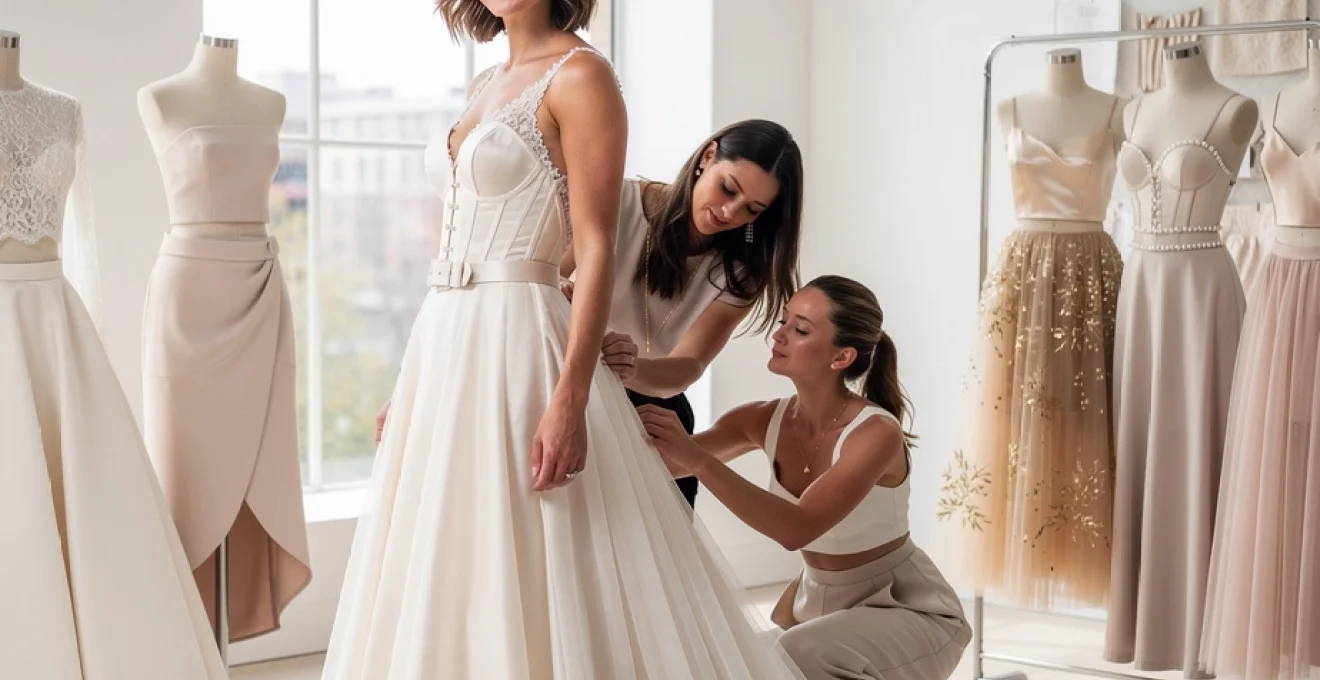
The traditional one-piece wedding dress is no longer the only path to bridal elegance. Modern brides increasingly embrace the versatility and personalisation that bridal separates offer, creating unique wedding day looks that reflect their individual style whilst providing practical benefits that extend far beyond the ceremony. This contemporary approach to bridal fashion allows for unprecedented creativity, enabling brides to curate ensembles that can transform throughout their special day whilst maintaining sophisticated elegance.
Bridal separates represent a fashion-forward movement that combines the timeless beauty of traditional wedding attire with the flexibility demanded by today’s discerning brides. The ability to mix different textures, silhouettes, and design elements creates opportunities for truly bespoke wedding looks that would be impossible to achieve with conventional gowns. From intimate ceremonies to grand receptions, separates offer the perfect solution for brides seeking both style and adaptability.
Understanding bridal separates: bodices, skirts, and contemporary Two-Piece designs
Bridal separates encompass a sophisticated range of garments designed to work harmoniously together whilst maintaining their individual character. The foundation of successful separate styling lies in understanding how different components interact to create cohesive, elegant ensembles. Modern bridal separates extend far beyond simple tops and skirts, incorporating intricate details, architectural elements, and innovative design features that rival traditional gown construction.
The evolution of bridal separates has introduced numerous silhouette options that cater to diverse body types and style preferences. Contemporary designs include everything from structured bodices with dramatic trains to minimalist crop tops paired with voluminous skirts. This versatility allows brides to create multiple looks for their wedding day, transitioning seamlessly from ceremony to reception whilst maintaining their desired aesthetic.
Structured bodice styles: corsets, bustiers, and boned support systems
Structured bodices form the cornerstone of many bridal separate ensembles, providing both visual impact and essential support. Corset-style bodices offer traditional elegance with modern construction techniques, featuring steel boning or synthetic alternatives that create smooth silhouettes whilst ensuring comfort throughout extended wear. These pieces often incorporate intricate lacing systems that allow for precise fit adjustments, making them ideal for brides who want a truly customised fit.
Bustier designs present a more contemporary approach to structured bridal tops, often featuring underwire construction and strategic seaming that enhances natural curves. Many modern bustiers incorporate innovative boning systems that provide support without the bulk of traditional corsetry, creating sleek lines that work beautifully under flowing skirts or fitted silhouettes. The key to selecting the right structured bodice lies in understanding how the support system will interact with your chosen bottom piece.
Ballgown skirts versus A-Line silhouettes for Mix-and-Match compatibility
The choice between ballgown and A-line skirt silhouettes significantly impacts the overall aesthetic and functionality of bridal separates. Ballgown skirts create dramatic volume and fairy-tale romance, making them ideal partners for fitted bodices or structured tops. These voluminous pieces typically feature multiple layers of tulle, organza, or crinoline that create the distinctive bell shape beloved by traditional brides.
A-line silhouettes offer greater versatility and easier movement, making them excellent choices for brides who plan to dance extensively or navigate challenging venues. These skirts work beautifully with both structured and flowing tops, creating elegant proportions that flatter most body types. The graduated volume of A-line skirts provides visual interest without overwhelming petite frames, whilst still offering the graceful movement that makes for stunning photographs.
Contemporary crop top and High-Low hem combinations
Modern bridal fashion has embraced crop top designs that challenge traditional modesty conventions whilst maintaining sophisticated elegance. These pieces often feature intricate beadwork, delicate lace applications, or innovative cut-out details that create visual interest whilst showcasing the bride’s personal style. Successful crop top styling requires careful consideration of proportions, ensuring that the exposed midriff area enhances rather than detracts from the overall look.
High-low hem combinations offer dynamic visual appeal and practical benefits for
modern brides, particularly when paired with bridal separates. The shorter front hem allows you to showcase statement shoes and move freely, while the longer back maintains a sense of ceremony and formality. When combining a crop top with a high-low skirt, maintaining balance is key: if the top is highly embellished or structured, a simpler skirt will keep the overall effect refined, whereas a minimalist top can be beautifully offset by a dramatic, cascading hemline.
These contemporary combinations are especially effective for brides seeking a day-to-night transformation with minimal effort. You might choose a more modest topper or jacket for the ceremony and reveal a cropped bodice for the reception simply by removing a layer. Similarly, a detachable high-low overskirt worn over a slim column skirt can provide the drama you want for the aisle and the ease you need for the dance floor. This modular approach to your bridal separates gives you multiple bridal looks without the need for multiple dresses.
Fabric weight coordination between upper and lower garments
One of the most overlooked aspects of bridal separates is fabric weight coordination between the bodice and skirt. Just as in interior design, where heavy furniture needs a balanced space, heavier bridal fabrics require thoughtful pairing to avoid a top- or bottom-heavy silhouette. A dense mikado or structured satin bodice, for example, sits best over a skirt with some body of its own, such as a full A-line in organza or layered tulle, rather than an ultra-fine chiffon that may appear visually overwhelmed.
Conversely, airy lace tops, chiffon camisoles, or soft tulle overlays pair beautifully with lighter-weight skirts that mirror their delicacy. When the upper and lower garments share similar drape and movement, the result is a cohesive, fluid look that feels intentional rather than improvised. During fittings, pay attention not only to how each piece looks on the hanger, but how the fabrics move together when you walk, turn, and sit, as this dynamic harmony is what will ultimately define the success of your bridal separates outfit.
Colour theory and fabric harmonisation for bridal separate coordination
Colour theory plays an essential role in creating a polished bridal separates ensemble, particularly when you are mixing pieces from different designers or collections. While many brides assume that all bridal whites are interchangeable, subtle differences in undertone and finish can dramatically influence how cohesive your outfit appears in person and in photographs. Understanding how ivory, cream, champagne, and soft blush tones interact allows you to intentionally curate your palette rather than relying on guesswork.
Fabric harmonisation is equally crucial, as even identical colours can appear different depending on surface sheen and weave. A matte crepe skirt will reflect light very differently to a high-shine satin top, for instance, which can either create an elevated contrast or an unintended clash. By considering both colour and fabric characteristics together, you can ensure that your mix-and-match bridal separates feel like a carefully designed whole, even if they were sourced from multiple labels or seasons.
Monochromatic ivory tonal variations: champagne, oyster, and pearl undertones
Monochromatic ivory bridal looks remain hugely popular, but today’s brides are increasingly drawn to nuanced tonal variations such as champagne, oyster, and pearl. These subtle shifts in undertone can be incredibly flattering on different skin tones, allowing you to tailor your bridal separates to your natural colouring. For example, a warm champagne or candlelight ivory bodice can bring a luminous glow to warmer complexions, while cooler oyster or soft pearl shades complement fair or pink-undertoned skin.
When mixing separate pieces in near-identical shades, think of your outfit as a tonal symphony rather than a strict colour match. Two ivory garments that are not an exact match can still work beautifully together if the undertones are compatible and the difference is deliberate rather than accidental. During your fittings, view your bridal separates under natural daylight as well as indoor lighting, and take photographs with flash: digital sensors often exaggerate colour discrepancies, and this preview will help you decide whether a subtle tonal contrast enhances or distracts from your overall bridal vision.
Texture contrast techniques: mikado silk with french lace applications
Texture contrast can transform simple bridal separates into a couture-level ensemble, and combinations like mikado silk with French lace are particularly effective. The structured, architectural quality of mikado provides a clean, sculptural base, while delicate Chantilly or corded lace adds romance, depth, and visual softness. When combined, these fabrics create a high-fashion balance of strength and delicacy, ideal for brides who want their mix-and-match bridal look to feel both modern and timeless.
You might choose a mikado A-line skirt paired with a lace illusion bodice, allowing the intricate motifs to visually “melt” into the stronger lines of the skirt. Alternatively, a sleek mikado corset worn over a lace-sleeved topper creates a layered effect reminiscent of custom couture. Think of texture mixing as similar to pairing jewellery: one hero element should take the lead, while the other supports and frames it. By choosing one primary textured piece and one simpler counterpart, you prevent the ensemble from becoming visually noisy while still achieving rich, editorial-worthy detail.
Metallic thread integration: gold embroidery on tulle overlays
Metallic threadwork, particularly gold embroidery on soft tulle overlays, has become a key trend in luxury bridal separates. These luminous details catch the light beautifully, adding a hint of opulence without overwhelming minimalist silhouettes. A sheer tulle topper embroidered with gold or champagne-toned florals can be worn over a simple satin bodice and skirt for the ceremony, then removed to reveal a cleaner look for the reception, offering two distinct bridal aesthetics with one set of separates.
The key to styling metallic accents is restraint and repetition. If your top incorporates gold embroidery, consider echoing the tone subtly in your jewellery, hair accessories, or shoe hardware rather than introducing competing metals. Metallic threads also pair particularly well with warmer ivory tones and champagne skirts, creating a cohesive, sunlit palette. For cooler ivory or white ensembles, soft silver or platinum embroidery can offer similar radiance while remaining in harmony with the base colour of your bridal separates.
Seasonal fabric selection: crepe versus chiffon for weather considerations
Seasonal considerations should guide your fabric choices just as much as style preferences, especially when working with bridal separates that may expose more skin or involve lighter layers. Crepe, with its slightly weightier drape and often matte finish, is a superb option for autumn and winter weddings or cooler evening ceremonies. It provides structure and warmth without bulk, making it ideal for fitted skirts or long-sleeve tops that still feel streamlined and elegant.
Chiffon, by contrast, is feather-light and fluid, making it the fabric of choice for warm-weather or destination weddings. A chiffon skirt paired with a lace crop top or silk camisole will move effortlessly in a seaside breeze and remain comfortable throughout a hot day. As you plan your mix-and-match bridal look, consider whether your event includes outdoor elements, strong air conditioning, or a shift from daytime heat to evening chill. You might, for instance, pair a chiffon skirt with a crepe or mikado bodice to gain the best of both worlds: cool movement below the waist and reassuring structure above.
Designer label integration: mixing high-street and couture pieces
One of the major advantages of bridal separates is the freedom to combine designer labels in creative ways, blending high-street bridal pieces with couture or independent designer finds. This approach allows you to allocate your budget strategically: you might invest in a made-to-measure corset from a specialist atelier while pairing it with a more accessible high-street tulle skirt, or choose a statement designer overskirt to elevate a simple, well-cut camisole. The result is a unique bridal look that feels elevated without requiring every element to carry a couture price tag.
When mixing brands, focus less on labels and more on the visual language of each piece. Do the seam lines, embellishment styles, and fabric qualities speak to each other? Are the undertones of the fabrics compatible under different lighting conditions? Because different designers cut and size garments differently, it is also crucial to build in time for tailored alterations so that everything meets seamlessly at the waist and sits correctly on the body. By treating your bridal separates as a curated collection rather than a single off-the-peg gown, you gain the ability to express your personal style with far greater nuance and individuality.
Styling accessories and undergarments for cohesive bridal separates
Accessories and undergarments have an outsized impact on the success of bridal separates, often acting as the “glue” that visually unites distinct pieces. Because two-piece wedding looks naturally draw attention to the waistline and transitions between garments, belts, sashes, and jewellery can be used strategically to create cohesion. A slim pearl belt, for example, can bridge a structured satin bodice and a soft tulle skirt, echoing beaded details in your hair comb or earrings to tie the ensemble together.
Undergarments require especially careful planning with bridal separates, as cropped tops, sheer lace panels, and low-back bodices often demand more specialised support solutions. Seamless, nude-toned pieces are typically best to avoid visible lines where tops meet skirts, and many brides find that a well-fitted bustier or longline bra can provide both structure and a smooth base layer. Shapewear, if you choose to wear it, should be tested thoroughly with each separate during fittings to ensure it does not peek out at the waist or disrupt the intended silhouette when you sit and dance. By refining these invisible foundations, you not only enhance comfort but also allow the design of your mix-and-match bridal separates to truly shine.
Body shape optimisation through strategic separate selection
Bridal separates offer powerful tools for body shape optimisation, as you can select each component to complement specific proportions rather than relying on a single, fixed gown silhouette. If you have a fuller bust, for instance, a boned corset or structured V-neck bodice can provide support and definition, while a softly flared A-line skirt balances the upper body without adding bulk at the hips. Brides with a more athletic frame might choose a ruched or embellished top to create curves and pair it with a sleek column skirt to showcase long lines.
Separates are particularly effective for petite brides or those with different top and bottom sizes, as you can mix standard sizing with custom tailoring far more easily than with an all-in-one dress. High-waisted skirts elongate the legs and define the waist, whereas slightly dropped waists can create a relaxed, modern line that suits taller figures. Think of your bridal separates as a modular toolkit: by adjusting waist placement, skirt volume, and neckline shape independently, you can sculpt a silhouette that feels both flattering and deeply authentic to your personal style.
Photography and movement considerations for multi-piece wedding ensembles
Finally, when designing a multi-piece wedding ensemble, it is essential to consider how your bridal separates will look in motion and under the camera’s eye. Photographs capture not only static poses but also the transitions between them, and the join between top and skirt can become a focal point if not carefully planned. During fittings, practise walking, turning, sitting, and raising your arms to ensure the bodice does not ride up or the skirt waistband fold awkwardly, and ask your tailor to adjust closures and internal fastenings accordingly.
Movement is where separates can truly excel: a flowing overskirt that swirls during your first dance, a detachable topper removed in a series of captured frames, or a high-low hem that reveals your shoes as you walk up the aisle all create dynamic visual stories. Sharing your full outfit plan with your photographer in advance allows them to anticipate key moments, such as the removal of an overskirt or jacket, and to frame shots that celebrate the unique construction of your look. By aligning design, practicality, and photography considerations, you ensure that your mix-and-match bridal separates are not only beautiful on the day, but also timeless in the images you will treasure for years to come.