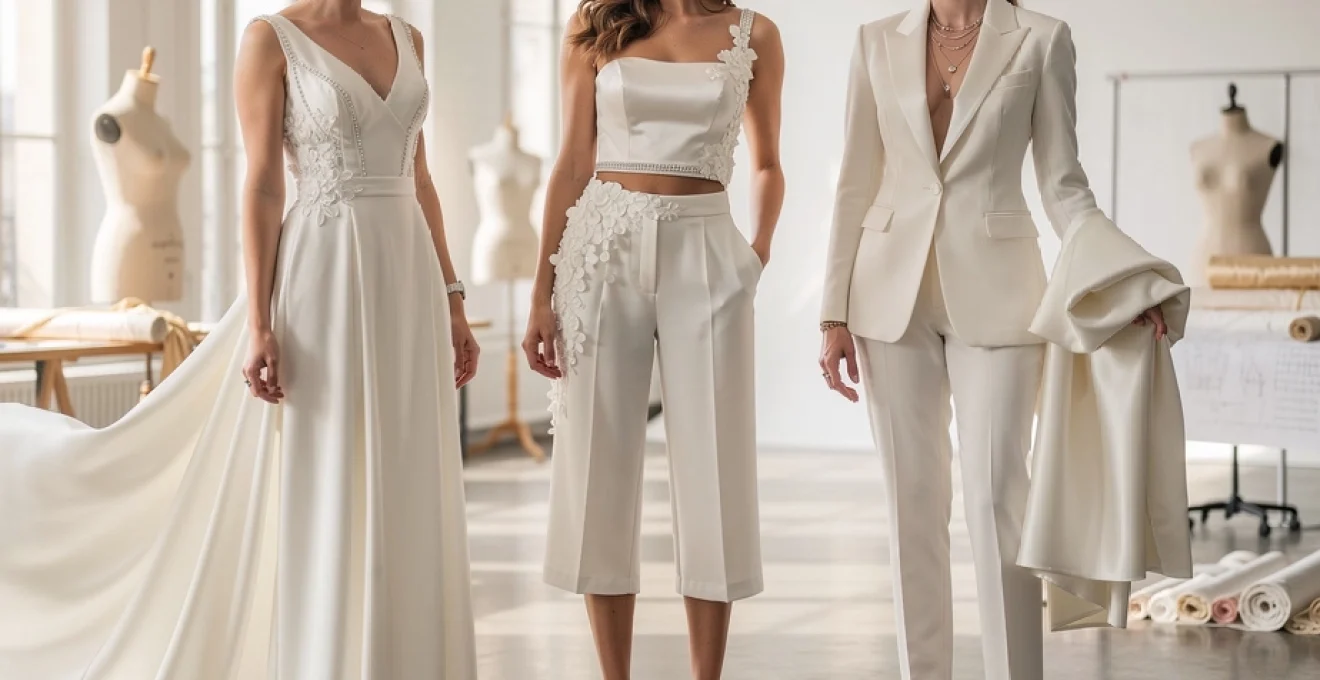
The bridal landscape has undergone a remarkable transformation over recent years, with contemporary brides increasingly rejecting one-size-fits-all traditions in favour of personalised expressions of style. Among the most striking manifestations of this shift is the emergence of bridal jumpsuits as a sophisticated alternative to traditional wedding gowns. No longer relegated to the realm of unconventional or second-look options, these tailored garments have secured their position at the forefront of bridal fashion, offering an elegant synthesis of comfort, versatility, and modern sophistication. From minimalist registry office ceremonies to grand receptions, bridal jumpsuits represent a deliberate choice for fashion-forward individuals who refuse to compromise their aesthetic vision for the sake of convention.
This sartorial revolution reflects broader cultural changes in how weddings are conceived and celebrated. Today’s brides seek garments that not only photograph beautifully but also allow them to move freely, dance uninhibited, and genuinely enjoy their celebration without the physical constraints of heavy fabrics and restrictive silhouettes. The bridal jumpsuit answers this need whilst maintaining the gravitas and elegance traditionally associated with wedding attire.
Sartorial evolution: from traditional wedding gowns to contemporary bridal jumpsuits
The trajectory of bridal fashion has always mirrored societal shifts in women’s roles and self-expression. Whilst the white wedding dress became popularised following Queen Victoria’s 1840 marriage to Prince Albert, establishing a tradition that dominated for over a century, the late twentieth century witnessed gradual diversification. Bianca Jagger’s iconic choice of a white skirt suit for her 1971 marriage to Mick Jagger represented an early departure from convention, signalling that bridal attire could encompass tailored separates without sacrificing elegance or occasion-appropriateness.
The twenty-first century has accelerated this evolution considerably. High-profile figures including Solange Knowles, who wore a striking caped Stéphane Rolland jumpsuit for her 2014 wedding, and Sophie Turner, who selected a Ukrainian-designed Bevza piece for her 2019 Las Vegas ceremony, have demonstrated that trousered bridal looks possess equal glamour and sophistication to their skirted counterparts. These visibility moments have legitimised the bridal jumpsuit within mainstream wedding culture, transforming what was once considered avant-garde into an increasingly normalised option.
Contemporary bridal designers have responded enthusiastically to this demand. Where previous generations might have struggled to locate appropriate jumpsuit options within traditional bridal collections, today’s market offers extensive variety across price points, aesthetic sensibilities, and construction qualities. This proliferation reflects not merely a passing trend but rather a fundamental recalibration of what constitutes appropriate wedding attire. The modern bride recognises that her choice of garment communicates personal values around comfort, practicality, and individual expression—considerations that frequently align more closely with jumpsuit construction than traditional gown architecture.
Fabric selection and construction techniques for bridal jumpsuits
The success of any bridal jumpsuit depends fundamentally upon fabric selection and construction methodology. Unlike traditional gowns, which can rely upon voluminous skirts to create dramatic silhouettes, jumpsuits require fabrics that drape beautifully whilst maintaining structural integrity across fitted bodices and flowing trouser legs. This technical challenge has driven innovation in bridal textile applications and tailoring approaches.
Silk crepe and satin: luxurious draping properties for tailored silhouettes
Silk crepe represents one of the most sophisticated fabric choices for bridal jumpsuits, offering a matte finish that photographs exceptionally well whilst providing the substantial weight necessary for clean lines. This fabric’s natural draping qualities create elegant movement in wide-leg trousers without appearing bulky or overwhelming the wearer’s frame. The subtle texture of crepe adds visual interest that prevents flat appearances in photography, a consideration particularly important for garments lacking the dimensional volume of traditional gowns.
Satin, conversely, delivers the lustrous sheen many brides associate with formal wedding attire. Heavy silk satin provides sufficient body to maintain trouser creases throughout extended wear, whilst its reflective surface catches light beautifully during both
movement. For contemporary bridal jumpsuits, designers often balance the high-shine quality of satin with minimalist silhouettes, preventing the look from tipping into excess. When cut on the bias, both crepe and satin skim the body in a way that feels luxurious yet relaxed, ideal for brides who want a modern bridal jumpsuit that feels as good as it looks throughout a long wedding day.
Many ateliers now blend natural silk with high-quality synthetic fibres such as polyester microfibre or elastane to enhance durability and reduce creasing. This can be particularly beneficial for destination weddings, where travel and humidity put fabrics under extra strain. For brides concerned about sustainability, eco-conscious options like organic silk, TENCEL™ blends, or recycled poly-satin offer similar drape and lustre with a reduced environmental footprint. Whichever route you choose, the key is to ensure the fabric supports both the tailored bodice and the architectural flow of the trouser leg.
Structural boning and corsetry integration for bodice support
Because bridal jumpsuits lack the internal scaffolding created by multi-layered skirts and petticoats, bodice engineering becomes even more critical. Designers frequently integrate lightweight boning and discreet corsetry into strapless, off-the-shoulder, or deep V-neck silhouettes to provide support and maintain clean lines. This internal structure distributes weight evenly and stabilises the garment, so you are not constantly adjusting the neckline or worrying about slippage during the ceremony or first dance.
Modern boning systems are far removed from the rigid corsets of the past. Flexible spiral steel or high-grade plastic bones are often encased in soft cotton channels or padded seams, ensuring comfort even over extended wear. Some bridal jumpsuits also incorporate built-in cups or underwired bra cups, eliminating the need for additional undergarments that might disrupt the line of the fabric. When expertly executed, this corsetry integration is almost invisible, offering the sculpting benefits of shapewear while allowing the minimalist aesthetic of the jumpsuit to take centre stage.
For brides with fuller busts or those opting for dramatic, low-backed designs, bespoke pattern-cutting and strategic panel placement become essential. Designers may raise side seams slightly, deepen waist darts, or add an internal waist stay to anchor the bodice to the torso. Think of it as the architectural framework inside a contemporary building: you may never see it, but it is what keeps everything standing smoothly and beautifully throughout the event.
French seaming and couture finishing methods for clean lines
The streamlined nature of bridal jumpsuits means that every seam, hem, and closure is on display. Where a ball gown might conceal construction within layers of tulle, a pared-back jumpsuit relies on immaculate finishing to look truly luxurious. French seams are a popular choice, enclosing raw edges within the seam itself and creating a neat, durable finish that is both comfortable against the skin and visually refined. This method is particularly effective for lightweight or semi-sheer fabrics such as silk georgette or chiffon overlays.
Couture-level finishing extends beyond seams. Hand-stitched hems, delicately rolled edges, and invisible zips all contribute to the polished appearance of high-end bridal jumpsuits. Many designers also favour hand-overcast seam allowances in areas where bulk must be minimised, such as the crotch and inner thigh. While these techniques are time-consuming, they prevent unsightly ridges and visible impression lines, which can be especially noticeable under strong photography lighting.
Attention to interior details is equally important. Fully lined bodices and trousers not only enhance comfort but also improve the way the garment drapes. A silky lining helps the jumpsuit skim over the body, much like a well-fitted slip beneath a dress, reducing cling and static. When you step into a well-constructed bridal jumpsuit, the difference is immediately apparent: it feels balanced, secure, and refined from every angle, both inside and out.
Stretch incorporation: four-way stretch fabrics for movement and comfort
One of the key advantages of a bridal jumpsuit over a traditional gown is unrestricted movement, and this is where stretch fabrics come into their own. Incorporating two-way or four-way stretch into strategic panels—often along the side seams, seat, or inner leg—allows you to sit, dance, and navigate flights of stairs without strain or discomfort. Four-way stretch crepes, scuba-inspired knits, and technical satin blends have become staples of the modern bridal jumpsuit wardrobe.
Designers often use stretch as a hidden ally rather than a visible design element. For example, a bodice might appear structured and tailored from the outside, while its lining or back panels incorporate stretch to accommodate breathing, hugging, and celebratory embraces. This subtle elasticity can also support size fluctuations between fittings and the wedding day, offering peace of mind in a way that rigid fabrics cannot. It is the sartorial equivalent of a safety net: ideally, you never notice it, but it is there when you need it most.
Stretch fabrics also open the door to more daring silhouettes, such as ultra-slim cigarette legs or second-skin catsuits with overskirts. Without some degree of give, these forms would be impractical for a full day of events. When you are evaluating modern bridal jumpsuits, take a moment to bend, sit, and raise your arms in the sample garment; if the fabric moves with you rather than against you, that subtle stretch has been intelligently integrated into the design.
Silhouette variations: wide-leg, culotte, and slim-fit designs
Just as traditional wedding gowns span from ballgown to sheath, bridal jumpsuits encompass a diverse array of silhouettes. This breadth of choice means there is a modern bridal jumpsuit to complement almost every body type, personal style, and wedding setting. The key is understanding how different cuts interact with proportion, movement, and overall bridal aesthetics. Are you drawn to sweeping, dramatic volume, or do you prefer razor-sharp tailoring and elongating lines?
Wide-leg, culotte, and slim-fit designs each bring distinct advantages. Wide-leg bridal jumpsuits evoke the romance and presence of a skirt while maintaining the practicality of trousers. Cropped culotte options foreground footwear and lend a playful, editorial edge, particularly suited to city elopements and registry office ceremonies. Meanwhile, tuxedo-inspired slim-fit silhouettes lean into androgynous elegance, channelling the power-dressing lineage of icons like Bianca Jagger and modern red-carpet suiting.
Palazzo-style wide-leg jumpsuits with cathedral train attachments
Palazzo-style wide-leg bridal jumpsuits are perhaps the closest counterpart to a traditional gown in terms of drama and movement. Cut from fluid fabrics like silk crepe, chiffon, or satin-backed crepe, their generous leg width creates the illusion of a skirt in motion, while the central seam offers ease of walking and dancing. When paired with a cathedral-length train attachment, the effect can be breathtaking: you achieve that coveted aisle-worthy sweep without the weight and restriction of multiple underskirt layers.
Train attachments for bridal jumpsuits come in several forms, from detachable overskirts that fasten at the waist to cape-like panels that cascade from the shoulders. This modular approach offers remarkable versatility. You can enjoy a full, ceremonial silhouette for the procession and photographs, then remove the train for the reception to reveal the clean lines of the trouser underneath. It is rather like having two bridal looks in one, without the expense or logistical complexity of a complete outfit change.
For taller brides or those seeking a statuesque effect, palazzo-style legs that gently graze the floor can visually elongate the figure, especially when worn with a pointed-toe heel. Petite brides may prefer slightly less volume or a higher waistline to avoid being overwhelmed by fabric. In all cases, precise hemming is essential; when the hem is tailored to your wedding shoes, the wide leg floats just above the ground, creating that coveted “gliding” effect in motion.
Cropped culotte jumpsuits paired with statement bridal footwear
Cropped culotte bridal jumpsuits offer a distinctly fashion-forward alternative, perfect for brides who view their wedding as an opportunity to showcase personal style rather than adhere to tradition. Ending mid-calf or just above the ankle, culottes create a dynamic interplay between volume and negative space, highlighting the lower leg and, crucially, your choice of footwear. If you have always dreamed of wearing sculptural heels, embellished sandals, or colour-pop shoes, this silhouette places them firmly in the spotlight.
The practicality of culottes is another major advantage. They are less likely to drag on the ground, making them ideal for outdoor ceremonies, urban elopements, or weddings involving significant walking between venues. When constructed from structured crepe or faille, they hold their A-line or wide shape beautifully, lending a sense of architectural chic that photographs exceptionally well. For more relaxed celebrations, softer fabrics can evoke a breezy, almost holiday-like feel while still reading as distinctly bridal in white or ivory.
Styling-wise, cropped jumpsuits pair beautifully with both minimalist and maximalist accessories. A clean, strapless neckline and wide culotte leg can serve as a canvas for a bold statement necklace or dramatic earrings. Alternatively, you may choose to keep jewellery understated and allow an intricate shoe—perhaps adorned with pearls, crystals, or metallic leather—to become the focal point. This balance between simplicity and statement is one of the defining appeals of the modern bridal jumpsuit.
Tailored tuxedo-inspired slim-fit designs with satin lapels
For brides drawn to sharp tailoring and androgynous silhouettes, tuxedo-inspired slim-fit bridal jumpsuits offer a compelling option. Featuring tapered legs, defined shoulders, and sometimes even classic satin lapels, these designs echo the structure of a tuxedo while reinterpreting it through a bridal lens. The result is a look that communicates confidence, authority, and modernity—perfect for city venues, evening ceremonies, or black-tie celebrations where you want your outfit to feel thoroughly contemporary.
The success of these slim-fit designs hinges on precise tailoring. A well-cut bridal jumpsuit will skim the hips, define the waist, and break cleanly at the ankle without pulling or bunching. Satin lapels, covered buttons, and welt pockets introduce subtle textural contrast, much like the detailing on a bespoke suit. Designers may soften the look slightly with a deep V-neckline, sheer lace inserts, or a detachable chiffon train, ensuring the overall effect still reads as bridal rather than purely corporate.
As with classic suits, proportion is paramount. Narrow lapels and cigarette legs can elongate the frame, while slightly cropped ankles showcase delicate heels or bridal flats. If you are considering a tuxedo-inspired bridal jumpsuit, a made-to-measure or alteration service is well worth the investment. A few millimetres taken from a shoulder seam or trouser hem can dramatically elevate the final look, turning a good fit into an exceptional one.
Convertible two-piece sets: separate bodice and trouser coordination
Convertible two-piece bridal sets sit at the intersection of jumpsuits and separates, offering brides a modular approach to their wedding wardrobe. Typically consisting of a coordinated bodice and trouser, these ensembles can be styled together to mimic the streamlined effect of a jumpsuit or mixed with other pieces—such as a tulle skirt or embellished top—for different phases of the day. For brides planning multiple events, from civil ceremonies to evening receptions, this flexibility can be invaluable.
From a practical perspective, two-piece sets also simplify tailoring and future wearability. Adjusting the waist or hem of a separate trouser is often easier than altering a one-piece jumpsuit, especially around the torso and rise. After the wedding, you might pair the tailored trousers with a silk blouse for formal occasions, or dress down the bodice with high-waisted jeans for a more casual but still sentimental look. In this sense, convertible sets align perfectly with the growing desire for sustainable bridal fashion that extends beyond a single day.
Design-wise, we see everything from minimalist crop tops and high-waisted wide-leg trousers to more romantic lace bodices and fluid palazzo pants. The key is cohesion: matching fabric, colour, and finishing create visual continuity so the set still feels like one intentional bridal outfit. When done well, a coordinated two-piece can be just as impactful as a traditional gown, while providing a level of freedom and versatility that appeals strongly to contemporary brides.
Embellishment techniques: beadwork, appliqué, and three-dimensional ornamentation
While many modern bridal jumpsuits lean towards minimalism, embellishment still plays a crucial role in elevating these pieces from eveningwear to bridal couture. Thoughtful decoration can introduce depth, texture, and focal points, transforming a simple silhouette into something truly extraordinary. Unlike heavily beaded ballgowns, however, embellishment on jumpsuits is often more strategic, concentrating on key areas such as the bodice, neckline, or cuffs to maintain mobility and keep the overall look light.
Beadwork remains a perennial favourite, with delicate seed beads, pearls, and crystals used to trace lace motifs or highlight structural lines. To prevent excessive weight—particularly important when the garment is supported primarily from the shoulders—designers may opt for scattered beading or gradient patterns that fade out towards the trouser. Lace appliqué offers another opportunity for artistry, allowing motifs to be hand-placed along illusion necklines, sheer sleeves, or side panels for a sculpted, almost tattoo-like effect. This technique is especially effective for creating the “bridal feel” on otherwise minimalist crepe jumpsuits.
Three-dimensional ornamentation has also gained prominence in recent seasons. Think hand-cut organza petals, silk chiffon flowers, or sculpted tulle ruffles that appear to float atop the base fabric. These 3D elements can add romance and softness to the inherently streamlined structure of a jumpsuit, much like floral arrangements transform a modern architectural space. The key is balance: a cluster of flowers at the shoulder or along one sleeve can be impactful without overwhelming the design or compromising its contemporary edge.
For brides who value longevity and re-wearability, removable embellishments can be a smart solution. Detachable beaded belts, appliquéd capelets, or embellished overskirts allow you to adopt a more ornate look for the ceremony and photographs, then simplify your bridal jumpsuit for later events. This modular approach not only extends the life of the garment but also offers a way to adapt your look to different venues and atmospheres throughout the wedding day.
Designer spotlight: stella McCartney, rime arodaky, and savannah miller bridal collections
The rise of modern bridal jumpsuits has been significantly shaped by leading designers who championed trousered bridal looks long before they entered the mainstream. Exploring their distinct approaches can help you refine your own preferences and vocabulary when shopping or working with a boutique. Rather than viewing “jumpsuit” as a single category, we can see how each designer interprets it through their unique aesthetic lens—minimalist, French atelier, or bohemian luxe.
Stella McCartney, Rime Arodaky, and Savannah Miller each exemplify a different facet of contemporary bridal style. McCartney is renowned for clean lines and sustainable fabrics, presenting jumpsuits that feel as sharp as red-carpet tailoring. Rime Arodaky brings a distinctly Parisian sensibility, blending separates, jumpsuits, and bridal minis with sheer panels and intricate lacework. Savannah Miller, by contrast, channels a softer, bohemian elegance, with bridal jumpsuits characterised by fluid silhouettes and poetic detailing.
Stella McCartney’s sustainable minimalist bridal jumpsuit aesthetic
Stella McCartney has long been associated with modern tailoring and ethical production, and her approach to bridal jumpsuits reflects these core values. Her designs tend to favour sleek, sculpted silhouettes in luxurious but understated fabrics, often with subtle details such as discreet waist seams, tailored darts, and gently flared hems. The effect is quietly powerful—ideal for brides who want their presence, rather than heavy embellishment, to make the statement.
Sustainability sits at the heart of McCartney’s brand ethos. Many of her bridal pieces are crafted from responsibly sourced viscose, organic cotton blends, or innovative eco-friendly materials that reduce environmental impact without sacrificing performance. For the eco-conscious bride, choosing a Stella McCartney bridal jumpsuit can feel like an alignment of style and principle, signalling a commitment to ethical fashion on one of life’s most symbolic days. It is a reminder that modern luxury increasingly encompasses how a garment is made, not just how it looks.
Stylistically, McCartney’s jumpsuits often draw on the language of eveningwear and suiting, with clean V-necks, long sleeves, and streamlined legs that elongate the body. Any embellishment tends to be minimal—perhaps a single row of covered buttons, a subtle cut-out, or a softly structured cape. This restrained aesthetic makes her pieces highly versatile, easily re-styled for future formal events with a change of accessories, which aligns perfectly with the growing demand for wearable, long-life bridal fashion.
Rime arodaky’s french atelier approach to modern bridal separates
Rime Arodaky has become synonymous with French-girl bridal cool, and her collections feature some of the most recognisable modern bridal jumpsuits and separates on the market. Her aesthetic combines sharp, contemporary lines with romantic, often daring details: illusion panels, open backs, cropped tops, and lace capes are all part of her design language. For brides seeking a modern bridal jumpsuit that feels both editorial and unmistakably bridal, Rime Arodaky offers a compelling template.
Working from her Parisian atelier, Arodaky frequently blends structured crepe trousers with more delicate lace or tulle bodices, creating a play of textures that keeps the eye engaged. She is also known for her “civil collection,” which includes short dresses, tailored jumpsuits, and separates designed with city hall ceremonies and intimate receptions in mind. These pieces cater to brides who want to look fashion-forward without appearing overly formal or traditional, particularly in metropolitan settings.
One of Arodaky’s signatures is the integration of transparency in a way that still feels chic rather than overtly revealing. Sheer lace sleeves, tulle overlays, and strategically placed appliqués allow a glimpse of skin while maintaining a strong, confident silhouette. This approach makes her bridal jumpsuits and separates especially popular among brides who want to honour bridal codes—lace, white, delicacy—within a distinctly modern framework.
Savannah miller’s bohemian-inspired jumpsuit designs with delicate detailing
Savannah Miller brings a relaxed, bohemian sensibility to bridalwear, and her jumpsuits reflect that ethos with fluid lines, soft drapes, and an emphasis on ease. Rather than sharp tailoring, her designs often showcase bias-cut crepes, flutter sleeves, and gentle wrap fronts that move beautifully with the body. The result is a kind of understated glamour, perfect for outdoor weddings, garden ceremonies, or destination celebrations where the atmosphere is more laid-back than formal.
Miller’s bridal jumpsuits frequently feature delicate detailing—think fine lace trims, subtle embroidery, or barely-there beading—applied with a light hand so the overall impression remains airy and effortless. Necklines may be softly cowl-shaped or V-cut, and waistlines are often defined with slender ties or integrated belts. This creates a flattering silhouette without the rigidity of heavy boning or corsetry, appealing to brides who prioritise comfort and a sense of ease in their wedding attire.
For those drawn to vintage references, Miller’s work often nods to 1930s and 1970s influences, eras known for their languid, body-skimming silhouettes and relaxed glamour. A Savannah Miller bridal jumpsuit might pair beautifully with loose waves, minimal jewellery, and natural makeup—an ensemble that feels authentic, romantic, and deeply wearable long after the wedding day has passed.
Styling protocols: accessorising and layering bridal jumpsuits for ceremony versatility
The beauty of modern bridal jumpsuits lies not only in their construction but also in their styling potential. Because they offer such a clean, contemporary canvas, thoughtful accessories, layers, and beauty choices can dramatically shift the mood of the look—from minimalist civil ceremony to full-scale cathedral glamour. How can you use styling to express your personality while ensuring your outfit transitions smoothly from aisle to after-party?
One effective strategy is to treat your bridal jumpsuit as the foundation of a modular ensemble. During the ceremony, you might layer a structured blazer, lace topper, or ethereal cape over the top, adding a sense of formality and occasion. For the reception, removing that layer instantly relaxes the silhouette, making it easier to dance and mingle. Veils, too, can play a transformative role; a fingertip-length veil paired with a sleek jumpsuit offers a subtle nod to tradition, while a dramatic cathedral veil juxtaposed with a tuxedo-inspired piece creates a striking high-fashion moment.
Accessories allow you to fine-tune the overall aesthetic. Delicate jewellery and soft, tonal shoes maintain a minimalist mood, whereas statement earrings, sculptural cuffs, or a bold headband introduce an editorial edge. Your choice of footwear is particularly important with bridal jumpsuits, as hems and proportions are often tailored around a specific heel height. Whether you opt for block heels, stilettos, or even embellished flats, ensure you bring your chosen shoes to fittings so your tailor can perfect the length and break of the trouser leg.
Finally, consider how hair and makeup choices complement the architecture of your jumpsuit. High necklines and detailed shoulders often pair best with updos or half-up styles that keep the neckline visible, while plunging V-necks can look stunning with loose waves or a sleek, centre-parted style. Makeup can echo the mood of the outfit: a soft, luminous look suits bohemian and romantic jumpsuits, whereas a sharper cat-eye or bold lip can underscore the confidence of a tuxedo-inspired silhouette. By approaching styling as an integral part of your bridal jumpsuit selection, you ensure that every element—from fabric and cut to veil and lipstick—works together to create a cohesive, contemporary bridal story.