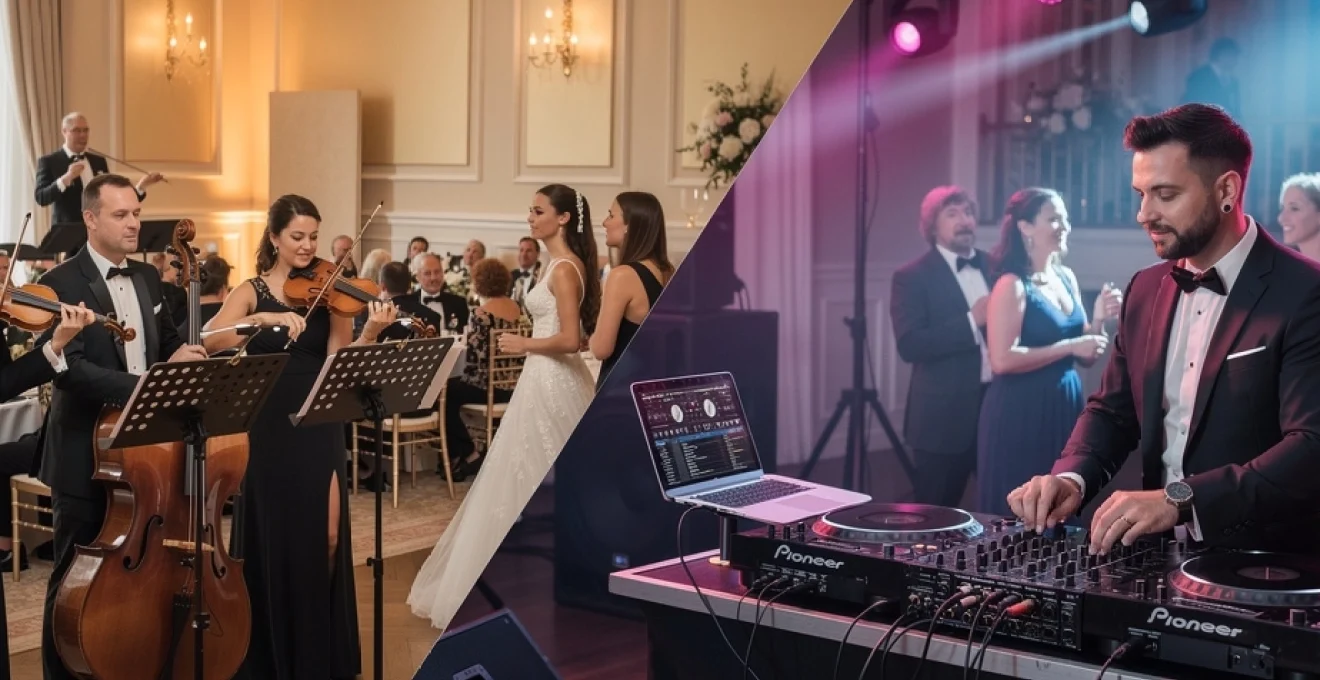
Selecting the perfect musical entertainment for your wedding represents one of the most critical decisions in your planning process. The choice between a live orchestra and a professional DJ extends far beyond simple preference, encompassing budget considerations, venue logistics, guest demographics, and the overall atmosphere you wish to create. Modern couples increasingly face this dilemma as both options have evolved significantly, with orchestras offering more contemporary repertoires and DJs incorporating sophisticated production elements that rival concert venues.
The wedding entertainment landscape has transformed dramatically over the past decade, with traditional boundaries between classical and contemporary music becoming increasingly blurred. Live orchestral performances now seamlessly integrate popular songs alongside classical masterpieces, whilst professional DJs have elevated their craft to include live instrumental accompaniment and complex lighting designs. Understanding the nuances of each option ensures you make an informed decision that perfectly complements your special day.
Live orchestra performance elements for wedding ceremonies
Live orchestral performances bring an unparalleled level of sophistication and elegance to wedding celebrations. The acoustic richness and dynamic range of live instruments create an immersive musical experience that recorded music simply cannot replicate. Professional wedding orchestras typically comprise highly trained musicians who understand the delicate balance required for different moments throughout your celebration, from the subtle accompaniment during cocktail hours to the triumphant processional music.
The visual impact of a live orchestra cannot be understated. Guests often find themselves captivated by the coordinated movements of string players, the dramatic flourishes of conductors, and the precise timing that creates magical musical moments. This performance aspect adds an entertainment dimension that extends beyond auditory pleasure, creating memorable experiences for your guests.
String quartet configurations and classical repertoire selection
String quartets represent the most popular orchestral configuration for weddings, offering an ideal balance between musical complexity and practical considerations. The standard formation includes two violins, one viola, and one cello, providing sufficient harmonic range to perform everything from Bach’s Brandenburg Concertos to modern arrangements of contemporary pop songs. Professional wedding quartets typically maintain repertoires exceeding 200 pieces, encompassing classical standards, romantic ballads, and carefully arranged versions of popular music.
The repertoire selection process involves careful consideration of your ceremony’s various segments. Prelude music during guest seating often features gentle classical pieces such as Pachelbel’s Canon or selections from Vivaldi’s Four Seasons. Processional music might include Wagner’s Bridal Chorus or more contemporary choices like John Legend’s “All of Me” arranged for strings. Recessional music typically features celebratory pieces such as Mendelssohn’s Wedding March or uplifting arrangements of modern love songs.
Full symphony orchestra logistics and venue requirements
Full symphony orchestras for weddings typically range from 15 to 40 musicians, requiring substantial logistical planning and venue coordination. These ensembles demand significant stage space, often requiring platforms measuring at least 20 by 16 feet for smaller configurations. Larger orchestras may need staging areas exceeding 30 by 20 feet, along with additional space for music stands, conductor podiums, and instrument storage.
Power requirements for full orchestras extend beyond basic needs, as many modern performances incorporate electronic elements alongside acoustic instruments. Professional sound reinforcement becomes essential for outdoor venues or large indoor spaces, requiring multiple microphone systems and sophisticated mixing equipment. Venue acoustics play a crucial role in orchestra performance quality, with hard surfaces and high ceilings generally providing better sound projection than heavily carpeted or draped environments.
Chamber music ensembles for intimate wedding settings
Chamber music ensembles offer flexibility and intimacy perfect for smaller wedding celebrations. These groups, typically comprising three to eight musicians, can adapt their performance to various venue constraints whilst maintaining the sophisticated appeal of live orchestral music. Popular configurations include piano trios, wind quintets, and mixed ensembles featuring combinations of strings, woodwinds, and piano.
The intimate nature of chamber music creates opportunities for unique musical interactions with your guests. Musicians can move throughout different areas of your venue, providing cocktail hour entertainment in one location before transitioning to ceremony music in another. This mobility advantage allows for creative programming that larger orchestras cannot achieve, including surprise musical moments during reception activities
and intimate serenades at dinner. For couples who desire the elegance of live music without the logistical footprint of a full orchestra, chamber ensembles often represent the most practical compromise between budget, space, and artistic impact.
Acoustic considerations and sound projection for outdoor venues
Outdoor wedding venues introduce unique acoustic challenges for both orchestras and DJs. Without walls or ceilings to reflect sound, music dissipates more quickly, meaning ensembles often need subtle amplification to ensure consistent coverage across the ceremony and reception areas. Wind, ambient noise, and uneven terrain can further affect how clearly guests hear vows, speeches, and key musical moments.
Professional wedding orchestras typically collaborate with audio technicians to design tailored amplification solutions for outdoor events. This might include discreet microphones on key instruments, carefully placed speakers, and delayed speaker lines to reach guests seated further away. You should discuss with your venue whether they provide basic sound reinforcement or if you will need to engage an external sound company to support your live orchestra.
Weather contingency plans are also crucial when planning outdoor wedding music. Sensitive instruments such as violins, cellos, and woodwinds are affected by humidity, direct sunlight, and temperature swings, which can impact tuning stability and performance quality. Many ensembles stipulate shaded performance areas, stable flooring, and covered structures in their contracts, ensuring both the safety of their instruments and reliable sound projection throughout your celebration.
Professional DJ equipment setup and technical specifications
Professional wedding DJs rely on sophisticated equipment setups to deliver seamless music transitions, crystal-clear audio, and immersive lighting effects. Modern DJ rigs rival small concert productions, integrating high-end players, mixers, controllers, and digital audio interfaces. Understanding the basics of DJ equipment helps you evaluate potential vendors more effectively and ensures the technical capabilities align with your wedding vision.
A well-prepared DJ will typically conduct a site visit or at least review your venue’s technical specifications in advance. This allows them to plan power distribution, speaker placement, and lighting positions to suit your floor plan and guest count. When comparing DJs for your wedding, you should ask detailed questions about their primary and backup equipment, as this is a key indicator of professionalism and reliability.
Pioneer CDJ-3000 and technics SL-1200 turntable integration
The Pioneer CDJ-3000 has become a benchmark for professional wedding DJs, offering precise control, robust performance, and seamless integration with digital music libraries. These media players allow DJs to access thousands of songs, set cue points, and apply creative effects without compromising sound quality. For couples who want a club-style atmosphere with flawless transitions and beat-matching, CDJ-based setups are often the preferred choice.
Many experienced DJs also incorporate Technics SL-1200 turntables for vinyl playback, adding a tactile, nostalgic element to the performance. The combination of CDJ-3000 units and SL-1200 turntables offers maximum flexibility, allowing DJs to blend digital tracks with classic records and specialty remixes. This hybrid configuration is particularly appealing if you value both modern convenience and the warm character of analog sound at your wedding reception.
Integration between these devices is managed through a professional DJ mixer, which serves as the central hub for audio routing and effects processing. High-end mixers provide dedicated channels for multiple decks, microphones, and auxiliary devices, enabling your DJ to transition smoothly between ceremony playlists, background dinner music, and high-energy dance sets. When discussing options, you can ask your DJ how their equipment setup supports uninterrupted music throughout the entire wedding day.
Wireless microphone systems and audio interface management
Clear speech intelligibility is just as important as music quality at a wedding, especially during vows, toasts, and announcements. Professional DJs typically deploy wireless microphone systems to provide flexibility for officiants, MCs, and speakers. These systems often include handheld microphones for speeches and discreet lapel microphones for the ceremony, ensuring every word reaches your guests, even in larger or acoustically challenging spaces.
Behind the scenes, audio interfaces and digital processors manage signal routing between microphones, playback devices, and speakers. A competent wedding DJ will monitor gain structure, equalization, and compression to prevent feedback, distortion, or sudden volume spikes. This technical expertise is crucial when transitioning from quiet speech segments to powerful entrance songs or dance-floor anthems.
Frequency coordination also plays a key role, particularly in urban venues or properties hosting multiple events simultaneously. Professional-grade wireless systems allow DJs to scan for available frequencies and lock channels to avoid interference from nearby devices. When interviewing potential DJs, you may wish to ask how they handle microphone reliability and what backup solutions they have in place should a unit fail mid-ceremony.
LED lighting rigs and DMX controller programming
Lighting has become an integral part of modern wedding DJ services, transforming basic spaces into immersive environments. LED lighting rigs offer energy-efficient, low-heat operation with a vast range of colors and effects, making them ideal for long events. From subtle uplighting on architectural features to dynamic moving-head fixtures over the dance floor, professional lighting can dramatically enhance your reception atmosphere.
Many DJs use DMX controllers to program and synchronize lighting cues with the music. This allows for smooth transitions between soft, romantic lighting during dinner and more vibrant, pulse-driven effects once the dance floor opens. Think of DMX programming as a choreography for light: each fixture follows a pre-planned sequence, creating a coordinated visual performance that mirrors the musical journey of your wedding.
When discussing packages, you should clarify which lighting elements are included and which incur additional fees. Some DJs offer basic dance-floor lighting as standard, with optional upgrades for monogram projections, LED walls, or intelligent lighting shows. If you envision a specific color palette or mood, sharing inspiration photos with your DJ can help them program a lighting setup that complements your décor and photography style.
Sound system calibration for different venue acoustics
Every venue has its own acoustic character, influenced by ceiling height, wall materials, room dimensions, and furnishings. A professional DJ will tailor their sound system to suit these conditions rather than relying on a generic setup. This process, known as sound system calibration, ensures even coverage across the room, balanced frequency response, and comfortable volume levels for guests of all ages.
Calibration typically begins with strategic speaker placement to minimize echo and dead zones. DJs may use a combination of main speakers, subwoofers, and fill speakers to cover large or irregularly shaped rooms. In some cases, basic measurement tools or reference tracks assist in fine-tuning equalization and crossover settings, similar to how a photographer adjusts exposure to suit different lighting environments.
Volume management is particularly important at weddings, where you want energetic music without overwhelming conversation areas. An experienced DJ will adjust levels throughout the evening, keeping background music at a pleasant level during dinner and gradually increasing intensity as the dance floor fills. When meeting with your DJ, you can ask how they adapt their sound system for your specific venue and whether they have previously performed there.
Budget analysis and cost structure comparison
Budget often plays a decisive role when choosing between an orchestra and a DJ for your wedding. While both options can create unforgettable experiences, their cost structures differ significantly. Orchestras typically involve multiple musicians, complex logistics, and higher minimum fees, whereas DJs offer a more condensed service model with fewer personnel and lower overheads.
Understanding how pricing works for each option helps you allocate your wedding budget strategically. Rather than simply comparing headline figures, it is useful to examine what is included in performance fees, how long each vendor will be present, and what additional services—such as ceremony coverage or lighting—are part of the package. This deeper analysis ensures you are comparing like-for-like when evaluating proposals.
Orchestra musician union rates and performance fees
Professional orchestras often follow union rate structures, especially in larger cities and established cultural hubs. These rates set minimum fees per musician for specified performance durations, typically in blocks of three or four hours. As a result, even a relatively small ensemble of 10 players can represent a substantial investment once standard rates, rehearsal time, and travel considerations are factored in.
In many cases, orchestral contracts also include additional charges for rehearsal sessions, music arrangement fees, and transportation of larger instruments such as harps or timpani. If you request custom arrangements of contemporary songs, an arranger or orchestrator may need to be hired, which can add several hundred dollars to your total cost. It is therefore essential to clarify what is included in the base fee and which services are billed separately.
Some wedding orchestras offer fixed-price packages for common configurations, such as a string quartet for the ceremony and cocktail hour or a 20-piece ensemble for the reception. These packages can simplify budgeting and reduce surprises, though they may be less flexible than à la carte options. When reviewing proposals, you should pay attention to overtime policies, as extending the performance by even one hour can incur significant extra costs due to union rules.
DJ package pricing models and equipment rental costs
Wedding DJs typically structure their pricing into tiered packages based on performance length, equipment needs, and additional services such as lighting or photo booths. Entry-level packages may cover a basic sound system and reception music for four to five hours, while premium options include ceremony coverage, cocktail hour playlists, uplighting, and advanced production features. This modular approach allows you to tailor the service to your priorities and budget.
Equipment costs are usually bundled into the DJ’s fee, but some high-end setups—such as extensive lighting rigs or LED dance floors—may involve separate rental charges. In regions where demand is high, popular wedding DJs book out 12 to 18 months in advance and command higher rates, particularly for peak Saturdays during wedding season. If your date is flexible, choosing a weekday or off-season wedding can sometimes reduce DJ costs without compromising quality.
When comparing DJ quotes, it is helpful to ask for a detailed breakdown of what is included: number of hours, setup and teardown time, number of sound zones (for example, separate systems for ceremony and reception), and any travel or accommodation fees. This transparency allows you to see which vendor offers the best value rather than simply the lowest headline price. Remember that a slightly higher fee may be justified by better equipment, more experience, or stronger reviews from past couples.
Hidden expenses and additional service charges
Both orchestras and DJs can involve hidden or easily overlooked expenses that affect your final wedding budget. For orchestras, these may include stage rentals, additional power distribution, risers, music stand lighting, and required hospitality such as meals or dressing rooms. Some venues require union stagehands or in-house technicians for setup and sound checks, which can add further costs beyond the musicians’ fees.
For DJs, potential extra charges often arise from travel distances, early setup requests, or extended performance time beyond the agreed contract. Upgraded lighting, fog machines, special effects, and custom monograms may also be billed as add-ons. To avoid surprises, you should request a comprehensive itemized quote and ask each vendor to highlight any scenarios that would trigger additional charges, such as schedule delays or last-minute location changes.
It is also wise to factor in insurance and licensing considerations. Reputable orchestras and DJs carry liability insurance and appropriate performance licenses, which protect both you and your venue. While these are typically included in their standard pricing, confirming coverage in writing provides peace of mind and reduces the risk of unexpected administrative fees close to your wedding date.
Venue compatibility and space requirements
Your chosen venue has a profound impact on whether an orchestra or a DJ is the more practical choice for your wedding. Space, layout, access, and noise regulations all influence how easily each form of entertainment can be integrated. Before committing to an ensemble or DJ, it is essential to evaluate how well their requirements align with your venue’s physical and technical constraints.
Orchestras, even in chamber configurations, require dedicated areas for instruments, chairs, music stands, and potentially a conductor’s podium. Venues with small stages or low ceilings may limit the size of the ensemble or restrict certain instruments, particularly percussion and brass. By contrast, a DJ booth typically occupies a footprint no larger than a dining table, allowing more flexibility in room layout and guest seating arrangements.
Access and setup logistics are another important consideration. Historic properties, rooftop spaces, or remote outdoor locations can be challenging for large orchestras that travel with extensive equipment. Elevators, loading docks, and parking proximity all affect how smoothly musicians or DJs can set up and strike their gear. Discussing these practicalities with your venue coordinator helps you anticipate any limitations and choose the option that best fits the space.
Musical repertoire flexibility and guest demographics
One of the most common concerns couples express is whether their chosen entertainment can cater to a diverse guest list. Weddings often bring together multiple generations, each with distinct musical preferences. Balancing your personal tastes with the expectations of parents, grandparents, and friends can feel daunting, which is why repertoire flexibility is such a critical factor when comparing orchestras and DJs.
Professional wedding orchestras have expanded far beyond strictly classical repertoires, frequently offering pop, jazz, film scores, and even themed sets. However, their flexibility is naturally limited by the arrangements they have prepared and rehearsed. Requests outside their existing library may be possible but often require additional time and fees for new arrangements. If you dream of walking down the aisle to a string arrangement of a current chart-topping ballad, it is important to confirm that your ensemble can accommodate this in advance.
DJs, on the other hand, have near-unlimited access to recorded music across decades and genres. This makes them particularly adept at responding to guest requests on the fly and adjusting the mood of the dance floor in real time. If your priority is a highly responsive soundtrack that evolves with the crowd’s energy, a DJ may be better suited to your needs. You can still provide a “must-play” and “do-not-play” list to ensure the evening reflects your identity as a couple while keeping guests engaged.
Guest demographics should guide, but not dictate, your decision. Ask yourself: do you envision grandparents swaying to orchestral renditions of classic love songs before younger guests take over the dance floor with current hits? Or would you prefer a DJ who can seamlessly move from 1970s disco to 1990s pop and today’s playlists within a single set? The more clearly you define the atmosphere you want to create, the easier it becomes to select the format that serves your guests best.
Backup contingency planning and risk mitigation strategies
Even the most meticulously planned wedding can face unforeseen challenges, from sudden weather changes to technical issues or performer illness. Robust backup plans and risk mitigation strategies are therefore non-negotiable when choosing between an orchestra and a DJ. Understanding how each vendor prepares for contingencies helps you gauge their professionalism and reduces stress on the day itself.
For orchestras, common risk management measures include having substitute musicians on call, carrying spare instruments and accessories, and arriving well in advance for setup and sound checks. Contracts should outline procedures for handling illness, travel delays, or equipment failure, as well as any financial implications. Some ensembles also provide recorded backup tracks for critical moments, such as the processional, in case extreme circumstances prevent a full live performance.
Professional DJs typically implement multiple layers of redundancy in their setups. This often includes backup laptops or media players, duplicate hard drives with music libraries, spare cables, and emergency microphones. Power protection devices, such as uninterruptible power supplies (UPS), help safeguard against power surges or brief outages. When interviewing DJs, you may ask, “What happens if your primary laptop fails during our first dance?” Their response will reveal how prepared they are for real-world challenges.
Finally, both orchestras and DJs should carry appropriate contracts and insurance to protect all parties. Key clauses to review include cancellation policies, force majeure provisions, and clear timelines for setup and teardown. By discussing contingency plans openly and early in the planning process, you ensure that your wedding music—whether delivered by a live orchestra, a DJ, or a combination of both—remains as uninterrupted and memorable as you have always imagined.