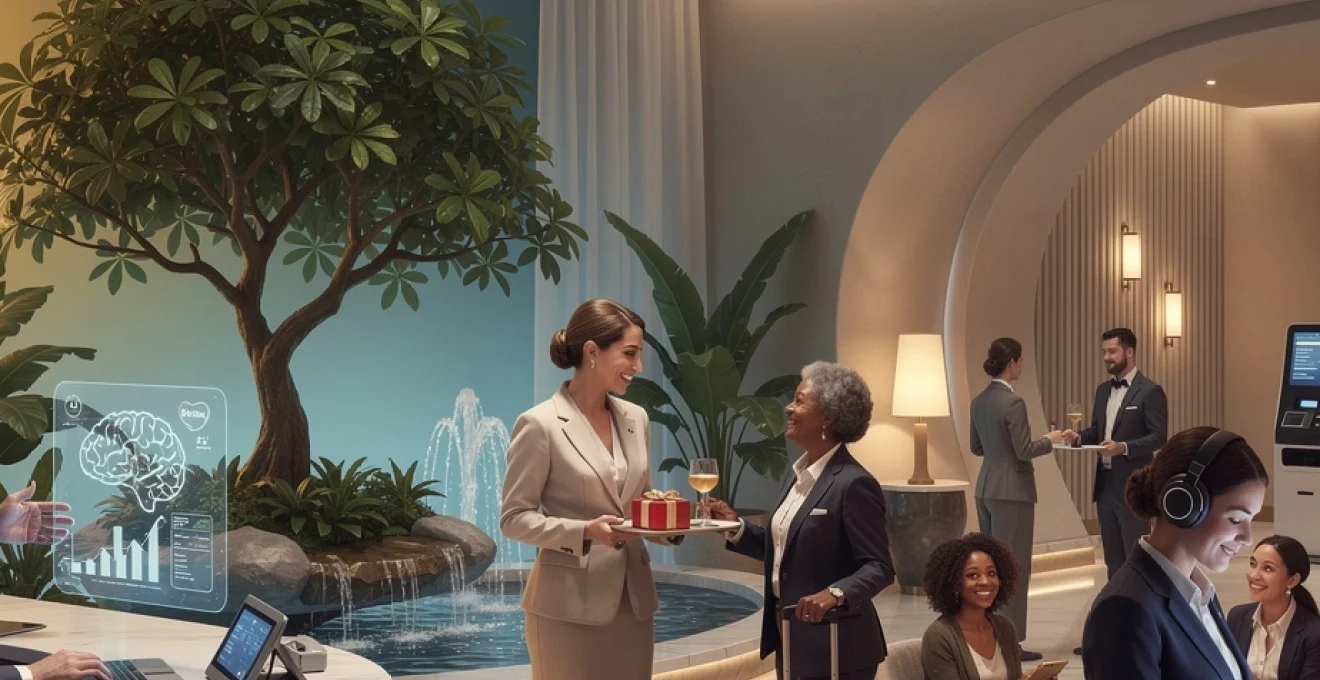
Creating exceptional guest experiences transcends mere hospitality—it becomes a sophisticated blend of psychology, technology, and human intuition. Modern hosts who truly understand their craft recognise that making guests feel special requires a deep appreciation of human behaviour, cultural nuances, and the subtle art of anticipation. The most memorable experiences emerge when hosts move beyond traditional service delivery to craft personalised journeys that resonate on emotional, psychological, and sensory levels. This transformation from simple accommodation to experiential mastery represents the evolution of hospitality in our increasingly connected world.
Today’s discerning guests arrive with heightened expectations shaped by digital experiences and global exposure to luxury standards. They seek authentic connections, personalised attention, and seamless interactions that feel effortless yet thoughtfully orchestrated. The challenge for modern hosts lies in balancing technological sophistication with genuine human warmth, creating environments where every detail serves the greater purpose of making each individual feel valued and understood.
Psychological foundations of exceptional guest experience design
Understanding the psychological underpinnings of human behaviour forms the cornerstone of extraordinary hosting. Guests respond to environments and interactions on multiple cognitive levels, often forming lasting impressions within the first few moments of their experience. Successful hosts intuitively grasp these psychological triggers and design their approach accordingly, creating frameworks that naturally guide guests toward positive emotional states.
Maslow’s hierarchy application in hospitality service delivery
The foundational principles of Maslow’s hierarchy provide invaluable insights for crafting guest experiences that address fundamental human needs. At the physiological level, guests require comfortable temperatures, quality air circulation, appropriate lighting, and access to refreshments. Safety needs encompass both physical security and emotional comfort—guests must feel protected from harm and free from social anxiety or embarrassment.
Moving up the hierarchy, belonging needs manifest in the desire for social connection and acceptance within the hosted environment. Exceptional hosts recognise that guests often seek validation through meaningful interactions and shared experiences. Esteem needs involve recognition, respect, and the feeling of being valued as individuals rather than mere customers. Self-actualisation, the pinnacle of the hierarchy, occurs when guests feel inspired, creative, or transformed by their experience.
Cognitive load theory for seamless guest journey mapping
Cognitive load theory reveals why certain guest experiences feel effortless while others create stress and confusion. When hosts minimise the mental effort required for guests to navigate their environment and make decisions, satisfaction increases dramatically. This involves streamlining choice architecture, providing clear visual cues, and anticipating information needs before they arise.
Effective journey mapping considers the cognitive capacity available to guests at different stages of their visit. Upon arrival, guests typically experience heightened cognitive load due to unfamiliar surroundings and orientation needs. Thoughtful hosts provide immediate anchoring points—clear signage, welcoming staff, and intuitive layouts that reduce mental processing requirements. As guests settle into their environment, cognitive capacity increases, allowing for more complex interactions and choices.
Emotional intelligence frameworks in Host-Guest interactions
Emotional intelligence serves as the bridge between technical service delivery and genuine human connection. Hosts with high emotional intelligence demonstrate acute awareness of their own emotional states while simultaneously reading and responding to guest emotions. This dual awareness enables them to adjust their approach in real-time, matching their energy and communication style to individual guest needs.
The four domains of emotional intelligence—self-awareness, self-management, social awareness, and relationship management—provide a structured approach to guest interactions. Self-aware hosts understand how their mood and behaviour affect the guest experience. Those skilled in self-management can regulate their responses even during challenging situations, maintaining professionalism while addressing concerns with empathy and efficiency.
Neuromarketing principles for memorable experience creation
Neuromarketing research reveals how sensory inputs and environmental factors influence memory formation and emotional responses. The brain’s preference for novelty suggests that unexpected positive elements create stronger lasting impressions than predictable service delivery. However, this novelty must be balanced with familiarity to avoid creating anxiety or discomfort.
Mirror neurons, which fire both when performing an action and observing others perform the same action, explain why genuine enthusiasm from hosts becomes contagious. When you demonstrate authentic excitement about
the guest experience, their emotional brain often mirrors that state. A host who appears rushed, distracted, or disinterested can unconsciously transfer that tension. By contrast, a calm, confident welcome combined with small, sensory “surprises and delights”—an unexpected refreshment, a personalised note, or a beautifully plated amenity—helps encode the stay as a peak moment in the guest’s memory.
Another key neuromarketing insight is the “peak-end rule”: people tend to remember an experience based on its most intense moment and its ending. For hosts, this means intentionally designing at least one standout interaction and paying close attention to how guests depart. A smooth check-out, a sincere farewell, and a thoughtful follow-up can significantly influence how special a guest feels long after they have left.
Pre-arrival guest intelligence and personalisation systems
Exceptional hosting begins long before a guest crosses the threshold. The pre-arrival phase offers a powerful opportunity to gather intelligence, personalise the journey, and communicate care. When used ethically, data-driven systems allow you to move from generic hospitality to highly tailored experiences that make each guest feel recognised as an individual.
Modern guest experience design increasingly mirrors customer experience strategies in leading digital brands. Rather than waiting for guests to ask, we can anticipate their preferences through subtle patterns and previous interactions. The result is a seamless continuum—from first enquiry or booking to the moment of arrival—where every touchpoint reinforces the message: “We see you, we remember you, and you matter here.”
CRM data mining for individual preference profiling
A robust CRM (Customer Relationship Management) system is the backbone of personalised hospitality. By consolidating contact details, stay history, preferences, feedback, and service notes, you create a living profile of each guest. Mining this data allows you to identify meaningful patterns—favourite room types, dietary requirements, preferred check-in times, or even pillow firmness.
The goal is not to accumulate data for its own sake, but to translate it into tangible gestures that elevate the guest experience. For instance, noticing that a frequent guest always orders sparkling water and having it waiting in their room sends a powerful signal of care. At scale, you can design simple rules—if a guest has stayed more than three times, automatically offer a complimentary upgrade when available—that transform routine stays into moments of delight.
Social media analytics for guest lifestyle assessment
Many guests now share aspects of their lives, tastes, and travels on social platforms, creating an open window into their expectations and aspirations. By responsibly reviewing public profiles—always with discretion and respect for privacy—you can enrich your understanding of who is about to walk through your door. Are they passionate about design, wellness, food, or adventure? Their posts often reveal more than a booking form ever could.
This kind of lifestyle assessment is less about surveillance and more about alignment. For example, if a guest frequently posts about plant-based dining, you might highlight vegan options on arrival or recommend a local café that matches their ethos. When done subtly, these personalised suggestions feel less like marketing and more like being hosted by someone who “gets” you.
Predictive modelling for anticipatory service delivery
Predictive modelling allows hosts to move from reactive to anticipatory service. By analysing aggregated data—booking patterns, seasonal trends, service requests—you can forecast both individual and group needs. In hotels, for instance, predictive tools might indicate when a guest is likely to request late check-out, early housekeeping, or airport transfers based on previous behaviour.
On a more granular level, technology can flag when a VIP guest is likely to arrive earlier than scheduled or when a long-stay visitor might appreciate a mid-stay check-in from management. The purpose is not to automate human warmth, but to free teams from guesswork. When you know what guests are likely to need, you can prepare in advance, reducing friction and allowing staff to focus on high-touch, human interactions.
Dynamic pricing psychology and value perception management
Dynamic pricing is now a standard tool across hospitality, but its psychological impact on guests is often overlooked. While rate optimisation maximises revenue, poorly communicated price fluctuations can erode trust and make guests feel like commodities rather than valued individuals. The art lies in balancing yield management with transparent, value-based communication.
Guests are generally comfortable with paying more when they clearly understand what they are receiving in return—exclusive access, unique amenities, or peak-season experiences. Highlighting added value rather than simply stating higher prices supports a positive perception of fairness. When guests feel they are receiving more than they expected for the price, the overall experience—and their sense of being well hosted—improves dramatically.
Physical environment optimisation through sensory design
The physical environment is the silent partner in every hosting experience. Long before a guest speaks to anyone, the space itself begins a conversation through light, sound, scent, and texture. Sensory design turns this silent conversation into a deliberate narrative, guiding emotions and behaviour in ways that feel natural rather than forced.
Thoughtful sensory design does not require extravagant budgets or radical renovations. Instead, it involves a series of subtle, layered decisions—about colours, materials, acoustics, plants, and aromas—that collectively signal comfort, care, and intention. When executed well, guests often cannot pinpoint why they feel so at ease; they simply know they would like to return.
Chromotherapy and colour psychology in interior spaces
Colours are more than aesthetic choices; they are emotional cues. Warm neutrals and soft earth tones typically create a sense of safety and belonging, while cooler hues can evoke calm, focus, or quiet sophistication. Chromotherapy, the use of colour to support wellbeing, offers a useful framework for aligning your palette with the feelings you want to cultivate.
For example, soft blues and greens work well in guest rooms where rest is the priority, whereas reception areas often benefit from slightly warmer tones that feel energising yet welcoming. Accent colours—used in artwork, textiles, or tableware—can inject personality without overwhelming the senses. By intentionally choosing colours that support the guest journey, you transform décor from mere decoration into a subtle tool of hospitality.
Acoustic engineering for ambient sound control
Sound is one of the most powerful yet underrated elements of the guest experience. Excessive noise can increase stress levels, disrupt sleep, and make even the most beautiful space feel chaotic. Conversely, well-managed acoustics create an atmosphere of ease, where conversations feel private and background noise fades into a pleasant hum.
Simple acoustic interventions—soft furnishings, rugs, curtains, and sound-absorbing panels—help reduce echo and sharp noise. Curated soundscapes, whether gentle music in common areas or nature sounds in wellness spaces, can further shape mood. Ask yourself: does the audio environment support the behaviour you want? A lively bar, a tranquil spa, and a focused meeting room each call for distinct acoustic signatures that align with guest expectations.
Aromatherapy integration and scent marketing strategies
Scent is directly connected to memory and emotion, making it a powerful instrument for hosts who want to create a distinctive, memorable experience. A subtle signature fragrance in a lobby or salon can instantly transport returning guests back to positive past visits. In smaller hosting contexts, even something as simple as fresh coffee, baked goods, or a lightly fragranced candle can set the tone.
The key is restraint and consistency. Overpowering scents can be intrusive, particularly for guests with sensitivities, while random or clashing fragrances create confusion rather than comfort. Consider aligning scents with specific zones and purposes—invigorating citrus notes in arrival areas, calming botanicals in rest spaces. When you choose aromas that support the story of your space, you create an invisible brand element guests will remember.
Biophilic design elements for stress reduction
Biophilic design, the practice of integrating natural elements into built environments, has been shown in multiple studies to reduce stress and enhance wellbeing. Humans have an innate affinity with nature, and even small doses—a potted plant, natural wood surfaces, or a view onto greenery—can dramatically shift how a space feels. For hosts, this offers a direct path to making guests feel calmer and more grounded.
Beyond aesthetics, biophilic elements can be functional. Living walls improve air quality, daylight reduces fatigue, and natural materials add tactile warmth. Think of biophilic design as the hospitality equivalent of a deep breath: it invites guests to slow down, relax their shoulders, and feel truly at home. When people are physically at ease, they are far more likely to describe an experience as special.
Advanced communication protocols for cultural sensitivity
In a globalised world, hosting is increasingly a cross-cultural act. Guests arrive with diverse norms, expectations, and communication styles, and making each person feel special requires more than a generic “international” approach. Cultural sensitivity in hospitality is not about memorising stereotypes; it is about cultivating curiosity, humility, and structured communication practices that prevent misunderstandings.
Advanced communication protocols can include everything from multilingual pre-arrival messages to staff training on formality, personal space, and non-verbal cues across cultures. Asking respectful questions—“How do you prefer to be addressed?” or “Is there anything we should know to make your stay more comfortable?”—signals openness rather than assumption. Over time, your organisation can develop cultural playbooks that blend research with real-world experience, guiding teams to respond with confidence and respect.
Technology can support this effort by flagging potential cultural considerations based on a guest’s origin or stated preferences, but the heart of cultural sensitivity remains human. When guests feel their identity is acknowledged rather than erased, they experience a rare kind of hospitality: one that honours not just their needs, but their story.
Technology integration for seamless guest experience management
Technology, when thoughtfully integrated, becomes an invisible facilitator of hospitality rather than a barrier to human connection. The most effective systems remove friction—speeding up check-in, simplifying payments, coordinating service—while preserving or even enhancing warmth and personal attention. The art lies in deciding which moments should be digital and which must remain distinctly human.
Mobile check-ins, digital keys, and messaging platforms can empower guests who value autonomy and speed, while still offering easy access to live support. Behind the scenes, integrated property management systems and task-management tools ensure that guest requests are logged, tracked, and resolved without information getting lost between teams. You might ask: how can technology free us from routine tasks so we have more time for genuine, face-to-face hosting?
Data security and privacy are non-negotiable components of this ecosystem. Guests must trust that the information they share to enable personalisation will be handled with care. Clear privacy policies, minimal data collection, and strict access controls protect that trust. In the best examples of tech-enabled hospitality, guests barely notice the systems at work—they simply experience a stay that feels smooth, responsive, and uncannily attuned to their needs.
Post-departure relationship cultivation and loyalty architecture
The art of hosting does not end at check-out or when the last guest leaves the table. Post-departure interactions are where fleeting enjoyment can be transformed into lasting loyalty. Thoughtful follow-up communicates that your care was not transactional; it was relational. When guests feel remembered and valued after they leave, they are far more likely to return, recommend you, and become advocates for your brand.
Effective loyalty architecture blends emotional connection with practical incentives. Personalised thank-you messages, invitations to share feedback, and occasional, relevant updates help keep the relationship alive. Rather than flooding inboxes with generic offers, consider segmenting guests based on their interests and behaviour: the wellness enthusiast, the business traveller, the family planner. Each segment receives communication that feels crafted for them, not blasted at them.
Simple gestures—a birthday note, early access to a new experience, or a small recognition of repeat visits—can feel disproportionately meaningful. These touches need not be extravagant; what matters most is their specificity and sincerity. Over time, your community of guests becomes more than a customer base. It evolves into a network of people who trust that when they step into your care, they will be seen, understood, and made to feel genuinely special, every single time.