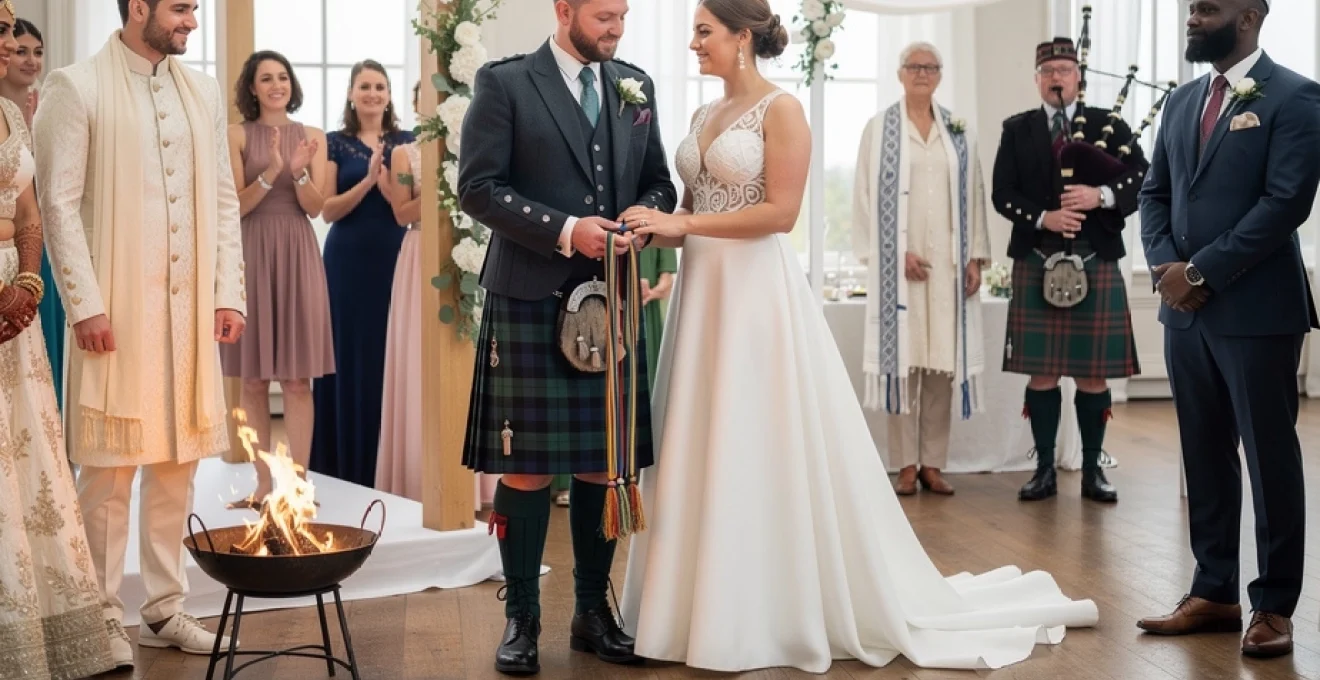
Wedding celebrations today represent a fascinating tapestry where ancient customs seamlessly blend with contemporary preferences. Couples increasingly seek to honour their ancestral heritage whilst creating personalised ceremonies that reflect their unique love stories. This cultural fusion has transformed the modern wedding landscape, where traditional rituals from Hindu fire ceremonies to Celtic handfasting find new expression in contemporary British venues.
The desire to incorporate meaningful cultural elements stems from a deep-rooted need for connection and authenticity. Rather than abandoning heritage in favour of purely modern celebrations, today’s couples are discovering innovative ways to adapt time-honoured traditions for contemporary settings. This evolution reflects broader societal changes where multiculturalism is celebrated and diverse backgrounds are woven together in union.
The transformation of wedding traditions showcases how cultural practices can remain vibrant and relevant across generations. From Scottish Highland ceremonies in urban venues to Chinese tea ceremonies in modern reception halls, these adaptations demonstrate the enduring power of ritual to create meaning and connection in our increasingly globalised world.
Hindu wedding rituals integration in contemporary british ceremonies
Hindu matrimonial traditions bring centuries of spiritual significance to modern British weddings, offering couples rich symbolism and meaningful rituals that transcend cultural boundaries. The integration of these ancient practices into contemporary celebrations requires careful consideration of venue limitations, guest understanding, and timing constraints whilst preserving the essential spiritual elements that make these ceremonies profound.
Modern Hindu-British weddings often span multiple days, incorporating traditional elements alongside Western customs. The challenge lies in maintaining the sacred integrity of each ritual whilst making them accessible to diverse wedding parties and guest lists. Many couples choose to explain the significance of each ceremony element through printed programmes or brief explanations from the officiant, creating educational moments that enhance appreciation for the cultural richness being shared.
Mehndi night adaptations for modern wedding timelines
The mehndi ceremony has evolved from a traditional pre-wedding ritual into a versatile celebration that fits contemporary wedding schedules. Modern mehndi nights often take place weeks before the actual wedding day, allowing intricate henna designs sufficient time to develop their deepest colour whilst accommodating busy professional schedules and destination wedding logistics.
Contemporary mehndi celebrations frequently incorporate entertainment elements that bridge cultural gaps, including Bollywood dance performances, traditional music mixed with modern hits, and interactive henna stations where guests can participate in the artistic tradition. Venues now commonly provide dedicated spaces for mehndi application, ensuring comfort and proper lighting for the intricate artwork that forms the ceremony’s centrepiece.
Mandap construction techniques in Non-Traditional venues
Creating authentic mandaps in contemporary wedding venues requires innovative engineering solutions that respect both architectural constraints and spiritual requirements. Modern mandap construction utilises modular systems that can be assembled in hotels, marquees, and non-traditional spaces whilst maintaining the four-pillar structure essential to the ceremony’s symbolism.
Floral mandaps have become increasingly popular, incorporating seasonal British flowers alongside traditional marigolds and roses. These living structures create stunning visual focal points whilst allowing for creative interpretation of classical designs. Professional mandap builders now work closely with venue coordinators to ensure structural integrity whilst maximising decorative impact within specific space limitations.
Sacred fire ceremony modifications for indoor celebrations
The Agni ceremony, central to Hindu weddings, has been thoughtfully adapted for indoor venues through the use of smaller, contained fire elements that maintain spiritual significance whilst meeting health and safety requirements. Modern interpretations often feature beautiful copper or brass vessels designed to contain sacred flames safely within hotel ballrooms and marquees.
Alternative approaches include LED flame effects combined with traditional incense burning, creating the visual and aromatic elements of the sacred fire whilst ensuring guest safety and venue compliance. Some couples choose to conduct abbreviated versions of the fire ceremony outdoors before moving to indoor venues for reception festivities, maintaining the ritual’s authenticity whilst accommodating practical constraints.
Saptapadi vow personalisation in multicultural unions
The seven sacred steps of the Saptapadi have been creatively personalised to reflect contemporary values whilst honouring traditional meanings. Modern couples often incorporate bilingual vows, expressing each step in both Sanskrit and English, making the ceremony accessible to diverse family members and friends who may be unfamiliar with Hindu traditions.
Couples in multicultural unions increasingly adapt each of the seven steps to reflect shared priorities such as equality, environmental responsibility, and mutual support in careers and caregiving. Rather than reciting purely literal translations, many choose to work with their priest or celebrant to craft wording that links traditional meanings with modern life, for example highlighting shared financial responsibility or respect for each other’s beliefs. In interfaith weddings, one partner may echo or respond to each vow in their own language or spiritual tradition, turning the Saptapadi into a true dialogue rather than a one-sided recitation. This thoughtful personalisation allows Hindu wedding vows to feel both rooted in heritage and fully aligned with contemporary values.
Celtic heritage revival in scottish and irish wedding customs
Celtic wedding traditions have seen a strong revival across the UK, particularly among couples with Scottish, Irish, or Welsh ancestry who want to honour their roots within modern ceremonies. Rather than recreating medieval rituals in full, many pairs select a few key customs that resonate with their story, such as handfasting, tartan symbolism, or traditional music. These elements can be woven seamlessly into civil or religious services, giving the day a distinct sense of place and lineage without overwhelming guests who may be less familiar with Celtic culture.
Handfasting ritual authentication using historical clan traditions
Handfasting, the symbolic binding of the couple’s hands with ribbon or cord, has become one of the most recognisable Celtic wedding rituals. To avoid it feeling like a mere trend, many Scottish and Irish couples research their own clan or regional history to choose colours, knot styles, and blessings that reflect genuine traditions. Some families provide heirloom tartan ribbons or cords woven by relatives, creating a tangible link between past and present generations.
Working with an experienced celebrant is crucial for ensuring that the handfasting ritual is both culturally respectful and legally appropriate within a British wedding ceremony. The legal vows must still be spoken clearly and separately, but the handfasting can frame these promises in a visually powerful way. By explaining the origins of the custom in the order of service or through a short introduction, couples help guests understand that this is not just a dramatic gesture, but a historically rooted commitment ritual.
Bagpiper processional integration in church ceremonies
The sound of the bagpipes remains one of the most evocative expressions of Scottish heritage, and many couples choose to feature a piper during their ceremony entrance or exit. In church weddings, careful coordination with clergy and musicians ensures that the piper’s performance complements, rather than competes with, hymns or organ music. A popular approach is to have the piper lead the wedding party to the church doors, pause during the formal processional, and then resume playing as the newlyweds exit to greet their guests.
For venues with strict noise regulations or urban locations, pipers may perform outdoors only, creating a memorable arrival experience that sets the tone for the day. Couples sometimes choose particular tunes associated with their clan or region, or commission modern arrangements that blend traditional melodies with contemporary tastes. This kind of musical integration highlights how cultural traditions can adapt to modern wedding timelines without losing their emotional impact.
Celtic knot symbolism in contemporary ring exchange ceremonies
The endless loops of Celtic knot designs have become a popular motif in wedding rings, invitation suites, and décor, symbolising eternal love and interconnected lives. Rather than simply choosing these designs for their visual appeal, many couples use the ring exchange moment to reference the deeper meaning behind the patterns. A short explanation from the celebrant can highlight how, like the knot, a marriage has no clear beginning or end and is formed from interwoven paths.
Jewellers across the UK now offer bespoke Celtic-inspired bands that incorporate subtle knotwork, ogham inscriptions, or clan symbols. This allows couples to integrate cultural heritage into their wedding jewellery while still maintaining a sleek, contemporary aesthetic. The rings become daily reminders of both modern commitment and ancient lineage, embodying the broader impact of cultural traditions on modern weddings.
Highland wedding attire adaptation for modern bridal parties
Highland dress, from kilts to sporrans and tartan sashes, continues to play a prominent role in Scottish weddings, even when celebrations take place in English cities or destination venues abroad. Grooms and groomsmen often balance tradition and comfort by selecting lighter-weight fabrics and modern tailoring that suit indoor ceremonies and extended receptions. Coordinating tartans across the bridal party can create a cohesive visual identity while still allowing individual expression through different cuts and accessories.
For brides and non-Scottish partners, subtle tartan touches—such as a sash, shawl, shoes, or bouquet wrap—offer a meaningful nod to heritage without requiring full traditional dress. Some couples invite immediate family to wear clan colours while offering guests optional tartan ribbons or pocket squares, creating a sense of shared belonging. This flexible approach to attire demonstrates how traditional Highland style can be adapted for diverse bodies, gender expressions, and comfort levels in modern weddings.
Jewish matrimonial traditions in secular wedding environments
Jewish wedding customs have long influenced global wedding culture, and many of these traditions are now thoughtfully incorporated into secular or interfaith ceremonies across the UK. Elements such as the chuppah (wedding canopy), ketubah (marriage contract), and glass-breaking ritual can all be adapted for non-synagogue venues while retaining their symbolic power. For couples where one or both partners are Jewish, these rituals offer a way to honour heritage in front of a diverse guest list.
In civil ceremonies, officiants often collaborate with rabbis or knowledgeable family members to ensure that adapted rituals remain respectful and meaningful. A chuppah may be set up in a garden, barn, or city hall, using fabrics or flowers that match the overall décor while still representing the couple’s new home. Many modern couples commission artist-designed ketubahs that include both Hebrew and English text, sometimes expanding the traditional wording to emphasise equality, mutual support, and shared decision-making.
The breaking of the glass at the end of the ceremony remains one of the most recognisable Jewish wedding traditions and is frequently included even in otherwise secular celebrations. To help non-Jewish guests understand the moment, couples often provide a short explanation in the order of service or invite the officiant to share its layered meanings—remembrance of historical hardship, awareness of life’s fragility, and the idea that joy and sorrow coexist. This simple act, followed by guests shouting “Mazel tov!”, becomes a powerful example of how a single cultural ritual can energise a modern wedding.
African diaspora wedding customs in british multicultural celebrations
Across Britain’s multicultural communities, African diaspora wedding traditions bring vibrant colour, music, and symbolism to modern ceremonies. Whether rooted in West African, Caribbean, or African-American heritage, these customs often focus on themes of community support, ancestral honour, and collective joy. Couples increasingly blend these rituals with Western formats, creating weddings that feel both deeply personal and openly inclusive.
Jumping the broom ceremony significance in modern context
Jumping the broom, a tradition with strong roots in African-American and Caribbean communities, has been embraced by many British couples of African descent as a powerful symbol of resilience and new beginnings. Historically, it emerged during times when enslaved people were denied legal marriage, becoming a way to claim commitment in the face of oppression. Acknowledging this history during the ceremony helps frame the act as more than a theatrical moment; it is a conscious reclaiming of agency and love.
In modern weddings, the broom is often decorated with ribbons, beads, or kente cloth and placed at the end of the aisle for the couple to jump together after their vows. Some choose to involve family members in decorating the broom beforehand, turning it into a collaborative heirloom that can be passed down. By inviting a brief explanation from the celebrant or including a note in the programme, couples help guests understand why this tradition still matters in today’s context of multicultural British celebrations.
Libation rituals for ancestral honour in contemporary venues
Libation ceremonies—pouring liquid to honour ancestors and invoke blessings—remain central to many African and Afro-Caribbean spiritual practices. In the context of a modern British wedding, they are often adapted to suit venue guidelines while preserving their essence. A small table or altar may be set up with water, wine, or traditional drinks, along with candles or photographs of loved ones who have passed.
Because some UK venues have restrictions around open flames or liquids on certain surfaces, couples work with coordinators to stage the libation in a controlled area, sometimes before guests are seated or during a quieter moment within the ceremony. The officiant or an elder typically leads the ritual, speaking names and blessings aloud so that the community can share in the remembrance. This visible act of honouring ancestry can be especially meaningful in multicultural weddings, where it invites all guests to reflect on their own family histories.
Kente cloth integration in western wedding attire
Kente cloth, with its bold patterns and coded colour meanings, has become a symbol of pride and cultural continuity for many people of Ghanaian and broader African heritage. Rather than wearing full traditional outfits, some couples choose to integrate kente into Western-style wedding attire for a balanced, contemporary look. This might include kente-trimmed veils, bow ties, waistcoats, or stoles draped over classic suits and gowns.
Bridal parties may coordinate with matching kente sashes or skirts, creating a strong visual thread throughout the event without overwhelming the overall styling. Designers and tailors in the UK now specialise in Afro-fusion bridalwear, helping couples choose patterns and colours that reflect their family histories and personal tastes. In this way, the fabric becomes both fashion and storytelling, embodying the impact of cultural traditions on modern wedding aesthetics.
African drumming processional coordination with traditional wedding music
Live African drumming brings an immediate sense of energy and community to wedding ceremonies, particularly during processionals and recessions. Coordinating drummers with more traditional wedding music—such as string quartets, choirs, or recorded tracks—requires thoughtful planning but yields unforgettable results. One common approach is to have drummers lead the couple and wedding party into the reception, transitioning into a DJ or band set once everyone is assembled.
For civil or church ceremonies, venue sound policies and acoustics need to be discussed well in advance, as drums can be loud and resonant. Couples may opt for softer hand percussion during the formal parts of the service, saving full ensembles for outdoor entrances or evening festivities. When done well, this blending of musical traditions mirrors the couple’s own blended identities, offering guests a powerful, rhythmic welcome into the celebration.
Chinese tea ceremony protocol in western wedding reception design
The Chinese tea ceremony, traditionally held to honour parents and elders, has become a central feature of many East Asian and British-Chinese weddings. Rather than existing as a separate event, it is now often woven into the main wedding day, either during the morning preparations or as a dedicated segment of the reception. This flexibility allows couples to maintain cultural traditions without extending the schedule across multiple days.
In Western-style venues, planners frequently create a dedicated tea ceremony area within the reception space, using screens, florals, and red-and-gold accents to evoke a sense of intimacy and respect. Chairs are arranged for elders to be seated comfortably while the couple kneels or bows to serve tea in traditional cups. To help guests from other cultural backgrounds understand the proceedings, some couples use bilingual signage or ask the MC to narrate the symbolism of each step—respect, gratitude, and the formal welcoming of both families into one.
Practical adaptations may include simplifying the order in which relatives are served, especially when extended families are large or travel distances are involved. Some couples combine the tea ceremony with gift exchanges or red envelope presentations, streamlining multiple customs into a single, meaningful moment. By integrating the tea ceremony into the reception design rather than treating it as an add-on, modern weddings show how cultural rituals can sit at the heart of the celebration, not just at its edges.
Mediterranean wedding feast traditions in modern catering practices
Mediterranean cultures—from Italy and Greece to Turkey and the Levant—place immense importance on food as a symbol of hospitality, abundance, and family connection. As a result, Mediterranean-inspired wedding feasts have become increasingly popular across the UK, even among couples without direct regional heritage. Shared platters, leisurely multi-course meals, and seasonal ingredients all contribute to a convivial atmosphere that encourages conversation and community.
Modern caterers adapt traditional dishes such as mezze spreads, antipasti tables, grilled fish, and slow-cooked lamb to suit diverse dietary needs and contemporary presentation styles. Rather than rigid three-course menus, couples often opt for family-style service or interactive food stations that echo the long, social meals typical of Mediterranean weddings. This approach not only reflects changing attitudes towards more relaxed receptions but also reduces food waste by allowing guests to choose what they actually want to eat.
Cultural symbolism can be highlighted through specific elements: sugared almonds at Italian-inspired weddings, honey-drenched pastries echoing Greek or Middle Eastern traditions, or toasts with regional wines and liqueurs. Some couples incorporate a late-night “second wave” of food—such as pizza slices, bougatsa, or flatbreads—to mirror the extended celebrations common in Mediterranean regions. By combining these time-honoured customs with modern service standards and inclusive menu planning, today’s weddings demonstrate how culinary traditions continue to shape the emotional heart of the celebration.