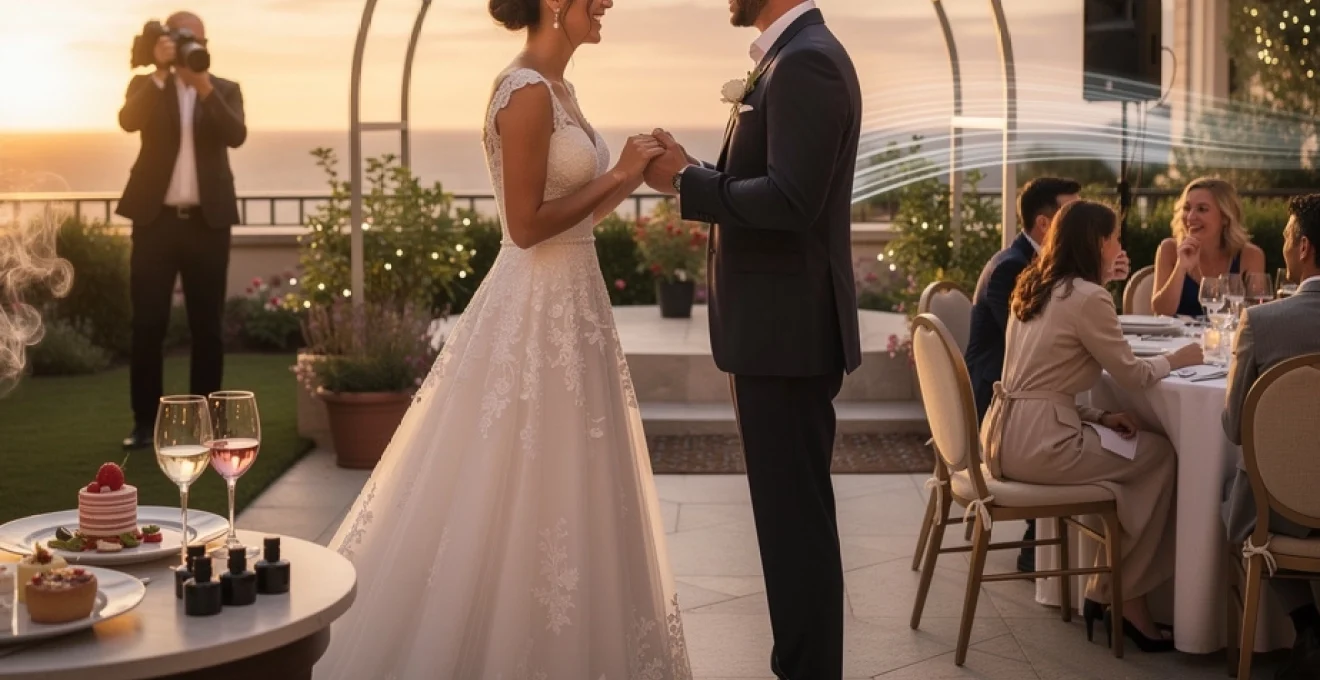
When guests leave a wedding remembering vivid details years later, it’s rarely by accident. The difference between a forgettable celebration and one that lingers in collective memory lies not in budget or venue grandeur, but in how the event aligns with fundamental psychological principles. Couples investing thousands in their wedding day often overlook the cognitive science that determines which moments will be remembered and which will fade within weeks. Understanding the psychology behind memorable wedding experiences allows you to design a celebration that creates lasting emotional imprints on everyone present, ensuring your investment translates into genuinely unforgettable moments rather than expensive details that guests won’t recall.
Cognitive psychology principles that shape wedding memory formation
The human brain doesn’t record experiences like a video camera. Instead, it selectively encodes moments based on specific cognitive patterns that have evolved over millennia. Wedding planners and couples who understand these patterns can strategically design their celebration to align with how memory actually works, creating experiences that guests will recall vividly for decades. Research in cognitive psychology reveals that certain types of experiences are far more likely to be consolidated into long-term memory than others, regardless of how much money was spent creating them.
The Peak-End rule and emotional climax design in wedding ceremonies
Nobel Prize-winning psychologist Daniel Kahneman discovered that people judge experiences based primarily on two moments: the peak emotional intensity and the final moments. This peak-end rule has profound implications for wedding planning. Guests don’t average out their experience across the entire day; instead, they remember the highest emotional moment and how things concluded. This explains why a spectacular first dance or surprise musical performance often becomes the defining memory, even if the meal service was slow or the weather turned poor earlier.
Strategic couples design deliberate emotional peaks throughout their celebration. The ceremony vow exchange naturally provides one peak, but the most memorable weddings create additional peaks during the reception. A bespoke wedding song performed live during the ceremony or first dance can generate that intense emotional moment that guests will reference years later. The peak doesn’t need to be elaborate or expensive—it simply needs to generate genuine emotional arousal that triggers the brain’s memory consolidation mechanisms.
Serial position effect: optimising first impressions and farewell moments
Cognitive research consistently demonstrates that people remember the beginning and end of experiences more clearly than the middle—a phenomenon called the serial position effect. Wedding guests will vividly recall their arrival experience and departure far more than many middle moments, regardless of cost or complexity. This principle suggests investing attention in the ceremony entrance, the initial reception atmosphere, and the final send-off, as these bookend moments disproportionately shape overall memory.
Many couples allocate substantial budgets to table centrepieces and menu details that occur during the memorably-weak middle period, whilst underfunding the arrival experience or ending on an anticlimactic note. The serial position effect explains why guests frequently struggle to recall what they ate but remember exactly how they felt walking into the venue or during the last dance. Designing a strong opening—perhaps with unexpected musical choices or atmospheric lighting as guests enter—and a powerful conclusion creates psychological anchors that support all memories in between.
The von restorff effect through unexpected signature elements
Items that stand out from their surroundings are remembered significantly better than uniform elements—a principle known as the Von Restorff effect or isolation effect. In wedding contexts, this means that unexpected, distinctive moments create far stronger memories than even beautiful but conventional elements. A singing waiter, an acoustic performance in an unusual location, or a meaningful ritual unique to the couple will be remembered long after guests have forgotten standard wedding elements, regardless of quality.
The Von Restorff effect doesn’t require dramatic gestures. Even small deviations from wedding expectations create memorable distinctiveness. A couple who incorporates a meaningful cultural tradition, commissions personalised music, or includes an unexpected pause for reflection creates cognitive “pop-out” moments. Research shows that just one or two distinctive elements can define an entire event’s memorability. This psychological principle explains why surprise generates such powerful memory formation and why guests can describe unique elements from weddings years ago whilst forgetting conventional aspects from celebrations attended just months prior.
Emotional arousal and memory consolidation during vow exchanges</h3
From a neuroscience perspective, these emotionally charged moments act like a highlighter pen over your memory. Heightened emotional arousal activates the amygdala, which in turn signals the hippocampus to prioritise encoding the event into long-term storage. This is why guests can quote a single, heartfelt line from personalised vows ten years later but cannot recall the colour of the chair sashes. When couples invest time in crafting vows that feel authentic rather than generic, they are not just making the ceremony “nicer”—they are engineering one of the strongest memory anchors of the entire wedding experience.
To maximise this effect, consider how you frame the vow exchange. Slowing the pace, minimising distractions, using carefully chosen music, and ensuring guests can hear every word all amplify emotional arousal. Pauses for breath and eye contact create micro-moments of intensity that the brain latches onto. In practice, this might mean briefing your celebrant to create space around the vows, choosing a simple soundscape instead of busy background noise, and resisting the urge to rush because you feel watched. The more present you both are, the more deeply this moment will be etched into everyone’s memory.
Sensory psychology and multi-modal experience architecture
While cognitive principles explain what gets remembered, sensory psychology explains how those memories are formed. Weddings that feel immersive and memorable rarely rely on visuals alone. Instead, they orchestrate multiple senses—sight, sound, smell, touch, and taste—into a cohesive “experience architecture” that wraps guests in a specific emotional atmosphere. Because different sensory channels are processed in different parts of the brain, a multi-sensory approach creates more neural pathways associated with your day, making the memory far more durable.
Think of this as designing a 360-degree experience rather than a series of pretty scenes. A candlelit aisle with a subtle signature scent, a live string arrangement that swells at just the right moment, the texture of linen napkins, and the warmth of a late-night snack all layer together. Even if guests can’t articulate every element, their nervous system registers it, and their memory becomes richer and easier to retrieve. The result is a wedding experience that is not only seen in photos but felt viscerally whenever something triggers those sensory cues in future.
Olfactory memory triggers: signature scent design and fragrance psychology
Of all the senses, smell is most directly wired to memory. The olfactory bulb sits adjacent to the amygdala and hippocampus—key regions for emotion and memory—which is why a single whiff of a familiar perfume can transport you back years in an instant. For weddings, this makes fragrance one of the most underused yet powerful tools for creating memorable experiences. A consistent “scent story” can become a lifelong trigger for recalling your day with unusual clarity.
Couples can leverage this by choosing a signature scent for the celebration: perhaps a particular candle during the ceremony, diffusers in key spaces, or a bespoke fragrance blend that appears subtly throughout. The key is repetition without overwhelming intensity. Later, lighting the same candle on anniversaries or using the same fragrance at home instantly reactivates the emotional memory network built on your wedding day. Rather than relying solely on images, you are creating a sensory key that unlocks the feeling of the day whenever you choose.
Auditory anchoring through personalised musical curation
Music acts as a powerful auditory anchor because rhythm and melody engage both emotional and motor areas of the brain. Studies consistently show that songs linked to significant life events can trigger detailed recall decades later. At weddings, music often becomes background noise, yet when curated intentionally it can structure the emotional arc of the day and create strong memory associations. Each key transition—the aisle walk, signing of the register, entrance to dinner, first dance, and final song—offers an opportunity to encode a specific emotional state into sound.
Personalised choices magnify this effect. A bespoke wedding song written from your story or a carefully selected track with lyrical relevance becomes more than “nice music”; it becomes a mnemonic device. Guests may not remember the table plan, but they will remember “that song they walked into the garden to” or “the acoustic version of their favourite track during the vows.” After the wedding, integrating these songs into playlists you listen to on drives, Sunday mornings, or anniversaries reinforces the neural link, making your wedding day a recurring emotional resource rather than a one-off event.
Haptic elements and tactile memory formation
Touch is often overlooked in wedding design, yet haptic experiences quietly shape how events feel at a bodily level. The weight of a handwritten invitation, the texture of the ceremony booklet, the softness of blankets at an outdoor reception, or even the feel of a solid, well-crafted champagne glass all send subtle cues to the nervous system. Our brains encode these tactile experiences alongside emotional context, which is why picking up your wedding album years later can bring back not just images but a bodily sense of the day.
To harness tactile memory, consider how guests physically interact with your wedding environment. Are they squeezing into wobbly chairs or settling into comfortable seating? Are they holding paper that feels flimsy or substantial? Are they invited to participate in a ritual—tying ribbons, signing a beautiful guest book, holding sparklers—that engages their hands in meaningful ways? Each of these micro-interactions turns a passive viewing experience into an embodied one, increasing the likelihood that both you and your guests will remember not only what happened but how it felt to be there.
Gustatory psychology in wedding breakfast menu design
Taste is closely linked with smell and, by extension, with memory. Yet from a psychological standpoint, what guests remember about wedding food is less about complexity and more about emotion, context, and timing. Research suggests that people recall whether food was enjoyable, abundant, and aligned with their expectations more than they recall specific dishes. This means that a thoughtfully designed, cohesive menu that feels “like you” will have more impact than an elaborate, showy meal that doesn’t fit the overall tone of the day.
Couples can use this to their advantage by anchoring at least one or two courses in personal significance—a favourite shared dish, a dessert tied to a family tradition, or a late-night snack that reflects how you met. When these gustatory elements are introduced with a short explanation (for example, by the MC or on a simple menu card), they shift from being generic catering to story-driven experiences. Guests are more likely to remember “the ice cream inspired by their first date” than a generic three-course menu, even if the latter is technically more sophisticated.
Social psychology dynamics in guest experience and collective memory
Memories of weddings are not formed in isolation; they emerge from a complex web of social interactions, group dynamics, and shared emotional states. Social psychology helps explain why two weddings with similar budgets and venues can produce entirely different guest experiences. It’s not simply who is in the room, but how those people connect, interact, and emotionally synchronise throughout the day. When you understand these dynamics, you can design not just for individual moments, but for a cohesive collective memory that guests co-create together.
From the size and composition of the guest list to how you structure seating plans and dance floor spaces, each social decision ripples through the atmosphere. Well-designed weddings encourage micro-connections: cousins meeting for the first time, old friends reconnecting, new friendships forming over shared laughter. These social micro-moments often become the stories guests tell afterwards, shaping how they—and you—remember the wedding. In this sense, you are less a host of a performance and more an architect of a temporary social community.
Dunbar’s number and optimal wedding guest list configuration
Anthropologist Robin Dunbar proposed that humans can maintain stable social relationships with around 150 people—known as Dunbar’s number. Beyond this, the quality of connection weakens. While weddings often stretch or compress this number, the principle remains useful: the larger the guest list, the harder it is to create an intimate, cohesive atmosphere where everyone feels emotionally involved. This is why many couples report that their smaller celebrations felt more meaningful and vividly remembered than larger, more lavish events they have attended as guests.
Practically, this doesn’t mean you must cap your guest list at 150, but it encourages you to be intentional about who you invite and how you structure the day. If you are planning a large wedding, consider smaller “inner circle” moments—an intimate pre-ceremony gathering, a private vow exchange, or a brunch the next day—for your closest network. These configurations align with how our social brains work, ensuring that the relationships that matter most receive the attention and emotional bandwidth they need to become lasting memories.
Social facilitation theory in reception layout and seating plans
Social facilitation theory suggests that the presence of others can enhance or impair performance depending on how comfortable we feel with the task. Translated into wedding contexts, guests are more likely to relax, dance, and engage when they feel socially safe and loosely supported by the group. Reception layouts and seating plans that ignore this dynamic can inadvertently create awkwardness and inhibit participation, leading to a flatter emotional atmosphere and fewer memorable high points.
Thoughtful seating plans group people with at least one anchor—someone they know or can easily connect with—while also creating bridges between social circles. Similarly, reception layouts that keep the dance floor, bar, and seating within visual proximity encourage natural flow and social cross-pollination. When guests can see others enjoying themselves, their own inhibitions lower, and the overall energy rises. In effect, you are designing a social feedback loop where positive behaviour—laughter, dancing, conversation—becomes contagious, reinforcing the collective memory of a vibrant celebration.
Collective effervescence: creating shared emotional synchrony
French sociologist Émile Durkheim coined the term collective effervescence to describe the energy and harmony people feel when they come together in a shared emotional experience. Weddings are uniquely fertile ground for this phenomenon: a roomful of people all focused on the same couple, the same moment, the same ritual. When couples and planners design intentionally for these shared surges of emotion, they create not just individual memories but a sense of “we were all there together” that binds guests long after the day.
Collective effervescence often emerges during moments of synchrony: everyone standing as the couple enters, singing along to a favourite song, raising glasses in a unified toast, or dancing in a circle around the couple. These are not accidental; they can be gently orchestrated through clear cues, well-timed music, and a confident MC or celebrant who knows how to lead a room. When guests’ emotional states align in this way, their memories become interlinked, strengthening the overall impression that the wedding was “electric” or “magical” even if individual details fade.
Neuroscience of wedding photography and visual memory encoding
Photography does more than document a wedding; it actively shapes how the day is remembered. Neuroscience shows that our brains reconstruct memories each time we recall them, often drawing heavily on visual cues. The images you see repeatedly after the wedding become the scaffolding around which your narrative of the day is built. This means that the choices you make about photography—style, timing, what is prioritised—have long-term consequences for your autobiographical memory of the experience.
Rather than thinking of photography as coverage, it is helpful to see it as selective encoding. A photographer who understands the emotional arc of a wedding will seek out not only posed portraits and décor shots but also micro-expressions, quiet in-between moments, and interactions that capture authentic connection. These candid, story-driven images give your memory more texture than a series of perfect but emotionally flat portraits. When you revisit your album, the brain fills in sounds, smells, and feelings around these visual anchors, reactivating the multi-sensory experience long after the event has passed.
Strategically scheduling time for post-ceremony or “golden hour” portraits also has a psychological benefit beyond aesthetics. Stepping away together creates a short, reflective interval where you can emotionally process what has happened. The photos taken in that calmer, more present state often become some of the most cherished, serving as visual symbols of not just how you looked, but how you felt moving from ceremony to married life. Over years, these images help stabilise your narrative of the day, providing reassurance and continuity during more challenging seasons of your relationship.
Temporal psychology: pacing, duration perception and event flow design
Our perception of time is subjective. Psychologists have shown that emotionally rich, varied experiences feel longer and more satisfying in retrospect than monotonous ones, even if the clock time is the same. Weddings that are poorly paced—long gaps with nothing happening, rushed transitions, or an abrupt ending—can distort guests’ sense of the day, making it feel disjointed or strangely short. Conversely, a well-designed event flow can make the celebration feel expansive and immersive, without exhausting anyone.
Key to this is alternating intensity and rest. Just as a well-structured film balances high-action scenes with quieter character moments, a memorable wedding weaves together peaks of collective energy with intervals of calm connection. A lively confetti exit followed by a relaxed drinks reception, heartfelt speeches after dinner, then an energetic first dance creates a natural rhythm. When you map your timeline, ask yourself not only “what happens when?” but “how will this feel in the body?” and “where do we want the emotional peaks and breaths to be?” This temporal awareness helps prevent energy dips that guests remember for the wrong reasons.
Duration perception also affects how you and your partner remember the day. Many couples describe their wedding as a blur. Building in intentional pauses—five quiet minutes together after the ceremony, a slow walk between locations, a private last dance—helps anchor memories. These micro-rituals act like bookmarks in your mental timeline, giving your brain chances to consolidate what has happened before moving on. In the long run, this makes the entire experience feel more spacious and comprehensible in memory, rather than a single, overwhelming flash.
Personalisation psychology and autobiographical memory enhancement
Ultimately, the most powerful wedding memories are not just generic “good times” but chapters in your autobiographical story. Personalisation psychology shows that we encode information more deeply when it relates directly to our identity, history, and values. A wedding that could belong to any couple will be remembered more weakly than one that clearly reflects who you are—individually and together. This is true for you as the couple, but also for your guests: the more they feel part of the narrative, the more vividly they remember it.
Practical personalisation goes beyond monograms and colour schemes. It might mean weaving in elements of how you met, referencing the challenges you’ve navigated, honouring family traditions, or creating new rituals that feel uniquely yours. Story-driven speeches, personalised readings, and bespoke music all reinforce the sense that this event is not a template but a lived story. Each time someone hears, sees, or participates in a moment that could only happen at your wedding, their brain tags it as personally relevant, boosting both emotional impact and long-term recall.
For your own autobiographical memory, investing in post-wedding rituals is just as important. Curating an album that tells the story rather than simply cataloguing the day, revisiting your vows on anniversaries, or playing your bespoke wedding song during significant milestones all help re-encode the experience over time. In doing so, you transform your wedding from a single date in the past into an ongoing psychological resource—a reservoir of shared joy and commitment that you can draw on when life becomes complex. By designing not just the day but the memories that follow, you honour the true value of your investment: a love story that continues to feel vivid, alive, and deeply your own.