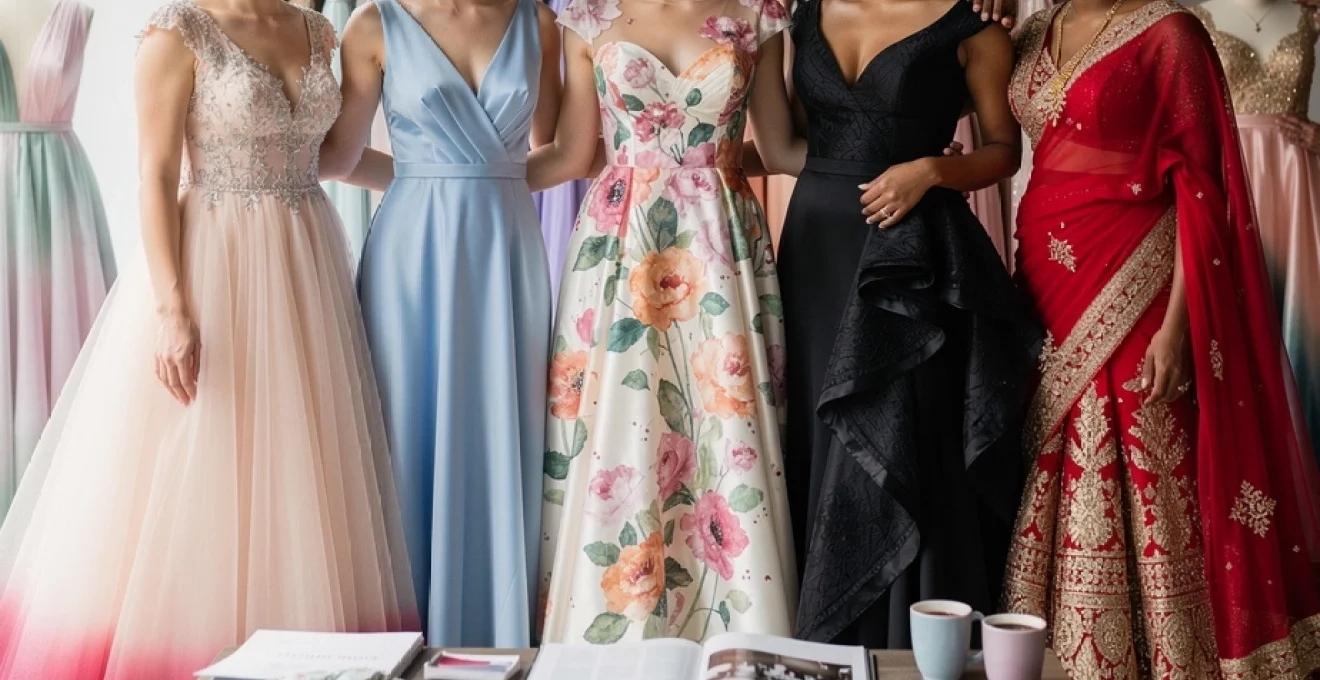
The wedding industry is experiencing a remarkable transformation as modern brides increasingly abandon the conventional white gown in favour of vibrant, colourful alternatives. This shift represents more than just a fashion trend; it reflects a fundamental change in how couples approach their wedding day, prioritising personal expression over traditional expectations. Recent data from Pinterest shows a staggering 240% increase in searches for “unique wedding dresses,” while blush pink and black gowns have seen remarkable growth of 60% and 50% respectively. This movement towards chromatic bridal wear challenges the long-standing tradition established by Queen Victoria in 1840, when her white wedding dress set the standard for generations to come.
Today’s brides are embracing colours that reflect their personalities, cultural backgrounds, and individual love stories. From soft pastels that whisper romance to bold jewel tones that command attention, coloured wedding dresses offer unlimited possibilities for self-expression. This evolution in bridal fashion represents a broader cultural shift towards celebrating individuality and breaking free from restrictive traditions that no longer serve modern couples’ desires for authenticity and personalisation.
Evolution of Non-Traditional wedding dress colour palettes in contemporary bridal fashion
The journey from exclusively white wedding dresses to today’s rainbow of bridal options has been gradual yet profound. Before Queen Victoria’s influential choice, brides commonly wore their finest dress in whatever colour they owned, making practical decisions that allowed them to re-wear their wedding attire. The white dress tradition, while beautiful, was initially a symbol of wealth and status rather than purity, as white fabrics were expensive and difficult to maintain.
Contemporary bridal fashion has returned to this more practical and personal approach, with designers and brides alike recognising that colour can enhance rather than detract from the ceremony’s significance. The modern palette extends far beyond the traditional ivory and cream variations, encompassing everything from subtle champagne and blush tones to dramatic emerald greens and midnight blues.
Millennial and Gen-Z bride preferences for alternative hue selections
Younger generations are driving the coloured wedding dress movement with unprecedented enthusiasm. Research indicates that 35% of millennial brides and 42% of Gen-Z brides consider non-white options for their wedding attire. These demographics prioritise authenticity and self-expression over adherence to traditional expectations, viewing their wedding as an opportunity to showcase their unique style and personality.
The preference for alternative hues often stems from practical considerations as well. Many younger brides appreciate the versatility of coloured gowns, which can be worn again for other special occasions. Popular choices include sage green for outdoor ceremonies, dusty rose for romantic garden weddings, and navy blue for sophisticated evening celebrations. These colour selections often coordinate beautifully with seasonal themes and venue aesthetics.
Instagram and pinterest’s role in normalising chromatic bridal wear
Social media platforms have played a pivotal role in normalising and popularising coloured wedding dresses. Instagram hashtags like #coloredweddingdress and #nonwhiteweddingdress have garnered millions of posts, creating communities of brides who share inspiration and encouragement for breaking traditional moulds. Pinterest boards dedicated to alternative bridal wear showcase thousands of stunning examples, from subtle ombré effects to bold monochromatic statements.
These platforms have democratised bridal fashion inspiration, allowing brides to discover options beyond what traditional bridal magazines typically feature. The visual nature of these platforms perfectly suits the display of coloured gowns, where the impact of hue and shade can be immediately appreciated. This exposure has helped shift public perception, making coloured wedding dresses appear not only acceptable but genuinely desirable.
Celebrity influence: gwen stefani’s pink Dip-Dyed gown and sarah jessica parker’s black vera wang
Celebrity weddings have significantly influenced the acceptance of non-white bridal wear. Gwen Stefani’s custom pink ombré gown by John Galliano for her 2002 wedding to Gavin Rossdale became iconic, inspiring countless brides to consider dip-dyed and gradient effects. The dress featured a dramatic pink-to-white fade that was both romantic and rebellious, perfectly capturing Stefani’s unique
spirit. Similarly, Sarah Jessica Parker made headlines when she chose a dramatic black Vera Wang gown for her 1997 wedding to Matthew Broderick. At the time, the choice was seen as daring, even shocking, yet it has since become a reference point for brides who love the idea of a black wedding dress that feels fashion-forward rather than funereal. These high-profile moments helped prove that a colourful or dark gown can still be deeply romantic and “bridal” in its own right.
Other celebrities have continued to expand the visual vocabulary of bridal fashion. Jessica Biel’s soft pink Giambattista Valli gown, Kaley Cuoco’s blush dress, and Chloë Grace Moretz’s Cinderella-blue look have all reinforced the idea that the perfect dress does not have to be white. When you see women in the public eye celebrating their vows in every shade from canary yellow to pastel purple, it becomes far easier to imagine yourself doing the same. Over time, these celebrity fashion choices filter down to mainstream bridal collections, influencing what designers create and what boutiques are willing to stock.
Seasonal colour trends: pantone’s wedding palette integration
The rise of colourful wedding dresses also aligns with broader fashion and interior trends, many of which are shaped by Pantone’s annual Colour of the Year and seasonal palettes. Designers increasingly look to Pantone forecasts when planning new bridal collections, integrating on-trend shades like Living Coral, Classic Blue, or Viva Magenta into their gowns and accessories. This approach helps brides who want their wedding aesthetic to feel current while still timeless in photographs.
Seasonal colour trends also guide brides when choosing a coloured wedding dress that matches their date and setting. Spring ceremonies often lend themselves to soft pastels such as blush, lilac, and sage, while autumn nuptials benefit from rich hues like burnt orange, burgundy, and deep forest green. By aligning gown colours with Pantone-inspired wedding palettes, couples can create cohesive visuals that run through everything from the invitations and florals to the bridesmaids’ dresses and table décor.
Cultural fusion: traditional chinese red and indian saffron in western ceremonies
As multicultural weddings become more common, cultural fusion has become a powerful driver in the adoption of colourful wedding dresses. Traditional Chinese bridal wear often features vibrant red, a colour associated with luck, joy, and prosperity. Many Chinese or Chinese-heritage brides now incorporate this symbolism into Western-style gowns, choosing red or red-accented dresses that blend the silhouette of a classic white dress with the auspicious colour of a qipao or cheongsam.
Similarly, Indian weddings have long embraced rich colours such as saffron, marigold, and deep crimson for bridal attire, symbolising fertility, power, and spiritual purity. Brides who grew up between cultures may opt for a saffron or jewel-toned lehenga-inspired gown, or select a white dress with bold embroidered borders and dupatta-style veils. This cultural fusion allows you to honour ancestral traditions while still feeling at home in a Western ceremony format, proving that colour can be a bridge between identities rather than a departure from heritage.
Designer collections championing chromatic bridal couture
High-end and boutique designers have been instrumental in turning colourful bridal wear from a niche idea into a recognised category. As more labels release full collections of chromatic bridal couture, brides gain confidence that a colourful wedding dress is not just a one-off curiosity, but a respected fashion choice. These designer collections often showcase advanced craftsmanship, from hand-painted fabrics to innovative layering techniques, underlining that a non-white gown can be every bit as luxurious as a traditional one.
Influential fashion houses and bridal designers are also using colour to tell stories within their collections. You will see capsules that progress from icy blue to stormy grey, or from nude blush to saturated fuchsia, echoing themes of dawn to dusk or innocence to passion. For brides, this means more curated, ready-made options that align with the emotional narrative they want to express on their wedding day.
Valentino’s haute couture coloured gown collections
Valentino’s haute couture collections have long celebrated colour, and this ethos naturally extends into bridal-adjacent gowns that many brides now choose as their wedding dress. Pierpaolo Piccioli’s voluminous silhouettes in shades like sunflower yellow, peony pink, and regal violet have inspired a new understanding of what a “statement” wedding dress can look like. While they may not be labelled as bridal, these gowns are increasingly worn down the aisle by fashion-conscious brides who value artistry and drama.
What makes Valentino’s coloured creations so influential is the way they balance boldness with sophistication. A floor-length mint-green silk faille gown or a cape-backed fuchsia dress reads as couture rather than costume, making it easier for brides to imagine themselves in a similarly chromatic silhouette. Many luxury bridal boutiques now stock Valentino-inspired styles, from softly tinted tulles to jewel-toned mikado, responding to this appetite for high-fashion colour in wedding couture.
Hayley paige’s whimsical blue and blush pink designs
For brides who dream of a fairytale aesthetic, Hayley Paige (now designing under different labels) helped popularise whimsical blue and blush pink wedding dresses. Her collections frequently featured layered tulle skirts, glittering bodices, and delicate celestial motifs rendered in soft pastels. These designs made the idea of a coloured wedding dress feel playful and romantic, rather than rebellious or severe.
Blue and blush dresses in particular have become staples in modern bridal salons, partly thanks to this whimsical design language. A pale blue ball gown can serve as both “something blue” and the main event, while a blush-toned A-line dress flatters many skin tones and feels subtly different from white without straying too far from convention. If you are curious about colour but nervous about going bold, Hayley Paige–style pastels offer a gentle entry point into non-traditional bridal fashion.
Marchesa’s hand-painted floral motif techniques
Marchesa is renowned for its ultra-feminine, romantic gowns, many of which incorporate hand-painted floral motifs that blur the line between fashion and fine art. Rather than starting with a fully coloured fabric, the designers often work on a neutral base—ivory, champagne, or pale nude—and then paint blossoms and vines in watercolour-like hues. The result is a coloured wedding dress that still reads as light and bridal, but reveals intricate artwork upon closer inspection.
This technique appeals strongly to brides who want a unique, almost bespoke feel without commissioning a fully custom gown. Hand-painted florals in soft pinks, lavenders, and greens can echo the wedding flowers and garden setting, turning the bride into a living extension of the décor. Because the colour is concentrated in the motifs rather than the entire fabric, the effect remains delicate, making it ideal for those who love colour but prefer a more understated approach.
Vera wang’s revolutionary black wedding dress movement
Vera Wang decisively challenged bridal norms when she released a collection of black wedding dresses in 2012, featuring inky ball gowns, charcoal mermaids, and dresses with bold black accents. At the time, the idea of an all-black bridal collection was radical, yet it opened the door for more dramatic and gothic-inspired interpretations of wedding style. Wang’s message was clear: black can be chic, powerful, and unapologetically bridal.
Since then, black and white wedding dresses, as well as fully black gowns, have become a recognised category. Brides seeking a sophisticated, fashion-forward look often turn to these designs, which photograph beautifully against minimalist venues, industrial lofts, or candlelit ballrooms. If you are drawn to the elegance of a black-tie event and want your gown to reflect that same level of polish, a black Vera Wang–inspired dress can be the perfect embodiment of modern, chromatic bridal couture.
Fabric technology and dyeing techniques for coloured bridal wear
The rise of colourful wedding dresses is not only a story of changing aesthetics; it is also a story of innovation in fabric technology and dyeing techniques. Delicate materials like silk, tulle, and lace require careful handling to maintain their drape and luminosity when colour is added. Advances in textile science now allow designers to create richly pigmented gowns that remain lightweight, comfortable, and durable enough to be preserved as heirlooms.
Understanding how colour interacts with different fabrics can help you make more informed choices when shopping for a non-white wedding dress. Matte crepe will display hue very differently from shimmering organza, just as velvet deepens colour while chiffon tends to soften it. By learning a little about these processes, you can better communicate with designers or consultants and select a coloured gown that will look as stunning in person as it does in photos.
Ombré and gradient dyeing methods in silk and tulle
Ombré and gradient dyeing techniques have become signature elements of many coloured bridal collections, offering a way to incorporate multiple tones in a single gown. In silk and tulle, dyes can be hand-applied or bath-dyed to create soft transitions from one colour to another—think white fading into blush, or pale blue melting into deeper navy at the hem. This technique allows brides to enjoy the symbolism of white near the bodice while still embracing bolder colour at the skirt.
From a technical standpoint, creating an even gradient on delicate fabrics requires skill and precise control of time, temperature, and dye concentration. When executed well, the result is almost like a sunset captured in fabric, adding movement and depth to every step you take. If you love the idea of a coloured wedding dress but want something nuanced rather than solid and saturated, an ombré silk or layered tulle gown can provide that perfect balance.
Colour-fast treatment technologies for delicate bridal fabrics
One practical concern many brides have about coloured wedding dresses is colour-fastness: will the shade bleed, fade, or stain during the day or over time? Modern textile finishing technologies address these worries through pre-treatment and post-treatment processes designed to lock pigment into the fibres. Enzyme washes, heat-setting, and specialised fixatives help ensure that delicate fabrics retain their vibrancy without sacrificing softness.
These advances are particularly important for multi-layered gowns, where contact between linings, underskirts, and outer layers could once lead to unwanted transfer. With improved colour-fast treatments, you can confidently choose a deep red or jewel-toned gown without fearing it will lose intensity after cleaning. When shopping, do not hesitate to ask your boutique or designer about the dyeing methods and care recommendations; a reputable maker of coloured bridal wear will be transparent about how their fabrics perform over time.
Hand-painted watercolour effects on organza and chiffon
Hand-painted watercolour effects are one of the most artistic ways to introduce colour into a wedding dress. On sheer fabrics such as organza and chiffon, pigments can be diluted and layered to mimic the look of a watercolour painting, with soft edges and subtle blending. Designers often use this technique to create abstract washes of colour, floral patterns, or even landscape-inspired motifs that make each gown feel one of a kind.
Because these effects are applied by hand, they lend themselves particularly well to semi-custom or bespoke gowns. You might work with an atelier to incorporate hues from your wedding palette, favourite flowers, or meaningful locations into the artwork on your dress. The result is a coloured wedding dress that is literally wearable art—an elegant canvas for your love story that will stand out in photographs for years to come.
Metallic thread integration and iridescent fabric applications
Metallic threads and iridescent fabrics provide another avenue for brides who want a colourful wedding dress that shimmers rather than shouts. Gold, silver, rose-gold, and even coloured metallic threads can be woven into lace, brocade, or tulle to create subtle glints that catch the light as you move. This approach is ideal if you enjoy the idea of a “champagne” or “gold” dress but prefer the sparkle to be integrated into the textile structure rather than applied as sequins.
Iridescent organzas and satins, which shift between two or more colours depending on the viewing angle, offer a more futuristic yet still romantic option. Imagine a gown that appears soft lilac in some lights and pale blue in others, echoing the changing sky on your big day. Used sparingly, metallic and iridescent elements can elevate a coloured bridal look, making it feel luxurious and special without overwhelming the overall silhouette.
Regional wedding traditions embracing colourful bridal attire
While Western culture only recently began to reconsider the dominance of white, many regions around the world have always embraced colourful bridal attire. In Japan, traditional shiromuku may be white, but vibrant uchikake over-robes in red, gold, or multi-coloured florals remain popular for wedding portraits and ceremonies. In parts of West Africa, brides wear richly patterned kente, asooke, or wax-print fabrics, often combining several bold colours and geometric motifs to honour their heritage.
Latin American weddings also showcase a broad range of colour, from embroidered Mexican wedding dresses with bright floral patterns to flamenco-inspired gowns in Spain that incorporate red ruffles and polka dots. Even within Europe, historical traditions include black bridal gowns in Scandinavia and Spain, chosen not for mourning but for practicality and elegance. As cultural exchange accelerates, these regional customs inspire Western brides, who borrow elements such as colourful embroidery, sashes, or jewellery to personalise their wedding look.
For couples planning destination weddings, embracing local bridal colours can add a layer of respect and connection to the host culture. A bride marrying on the Amalfi Coast might choose a lemon-yellow or sea-blue gown echoing the landscape, while a ceremony in Marrakech could inspire a terracotta or saffron dress that harmonises with the surrounding architecture. By looking beyond the white dress tradition, you open the door to a world of colour stories that have been part of wedding culture for centuries.
Photography and styling considerations for non-white wedding dresses
Choosing a colourful wedding dress also means thinking strategically about photography and styling so that your gown looks its best on the day and in your album. Different hues interact with light in unique ways: a dark emerald or black dress will create striking contrast against pale backdrops, while a pastel gown can appear washed out in harsh mid-day sun if not photographed carefully. Working with a photographer who has experience shooting non-white wedding dresses can make a tangible difference in how your images turn out.
Before the wedding, you might share test photos or inspiration images with your photographer to discuss angles, locations, and lighting that will flatter your chosen colour. Golden hour often enhances colourful bridal wear, imbuing warm tones with extra glow and lending depth to cooler shades. Indoors, soft window light or carefully balanced flash can prevent colour casts that distort the true hue of your gown.
Styling also plays a key role in showcasing a coloured wedding dress. Neutral or complementary florals—such as white and greenery with a red gown, or soft pinks with a blue dress—ensure your bouquet does not compete with the main garment. Similarly, selecting bridesmaids’ dresses in harmonising colours, rather than identical shades, creates depth in group photos while keeping you as the focal point. Think of your wedding party and décor as the supporting cast that frames your chromatic bridal look.
Makeup and accessories should be chosen with the same level of care. Bold eye makeup paired with a vivid gown may be too strong for some tastes, whereas a clean, luminous look often lets the dress take centre stage. Jewellery in metals that complement your gown’s undertone—warm gold with champagne or peach, cool silver with icy blue or grey—helps create a cohesive, polished effect. By aligning photography, florals, and styling with your colour choice, you ensure the daring decision to go non-white pays off beautifully in every frame.
Seasonal appropriateness and venue-specific colour selection guidelines
When selecting a colourful wedding dress, season and venue are two of the most practical factors to consider. Certain hues feel naturally aligned with specific times of year: airy pastels and soft neutrals for spring, bright florals and sea-inspired blues for summer, earthy jewel tones for autumn, and rich metallics or deep shades for winter celebrations. Choosing a colour that echoes the seasonal landscape can make your entire event feel cohesive, as if your dress is part of the environment rather than separate from it.
Venue style and architecture also influence how a coloured gown will read. In a rustic barn or woodland setting, muted tones like dusty rose, sage, and taupe tend to photograph beautifully against natural backdrops, while neon or ultra-saturated colours may clash. By contrast, an urban loft or modern art gallery can handle strong hues and high-contrast looks, such as black and white wedding dresses or bold red gowns, which stand up to concrete, metal, and graphic décor.
For beach weddings, light-reflective tones like soft aqua, sand, and blush often complement the sea and sky, while very dark colours might feel heavy in bright sun and heat. In historic ballrooms or grand hotels, champagne, gold, burgundy, and navy dresses echo the opulence of chandeliers and gilded mouldings. Ask yourself: does this colour enhance the space, or does it fight with the surroundings?
Ultimately, seasonal and venue guidelines are just that—guidelines, not rules. If you dream of a black gown in summer or a pastel blue dress in winter, you can absolutely make it work with thoughtful styling. Adjusting accessories, florals, and lighting can help bridge any gap between your chosen hue and the environment. By considering the context in which you will wear your colourful wedding dress, you can break tradition in a way that still feels harmonious, intentional, and unmistakably you.