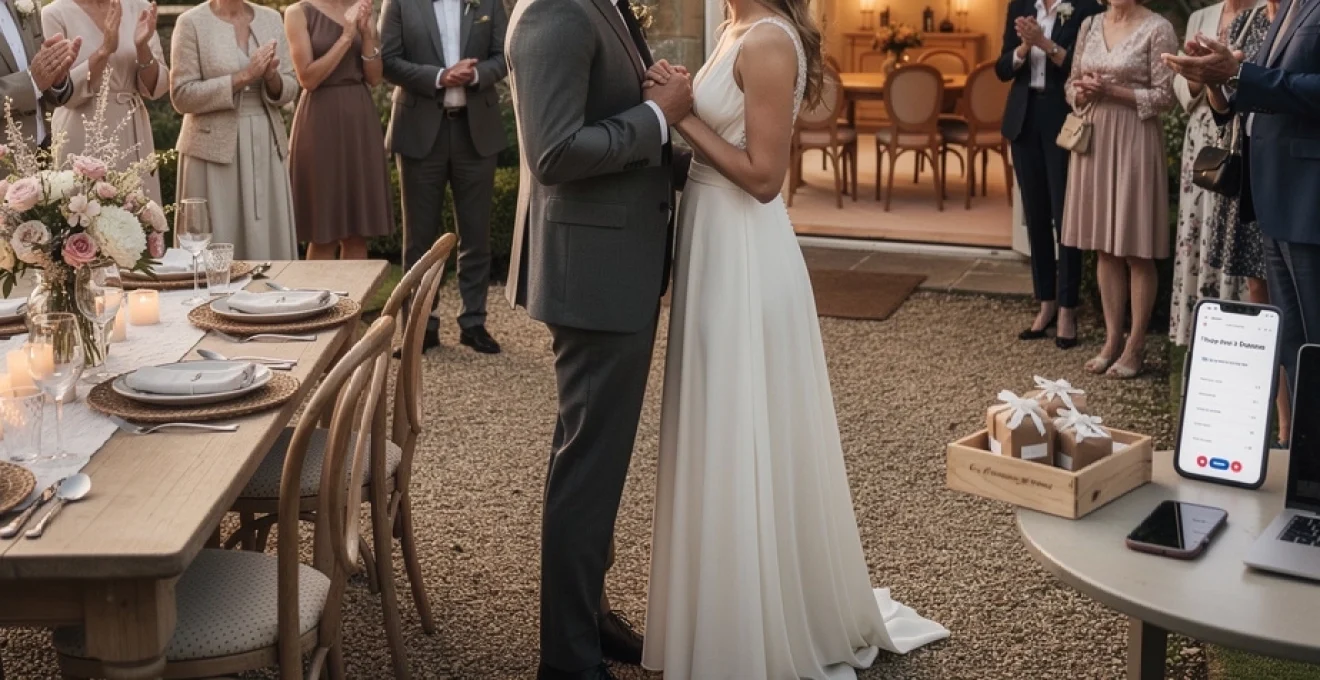
The wedding landscape has undergone a profound transformation in recent years, with couples increasingly choosing intimacy over grandeur. This shift represents more than just a trend – it’s a fundamental reimagining of how modern couples want to celebrate their union. Intimate weddings, typically featuring fewer than 50 guests, have emerged as the preferred choice for couples seeking authenticity, meaningful connections, and exceptional experiences over traditional large-scale celebrations.
What was once considered unconventional has now become the gold standard for discerning couples. The appeal lies not in compromise, but in the opportunity to create deeply personal celebrations that reflect genuine values and priorities. From micro-ceremonies in historic manor houses to exclusive restaurant buyouts, intimate weddings offer unparalleled flexibility and the chance to invest in quality over quantity.
Post-pandemic wedding industry statistics and Micro-Wedding market growth
The COVID-19 pandemic served as an unexpected catalyst for the intimate wedding movement, but the trend has proven to have staying power well beyond necessity. Industry data reveals that approximately 60% of couples now deliberately choose smaller guest lists, even when restrictions no longer apply. This represents a 40% increase from pre-2020 levels, indicating a permanent shift in wedding preferences rather than a temporary adaptation.
The financial implications are equally compelling. The average cost of a traditional UK wedding has reached £24,000, while intimate celebrations typically range from £8,000 to £15,000. This cost reduction allows couples to allocate resources more strategically, often investing in premium experiences such as luxury accommodations for their closest family and friends. The micro-wedding market is projected to grow by 25% annually through 2025, driven by millennial and Gen Z preferences for authentic experiences over conventional displays.
Wedding venues report that half of all bookings now involve guest lists under 30 people, with Gretna Green experiencing a 20% increase in elopements since 2021. Professional celebrants note increased demand for personalised ceremonies, with couples investing more time in crafting meaningful vows and selecting bespoke elements that reflect their unique relationship stories.
The emphasis has clearly shifted towards quality, connection and experience. Couples want their day to feel like an extension of who they are, not a set of rules they feel obliged to follow.
Guest list optimisation strategies for intimate celebrations
Creating the perfect guest list for an intimate wedding requires strategic thinking and emotional intelligence. The process involves more than simple reduction – it’s about curating a group that will enhance the celebration’s atmosphere and create lasting memories. Successful couples approach this challenge by establishing clear criteria and maintaining consistency throughout their decision-making process.
VIP guest selection methodology for maximum emotional impact
The foundation of intimate wedding planning lies in identifying individuals who genuinely contribute to your happiness as a couple. Start by creating separate lists of people you cannot imagine celebrating without, then combine and refine these selections together. Consider each person’s role in your relationship journey and their ability to support your marriage beyond the wedding day.
Priority should be given to individuals who have consistently demonstrated love and support throughout your relationship. This typically includes immediate family members, closest friends who have witnessed your relationship’s growth, and mentors who have positively influenced your lives. The goal is to surround yourselves with people whose presence enhances rather than complicates your special day.
Wedding party downsizing techniques without social friction
Reducing your wedding party size requires diplomatic communication and creative alternatives. Consider eliminating traditional roles entirely, opting instead for a simple ceremony with just the two of you and your officiant. Alternatively, create meaningful roles for important people without formal wedding party designations, such as ceremony readers or special hosts.
Transparent communication proves essential when explaining your intimate wedding choice to friends and extended family. Emphasise that the decision reflects your personal preferences rather than judgements about relationships. Many couples successfully navigate this by hosting separate celebration events or casual gatherings before or after their intimate ceremony.
RSVP management systems for exclusive guest lists
Managing RSVPs for intimate weddings requires different approaches than traditional celebrations. Digital wedding websites become particularly valuable, allowing you to share detailed information about your celebration’s intimate nature and helping
you track responses in real time. Many couples choose to use password-protected RSVP forms to reinforce the sense of exclusivity and reduce the risk of uninvited plus-ones appearing on the day. Automated reminders and cut-off dates help you finalise numbers early, which is crucial when every seat and every plate counts.
For micro-weddings, clarity around expectations is vital. Consider asking guests to confirm details such as dietary requirements, travel plans and accommodation needs in one streamlined form. This allows you to personalise the guest experience, from welcome notes in rooms to bespoke menu cards at each place setting. Think of your RSVP system as the control centre of your intimate wedding: the smoother it runs, the calmer everything else feels.
Multi-generational balance in micro-wedding planning
Balancing the needs and expectations of different generations can be one of the trickiest aspects of planning an intimate wedding. Older relatives may associate a “proper wedding” with a large guest list, formal speeches and traditional rituals, while younger guests often favour relaxed timelines and informal interaction. The key is to communicate early and frame your choices as intentional rather than restrictive.
Consider how each generation will experience the day in practical terms. For grandparents or less mobile guests, venue accessibility, seating comfort and quieter spaces matter as much as the ceremony itself. Younger guests might appreciate longer drinks receptions, more interactive elements or flexible seating. By weaving in a few familiar traditions – such as a first dance or cake cutting – alongside modern touches, you create continuity between generations without compromising your vision.
Boutique venue selection for small-scale ceremonies
Choosing the right venue is arguably the most defining decision for an intimate wedding. Without the need to accommodate 150+ guests, you can think beyond conventional ballrooms and explore character-rich spaces that would be impossible for a large crowd. The best boutique venues for small-scale ceremonies share three qualities: authenticity, flexibility and a layout that naturally encourages connection.
When guest numbers are low, every square metre starts to matter. Oversized venues can feel empty, while small but cleverly designed spaces feel warm, atmospheric and “just full enough”. As you evaluate options, imagine how the day will flow: where guests will arrive, where you will exchange vows, how dinner will be served and where you will share that first cocktail as a married couple. A well-chosen venue acts like a frame for your story – subtle, supportive and perfectly sized.
Private estate venues: luxury properties and historic manor houses
Private estates and historic manor houses are a natural fit for couples seeking a luxury intimate wedding. These venues often offer exclusive hire, giving you and your guests the feeling of having your own country retreat for the day or even the whole weekend. With a guest list under 50, grand staircases, drawing rooms and landscaped gardens can be used in more imaginative ways: ceremonies in the library, cocktails on the terrace, supper by candlelight in a panelled dining room.
From a practical standpoint, estates frequently provide on-site accommodation, making logistics far simpler for multi-generational groups. When touring properties, pay attention not just to the “wow” factor, but to the smaller, lived-in details: cosy corners for conversations, fireplaces for winter gatherings, shaded spots for summer ceremonies. A historic venue with soul will enhance your intimate wedding without overwhelming it.
Restaurant buyouts and chef’s table wedding experiences
For food-focused couples, a restaurant buyout or chef’s table wedding can transform your celebration into an immersive dining experience. Instead of standard banquet menus, you can work directly with the head chef to design a bespoke tasting menu that reflects your favourite flavours, holidays or shared memories. With fewer guests, higher per-head budgets become realistic, allowing for exceptional ingredients, curated wine pairings and theatrical plating.
Restaurant weddings also simplify styling decisions. Existing interiors – from exposed brick walls to candlelit banquettes – often require only minimal enhancement. When considering a buyout, ask about noise levels, layout options for ceremonies, and how service can be paced to allow for speeches and toasts. Think of the restaurant not just as a place to eat, but as the stage for your entire micro-wedding experience.
Airbnb wedding venues and alternative location strategies
For couples who value flexibility and a homely atmosphere, carefully selected Airbnb properties and alternative spaces can offer a refreshing alternative to traditional venues. Converted barns, coastal cottages or architect-designed homes can host ceremonies, dinners and relaxed after-parties under one roof. This approach works best for very small guest lists, where you can comfortably accommodate everyone within the property and its grounds.
However, alternative locations require due diligence. Always check house rules regarding events, maximum occupancy, noise restrictions and parking. In many cases you may need to hire in additional infrastructure such as catering tents, restrooms or generators. When done thoughtfully, though, an Airbnb or non-traditional space allows you to create a wedding that feels less like a formal event and more like an extraordinary weekend away with your favourite people.
Micro-venue capacity planning and space optimisation
Capacity planning for a micro-wedding is a little like interior design: you are trying to balance comfort, aesthetics and functionality within a finite space. A room that seats 40 for dinner might only feel comfortable with 25 for a ceremony, depending on layout and sightlines. During viewings, walk the route your guests will take, noting potential bottlenecks and underused corners that could become lounge areas or photo backdrops.
Consider how different elements of the day will share the space. Can the ceremony area transform into the dance floor? Is there a natural spot for a bar that won’t block circulation? Simple tricks – such as using smaller tables, mixed seating, or zoning with rugs and lighting – can make a compact venue feel generous and intentional. When in doubt, ask the venue team to show you sample floor plans from previous intimate weddings; real-world examples are often more helpful than capacity numbers on a brochure.
Destination elopement packages in the cotswolds and scottish highlands
The Cotswolds and Scottish Highlands have become emblematic destinations for couples seeking romantic, small-scale elopements in the UK. Rolling hills, historic stone villages and atmospheric lochs create a cinematic backdrop that needs very little embellishment. Many boutique hotels and lodges now offer dedicated micro-wedding and elopement packages, bundling accommodation, ceremony spaces, photography and tasting menus into a seamless experience.
When planning a destination elopement, think of the wedding as part of a wider travel experience for you and your guests. How easy is the journey for older relatives? Are there local activities – from whisky tastings to guided walks – that can turn the celebration into a shared mini-break? By treating your micro-wedding as an intimate retreat, you give yourselves and your guests the luxury of time together, rather than compressing everything into a single whirlwind day.
Budget reallocation frameworks for premium wedding experiences
One of the greatest advantages of an intimate wedding is the freedom to reallocate your budget from sheer volume to elevated quality. Instead of feeding 150 guests a standard three-course meal, you might choose to treat 30 guests to a seasonal tasting menu with paired wines, or upgrade to a renowned photographer whose work you truly love. Think of your budget as a series of levers: as you dial down guest numbers, you can dial up craftsmanship, comfort and creativity.
A useful starting point is to map your total budget across core categories – venue, food and drink, photography, attire, florals, entertainment and accommodation – then ask yourselves which two or three areas matter most. Many micro-wedding couples prioritise hospitality (exceptional food, relaxed service), visual storytelling (photography and film) and guest comfort (travel, rooms, small luxuries). By consciously diverting funds from lower-priority items – such as extensive décor or large-scale entertainment – you can create a celebration that feels indulgent yet fully aligned with your values.
Personalisation technology and bespoke wedding design elements
As weddings become smaller, personalisation is moving from surface-level styling to deeply considered experiences. Technology now plays a central role in how couples design, share and remember their intimate weddings, from interactive websites to digital guest books and live streaming. Rather than replacing human connection, these tools can enhance it, allowing you to tell your story with more nuance and invite guests into the journey long before the big day.
Bespoke design elements – from custom stationery to personalised playlists and signature cocktails – are amplified in a micro-wedding setting, where every detail is noticed. With fewer tables and fewer guests, you can afford to make each place setting feel like a curated vignette rather than just a seat. The goal is not to add complexity for its own sake, but to ensure that every touchpoint feels intentional and reflective of who you are as a couple.
Custom digital wedding websites and guest experience portals
A custom wedding website or guest portal has become almost essential for intimate celebrations, especially when travel or multi-day events are involved. Beyond basic logistics, a well-designed site can set the tone long before guests arrive, sharing your story, dress code guidance, local recommendations and even a loose itinerary of the weekend. For micro-weddings, this is where you can explain the intimate nature of the event and gently manage expectations around plus-ones, children or post-wedding gatherings.
Think of your website as a digital concierge. You might include interactive maps, FAQs for anxious travellers, and links to curated playlists to build anticipation. Post-event, the same portal can host photo galleries, highlight reels and thank-you messages, extending the life of your celebration. A clear, visually cohesive online hub helps guests feel informed, considered and genuinely part of a carefully crafted experience.
Artisan vendor collaboration for handcrafted wedding details
Smaller weddings open the door to collaborating with artisan makers and independent creatives in a way that simply isn’t feasible for large-scale events. From hand-thrown ceramic place settings to calligraphed menus and locally blended candles, these details bring tactility and story to your day. Because you are ordering in lower quantities, you can often work directly with makers to co-create designs that feel truly one-of-a-kind.
When selecting artisan vendors, look for those whose aesthetic naturally complements your venue and vision. Schedule time for conversations about your relationship, shared interests and the mood you want to create; this context often inspires more thoughtful outcomes. The result is a wedding environment that feels less like a styled set and more like an extension of your home – layered with objects that can live on in your daily life long after the last glass has been cleared away.
Interactive guest engagement through technology integration
Technology can also deepen guest engagement during the wedding itself, particularly when numbers are small enough for everyone to participate. Digital photo booths, live polls, shared playlists and QR-coded menus are just a few examples of interactive elements that can make guests feel involved rather than simply entertained. Used thoughtfully, these tools act like subtle prompts for conversation and connection.
For instance, you might invite guests to contribute song choices ahead of time via your website, then reveal a “guest favourites” playlist during the evening. Or you could use a tablet-based guest book where attendees leave video messages instead of written notes. The aim is not to have everyone glued to their phones, but to use technology as a bridge – capturing memories, sparking stories and ensuring that quieter voices are heard as clearly as the confident speech-givers.
Personalised wedding favour creation and local sourcing
In an intimate setting, wedding favours evolve from generic tokens into meaningful mementoes. Because you are creating fewer items, you can invest in higher quality and deeper personalisation. Locally sourced favours – such as artisan chocolates, small-batch spirits, handmade soaps or mini bouquets of seasonal flowers – also support regional businesses and reduce environmental impact.
Consider favours that either enhance the day itself or become part of guests’ everyday lives: engraved glassware that doubles as place cards, linen napkins guests can take home, or packets of seeds reflecting the flowers from your bouquet. When each guest receives something chosen with their experience in mind, the favour becomes a tangible extension of the intimacy you have cultivated throughout the celebration.
Live streaming infrastructure and virtual guest integration solutions
Even the most intimate wedding rarely exists in isolation. There will almost always be loved ones who cannot attend in person due to distance, health or logistics. Thoughtfully implemented live streaming allows you to honour the small, in-person nature of your day while still including a wider circle in the moments that matter most. Rather than treating virtual guests as an afterthought, the most successful micro-weddings integrate them into the planning from the outset.
At a technical level, this means investing in reliable audio-visual equipment – dedicated microphones, stable internet connections and at least one camera operator who understands the flow of a ceremony. Many couples now work with specialist streaming providers or videographers who can manage the virtual experience, from branded waiting screens to real-time chat moderation. Done well, a virtual stream feels less like watching CCTV and more like tuning into a beautifully produced broadcast of your story.
You can also build moments of interaction into the day. Perhaps virtual guests raise a glass during a dedicated “online toast”, or send pre-recorded video messages that play between courses. Digital guest books and private streaming links ensure that those watching from afar still feel part of an exclusive, carefully held circle. In this way, technology allows intimate weddings to remain small in scale but expansive in spirit – proof that, when planned with intention, less genuinely can become so much more.