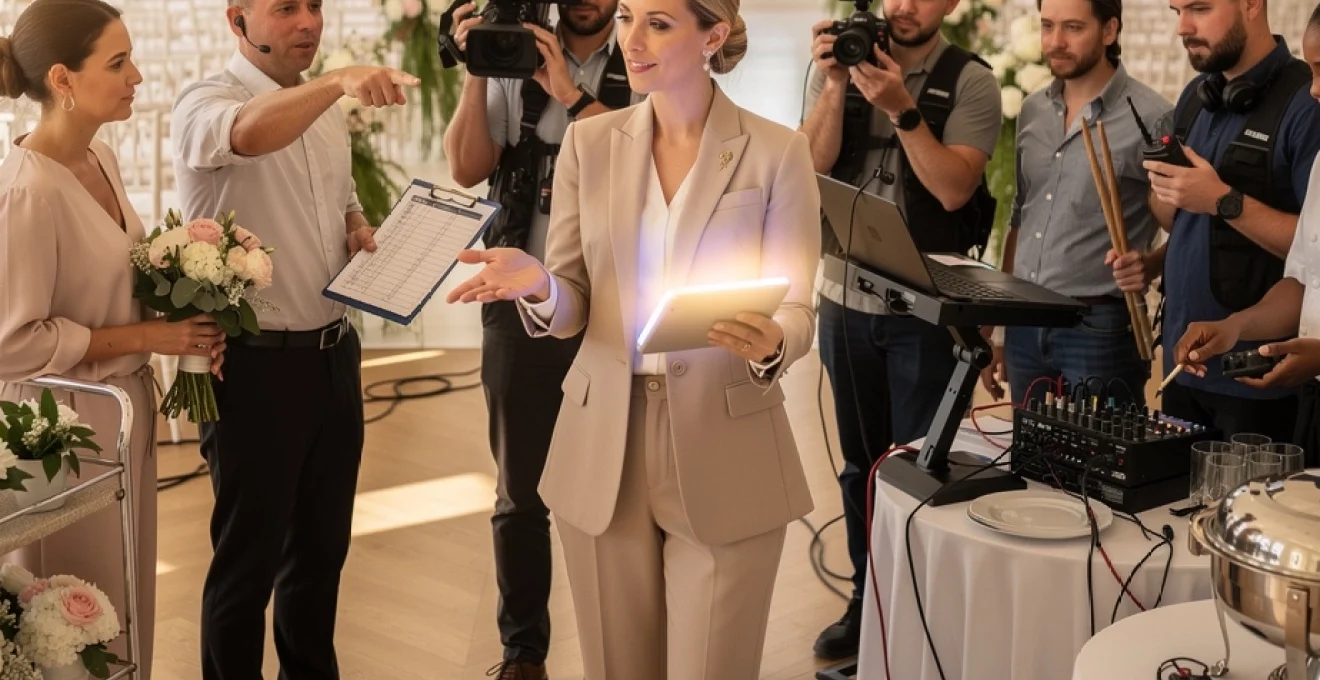
Behind every flawlessly executed wedding lies an intricate network of vendor coordination that operates seamlessly behind the scenes. The success of your special day depends not just on individual suppliers delivering exceptional service, but on how effectively they work together as a unified team. From photographers synchronising with videographers to caterers collaborating with entertainment teams, vendor coordination forms the invisible backbone that transforms wedding dreams into reality.
Modern weddings involve an average of 8-12 different suppliers, each bringing specialised expertise to create your perfect celebration. Without proper coordination, even the most talented vendors can inadvertently work against each other, creating delays, conflicts, and missed opportunities. Professional wedding coordination ensures that every supplier understands their role within the larger production, creating a harmonious workflow that benefits everyone involved.
The complexity of contemporary wedding celebrations demands sophisticated coordination strategies that go far beyond simple scheduling. Today’s couples expect seamless integration between all elements of their day, from the moment suppliers arrive for setup through to the final breakdown. This level of orchestration requires careful planning, robust communication systems, and experienced professionals who understand how different wedding services interconnect.
Pre-ceremony vendor synchronisation protocol
The foundation of successful wedding day vendor coordination begins hours before guests arrive, during the critical setup phase. Pre-ceremony synchronisation requires careful orchestration of multiple teams working simultaneously within the same venue space. Professional coordinators establish clear protocols that prevent conflicts, maximise efficiency, and ensure every supplier can complete their preparations without interference.
Effective synchronisation starts with a comprehensive understanding of each vendor’s setup requirements, including space needs, power requirements, and timing constraints. Florists typically need first access to ceremony spaces for large installations, while photographers require specific lighting conditions for detail shots. Sound technicians must coordinate with both ceremony officials and entertainment providers to ensure seamless audio transitions throughout the day.
Timeline alignment using wedding management software systems
Modern wedding coordination relies heavily on sophisticated software platforms that enable real-time timeline management across multiple vendor teams. These systems allow coordinators to create detailed schedules that account for dependencies between different suppliers, automatically adjusting timings when changes occur. Popular platforms like Aisle Planner and Honeybook provide centralised dashboards where all vendors can access updated information instantly.
Timeline alignment becomes particularly crucial when managing complex venue transformations, such as ceremony-to-reception space conversions. The coordination software tracks critical milestones like cocktail hour duration, allowing catering teams to time their service precisely with entertainment transitions. This technological approach reduces the margin for error significantly compared to traditional paper-based scheduling methods.
Venue access coordination for setup teams
Venue access coordination represents one of the most logistically challenging aspects of wedding day management. Multiple supplier teams often require simultaneous access to limited venue spaces, creating potential bottlenecks that can cascade into significant delays. Professional coordinators develop detailed access schedules that prioritise vendors based on setup complexity and interdependencies.
The coordination process typically begins with the most space-intensive suppliers, such as tent rental companies and large floral installations. Once these foundational elements are in place, smaller detail-focused vendors can complete their work efficiently. Access scheduling must also account for venue-specific constraints, such as loading dock availability and elevator capacity, which can significantly impact setup timelines.
Equipment sharing agreements between photography and videography teams
Photography and videography teams often benefit from collaborative equipment arrangements that enhance their collective output while reducing costs for couples. These partnerships typically involve shared lighting equipment, stabilisation systems, and backup power supplies. However, successful equipment sharing requires clear agreements established well before the wedding day to prevent conflicts during critical moments.
Professional teams often develop complementary shooting styles that maximise their shared resources. For example, photographers might provide additional lighting that enhances video quality, while videographers can capture behind-the-scenes content that photographers use for their own marketing. These collaborative relationships often result in higher-quality final products for couples while demonstrating the power of effective vendor coordination.
Sound system integration for ceremony and reception vendors
Audio integration represents a particularly complex coordination challenge, as multiple vendors often require access to sound systems throughout the wedding day. Ceremony officiants, musicians, entertainment providers, and speech coordinators all depend on seamless audio delivery for their contributions to be effective.
To avoid overlapping systems and microphone failures, the wedding coordinator will typically designate a primary sound lead (often the DJ or production company) and agree in advance how ceremony, cocktail hour, and reception sound will connect. This may involve sharing mixers, running additional XLR lines between spaces, and confirming who controls volume at each stage of the day. When vendors share one integrated sound plan rather than improvising on site, you reduce feedback issues, awkward silences, and the dreaded “can anyone hear me at the back?” moments.
Real-time communication systems for wedding day execution
Even the best pre-ceremony planning cannot account for every real-world variable on the wedding day. Guests arrive early, traffic delays a key supplier, a power outlet fails, or a sudden shower changes your outdoor ceremony plan. Real-time communication between vendors is what keeps the day running smoothly despite these changes. Rather than each supplier working in isolation, a centralised communication system allows everyone to stay informed and respond quickly.
Professional coordination teams now treat communication tools as essential as timelines and floor plans. From two-way radios to WhatsApp Business groups, these systems create a live information “backbone” across the site. The goal is simple: ensure that the right person receives the right information at the right moment, without constantly disturbing the couple or their families.
Two-way radio network implementation among key suppliers
Two-way radios remain the gold standard for instant, reliable communication across a wedding venue. Unlike mobile phones, they provide immediate, push-to-talk access with no signal issues or typing delays. Coordinators commonly deploy radios to key operational suppliers such as catering managers, venue staff, production teams, photographers, and the wedding day coordinator’s assistants.
A structured radio protocol is essential for avoiding chaos. Channels are assigned by function (for example, one for venue and catering, another for coordination and entertainment), and vendors receive a short briefing on call signs and etiquette during setup. This is particularly valuable on large estates, marquee weddings, or multi-level venues where walking messages back and forth would waste time and energy.
Whatsapp business group management for vendor updates
While radios handle immediate, on-site issues, many coordinators also use WhatsApp Business groups for more detailed vendor communication. These groups are usually created a week or two before the wedding and include all key suppliers. Final timelines, access maps, and updates are shared here so everyone has the latest information in one place and can refer back to it at any time.
On the wedding day, WhatsApp is ideal for non-urgent updates that still matter for seamless execution, such as sharing revised family photo lists, confirming transport ETAs, or circulating changes to speech order. Because messages are timestamped and stored, they also help create a transparent record of decisions, reducing the chance of misunderstandings between vendors.
Emergency contact escalation procedures
Even with strong planning, truly urgent situations can arise: a key vendor stranded by car trouble, a medical incident, or a major equipment failure. That is where clear emergency contact escalation procedures become vital. Rather than every supplier trying to reach the couple, there should be a defined chain of command led by the wedding coordinator or production manager.
Before the wedding, coordinators typically collect out-of-hours and emergency contacts for all suppliers, along with backup numbers for senior staff. They also agree which issues require immediate escalation to the couple (for example, major layout changes) and which can be handled discreetly by the vendor team. This structured approach ensures that when something critical happens, everyone knows who to call and in what order, avoiding panic and duplicated efforts.
Weather contingency communication protocols
Weather is one of the most common variables that can disrupt even the best-planned wedding day, especially for outdoor ceremonies and marquee receptions. A robust weather contingency communication protocol ensures that any shift from Plan A to Plan B happens in a controlled, coordinated way. Rather than last-minute chaos, vendors receive clear instructions with enough time to adjust setups and protect equipment.
Professional coordinators usually define decision points tied to weather forecasts, such as “final call for outdoor ceremony at T-3 hours.” Once a decision is made, it is communicated simultaneously across all channels: via WhatsApp group, radio, and direct contact with key leads. This keeps florists, rental companies, musicians, and photographers aligned on layout changes, allowing you to enjoy your day without watching the forecast every five minutes.
Catering and bar service integration strategies
Catering and bar service sit at the heart of the guest experience, but they are also some of the most logistically complex elements of the wedding day. Kitchen teams operate to precise schedules, bar staff respond to fluctuating demand, and both must align with photography, speeches, and entertainment. Without careful coordination, food can arrive lukewarm, speeches can clash with service, and queues at the bar can build at the worst possible moments.
Effective integration starts with a shared timeline that includes not just “dinner at 7pm” but detailed service phases: canapés, clearing, main service, coffee, and late-night snacks. Coordinators work closely with the catering manager and bar lead to map these phases against key wedding moments. For example, they will avoid serving main courses during emotional speeches or cutting the cake while the kitchen is mid-service.
Another crucial coordination point is guest flow. The bar, buffet stations, dessert tables, and dance floor must be placed and timed so they do not compete. Many experienced coordinators implement staggered bar openings, closing one station temporarily during formal moments to gently draw guests back to the main room. When catering and bar teams are integrated into the overall wedding coordination plan, the atmosphere feels effortless rather than stop-start.
Photography and videography collaborative workflow management
The relationship between photography and videography teams can make or break your visual record of the day. When these professionals collaborate well, they create a cohesive story that captures every important moment from complementary angles. When they do not, they may block each other’s shots, compete for the couple’s attention, or duplicate work inefficiently.
Coordinated workflow management begins long before the wedding day, ideally with an introductory call where both teams review the schedule, venue layout, and couple’s priorities. The wedding coordinator often facilitates this conversation, ensuring that each team understands the other’s style and technical requirements. On the day, clear communication and agreed positions for key moments prevent frustration and allow each vendor to perform at their best.
Shot list coordination to prevent creative conflicts
A detailed but realistic shot list is essential for both photography and videography teams, especially for complex weddings with multiple locations and large families. Coordinated shot lists help avoid creative conflicts, such as two teams trying to stage different poses at the same time or pulling the couple away from guests too often. Instead, they work from a unified plan that respects both artistic visions.
Typically, the photographer will lead on formal portraits and group shots, while the videographer focuses on movement, ambient sound, and narrative moments. The coordinator ensures that time is allocated for both, often grouping similar shots together to minimise disruption. By agreeing in advance who leads which segments and how much time is available, you reduce stress for the couple and maintain a calm, professional atmosphere.
Lighting equipment sharing between visual teams
Lighting is one of the biggest technical variables affecting photo and video quality. In many modern weddings, photographers and videographers share certain lighting resources, such as continuous LED panels, off-camera flashes, or power supplies. When managed well, this reduces clutter, avoids health and safety issues, and ensures consistent visual results across both final products.
However, shared lighting only works with crystal-clear agreements. For example, teams should decide whether flash will be used during the ceremony, who controls intensity during the first dance, and how any stands or cables will be positioned to minimise trip hazards and visual distractions. Coordinators often review these plans with the venue, especially in heritage buildings where power access or mounting points are restricted.
Timeline synchronisation for key moment capture
Key wedding moments—such as the first look, ceremony entrance, confetti shot, first dance, and sparkler exit—require perfect timeline synchronisation between photography, videography, and the wider vendor team. If the DJ starts the first dance track early, or catering quietly begins coffee service during speeches, visual teams may miss irreplaceable reactions or cutaways.
To prevent this, coordinators act as “stage managers” for each key moment. They confirm that both photo and video teams are in position, cameras are ready, and audio is being recorded before giving the cue to begin. It is much like a director calling “action” on a film set: everyone knows the sequence, but the actual start depends on a final, coordinated signal. This simple step dramatically increases the success rate of capturing the day’s most important memories.
Floral design and venue decoration sequencing
Floral design and venue decoration provide the visual framework for the entire celebration, but they must be carefully sequenced with all other supplier activities. Large installations, such as arches, suspended pieces, or staircase florals, often require ladders, extra floor space, and access to power or water. If decor teams and furniture rental companies arrive at the same time without coordination, the result can be unnecessary delays and potential damage.
Professional wedding coordinators create a detailed decor sequencing plan that specifies which areas are completed first and which vendors have priority access at each stage. Ceremony backdrops and high-impact entrance pieces typically come early, followed by table styling once linens and furniture are in place. Photographers are then given a specific window to capture fully styled spaces before guests enter, ensuring that the couple has a record of the design they invested in.
Another key aspect is repurposing florals and decor between ceremony and reception. For example, aisle arrangements may become table centrepieces, or the ceremony arch might be moved behind the top table. This only works smoothly when florists, venue staff, and coordination teams agree who will handle the moves, at what time, and how long it will take. Done well, this approach maximises your floral budget while maintaining a polished, intentional look throughout the day.
Entertainment and technical production coordination
Entertainment and technical production—DJs, live bands, lighting designers, and AV technicians—shape the energy and flow of the wedding more than almost any other vendor group. They also rely heavily on shared resources such as power, staging, and sound systems, making coordination essential. When managed well, transitions between different entertainment elements feel natural and immersive; when neglected, guests experience awkward pauses, feedback squeals, or sudden changes in atmosphere.
Coordinators work with entertainment and production teams to create a unified show plan that covers everything from ceremony music cues to late-night playlists. This includes technical details such as stage plot, input lists, and lighting mood changes, as well as guest-facing elements like introduction announcements and interactive moments. The objective is to treat the entire wedding as one continuous experience rather than a series of disconnected segments.
DJ and live band transition management
Many modern weddings feature both a live band and a DJ, especially for full-evening receptions. Without careful planning, transitions between them can feel jarring, with sudden changes in volume, tempo, or musical style. Transition management ensures that the shift from band to DJ (or vice versa) enhances the atmosphere rather than interrupting it.
Before the wedding, the coordinator brings the band leader and DJ together to agree on handover points, shared playlists, and who will control the microphone for key announcements. For example, the band might perform the first dance live, then segue into a final high-energy track while the DJ gradually blends in. This creates the impression of one continuous performance rather than two separate acts competing for attention.
Sound engineering coordination for multiple audio sources
Between ceremony musicians, DJs, bands, speech microphones, and background playlists, a typical wedding can involve half a dozen separate audio sources. If each vendor manages their own sound independently, the result is often inconsistent levels, feedback, or dead air. Coordinated sound engineering treats the entire event as a single audio environment.
Ideally, one sound engineer or production company oversees all audio, providing a central mixer and ensuring correct gain structure across devices. When that is not possible, the coordinator will at least arrange a short technical run-through with every vendor on site. This includes checking microphone levels, confirming playback devices, and agreeing who mutes or unmutes channels at specific moments. Think of it as tuning an orchestra before the performance: everyone still plays their own instrument, but in harmony.
Lighting design integration with photography requirements
Lighting designers aim to create dramatic, immersive atmospheres, while photographers need consistent, flattering light to capture clear images. Without coordination, these goals can conflict, resulting in heavily coloured lighting that looks beautiful in person but problematic in photos, or strobing effects that interfere with video recording. Integration between lighting design and photography is therefore crucial.
During the planning stage, the coordinator arranges for the photographer and lighting designer (or DJ/band providing lighting) to align on colour palettes, intensity levels, and special effects. For instance, they might agree to avoid strong magenta washes during speeches or to reduce moving light intensity during the first dance so the couple is not lost in shadow. By treating lighting as both a design and technical element, you ensure that the atmosphere feels magical in real life and looks just as good in your final gallery and film.
Stage management for ceremony and reception entertainment
Stage management is the behind-the-scenes discipline that ensures every entertainment element appears at the right place and time, much like a theatre production. During the ceremony, this might involve cueing musicians, managing microphone handovers, and coordinating processional timings. At the reception, it extends to grand entrances, speeches, live performances, and special surprises.
The wedding coordinator or a designated production manager usually acts as stage manager, standing at the intersection of vendor teams, venue staff, and the couple. They brief speakers before they go on stage, confirm with the DJ or band that the correct track is queued, and check with photographers that they are in position. By controlling these “show cues” with precision, they allow the entire vendor team to perform with confidence, and you get to experience your wedding day as a seamless, beautifully orchestrated celebration rather than a series of logistics.