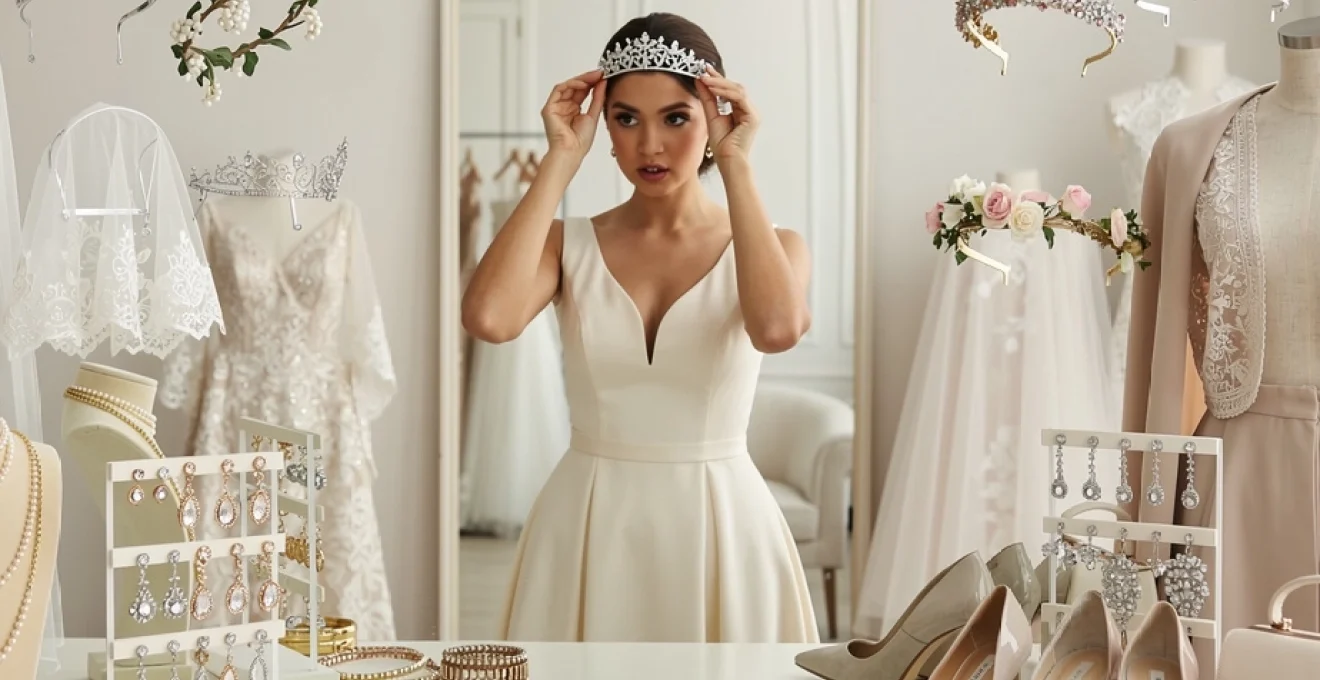
Your wedding dress may be the centrepiece of your bridal ensemble, but the accessories you select have the transformative power to elevate your look from beautiful to absolutely breathtaking. Every carefully chosen element—from the sparkle of your earrings to the graceful flow of your veil—contributes to telling your unique love story through fashion. With bridal styling moving increasingly towards personalised expressions of individuality, understanding how to curate the perfect collection of finishing touches has become more important than ever. Whether you’re drawn to timeless elegance, contemporary minimalism, or romantic bohemian aesthetics, mastering the art of accessory selection ensures your wedding day vision comes to life with stunning cohesion and style.
The modern bride faces an exciting yet potentially overwhelming array of choices when it comes to completing her bridal look. From metal finishes and gemstone selections to veil lengths and headpiece styles, each decision plays a crucial role in creating harmony between individual elements. Strategic accessory planning not only enhances your gown’s inherent beauty but also provides opportunities to inject personality, honour traditions, and create multiple looks throughout your celebration. Understanding the principles of proportion, balance, and coordination empowers you to make confident choices that feel authentically you whilst achieving that coveted bridal radiance.
Understanding bridal jewellery: from statement necklaces to delicate ear climbers
Bridal jewellery serves as the punctuation marks in your wedding day narrative—emphasising, enhancing, and adding that final polish to your overall aesthetic. The key to successful jewellery selection lies in understanding how each piece interacts with your gown’s neckline, embellishments, and overall design philosophy. A common mistake brides make is feeling obligated to wear a complete jewellery set simply because tradition suggests it. In reality, less is often more when it comes to bridal adornments, and selecting just one or two standout pieces can create a more sophisticated and modern appearance than overwhelming yourself with multiple competing elements.
Your gown’s neckline dictates which jewellery pieces will shine most effectively. Strapless and sweetheart necklines offer a generous canvas for statement necklaces, allowing you to showcase elaborate designs featuring cascading crystals or vintage-inspired pendant arrangements. Conversely, high necklines, halter styles, and heavily embellished bodices call for restraint around the neck area, shifting focus instead to show-stopping earrings that frame your face beautifully. Illusion necklines present an interesting middle ground—the sheer fabric creates visual interest without completely covering your décolletage, meaning you can often incorporate a delicate pendant or subtle collar necklace without creating visual competition.
Coordinating metal finishes with your engagement ring and wedding band
Achieving harmonious metal coordination throughout your bridal jewellery creates a polished, intentional appearance that photographers will capture in every close-up shot. Your engagement ring and wedding band naturally serve as the starting point for this coordination, as these pieces will feature prominently in your wedding photographs and remain constant throughout your celebration. If your rings feature white gold or platinum, continuing this cool-toned metal theme throughout your earrings, necklace, and bracelet selections creates elegant unity. Yellow gold rings pair beautifully with warm metallic accessories, whilst rose gold has become increasingly popular for brides seeking a romantic, contemporary feel that works particularly well with ivory and champagne-toned gowns.
That said, strict matching isn’t always necessary in modern bridal styling. Mixed metal jewellery has gained considerable traction, allowing brides to combine silver and gold tones for a more eclectic, personalised look. This approach works especially well for brides whose engagement rings feature mixed metals or who want to incorporate family heirloom pieces that don’t perfectly match their ring’s finish. The key to successful mixed metal styling lies in intentional repetition—if you’re wearing a rose gold bracelet with your white gold engagement ring, consider earrings that incorporate both metal finishes to create visual bridges between the different tones.
Layering techniques for bridal necklaces: chokers, princess length, and opera styles
Necklace layering has emerged as a distinctive trend that allows fashion-forward brides to create dimensional, text
Necklace layering has emerged as a distinctive trend that allows fashion-forward brides to create dimensional, textured interest around the neckline without overpowering the gown. The most successful bridal necklace stacks usually combine two, or at most three, lengths such as a close-fitting choker, a classic princess-length chain (around 18 inches), and a longer opera strand that grazes the bodice. Think of your layers like tiers of a wedding cake—each one should be clearly defined, harmonious in style, and proportionate to the overall structure. If your dress features a plunging V or a clean, strapless neckline, this technique can beautifully echo and elongate the line of your décolletage.
To keep layered bridal necklaces looking intentional rather than cluttered, choose a single design element to repeat throughout—this might be pearl accents, fine chains with tiny pavé details, or slim bar pendants. Avoid mixing very chunky pieces with ultra-delicate ones, as the contrast can feel disjointed in wedding photography. Instead, vary the scale gently, perhaps pairing a subtle diamond choker with a slightly bolder pendant at princess length. For gowns with intricate beading or lace near the neckline, you may wish to forgo layering altogether and opt for a single, perfectly placed necklace that enhances rather than competes with your dress.
Selecting earring silhouettes: chandelier drops, studs, and contemporary huggies
Earrings sit closest to your face, so they have enormous impact on how your bridal beauty look is perceived both in person and in photographs. When choosing between chandelier drops, classic studs, and contemporary huggies, consider not only your dress style but also your hairstyle, veil choice, and even the shape of your face. Chandelier earrings and long linear drops draw the eye downward and can beautifully elongate the neck, particularly when paired with an updo or sleek ponytail. These statement styles work especially well with minimalist gowns or strapless silhouettes where there is visual space for bolder jewellery.
If your gown features heavy embellishment, a detailed neckline, or strong shoulder details, you may find that refined studs or small huggies create a more balanced bridal look. Diamond or pearl studs are timeless, photograph beautifully, and won’t snag on veils or intricate lace. Modern brides increasingly favour petite huggies and ear climbers for a subtle yet fashion-forward twist—these designs hug the earlobe or trace the curve of the ear, adding interest without dominating. Ask yourself: when guests look at you walking down the aisle, do you want their focus on dramatic earrings, or on your eyes, veil, or neckline? Your answer should guide the scale and silhouette you choose.
Bracelet stacking strategies: tennis bracelets, bangles, and cuff combinations
Because your left hand will feature prominently in ring and bouquet shots, bracelets deserve more attention than many brides initially give them. A single diamond or cubic zirconia tennis bracelet offers a sleek, uninterrupted line of sparkle that flatters almost every gown style and pairs beautifully with both solitaire and halo engagement rings. For a more editorial bridal look, stacking multiple fine bracelets—such as a slim tennis line with a delicate chain and one understated bangle—can create a softly layered effect that still feels refined. As with necklace layering, aim for cohesion in metal tone and overall delicacy to keep the focus on your wedding band and engagement ring.
Chunkier cuffs and multiple rigid bangles tend to suit modern, architectural gowns or city-chic bridal suits where stronger accessories feel intentional. If your dress has long or illusion sleeves, consider whether a bracelet will catch on the fabric or simply disappear from view; in these cases, you might skip wrist jewellery altogether. A practical tip is to wear bracelets only on the hand opposite your bouquet-holding hand, reducing the risk of snagging. Ultimately, think of bracelets as the framing detail for your rings—supporting characters that should enhance, rather than upstage, your bridal jewellery story.
Veil selection and placement techniques for maximum visual impact
Few wedding accessories have the same emotional and visual impact as a beautifully chosen veil. The right veil length, fabric, and placement can transform your silhouette, highlight your gown’s best features, and create breathtaking movement in your photographs. When selecting your veil, start by considering your dress train, back detail, and the overall formality of your celebration. Are you envisioning a grand, cathedral aisle moment, or a relaxed garden ceremony where a lighter, fingertip veil feels more in keeping with the setting?
Veil placement is just as crucial as veil length. Positioning the comb higher on the crown creates a more traditional, voluminous look and pairs well with classic updos and tiaras. Placing the veil lower at the back of the head, just above a bun or chignon, feels more modern and allows the front of your hairstyle to remain the focal point. During your hair trial, experiment with different veil positions and ask your stylist to photograph each option from the front, side, and back—this will help you evaluate which configuration best flatters your proportions and complements your gown.
Cathedral length veils versus blusher styles: matching train proportions
Cathedral length veils, typically extending 250–300 cm or more, are designed to mirror or slightly exceed the length of a dramatic train, creating a continuous, flowing line behind you as you walk. They are ideal for formal church ceremonies, grand venues, and architectural ballgowns or fit-and-flare dresses with significant train volume. If your gown has a sweeping chapel or cathedral train, matching that scale with an equally elongated veil amplifies the sense of occasion and looks spectacular in wide-angle aisle and outdoor portraits. Think of it as extending the silhouette of your dress, rather than adding a separate layer.
By contrast, blusher veils—short layers traditionally worn over the face and lifted during the ceremony—offer a softer, more romantic effect. They can be combined with longer veils or worn alone with tea-length or minimalist gowns for a nod to tradition without excess volume. For brides whose dresses have little or no train, fingertip, elbow, or shoulder-length veils often feel more proportionate, ensuring the veil doesn’t overpower the gown. When in doubt, compare veil and train lengths side by side during your fittings: if the veil dramatically outpaces the dress or ends at an awkward point, consider adjusting the length so the two elements feel like part of the same design story.
Lace appliqué and embellished edge treatments: coordinating with gown details
Detailing on your veil should be chosen with the same care as jewellery, as it sits directly against your gown and frames your overall look. Lace appliqué, beaded edging, and pearl-scattered tulle can either echo motifs from your dress or introduce a complementary texture. If your gown features ornate lace, embroidered florals, or heavy beadwork, a simpler veil with a clean-cut or lightly stitched edge often allows the dress to remain the focal point. On the other hand, a minimalist crepe or satin gown can be beautifully elevated by a veil edged in Chantilly lace, 3D florals, or a subtle sprinkle of sequins that catch the light as you move.
When coordinating veil embellishments, pay close attention to scale and density. Large lace motifs concentrated near the hem of the veil can frame your train without cluttering the upper body, while all-over scattered pearls or tiny beads create a more ethereal, mist-like effect. Consider colour, too: warm ivory veils pair best with ivory or champagne dresses, while bright white tulle can look stark against softer-toned gowns. During your appointment, place the veil directly over your dress and take a step back—does the combination feel like a single cohesive piece, or do the textures and colours compete? Let the answer guide your final choice.
Juliet caps, mantilla veils, and modern tulle alternatives
Beyond classic comb-attached styles, distinctive veil silhouettes such as Juliet caps and mantilla veils offer a unique way to express your personality. Juliet cap veils, which secure close to the head with a small cap or band, exude vintage romance and pair beautifully with lace gowns, slip dresses, and 1920s or 1930s-inspired silhouettes. Mantilla veils, traditionally edged in lace and draped in a single circular layer around the face and shoulders, create a striking frame for your features and work particularly well with simple, structured gowns that allow the veil’s detailing to shine.
Modern brides seeking an alternative to traditional veiling are increasingly drawn to soft tulle wings, detachable capes, and exaggerated tulle bows. These pieces offer the same sense of movement and drama as a veil, but with an updated, fashion-forward edge. They are especially practical if you would prefer not to wear anything over your face or want the option to remove your trailing accessory entirely for the reception. Ask yourself which feels more “you”: the timeless silhouette of a veil, or the editorial flair of tulle wings or a cape? There is no right answer—only the choice that aligns best with your wedding day vision.
Securing methods: combs, clips, and under-crown attachment techniques
The most beautiful veil will only deliver its full impact if it is securely and comfortably attached. Standard metal or plastic combs are the most common fastening, designed to slide into the base of an updo, beneath a half-up style, or under a headpiece. For fine or very sleek hair, your stylist may recommend adding discreet bobby pins, backcombing the area where the comb will sit, or sewing a few small loops into the veil’s base to anchor it with pins. Think of this as scaffolding—hidden support that ensures your veil stays put through hugs, wind, and dancing.
Clips and under-crown attachment methods are ideal when you’re pairing a veil with a tiara, crown, or structured headband. In these cases, the veil can be sewn to a separate, small comb that sits underneath the headpiece, or even attached directly to the inner band of the crown for a seamless effect. This technique prevents the top of the veil from competing visually with the headpiece and often feels more secure. During your hair trial, bring your veil and any headwear so your stylist can experiment with placement and fastening—this reduces stress on the wedding morning and ensures your accessories work together as a cohesive architectural structure.
Headpiece architecture: tiaras, crowns, and contemporary hair vines
Headpieces act as the crowning element of your bridal styling, both literally and figuratively. Whether you lean towards regal tiaras, full crowns, or fluid hair vines, the structure and embellishment of your chosen piece should harmonise with your gown, veil, and personal style. Think of headpiece selection like choosing the frame for a work of art: the right design enhances what’s already there, drawing the eye to your features without overwhelming them. As bridal fashion has shifted towards individual expression, we’ve seen everything from delicate celestial halos to bold, sculptural crowns gracing the aisle.
When deciding on a headpiece, consider your hairstyle and the overall balance of your look. High tiaras and tall crowns add height and drama, working well with classic ballgowns and cathedral veils in larger venues. Lower-profile headbands and flexible hair vines feel more understated and suit bohemian, beach, or garden weddings where a softer aesthetic is key. Try each piece on with your dress, if possible, and pay attention to how it looks from all angles—guests will see you in three dimensions, and your photographer will capture every side.
Swarovski crystal versus freshwater pearl embellishments in bridal headwear
The materials used in your headpiece significantly influence its mood and how it photographs. Swarovski crystals and high-quality cubic zirconia offer intense sparkle, catching and reflecting light much like fine diamonds. These are perfect if you’re aiming for a glamorous, red-carpet feel or want your headpiece to stand out in evening reception lighting. Freshwater pearls, by contrast, give off a softer, more luminous glow that reads as romantic and timeless. They are particularly flattering in daylight and pair beautifully with lace, satin, and silk gowns.
Choosing between crystal and pearl (or opting for a combination of both) often comes down to the overall tone of your wedding accessories. If your earrings and necklace feature clear stones or geometric shapes, a crystal-encrusted tiara or crown will echo that sharp brilliance. If you’ve gravitated towards pearl bridal jewellery and subtle metallic sheen, a pearl-detailed comb or vine will feel more cohesive. As with mixed metal jewellery, you can blend materials, but aim for repetition: for example, a vine combining tiny crystals and seed pearls that ties together your sparkly earrings and pearl-studded veil.
Grecian-inspired hair vines and bohemian floral crown construction
Grecian-inspired hair vines offer one of the most versatile approaches to bridal headpieces, thanks to their flexible, wire-based construction. These pieces can be woven through braids, wrapped around a low bun, or worn as a subtle halo across the crown of the head. Often adorned with leaves, small crystals, or pearls, they echo the laurel wreaths of ancient Greece while still feeling modern and wearable. For brides opting for relaxed, romantic hairstyles—think loose waves or soft updos—a hair vine can add structure and sparkle without the formality of a full tiara.
Bohemian floral crowns, whether made from fresh blooms or high-quality silk flowers, create a whimsical, nature-inspired frame for your face. They pair especially well with outdoor ceremonies, meadow or forest venues, and gowns featuring floral lace or chiffon skirts. When constructing a floral crown, proportion is vital: a very dense or tall crown can shorten the appearance of your face and compete with your bouquet, while a slender, asymmetrical design often looks more effortless and flattering. If you’re using fresh flowers, discuss durability with your florist—some blooms fare better than others over several hours of wear, particularly in heat.
Art deco influenced headbands and vintage-inspired combs
For brides drawn to vintage glamour, Art Deco-inspired headbands and combs offer a sophisticated nod to the 1920s and 1930s without feeling like fancy dress. Look for geometric motifs, fan shapes, and linear arrangements of crystals that mimic the architecture and jewellery of the era. Slim headbands worn low across the forehead can create a striking Gatsby-esque effect, especially when paired with finger waves or a sleek bob. Alternatively, placing a Deco comb to the side of a chignon or tucked into a half-up style adds subtle sparkle with a nostalgic twist.
Vintage-inspired combs also work beautifully as veil anchors, allowing you to remove the veil later while still retaining a decorative focal point in your hair. If you’re mixing modern and vintage elements—for example, a contemporary minimalist gown with a Deco headband—use your other accessories to bridge the gap. Delicate drop earrings or a simple bracelet with similar angular shapes can tie everything together, resulting in a look that feels curated rather than mismatched.
Bridal shoe selection: balancing heel height with ceremony duration
Your bridal shoes may be partially hidden beneath your gown, but they play a major role in your comfort, posture, and confidence on the day. The ideal wedding shoe strikes a balance between style and practicality, taking into account heel height, venue terrain, and the length of your celebration. A stiletto might look stunning in mirror selfies, but will it still feel like a good idea after several hours of standing, walking, and dancing? As a general rule, choose the highest heel you can comfortably wear for at least four hours during a trial run at home.
Block heels, kitten heels, and wedge styles have become increasingly popular bridal shoe options because they distribute weight more evenly and offer greater stability on grass, cobblestones, and uneven surfaces. If you adore the look of high stilettos for your ceremony, consider having a second, lower or flat pair ready for your reception—many brides now plan this switch as a deliberate style moment. Closed-toe courts and d’Orsay pumps feel classic and formal, while strappy sandals and embellished flats lend themselves to beach, destination, or more relaxed weddings. Whatever you choose, bring your exact shoes to your dress fittings so your hemline can be tailored precisely.
Clutch bags and bridal purses: proportions, embellishments, and functionality
While you won’t carry a bag constantly on your wedding day, a well-chosen clutch or bridal purse is invaluable for keeping essentials close—think lipstick, blotting papers, mints, and maybe a sentimental keepsake. The key is to choose a piece that is compact yet functional, complementing your accessories without competing for attention. Structured box clutches or slim envelope styles work particularly well, as they photograph neatly and are easy to set down on tables without collapsing. Soft pouches can look more bohemian and relaxed, especially in silk or velvet, but ensure they have enough structure to hold their shape.
In terms of embellishment, echoing details from your gown or jewellery creates a cohesive effect. A pearl-embellished purse, for example, ties in beautifully if you’re wearing pearl earrings or a pearl-detailed veil. Metallic finishes in the same tone as your jewellery—silver, gold, or rose gold—also help unify your look. Consider proportion too: if you are petite or wearing a very delicate gown, an oversized bag can feel visually heavy. Many brides also choose to personalise their clutch with initials, wedding date embroidery, or a hidden message inside, turning it into a keepsake they’ll use long after the day itself.
Seasonal fabric considerations: shawls, boleros, and statement capes for wedding day layering
Layering pieces such as shawls, boleros, and capes are not only practical solutions for dealing with temperature changes; they’re also powerful style tools for creating multiple bridal looks. When choosing a cover-up, let the season, venue, and fabric of your gown guide you. For winter or late autumn celebrations, faux fur stoles, feather capes, and structured boleros in velvet or heavy lace provide warmth while adding luxurious texture. In contrast, spring and summer weddings call for lighter layers—think silk chiffon wraps, sheer tulle capes, or delicate lace jackets that provide modesty without weight.
Fabric choice should complement, not compete with, your dress. A heavily beaded bodice, for instance, may look best with a simple tulle cape that allows the underlying detail to remain visible, while a minimalist crepe gown can be dramatically transformed by an ornate, embroidered cape or detachable tulle sleeves. Many designers now offer matching capes or overskirts specifically designed to pair with their gowns, creating a “second look” effect when removed for the reception. As you try layering pieces, move, sit, and raise your arms—do they restrict your movement, catch on beading, or shift awkwardly? A well-chosen cover-up should feel like a natural, integrated part of your bridal ensemble, not an afterthought added purely for warmth.