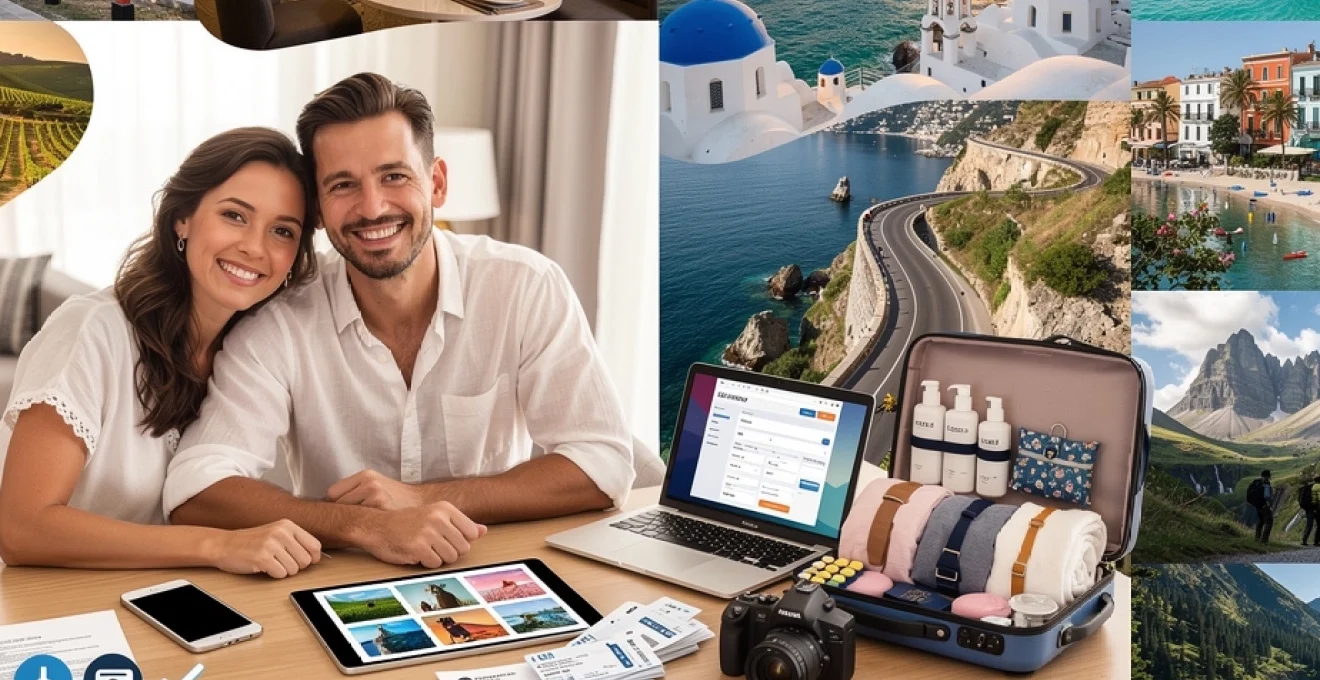
# The Ultimate Guide to Planning a Stress-Free Honeymoon from Start to Finish
The honeymoon represents one of the most significant journeys a newly married couple will undertake together. Yet despite its romantic promise, the planning process can quickly become overwhelming without proper guidance. From navigating complex visa requirements to selecting between overwater bungalows and mountain chalets, every decision shapes the first chapter of married life. Recent studies indicate that nearly 65% of couples utilize professional travel planning services to manage the intricate details of their post-wedding getaway, recognizing that expert assistance transforms potential stress into anticipation. The key to creating an unforgettable honeymoon lies not in spontaneity alone, but in strategic preparation that balances structure with flexibility, allowing romance to flourish within a well-organized framework.
Pre-departure timeline: strategic planning 12-6 months before your honeymoon
The foundation of a stress-free honeymoon begins months before departure, with advance planning serving as the cornerstone of success. Starting your preparations 9-12 months ahead provides substantial advantages, from securing preferential rates to ensuring availability at sought-after properties during peak seasons. This extended timeline allows you to methodically address each component without the pressure of impending deadlines, creating space for thoughtful decision-making rather than hasty compromises.
Early planning delivers tangible financial benefits that extend far beyond simple cost savings. Airlines typically release their most competitive fares 6-8 months before departure, whilst luxury resorts often offer early-booking incentives including complimentary room upgrades, resort credits, or additional amenities for couples who reserve well in advance. The psychological advantage proves equally valuable—knowing your honeymoon details are secured allows you to focus fully on wedding preparations without the nagging concern of unfinished travel arrangements.
During this initial phase, engage in open conversations about your respective travel preferences and expectations. One partner may envision adventure-filled days whilst the other dreams of uninterrupted relaxation. These discussions, though sometimes challenging, prevent disappointment and ensure your itinerary reflects shared desires rather than one person’s singular vision. Compatibility in travel style often proves as important as romantic connection when crafting memorable honeymoon experiences.
Budget allocation framework: accommodation, flights, and activity cost structures
Establishing a realistic budget requires honest financial assessment and strategic allocation across multiple categories. Industry benchmarks suggest dedicating approximately 40-50% of your total honeymoon budget to accommodation, 25-30% to flights, 15-20% to activities and dining, with the remaining 10-15% reserved for contingencies and spontaneous indulgences. However, these percentages shift based on destination choice—a Maldivian resort honeymoon demands greater accommodation investment, whilst a European city tour may prioritise dining and cultural experiences.
The most successful budgets incorporate flexibility mechanisms that accommodate unexpected opportunities without derailing financial planning. Setting aside a dedicated “experience fund” of £300-500 allows you to embrace spontaneous moments—a sunset helicopter tour, an exclusive wine tasting, or a couples’ spa treatment—without guilt or budget anxiety. This approach transforms potential stress points into joyful surprises, maintaining the honeymoon’s romantic essence whilst respecting fiscal responsibility.
Consider leveraging honeymoon registry platforms that allow wedding guests to contribute towards specific experiences rather than traditional gifts. Services like Honeyfund and Traveler’s Joy integrate seamlessly with wedding websites, enabling friends and family to fund everything from candlelit dinners to snorkelling excursions. Recent data shows that 38% of couples now incorporate honeymoon registries into their wedding planning, with average contributions reaching £2,500-3,000—a substantial boost to your travel budget.
Destination selection criteria: climate patterns, peak season analysis, and travel restrictions
Selecting your honeymoon destination involves more than choosing between beaches and mountains—it requires analysing climatic conditions, understanding seasonal tourism patterns, and evaluating practical accessibility. The Maldives, for instance, experiences optimal weather from November through April, whilst monsoon season (May-October) brings increased rainfall and rougher seas that diminish the overwater villa experience. Similarly, European destinations like Santorini shine brightest during shoulder seasons (April-May
May and September-October) when crowds thin and prices ease, yet the weather remains pleasant. Long-haul destinations also demand attention to hurricane seasons, heatwaves, or regional holidays that can affect opening hours and crowd levels. A data-driven approach—cross-checking climate charts, historical weather trends, and public holiday calendars—helps you avoid arriving during storms, heat extremes, or national shutdowns.
Beyond climate, evaluate peak, shoulder, and low seasons for each prospective destination. Peak season usually offers the best weather and most vibrant atmosphere, but it also brings higher costs and denser crowds, which can undermine a stress-free honeymoon. Shoulder seasons often deliver the most balanced experience: lower prices, more availability, and fewer tourists without sacrificing too much in terms of conditions. Low season can be tempting for budget-conscious couples, but always assess whether monsoons, hurricanes, or extreme cold will significantly limit activities you care about most.
Current travel restrictions and entry requirements form the third pillar of smart destination selection. Check government advisories, health protocols, and airline regulations for each country under consideration, particularly if you are planning multi-country itineraries. Some locations still require proof of vaccination, digital forms, or health insurance as a condition of entry, whilst others impose strict rules on drone use, medication import, or cash declarations. Incorporating these practical constraints early prevents expensive itinerary changes later and keeps your honeymoon focused on connection rather than compliance.
Passport validity requirements and visa processing timelines by destination
Travel documentation is one of the most common—and most preventable—sources of honeymoon stress. Many countries require that passports remain valid for at least six months beyond the date of departure, not just the date of arrival. If your passport is close to expiring, prioritise renewal before you book non-refundable flights or accommodation; processing times can fluctuate seasonally, with pre-summer months often seeing significant delays. You should also ensure that you have sufficient blank pages available, as some immigration authorities insist on two consecutive clean pages for stamps and visas.
Visa requirements vary widely depending on your nationality and chosen honeymoon destination. The Schengen Area in Europe, for example, offers visa-free stays of up to 90 days for many passport holders, but others must apply weeks or even months in advance. Popular honeymoon spots such as Bali (Indonesia), Thailand, and Mauritius may offer visa-on-arrival schemes, yet still require proof of onward travel, hotel bookings, and minimum funds. A good rule of thumb is to confirm visa rules 6-9 months before departure and submit applications at least 8-10 weeks ahead of travel, leaving buffer time for additional documents or unexpected processing delays.
Complex itineraries that include multiple regions—such as pairing a safari in South Africa with an island stay in the Seychelles—often involve different visa regimes and transit requirements. Some countries require a transit visa even if you never leave the airport, particularly for long layovers or specific nationalities. Reviewing official embassy websites rather than relying on informal travel forums ensures you receive accurate, up-to-date information. For couples seeking maximum peace of mind, professional visa services or a specialised honeymoon travel advisor can manage the entire process, flagging potential complications before they threaten your carefully planned escape.
Travel insurance policy comparison: medical coverage, cancellation protection, and adventure sports riders
Comprehensive travel insurance is the safety net that transforms a high-stakes international honeymoon into a confident, low-stress experience. When evaluating policies, prioritise robust medical coverage, particularly if you are travelling to destinations with high private healthcare costs such as the United States, the Maldives, or remote safari lodges. Look for emergency medical coverage of at least £1 million, 24/7 multilingual assistance, and clear provisions for medical evacuation, which can otherwise cost tens of thousands of pounds if you require airlifting to a major hospital. Remember that your domestic health insurance rarely extends comprehensive protection overseas.
Cancellation and interruption cover play an equally critical role, especially when your honeymoon represents a substantial financial investment. Strong policies reimburse non-refundable expenses—flights, prepaid hotels, tours—if you cancel for covered reasons such as serious illness, injury, or unexpected job loss. Some insurers offer cancel for any reason upgrades, which cost more but provide far broader flexibility, an appealing option for couples planning complex itineraries or travelling during unstable political or health situations. Review exclusions carefully; pre-existing medical conditions often require additional declarations or waiting periods to qualify for full protection.
Finally, align your policy with the nature of your honeymoon activities. If you envision scuba diving in Bora Bora, heli-hiking in New Zealand, or glacier trekking in Iceland, verify that your insurance includes adventure sports riders or specific clauses that cover these pursuits. Many standard plans exclude activities deemed “high risk,” including certain water sports, off-piste skiing, or small aircraft flights. By matching your insurance to your actual plans, you avoid unpleasant surprises at the moment you need support most—ensuring that even adventurous honeymoons remain stress-free from a risk-management perspective.
Destination-specific honeymoon planning: from maldives overwater villas to santorini caldera views
Once your strategic framework is in place, you can turn to the more inspiring task of tailoring your honeymoon to specific destinations. Rather than asking simply “Where is beautiful?”, consider how each location supports your preferred pace, style, and shared interests. Do you imagine yourselves floating in a private infinity pool above turquoise waters, wandering cobbled European streets with gelato in hand, or tackling dramatic hiking trails together? Aligning destination type with personality is the secret to a honeymoon that feels personal rather than generic.
Tropical beach destinations: bora bora, seychelles, and mauritius resort selection
Tropical beach honeymoons remain perennially popular for good reason: they combine effortless relaxation with postcard-perfect scenery. Destinations like Bora Bora, the Seychelles, and Mauritius offer a spectrum of resort styles, from rustic-chic eco-lodges to ultra-luxury villas with private butlers. When choosing between them, look beyond glossy photos and compare practical factors such as transfer logistics, board options (bed and breakfast, half board, all-inclusive), and included activities like snorkelling, non-motorised water sports, or daily excursions. A resort that bundles experiences can significantly streamline planning and reduce on-site expenses.
Bora Bora is famed for its iconic overwater bungalows perched above crystalline lagoons, ideal for couples who prioritise privacy and direct access to the sea. However, this exclusivity often comes with higher nightly rates and additional seaplane or boat transfers from Tahiti. Seychelles, by contrast, offers a mix of boutique properties and larger resorts spread across multiple islands, making it well-suited to couples who enjoy exploring different beaches and viewpoints. Mauritius tends to provide excellent value for money, with highly polished service, lush interiors, and strong all-inclusive offerings that make budgeting simpler.
To choose the right resort, examine the atmosphere as closely as the amenities. Some properties cater primarily to honeymooners and adults, promising quiet pools and candlelit dinners, whilst others welcome families and larger groups, creating a livelier environment. Consider whether you prefer an intimate, secluded setting or a social vibe with multiple restaurants and evening entertainment. Reading recent guest reviews, checking resort maps to understand room locations, and consulting a specialist travel advisor can help you avoid mismatches—so the only surprises you encounter are pleasant ones.
European romance routes: amalfi coast, lake como, and french riviera itineraries
European honeymoons offer a distinct form of romance: dramatic coastlines, refined cuisine, and centuries of culture layered into every piazza and port. The Amalfi Coast, Lake Como, and the French Riviera each provide their own signature style, yet all reward thoughtful itinerary design that balances sightseeing with unscheduled time. The Amalfi Coast, with towns like Positano and Ravello, enchants with cliffside hotels and terraced gardens, but narrow roads and seasonal crowds can be intense. Many couples find it helpful to base themselves in one or two towns and explore by boat or private driver rather than changing hotels every night.
Lake Como delivers a calmer, more stately atmosphere, with grand villas, lakeside promenades, and elegant ferries linking charming villages. Here, a three- to five-night stay allows time for leisurely boat trips, villa tours, and long lunches in shaded trattorias. If you appreciate old-world glamour and slower rhythms, Como may suit you better than the more frenetic Amalfi Coast. The French Riviera—Nice, Cannes, Saint-Tropez, and smaller enclaves—adds a cosmopolitan layer, blending beach clubs, art museums, and Michelin-starred dining. Trains and coastal roads make it easy to combine multiple stops without excessive transit stress.
When planning a European romance route, anchor your itinerary around a few cornerstone experiences: a private boat cruise at sunset, a wine tasting in a historic cellar, or a cooking class with a local chef. Then, intentionally protect empty mornings or afternoons for spontaneous discoveries—an alleyway café, a hidden viewpoint, a local festival you stumble upon by chance. Think of your itinerary like a well-structured novel: key scenes are pre-planned, but the interludes and dialogue evolve naturally, creating a narrative that feels both crafted and authentic.
Adventure honeymoons: patagonia trekking, iceland ring road, and new zealand south island circuits
For some couples, the idea of lounging on a beach for a week feels less romantic than standing together at the edge of a glacier or summiting a mountain trail at sunrise. Adventure honeymoons in regions like Patagonia, Iceland, and New Zealand’s South Island deliver shared challenges and triumphs that can deepen your bond in powerful ways. However, they also demand more rigorous logistical planning and physical preparation, which makes early research and realistic self-assessment essential. Ask yourselves: what level of exertion feels enjoyable rather than exhausting?
Patagonia, spanning Chile and Argentina, offers world-class trekking in Torres del Paine and Los Glaciares National Parks. Typical itineraries alternate between day hikes and rest days in estancias or eco-lodges, often with unpredictable weather and long transfer times between regions. Iceland’s Ring Road provides a different kind of adventure: dramatic waterfalls, black-sand beaches, geothermal lagoons, and the possibility of Northern Lights in winter months. Self-drive circuits work well here, as long as you’re comfortable navigating changing conditions and long daylight hours (or extended darkness) depending on the season.
New Zealand’s South Island combines rugged alpine landscapes, fjords, and coastal drives in a compact, road-trip-friendly format. You might pair Queenstown’s adrenaline activities—jet boating, bungee jumping, heli-hikes—with the serenity of Milford Sound or Wanaka’s lakeside trails. For all three destinations, build rest and romance into your schedule: a night in a lodge with a hot tub under the stars, a slow morning after a challenging hike, or a spa day at the end of a multi-day circuit. Treat the adventure as a shared project, not an endurance test, and your honeymoon will feel both exhilarating and deeply connective.
Cultural immersion experiences: kyoto temple districts, marrakech riads, and tuscany vineyard tours
Cultural immersion honeymoons invite you to step into new worlds together, exchanging beach loungers for souks, temples, and vineyards. Kyoto offers a serene, contemplative version of romance, with lantern-lit streets, traditional tea houses, and historic temples tucked among quiet neighbourhoods. Staying in a ryokan with tatami mats, onsen baths, and kaiseki dinners can transform your honeymoon into a slow, sensory journey. Advance reservations for tea ceremonies, kimono experiences, or guided temple walks ensure you access more intimate, less touristy corners of the city.
Marrakech, by contrast, delivers a heady blend of colour, sound, and scent in its bustling medina and tranquil riads. Here, the choice of accommodation has a profound impact on your experience; a well-located riad with a calm interior courtyard functions as a sanctuary from the city’s energy. Plan your days to mix guided explorations of souks and historical sites with downtime by rooftop pools or hammams. For couples who thrive on sensory richness and don’t mind a bit of chaos, Marrakech can spark unforgettable memories and photographs.
Tuscany rounds out the cultural trio with rolling vineyards, medieval hill towns, and a slower, agritourism-based rhythm. Renting a car gives you freedom to roam between wine estates, small trattorias, and towns like Siena, San Gimignano, or Montepulciano. Many agriturismi and vineyard stays offer cooking classes, tastings, and farm-to-table dinners that make it easy to connect with local traditions. Whether you’re sipping Chianti at sunset or wandering olive groves at dawn, Tuscany exemplifies how a culturally rich honeymoon can still feel deeply restful and romantic when planned with balance in mind.
Booking strategies: leveraging airline alliances, hotel loyalty programmes, and package deals
With your destination chosen and broad structure defined, the next step is to secure flights and accommodation in a way that maximises value without compromising comfort. Strategic booking turns your honeymoon budget into a lever rather than a limitation, especially if you utilise airline alliances, hotel loyalty schemes, and well-designed packages. Think of this phase as building the backbone of your trip: when your transport and lodging are solid, everything else feels easier.
Flight booking windows: optimal purchase timing and fare class upgrades using miles
Timing your flight purchase can yield significant savings, particularly on long-haul routes to honeymoon hotspots. As a general guideline, aim to book international flights 4-8 months in advance and domestic legs 2-4 months ahead, adjusting for major holidays or peak seasons. Use fare-tracking tools and alerts to monitor price trends over several weeks rather than purchasing impulsively after a single search. Airlines often adjust fares multiple times per week; by watching patterns, you can recognise a genuine deal when it appears.
Airline alliances—such as oneworld, Star Alliance, and SkyTeam—allow you to earn and redeem miles across multiple carriers, which is especially valuable if you are piecing together multi-stop itineraries. If you have existing loyalty balances or credit card points, explore whether a premium economy or business class upgrade is within reach for at least one leg of your journey. Arriving well-rested after an overnight flight can transform your first days on the ground, reducing jet lag and increasing your capacity to enjoy activities without needing extended recovery time.
When using miles for upgrades, pay attention to fare classes and upgrade eligibility rules, which can be surprisingly complex. Some discounted economy tickets cannot be upgraded at all, whilst others require higher mileage amounts. It is often more cost-effective to purchase a slightly more flexible fare that permits upgrading, then apply miles strategically. Consider this like paying a small premium on your “base model” flight in order to unlock the luxury “add-on” of lie-flat seats or lounge access—benefits that can be especially meaningful on your honeymoon.
Accommodation hierarchy: five-star resorts vs boutique hotels vs private villa rentals
Accommodation represents the emotional centre of most honeymoons; it is where you wake up, reconnect, and unwind. Deciding between five-star resorts, boutique hotels, and private villa rentals is less about star ratings and more about the type of intimacy and service you value. Five-star resorts typically offer extensive facilities—multiple restaurants, spas, pools, and concierge teams—making them ideal for couples who enjoy convenience and pampering. However, they can sometimes feel less personal, especially in very large properties.
Boutique hotels, by contrast, prioritise character and individuality over scale. With fewer rooms and more curated design, they often foster stronger connections between guests and staff, leading to personalised recommendations and small, thoughtful gestures. For urban honeymoons or culturally rich destinations, a well-chosen boutique hotel can place you in the heart of a neighbourhood rather than a tourist enclave. Private villas and apartment rentals add another layer of privacy and autonomy, particularly suitable for longer stays or couples who relish cooking, lounging, and living like locals.
When constructing your accommodation hierarchy, you might blend categories across the trip: begin with a full-service resort to decompress after the wedding, then shift to a boutique hotel or villa for a more independent second phase. Evaluate each option using four lenses: location, atmosphere, service level, and privacy. A central but noisy hotel may not support restful mornings; an isolated villa without reliable transport can complicate dinner plans. By matching your lodging style to each segment of the honeymoon, you create a rhythm that supports both relaxation and exploration.
Honeymoon registry platforms: honeyfund, traveler’s joy, and zola integration methods
Honeymoon registries have evolved into powerful tools for funding elevated experiences without placing undue strain on your personal finances. Platforms such as Honeyfund, Traveler’s Joy, and Zola enable guests to contribute towards flights, hotel stays, or specific activities instead of traditional household gifts. From a planning perspective, this transforms parts of your itinerary—like a private catamaran cruise or a Michelin-starred dinner—into collaborative celebrations that your loved ones help bring to life. Clearly outlining these experiences on your registry also clarifies your own priorities, nudging you towards a more intentional itinerary.
Integration is straightforward for most modern wedding websites, with registry links embedded directly into your event pages or invitations. To maximise engagement, list a mix of price points—from modest contributions towards airport transfers or breakfasts to higher-ticket items like spa packages or multi-day tours. Many couples find it helpful to describe each item with a short sentence about why it matters (“Sunset sailing along the Amalfi Coast” or “Street food tour in Kyoto’s Gion district”), turning line items into visual stories that guests are excited to support.
From a logistical standpoint, confirm how and when funds are disbursed, as some platforms charge processing fees or release money on specific schedules. Align your registry timeline with your booking deadlines so that contributions arrive before major payments are due. Treat your honeymoon registry as part of your broader financial strategy rather than an afterthought; when managed thoughtfully, it can elevate your honeymoon from “comfortable” to “extraordinary” without generating additional stress.
Health preparation protocols: vaccinations, medication management, and medical documentation
Health preparation might not be the most glamorous aspect of honeymoon planning, but it is one of the most crucial for ensuring a smooth journey. Begin by researching recommended and required vaccinations for your destination at least 8-12 weeks before departure. Regions with malaria, yellow fever, or other tropical diseases often necessitate specific immunisations or prophylactic medications, and some countries require proof of vaccination for entry. Schedule a consultation with a travel health clinic or your GP to discuss your itinerary; think of it as preventive maintenance for the most important trip of your early married life.
Medication management deserves particular attention if either of you takes regular prescriptions. Carry enough for the entire trip plus a buffer of at least one extra week, stored in original labelled containers and divided between your carry-on and checked baggage where possible. Request a printed list of your medications, generic names, and dosages from your doctor, along with a brief note explaining any essential treatments or medical conditions. This documentation can be invaluable if you need refills abroad or encounter customs checks in countries with strict pharmaceutical regulations.
Finally, assemble a compact but comprehensive medical kit tailored to your destination and activities. Basic pain relief, antihistamines, anti-diarrhoeals, rehydration salts, blister plasters, and wound-cleaning supplies can resolve many minor issues without the need for pharmacy visits in unfamiliar languages. If you are heading to remote regions or planning adventure sports, consider additional items such as altitude sickness medication or motion sickness tablets. By addressing health logistics before you board the plane, you effectively “front-load” potential stress, leaving more mental space for romance and exploration once you arrive.
Packing methodology: climate-appropriate wardrobe planning and carry-on optimisation
Packing for a honeymoon should feel like curating a capsule wardrobe for the best version of your shared life on the road. Start by analysing climate data and cultural norms for each destination and season, then build outfits around versatile layers rather than single-use showpieces. For warm beach locations, prioritise breathable fabrics, swimwear, and light cover-ups, adding one or two elevated evening looks for special dinners. For mixed-climate itineraries, think in terms of building blocks: base layers, insulating mid-layers, and weatherproof outerwear that can be combined as needed.
Approach footwear with the same strategic mindset. A pair of comfortable walking shoes or trainers is non-negotiable in almost every scenario, from city strolls to light hikes. Add dressier shoes for evenings and, where relevant, sandals suitable for both poolside lounging and short walks. Overpacking shoes is a common trap that eats into luggage weight and space; instead, choose 2-3 pairs that complement multiple outfits. Accessories like scarves, belts, and jewellery can refresh your look without adding significant bulk.
Your carry-on functions as an insurance policy against delayed luggage and as a convenience toolkit for long travel days. Pack a change of clothes, essential toiletries under liquid limits, medications, chargers, and any irreplaceable items (wedding jewellery, cameras, or important documents). Consider including small comfort items such as eye masks, noise-cancelling headphones, and refillable water bottles to transform flights into more restful experiences. By treating your carry-on as a self-contained 24-48 hour micro-kit, you ensure that even baggage mishaps need not derail the start of your honeymoon.
On-ground logistics: airport transfers, SIM card activation, and currency exchange strategies
Once you land, smooth on-ground logistics act like invisible choreography, allowing your honeymoon to unfold effortlessly. Pre-booking airport transfers—whether a private car, hotel shuttle, or reputable taxi service—removes the need to negotiate fares or decipher public transport after a long flight. Many luxury and boutique properties offer arrival assistance, from fast-track immigration to luggage handling; taking advantage of these services can turn a potentially stressful arrival into a seamless transition from plane to pillow. Think of it as rolling out a red carpet for your first steps as newlyweds abroad.
Staying connected is another pillar of stress-free travel. Research local SIM card options and eSIM providers before departure, comparing data packages, coverage maps, and activation requirements. In many destinations, purchasing a local SIM at the airport or a nearby kiosk within the first hour of arrival is both economical and convenient. If you prefer to avoid queues, consider international roaming plans from your existing provider or eSIM services that can be activated with a QR code. Reliable connectivity simplifies navigation, translation, and communication with hotels or tour operators—particularly valuable when plans change unexpectedly.
Finally, adopt a strategic approach to currency exchange and payments. A mix of payment methods—local cash, at least two debit or credit cards, and possibly a prepaid travel card—provides resilience against card blocks or ATM issues. Avoid airport exchange counters with poor rates; instead, withdraw cash from reputable ATMs in town or use banks and authorised bureaus. Inform your bank of your travel dates and destinations to reduce the likelihood of fraud alerts freezing your cards at inopportune moments. By thinking of logistics as the silent infrastructure beneath your romantic experiences, you can design a honeymoon that feels spontaneous on the surface yet is firmly supported behind the scenes.