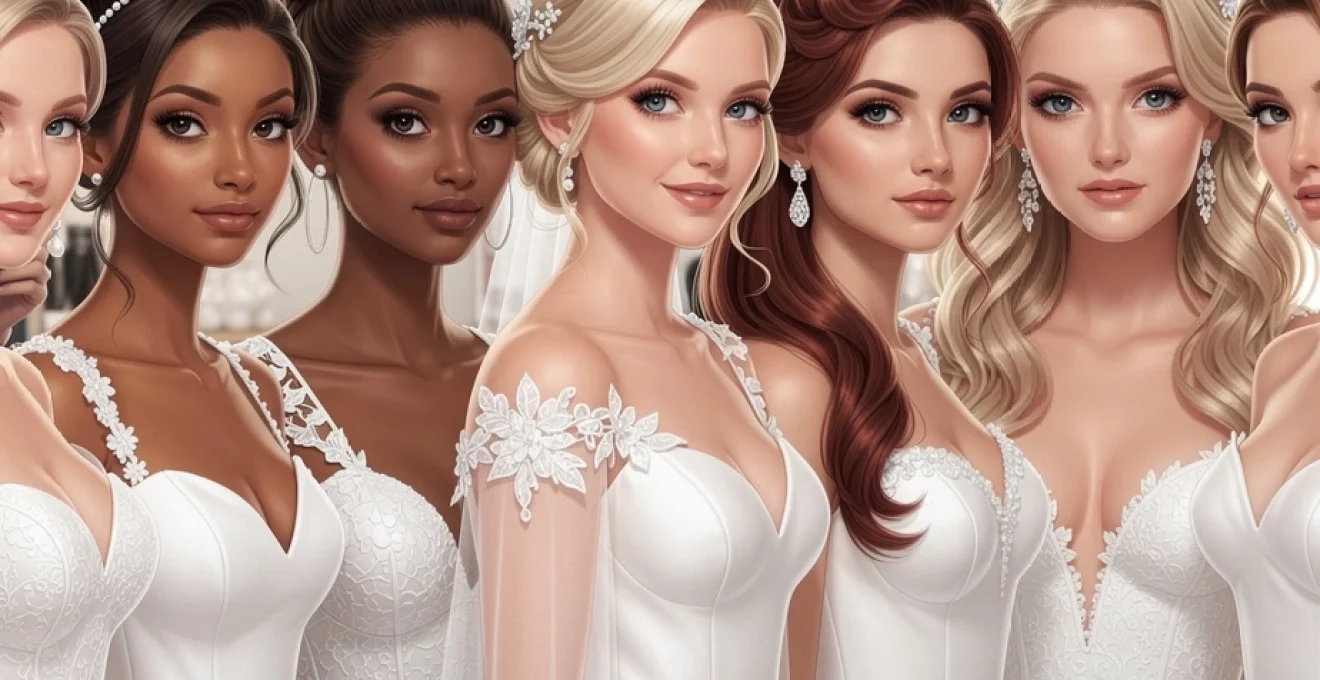
Your wedding day represents one of life’s most photographed moments, making your hairstyle choice absolutely critical to how you’ll look and feel as you walk down the aisle. The perfect bridal hairstyle goes beyond following trends—it requires understanding your unique facial geometry and selecting styles that enhance your natural features. Whether you’re blessed with delicate oval proportions or striking angular contours, the right hairstyle can transform your entire bridal look, creating that radiant confidence every bride deserves. Modern bridal styling has evolved to embrace diversity in both face shapes and hair textures, offering sophisticated solutions for every bride’s individual needs.
Understanding face shape classification: the geometric foundation of bridal hairstyling
The science of face shape analysis forms the cornerstone of professional bridal hairstyling, transforming what might seem like artistic intuition into precise geometric calculations. Professional stylists use specific measurement ratios and proportional relationships to determine which hairstyles will most effectively enhance each bride’s natural features. This methodical approach ensures that your chosen style doesn’t just follow current trends, but creates genuine harmony between your facial structure and overall aesthetic presentation.
Face shape classification operates on principles similar to architectural design, where proportion and balance create visual appeal. The width-to-length ratio of your face, combined with the positioning of your cheekbones, jawline, and forehead, creates a unique geometric blueprint. Understanding these measurements allows stylists to strategically place volume, create textural contrast, and position accessories to achieve optimal visual balance. Modern facial analysis has moved beyond the traditional five-shape model to recognise subtle variations and combination shapes that require customised styling approaches.
Oval face shape characteristics and hair texture considerations
Oval faces represent the golden standard in facial proportions, measuring approximately one and a half times longer than their width, with gently curved jawlines and balanced cheekbone placement. This versatile shape provides the greatest styling flexibility, as the natural symmetry works harmoniously with virtually any hairstyle configuration. However, this abundance of options can sometimes feel overwhelming for brides seeking their perfect look.
Hair texture plays a crucial role in styling oval faces effectively. Fine hair benefits from volumising techniques that create fullness without overwhelming delicate features, whilst thick, coarse hair can support more elaborate updos and intricate braiding patterns. The key lies in maintaining the face’s natural proportional balance whilst incorporating personal style preferences and wedding theme requirements.
Round face shape analysis: creating angular illusions through volume placement
Round faces exhibit equal width and length measurements, characterised by full cheeks, soft jawlines, and curved hairlines. The styling objective focuses on creating vertical lines and angular illusions that elongate the face’s appearance. Strategic volume placement at the crown, combined with sleek sides, generates the desired lengthening effect whilst maintaining feminine softness.
Professional techniques for round faces emphasise asymmetrical partings and height creation through backcombing or teasing at the crown area. Side-swept styles work exceptionally well, drawing the eye upward and creating diagonal lines that counteract the face’s circular geometry. Avoiding excessive width at the temples and cheek level prevents further emphasis on the face’s natural roundness.
Square face shape softening techniques using asymmetrical styling
Square faces feature strong, angular jawlines with equal width measurements across the forehead, cheekbones, and jaw. The styling approach centres on softening these dramatic angles through curved lines, textural elements, and strategic asymmetry. The goal involves creating feminine contrast to the face’s naturally powerful geometric structure.
Asymmetrical styling proves particularly effective for square faces, with side-swept bangs and diagonal partings breaking up the strong horizontal lines. Soft waves and loose curls positioned around the jawline create gentle curves that balance angular features. Avoiding blunt cuts and severely pulled-back styles prevents emphasising the face’s naturally strong bone structure.
Heart-shaped face balancing: Forehead-to-Chin proportion adjustment
Heart-shaped faces display wider foreheads with narrow, pointed chins, creating an inverted triangle silhouette. The styling strategy focuses on adding visual weight to the lower portion
of the face while visually narrowing the upper third. Stylists achieve this by introducing softness around the jawline and ears, either through loose tendrils, textured curls, or low-set volume that broadens the lower part of the face. Side parts and diagonal fringes are particularly effective, as they interrupt the width of the forehead and direct attention toward the eyes and cheekbones instead of the hairline.
For bridal hairstyles that enhance a heart-shaped face, consider low buns, side-swept ponytails, or half-up styles that sit below the crown. These configurations create balance by concentrating volume at or below the cheekbone level. Avoid excessive height directly on the top of the head or severe slicked-back looks that expose the full width of the forehead. Instead, incorporate soft, face-framing layers or curtain bangs to create a harmonious transition from forehead to chin.
Long face shape width enhancement through horizontal volume distribution
Long (or oblong) faces are characterised by a length significantly greater than the width, with relatively consistent width from forehead to jawline. The primary styling objective is to visually reduce vertical length by introducing width and strategic “break points” along the face. Think of it as drawing horizontal lines across a tall rectangle to make it appear more balanced and proportionate.
For brides with long face shapes, hairstyles that compress height and add lateral fullness work best. This includes styles with soft, horizontal fringes, wide waves around the cheekbones, or low, full chignons positioned at the nape. Middle parts can sometimes exaggerate length, so a soft side part or curtain fringe often proves more flattering. Avoid extremely high buns or updos with significant crown height, as these can make the face appear even longer in photographs.
Classic updo variations: chignon and bun techniques for structured elegance
Classic updos remain among the top bridal hairstyles that enhance every face shape because they offer a structured framework that can be customised with precision. Much like tailoring a couture gown, the placement, height, and texture of an updo can be subtly altered to complement different facial geometries. For round faces, height and vertical lines are key; for long faces, width and compact structure matter more. Square and heart-shaped faces benefit from softness and asymmetry strategically integrated into otherwise polished silhouettes.
From the French twist to the low chignon, these iconic styles share a common advantage: they reveal the neckline, shoulders, and back of the gown, allowing the overall bridal look to feel cohesive and considered. When executed with professional techniques and the right products, classic updos also deliver exceptional longevity, remaining intact from ceremony to final dance. This combination of aesthetics and practicality explains why structured updos continue to dominate bridal trend reports globally.
French twist mastery: traditional pleating and modern pin placement
The French twist is a cornerstone of elegant bridal hairstyling, particularly for brides seeking a timeless, editorial finish. Traditionally, the style is created by gathering the hair at the nape, twisting it upward along the back of the head, and tucking the ends into a sleek vertical roll. Modern interpretations often relax the surface texture slightly, introducing soft movement or a few face-framing pieces to prevent the look from feeling too severe—especially important for square and heart-shaped faces.
Pin placement is critical to both comfort and hold. Professionals typically work in a criss-cross pattern, inserting hairpins along the seam of the twist like invisible “stitching” in couture tailoring. For round faces, additional height can be created at the crown before rolling, subtly elongating the silhouette. Long and oval faces, on the other hand, benefit from a more compact shape with gentle volume through the midsection rather than at the very top, creating balanced proportions without adding vertical length.
Low chignon construction: gibson tuck and rolled edge finishing
The low chignon is one of the most versatile bridal hairstyles for every face shape because minor variations dramatically shift its visual effect. Positioned at or just below the occipital bone, this style anchors the eye at the centre-back of the head, which works especially well for long and heart-shaped faces that benefit from lower-set volume. The Gibson tuck, a vintage-inspired variation, involves rolling hair inward along a horizontal axis, creating a soft, romantic silhouette ideal for rustic, garden, or heritage venues.
Finishing techniques define whether the chignon reads as classic, modern, or bohemian. A sleek, polished surface with minimal flyaways complements minimalist gowns and structured veils, while a softly pulled-out edge with visible tendrils suits brides seeking a more relaxed aesthetic. For square and round faces, stylists often loosen sections around the temples and jaw to create gentle curves that soften strong angles or full cheeks. Oval faces can support either a taut, sculpted chignon or a more deconstructed version with braids and twists woven into the roll.
High ballerina bun architecture: crown positioning and texture integration
The high ballerina bun offers a powerful combination of elegance and practicality, lifting the facial features and opening the neckline. Its “architecture” is determined by bun placement: a bun centred at the crown elongates the neck and can visually heighten shorter brides, while one slightly toward the back of the head feels more classic and balanced. For round faces, additional height at the bun’s base helps create the illusion of a more oval silhouette, whereas long faces benefit from a slightly lower bun with added width rather than extra height.
Texture integration transforms this simple structure into a personalised bridal statement. Slicked, ultra-smooth buns pair beautifully with modern, minimalist gowns and statement accessories, while softly textured buns with braided bases or wrapped twists deliver a romantic, ethereal effect. Incorporating subtle root lift and a gentle, brushed-out finish helps prevent the style from appearing too severe on square and heart-shaped faces. The ballerina bun also serves as an excellent base for veils, tiaras, or hair vines, offering strong support for heavier accessories.
Braided crown incorporation: dutch and fishtail weaving fundamentals
A braided crown or halo braid offers a striking way to frame the face while securing hair away from the neckline—ideal for outdoor or destination weddings. Dutch braids, which sit raised on the surface of the scalp, create pronounced definition and structure, making them particularly effective on thicker hair types. Fishtail braids, with their finer, overlapping sections, provide a softer, more intricate texture that works beautifully for boho and romantic bridal themes. Both techniques can be wrapped across the crown or combined with low buns and chignons for added complexity.
From a face-shape perspective, the position and density of the braid are more important than the exact weaving method. For long or narrow faces, a slightly lower, wider braided halo adds horizontal balance. Round faces benefit from a crown braid set a bit higher with volume at the top centre, creating subtle height. Square faces are flattered by asymmetrical placement, such as a braid that is fuller on one side, breaking up strong horizontal lines. Heart-shaped faces look best when the braid does not sit too close to the widest part of the forehead; instead, small face-framing strands or wispy fringes soften the overall effect.
Romantic loose waves and cascading styles: hollywood glamour techniques
Loose waves and cascading lengths remain among the most requested bridal hairstyles because they strike a balance between glamour and effortlessness. These styles can be fine-tuned to flatter every face shape through thoughtful parting, wave placement, and density. For example, a deep side part with sculpted waves adds drama and softens angular features, ideal for square or diamond faces. A centre part with symmetrical waves frames oval faces beautifully, while strategic height and diagonal flow help elongate round faces in a subtle, flattering way.
Hollywood-inspired glamour hairstyles rely heavily on technical precision: consistent curl direction, controlled brushing, and the right combination of thermal protection and setting products. When executed well, they create a “liquid” shine and fluid movement that photographs exceptionally well under both natural and artificial light. For brides concerned about humidity or wind, modern styling products and setting techniques ensure that romantic waves remain intact for hours without looking stiff or over-sprayed.
Finger wave revival: marcel iron application and setting methods
Finger waves, originally popularised in the 1920s and 1930s, have seen a resurgence in bridal styling for brides seeking vintage glamour. Modern finger waves are often created using a Marcel iron—a clamp iron with a rotating handle that allows stylists to sculpt precise S-shaped patterns close to the scalp. The hair is typically set in alternating ridges and troughs, then clipped in place to cool, locking in the exaggerated, glossy curves that define this iconic look.
Because finger waves sit close to the head, they are particularly flattering for oval and heart-shaped faces, where the smooth contours highlight balanced proportions and pronounced cheekbones. To avoid elongating a long face, stylists may confine the waves to the mid-lengths rather than the crown, pairing them with a low bun or chignon at the back. Round faces benefit from waves that gradually open out into looser curls below the jawline, creating vertical flow rather than concentrating width at cheek level. A high-shine finishing spray or pomade enhances the sculptural quality of the waves, making them ideal for black-tie or vintage-inspired weddings.
Vintage victory rolls: pin curl foundation and structural support
Victory rolls, rooted in 1940s styling, introduce dramatic height and curvature that can be cleverly tailored to different facial geometries. The style typically starts with a pin curl foundation: sections of hair are rolled around the fingers or a tool, pinned flat to the head, and allowed to set, establishing a strong, curved structure. Once released, the curls are brushed into large, tubular rolls and pinned securely, usually along the front hairline or crown. This construction method provides the internal support necessary to keep the rolls elevated throughout the wedding day.
For heart-shaped or square faces, positioning a single large roll to one side with soft waves cascading from the opposite side creates beautiful asymmetry that balances prominent cheekbones or strong jawlines. Round faces can be elongated by placing paired rolls higher on the head and allowing the remaining hair to fall in loose waves below the shoulders. Long faces, however, are best suited to smaller, lower-sitting rolls that add width rather than height. Because victory rolls are inherently bold, they pair well with understated gowns or minimalist accessories, creating a focal point around the face.
Beach wave texturing: salt spray application and diffuser techniques
Beach waves are the go-to choice for brides seeking a relaxed yet refined look that appears naturally tousled rather than overly styled. Achieving this effect begins with enhancing the hair’s inherent texture using a salt or mineral spray, which adds grip and a matte finish reminiscent of sea air. Stylists often apply the product to damp hair, scrunching sections with their hands before drying with a diffuser on low heat to preserve wave pattern and minimise frizz. For naturally straight hair, a tong or flat iron can be used to create irregular bends that mimic organic movement.
Face shape customisation comes from where and how the texture is concentrated. For round faces, waves that begin below the cheekbone and extend toward the ends help create vertical lines and avoid adding extra width at the centre of the face. Long faces benefit from waves starting higher up, around the temples and cheek area, injecting much-needed volume through the sides. Heart-shaped faces look particularly beautiful with beach waves paired with a soft fringe or long layers around the jawline, which balance the narrow chin. Square faces are softened when the ends are lightly texturised and the waves are brushed out for a loose, cloud-like finish.
Loose barrel curl formation: thermal tool selection and sectioning
Loose barrel curls are a staple of many top bridal hairstyles that enhance every face shape because they deliver controlled volume and movement without sacrificing polish. The key lies in choosing the correct barrel size: larger barrels (32–38 mm) create soft, cascading curls ideal for long hair, while medium barrels (25–28 mm) suit medium lengths and finer textures. Stylists work in vertical or diagonal sections, wrapping hair away from the face to open up the features, or alternating directions for a more natural, voluminous effect. Each curl is allowed to cool in its coiled form before being gently brushed or finger-combed into waves.
Sectioning patterns are adapted to facial geometry. For brides with round faces, stylists may concentrate vertical sections around the front to create elongated lines, whereas square faces benefit from diagonal sections that soften sharp angles. Long faces are balanced by focusing curl density through the mid-lengths and ends, avoiding excessive root height. Heart-shaped faces can be flattered by curls that thicken the area around the jawline and collarbone, broadening the lower third of the silhouette. A lightweight, flexible-hold hairspray preserves movement while maintaining definition, ensuring that curls remain touchable rather than stiff.
Hair accessory integration and positioning strategies
Hair accessories act as visual anchors within bridal hairstyles, guiding the eye and enhancing facial symmetry when placed strategically. Whether you favour delicate pins, bold tiaras, veils, or fresh florals, the positioning of these elements can either complement or conflict with your face shape. For instance, a high, central tiara adds vertical emphasis, which may be ideal for round faces but overpowering for long or narrow features. Conversely, side-positioned combs or vines introduce asymmetry, beautifully balancing square or heart-shaped faces.
When choosing accessories for top bridal hairstyles that enhance every face shape, consider three key factors: weight, scale, and placement. Heavy pieces require structurally sound bases such as buns or braids to avoid discomfort and slippage. The scale of the accessory should echo your gown detailing—fine lace pairs best with delicate pins or vines, while clean, modern silhouettes can support bolder, sculptural pieces. Finally, placement should work with your chosen parting and hairstyle: a comb tucked above the ear on the “open” side of a deep part can lift and brighten the face, while a low-placed cluster at the nape emphasises a backless gown and elongates the neck.
Professional application techniques: tool selection and product formulation
Behind every seemingly effortless bridal hairstyle lies a carefully curated toolkit and product regimen. Professional stylists select tools based not only on desired curl pattern or finish, but also on hair type, length, and porosity. For example, titanium curling irons offer fast, high heat ideal for coarse or resistant hair, while ceramic tools provide gentler, more even heat suited to fine or colour-treated strands. Boar bristle brushes smooth the cuticle and create shine for sleek updos, whereas mixed-bristle or vent brushes are better for building volume and texture in loose styles.
Product formulation is equally important for achieving top bridal hairstyles that enhance every face shape while ensuring longevity. Lightweight mousses and volumising sprays are used at the root to create lift without stiffness, particularly helpful for round or heart-shaped faces needing height or structure. Mid-lengths and ends may be treated with smoothing creams or serums to control frizz and promote shine, especially in humid climates. Flexible-hold hairsprays and working sprays allow stylists to refine shapes as they go, while stronger finishing sprays “lock in” the final design without creating a helmet-like effect. Heat protectants are non-negotiable, forming a protective barrier during thermal styling to preserve hair health before and after the wedding day.
Longevity and hold optimisation: climate-resistant styling methods
Designing a bridal hairstyle that looks flawless in the mirror is only half the equation; ensuring that it withstands hours of movement, emotion, and changing conditions is where professional technique truly shows. Longevity begins with proper preparation: clean, well-conditioned hair that is not overly soft or slippery provides the best foundation. Stylists often recommend washing the hair the night before rather than the morning of the wedding, then using targeted products to create grip and structure. Think of this as priming a canvas before painting—essential for a finish that endures.
Climate-resistant strategies are especially crucial for destination weddings or outdoor ceremonies. In humid environments, anti-frizz serums, humidity-resistant sprays, and softly structured updos help prevent hair from expanding or collapsing. In dry or windy conditions, additional hydration and stronger internal pinning techniques ensure that loose waves and updos remain intact without excessive stiffness. For each face shape, the same principles apply: select one of the top bridal hairstyles that enhance every face shape, then adapt its structure and product support to your specific environment. By aligning geometry, technique, and climate-conscious planning, you achieve a bridal look that remains as polished at the final farewell as it did at your first step down the aisle.