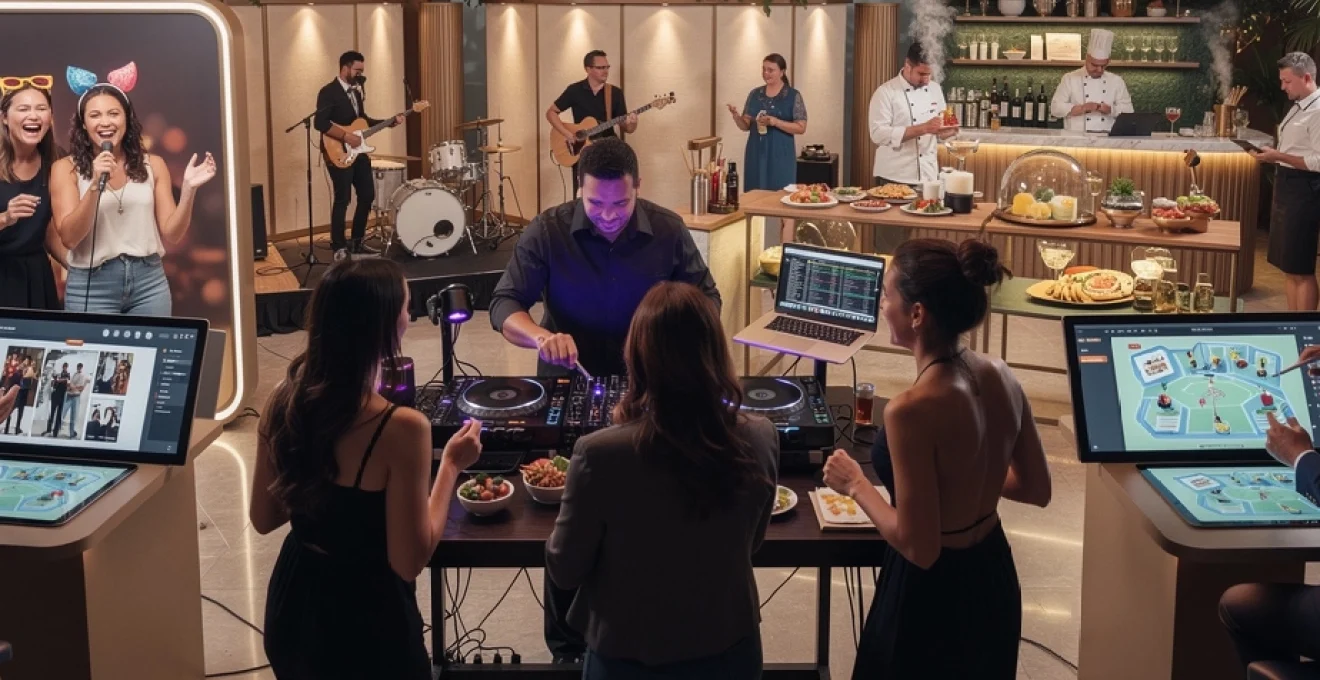
Creating memorable wedding entertainment has evolved far beyond traditional dancing and speeches. Modern couples seek innovative approaches that transform their reception into an extraordinary experience, ensuring every guest feels engaged throughout the celebration. The key lies in understanding that successful entertainment transcends mere activities—it creates emotional connections, sparks conversations, and generates lasting memories.
Today’s reception entertainment landscape offers unprecedented opportunities to personalise the guest experience. From interactive technology stations to immersive culinary adventures, couples can craft unique moments that reflect their personalities whilst maintaining the celebratory atmosphere essential to any successful wedding reception.
Interactive entertainment stations for enhanced guest engagement
Interactive entertainment stations serve as the cornerstone of modern reception design, transforming passive guests into active participants. These carefully curated experiences encourage mingling whilst providing structured activities that appeal to diverse age groups and interests. The strategic placement of these stations throughout the venue creates natural flow patterns, preventing crowding whilst ensuring continuous engagement.
Photo booth technology with custom backdrop design systems
Contemporary photo booth experiences have transcended simple backdrop photography, incorporating sophisticated technology that creates personalised keepsakes. Modern systems feature instant social media integration, allowing guests to share memorable moments whilst simultaneously building the couple’s digital wedding album. Green screen technology enables couples to transport guests to meaningful locations—perhaps the spot where they first met or their honeymoon destination.
Advanced photo booth setups include props specifically designed around the couple’s story, incorporating inside jokes, shared hobbies, or cultural elements. Professional-grade lighting systems ensure every photo captures guests at their best, whilst high-resolution printing provides immediate takeaway memories. Some couples opt for GIF stations or slow-motion video booths, creating dynamic content that traditional photography cannot achieve.
Live music performance scheduling and acoustic management
Strategic live music programming requires careful consideration of guest demographics, venue acoustics, and reception timeline. Professional acoustic management ensures music enhances rather than overwhelms conversation during cocktail hours, gradually building energy as the evening progresses. Multiple performance areas allow for varied musical experiences—perhaps acoustic guitar during dinner transitions to jazz ensemble for cocktails, culminating in dance music later.
Successful live music integration involves more than simply hiring musicians. Sound engineers work with venue staff to optimise audio levels throughout different reception phases, ensuring elderly relatives can converse comfortably whilst younger guests enjoy energetic performances. Many couples now incorporate surprise musical elements—flash mobs by professional dancers or unexpected duets between family members—creating spontaneous entertainment moments.
Professional DJ equipment setup and playlist curation strategies
Modern DJ services extend far beyond music selection, incorporating sophisticated lighting systems, fog machines, and interactive elements that transform dance floors into immersive environments. Professional-grade equipment ensures crystal-clear audio quality regardless of venue size or shape, whilst wireless microphone systems facilitate seamless transitions between speeches, toasts, and musical segments.
Playlist curation involves extensive consultation with couples to understand their musical journey, incorporating songs from different relationship phases whilst considering guest preferences across generations. Advanced DJ setups include song request systems where guests can submit preferences via smartphone apps, ensuring everyone hears familiar favourites whilst maintaining the couple’s overall musical vision.
Interactive game stations with digital integration capabilities
Digital game stations combine nostalgic appeal with modern technology, creating engaging experiences that encourage friendly competition amongst guests. Large-scale versions of classic games—giant Jenga, oversized Connect Four, or lawn-sized chess sets—provide visually striking entertainment that doubles as conversation starters. Digital scoring systems track competitions throughout the reception, building excitement towards final prize presentations.
Technology-enhanced gaming includes tablet-based trivia about the couple, interactive displays where guests vote on various wedding-related questions, or collaborative digital art projects that become permanent keepsakes. These systems often incorporate social media integration, allowing remote friends and family to participate virtually whilst creating shareable content that extends the celebration beyond physical attendees.
Culinary experience design and food presentation innovation
Contemporary reception catering has evolved into theatrical culinary entertainment that engages multiple senses whilst satisfying diverse dietary requirements. Interactive food experiences transform traditional serving methods into memorable entertainment, encouraging guest participation whilst showcasing culinary artistry. These innovations require careful coordination between catering teams and entertainment planners to ensure seamless execution throughout the reception timeline.
Live
Live cooking demonstrations transform the reception into a dynamic culinary theatre, where guests become the audience and, at times, active participants. Chefs can prepare signature dishes, late-night snacks, or dessert elements in front of guests, narrating their process and answering questions in real time. This approach works particularly well for open kitchens, outdoor receptions, or venues with a dedicated chef’s station. To avoid bottlenecks, couples should coordinate demonstration times with their planner so that performances coincide with natural pauses in the schedule, such as the gap between courses or the transition from dinner to dancing.
For maximum impact, establish clear chef interaction protocols in advance. Agree how much the chef will engage verbally, whether guests can taste elements as they are prepared, and how questions will be handled in a busy environment. You might, for instance, schedule short, repeated sessions (10–15 minutes each) rather than one long demonstration to ensure more guests can watch. Clear signage and a brief introduction from the MC or DJ will guide guests towards the area, reducing confusion and ensuring the live cooking experience enhances, rather than disrupts, the overall wedding reception flow.
Themed food stations with cultural authenticity elements
Themed food stations are one of the most effective ways to entertain guests during the reception while showcasing your story and heritage. Instead of a single buffet, you can curate multiple stations inspired by meaningful locations or cultural influences—think Mediterranean mezze, Asian street food, or a nostalgic “childhood favourites” bar. Each station becomes both a visual feature and a talking point, encouraging guests to circulate around the space and discover new flavours at their own pace.
Authenticity is essential when designing cultural food experiences that feel respectful rather than superficial. Where possible, involve caterers or consultants with lived experience of the cuisine you are serving, and consider small interpretive touches such as menu cards explaining the origin of key dishes. Incorporating traditional serving vessels, textiles, or décor from the relevant culture adds depth without overwhelming your overall wedding design. By treating each themed food station as a mini installation, you create a series of micro-experiences that keep guests engaged throughout the evening.
Molecular gastronomy techniques for memorable taste experiences
For couples seeking truly original ideas to entertain guests, molecular gastronomy offers a memorable twist on classic wedding catering. Techniques such as liquid nitrogen ice cream, flavoured foams, edible spheres, or smoke-filled cloches turn simple bites into conversation-starting spectacles. A dedicated station where a chef prepares these avant-garde creations functions almost like a live show, with guests gathering to watch the science-meets-culinary magic unfold.
Because molecular gastronomy relies on specialised equipment and safety protocols, it is crucial to work with experienced professionals who understand both flavour and theatre. You will need to consider ventilation, power supply, and clear queuing systems so guests can enjoy the experience without crowding the area. When executed well, these techniques elevate your reception from standard dining to an immersive sensory journey, giving guests a story they will share long after the last dance.
Interactive beverage mixing workshops and cocktail masterclasses
Interactive beverage stations take the familiar concept of a bar and turn it into hands-on entertainment during the reception. Cocktail masterclasses, mocktail bars, or “build-your-own” gin and tonic stations allow guests to personalise their drinks under the guidance of a professional mixologist. These experiences work particularly well during the cocktail hour, bridging the gap between ceremony and dinner while encouraging guests who have not met before to chat over shared creations.
To keep things streamlined, offer a curated menu of two or three signature drinks rather than unlimited options, and provide clear step-by-step instructions or visual recipes. The mixologist can lead short group sessions at set times, explaining flavour pairings, shaking techniques, and garnish choices, much like a mini workshop. For non-drinkers and younger guests, parallel mocktail stations ensure everyone can participate. When well planned, interactive beverage mixing becomes both a practical amenity and a standout form of reception entertainment.
Immersive themed environment creation and atmospheric design
Beyond individual activities, the overall atmosphere of your reception plays a decisive role in how entertained guests feel. Immersive themed environments transform standard venues into spaces that tell your story from the moment guests arrive. Whether you are envisioning a vintage speakeasy, enchanted woodland, modern art gallery, or relaxed festival-style celebration, cohesive design elements help guests feel as though they have stepped into another world tailored to your relationship.
Successful atmospheric design starts with a clear concept and a limited, well-chosen palette of visual cues. Lighting, for instance, is one of the most powerful yet often overlooked tools: warm fairy lights, patterned gobos, coloured uplighting, or candle clusters can radically change how a room feels without extensive structural décor. Layer this with textured linens, themed signage, curated furniture layouts, and scent (via candles or diffusers) to create a multi-sensory environment. Think of it as stage design for your wedding reception—every detail, from the entrance walkway to the dance floor, should reinforce the experience you want guests to have.
To keep immersive theming from feeling overwhelming or forced, focus on a few anchor points where the concept is expressed most strongly. These might be the bar, the photo area, and the dance floor, or perhaps the head table, dessert station, and lounge corner. Within these zones, you can introduce interactive elements such as themed props, projection mapping, or ambient soundscapes that extend beyond the main playlist. By guiding guests on a subtle journey through distinct yet cohesive areas, you create continuous discovery and natural entertainment without needing constant scheduled performances.
Technology-enhanced guest participation activities
Digital tools have opened up fresh possibilities for original ideas to entertain guests during the reception, making participation easier and more inclusive. Well-chosen technology should feel intuitive and supportive, rather than pulling guests away from the moment. Used thoughtfully, it can enhance live experiences, foster connection between tables, and even involve friends and family who could not attend in person.
One increasingly popular approach is the use of event apps or QR codes to power interactive elements. Guests might scan a code at their table to vote on the next song, submit questions for speeches, or take part in a light-hearted quiz about the couple. Live polls can be displayed discreetly on a screen, allowing everyone to see real-time results without interrupting the flow of the evening. This type of digital integration turns passive viewing into active engagement, much like handing the audience a remote control during a show.
Another powerful tool is live streaming and remote guest interaction. For international weddings or events with limited capacity, you can designate a “virtual guest corner” with a screen, camera, and good microphone, allowing remote attendees to deliver toasts or join group photos. Some couples also use private messaging platforms where guests can upload candid images and short video clips during the night, creating an instant, crowd-sourced digital album. When balanced with in-person entertainment, these technology-enhanced activities make the celebration feel more accessible and personalised for everyone involved.
Professional entertainment booking and vendor coordination strategies
Even the most creative wedding entertainment ideas rely on strong behind-the-scenes coordination to succeed. Booking professional entertainers—whether musicians, magicians, caricaturists, or culinary specialists—requires more than simply securing a date and signing a contract. You will need to align each vendor’s requirements with the venue’s capabilities, the catering schedule, and your overall reception timeline to prevent clashes and downtime.
Begin by mapping out your key entertainment moments on a detailed schedule that includes setup, sound checks, performance times, and break periods. Share this document with your planner, venue coordinator, and all vendors so everyone is working from the same plan. It is often helpful to appoint a single point of contact on the day—either a professional planner or a trusted friend—who can troubleshoot minor issues, cue performers, and liaise with the DJ or MC. This ensures you can remain fully present while the logistics unfold smoothly in the background.
Technical riders and access needs should be confirmed well in advance to avoid last-minute surprises. Ask entertainers what power, space, lighting, and sound support they require, and cross-check this with your venue’s specifications. For example, a live band may need dedicated circuits and a raised platform, while a photo booth provider might require proximity to a wall socket and a certain amount of floor space. Building in buffer time for setup and teardown reduces stress and protects the polished, professional feel of your reception entertainment.
Finally, consider how different entertainment elements complement one another rather than competing for attention. You might schedule high-energy performances directly after dinner to transition guests onto the dance floor, while placing quieter activities—like caricature drawing or lawn games—slightly away from the main sound system. By curating a balanced mix of focal moments and relaxed options, and by coordinating vendors with care, you create a reception where every guest can find something they enjoy, and every entertainer has the conditions they need to shine.