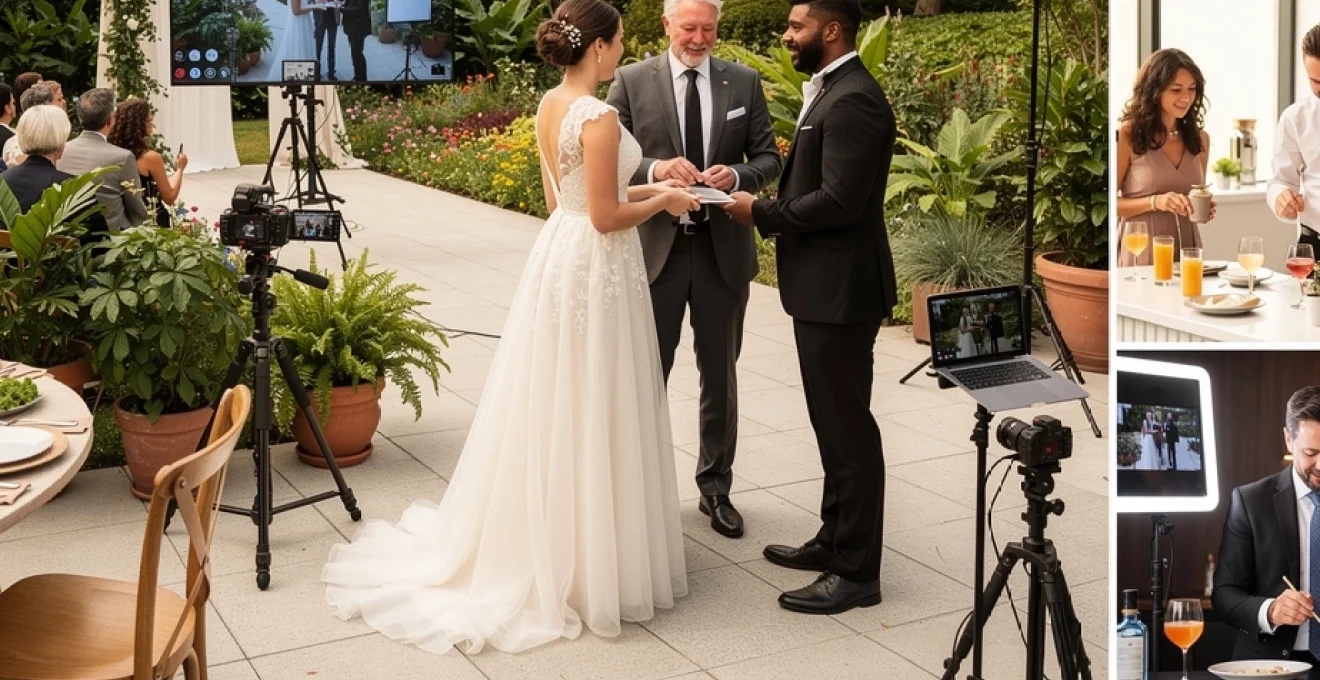
The wedding industry is experiencing a profound transformation as couples increasingly prioritise authenticity, sustainability, and personalised experiences over traditional expectations. From intimate micro-celebrations to technology-enhanced hybrid ceremonies, modern weddings reflect evolving values that emphasise meaningful connections, environmental responsibility, and creative self-expression. These shifts aren’t merely aesthetic preferences—they represent fundamental changes in how couples approach one of life’s most significant milestones. The emphasis has moved decisively away from following prescribed formulas towards crafting celebrations that genuinely reflect individual relationships, cultural backgrounds, and personal priorities.
Today’s engaged couples are questioning long-standing conventions and making deliberate choices about every aspect of their wedding day. Whether opting for carbon-neutral venues, commissioning bespoke ceremony scripts, or selecting non-traditional locations that hold personal significance, these decisions reflect a deeper desire for authenticity and purpose. The trends shaping contemporary weddings aren’t about keeping up with what’s fashionable—they’re about creating experiences that resonate emotionally with both the couple and their guests whilst aligning with broader social and environmental concerns.
Micro-weddings and intimate guest lists: the shift towards quality over quantity
The micro-wedding movement has fundamentally redefined what constitutes an ideal celebration size. Limiting guest lists to fewer than 50 attendees allows couples to invest more meaningfully in every aspect of their day whilst fostering genuine connection amongst those present. This trend accelerated significantly during the pandemic but has persisted because couples discovered unexpected advantages: reduced stress, enhanced intimacy, and the ability to allocate budget towards elevated experiences rather than simply accommodating larger numbers.
When you reduce your guest count, you’re not simply scaling down a traditional wedding—you’re creating an entirely different experience. Intimate celebrations enable personalised attention for each guest, from custom menu selections that accommodate individual dietary preferences to handwritten notes expressing why each person’s presence matters. Couples report feeling more present during their own celebration when they’re not navigating through 200 guests during a limited reception timeframe. The emotional quality of a micro-wedding often surpasses larger events precisely because meaningful interaction becomes possible rather than aspirational.
Financial considerations play a significant role as well. Industry data suggests that couples hosting micro-weddings spend approximately 40-60% less overall compared to traditional-sized celebrations, even when choosing premium vendors and upscale venues. This cost reduction doesn’t necessarily mean compromising on quality; rather, it allows strategic investment in elements that truly matter—exceptional cuisine, premium photography, luxurious accommodations, or extended celebration periods that transform a single day into a multi-day experience.
For distant friends and family unable to attend in person, hybrid solutions have emerged as the perfect complement to intimate celebrations. Live streaming technology enables virtual participation without inflating the physical guest count, ensuring that geographical constraints don’t exclude loved ones from witnessing your ceremony. This approach satisfies the desire for inclusivity whilst maintaining the carefully curated intimacy that makes micro-weddings so appealing.
Sustainable wedding planning: Eco-Conscious ceremonies and Zero-Waste celebrations
Environmental consciousness has shifted from a niche concern to a central planning priority for couples across demographic groups. The average wedding generates approximately 400 pounds of waste and produces a carbon footprint equivalent to driving nearly 7,000 miles—statistics that increasingly conflict with couples’ values and environmental commitments. Consequently, sustainable wedding planning has evolved from making isolated eco-friendly choices to adopting comprehensive strategies that minimise environmental impact across all celebration elements.
This sustainability focus manifests differently for each couple, ranging from subtle adjustments to completely reimagined celebration models. Some prioritise specific high-impact areas like catering and venue selection, whilst others pursue comprehensive zero-waste goals that influence decisions from invitations to post-event donation strategies. The common thread connecting these approaches is intentionality—making deliberate choices based on environmental values rather than defaulting to conventional options.
Carbon-neutral venues and LEED-Certified wedding locations
Venue selection represents one of the most significant opportunities to reduce wedding-related environmental impact. Carbon-neutral facilities and LEED-certified buildings incorporate sustainable practices into their operational frameworks, from renewable energy systems and water conservation measures to waste reduction programmes and sustainable landscaping. When you choose these venues, you’re supporting businesses that prioritise environmental stewardship
and systematically reducing resource consumption. Many venues now publish sustainability reports or green policies on their websites, making it easier to evaluate their commitments. When considering options, you might look for venues powered by renewable energy, properties with robust recycling and composting systems, or locations that offer carbon-offset packages integrated into their wedding pricing. Even if a space is not formally certified, you can still ask targeted questions about their energy use, vendor policies, and waste management to make an informed, eco-conscious decision.
Location choice also influences emissions related to guest travel, which often represents the largest portion of a wedding’s carbon footprint. Selecting a venue close to where most guests live, or near major transport hubs, can dramatically lower the need for long-haul flights and car journeys. Some couples go a step further by arranging group transport, encouraging car-sharing, or providing incentives for guests who use public transport. Thinking of your venue as the “anchor” for your sustainability strategy helps align every other choice—from accommodation blocks to rehearsal dinners—with your environmental goals.
Plant-based catering and farm-to-table menu curation
Food is another high-impact area where small changes yield substantial environmental benefits. Studies from leading environmental organisations indicate that plant-based menus can reduce meal-related emissions by up to 50% compared with traditional meat-heavy offerings. This doesn’t necessarily mean serving a fully vegan wedding breakfast (although many couples do); even shifting to a primarily plant-forward menu with one well-considered meat or fish option can significantly lower your overall footprint. The bonus? Modern plant-based cuisine is vibrant, inventive, and satisfying, challenging old assumptions that “eco-friendly” means compromising on flavour.
Farm-to-table catering extends these principles by focusing on locally sourced, seasonal produce. When you work with chefs who prioritise regional suppliers, you reduce food miles, support small-scale agriculture, and often enjoy fresher, more flavourful ingredients. Menu planning becomes a collaborative, creative process—curating dishes based on what’s in peak season rather than forcing out-of-season imports. Think heritage tomato tarts in late summer, root vegetable gratins in winter, or wild berry desserts sourced from nearby growers. You can highlight these choices on your printed or digital menus, helping guests connect the culinary experience to your sustainability values.
Biodegradable confetti, seed paper invitations, and compostable tableware
Traditional wedding staples such as plastic confetti, glossy invitations, and single-use tableware can generate surprising amounts of landfill waste. Eco-conscious couples are increasingly swapping these for biodegradable or reusable alternatives that deliver the same sense of celebration with far less environmental cost. Biodegradable confetti made from dried petals, leaves, or rice paper breaks down naturally, avoiding the microplastic pollution associated with conventional options. Some venues now require biodegradable confetti as part of their environmental policy, particularly in outdoor settings or heritage locations.
Stationery is another area ripe for innovation. Seed paper invitations, which can be planted to grow wildflowers or herbs, transform what would otherwise be discarded into a living reminder of your day. Paired with digital RSVPs and wedding websites, you can dramatically reduce paper usage whilst still preserving the tactile charm of a physical invite. For the wedding day itself, compostable tableware made from materials such as bamboo, palm leaf, or sugarcane fibre offers a stylish alternative to plastic, especially for outdoor receptions or festival-style celebrations. The key is working with your caterer and venue to ensure these items are actually composted afterwards, closing the loop rather than shifting the waste elsewhere.
Ethical diamond sourcing and lab-grown gemstone alternatives
As awareness of mining practices grows, couples are scrutinising the origin of their engagement rings and wedding bands with the same care they apply to food or fashion. Ethically sourced diamonds and traceable gemstones aim to ensure that workers are paid fairly, communities benefit from the trade, and environmental damage is minimised. Many jewellers now provide provenance documentation, outlining where stones were mined and how they moved through the supply chain. Asking for this information is no longer unusual—it’s part of a broader cultural shift towards transparency and ethical luxury.
Lab-grown diamonds and gemstones have rapidly moved from niche to mainstream, offering a lower-impact and often more affordable alternative to mined stones. Chemically and visually identical to their natural counterparts, lab-grown diamonds are created in controlled environments that avoid many of the social and environmental challenges associated with traditional mining. For couples, this opens up new design possibilities: you might choose a larger stone, a coloured diamond, or an intricate cluster setting that would have been cost-prohibitive with mined gems. Whether you opt for vintage, ethically mined, or lab-grown, the guiding principle is the same—aligning your symbols of commitment with your ethical and environmental values.
Second-hand bridal gowns and rental formalwear services
The fashion industry is one of the world’s most resource-intensive sectors, and wedding attire—often worn only once—has come under increased scrutiny. In response, resale platforms, curated pre-loved boutiques, and designer rental services are reshaping how couples and wedding parties approach their outfits. Choosing a second-hand bridal gown can reduce the environmental impact of your wedding wardrobe by up to 80%, according to some lifecycle assessments, whilst granting access to high-end designers at a fraction of the original price. Many brides also appreciate the story behind a pre-loved dress, seeing themselves as part of a garment’s evolving narrative rather than its sole owner.
Rental formalwear for grooms, bridesmaids, and guests is also becoming more sophisticated, moving far beyond basic tuxedos or generic gowns. Contemporary rental services offer on-trend silhouettes, inclusive sizing, and custom tailoring, all without the long-term commitment or storage concerns. Think of it as the wedding equivalent of a shared library—beautiful pieces circulating between celebrations instead of languishing in wardrobes. If you still dream of owning your dress, you might consider reselling it after the wedding or having it altered for future events, extending its lifespan and keeping it out of landfill. By reframing “something borrowed” as a guiding principle rather than a single accessory, you integrate circular fashion into the heart of your celebration.
Experiential wedding design: immersive guest engagement and interactive elements
As weddings become more personal and design-led, couples are moving beyond purely visual aesthetics towards experiential wedding design. Instead of asking “How will this look in photos?”, many now start with “How will this feel for our guests from the moment they arrive?”. The result is a shift towards immersive, multi-sensory celebrations where soundscapes, scent, movement, and interaction play as important a role as flowers and linens. In this context, guests are no longer passive observers; they become active participants in a carefully choreographed experience that reflects the couple’s story.
This experiential focus doesn’t require a limitless budget—rather, it demands intentional, creative thinking. You might design a “journey” through different spaces that reveal chapters of your relationship, or curate touchpoints that encourage conversation and play, from interactive escort card displays to tasting stations and live art. Well-planned experiential elements also act as natural icebreakers, helping guests from different social circles connect more easily. When done well, the wedding feels less like a performance and more like an unfolding narrative in which everyone has a role.
Live entertainment installations and performance art integration
Live music has long been a staple of wedding entertainment, but the latest trend pushes this concept further by integrating performance art directly into the event environment. Imagine string musicians positioned on a mezzanine, vocalists weaving through the crowd during cocktail hour, or contemporary dancers performing a surprise piece that reflects the couple’s journey. These live entertainment installations blur the line between décor and performance, transforming the wedding into a curated cultural experience rather than a series of isolated “sets.”
Performance art integration works particularly well when it reinforces your wedding theme or narrative. A couple with a shared love of theatre might stage their ceremony in the round, with actors delivering readings, while art enthusiasts could commission a live muralist to create a piece that evolves throughout the evening. The key is balance: you want performances to enhance, not dominate, the celebration. By scheduling shorter sets at strategic moments—such as transitions between courses or during cocktail hour—you maintain energy and anticipation without overwhelming guests. Think of these performances as punctuation marks that shape the rhythm of the night.
Culinary theatre stations and chef-led tasting experiences
Food stations and buffets are being reimagined as “culinary theatre,” where chefs prepare dishes in front of guests, explaining ingredients, origins, and techniques. This approach turns dining into an interactive experience, inviting guests to explore flavours and textures rather than passively receiving plated courses. From live sushi rolling and pasta-making to open-fire grilling and dessert flambé stations, these chef-led experiences create a sense of spectacle that doubles as entertainment. They also cater well to diverse dietary needs, allowing guests to personalise their plates with guidance from professionals.
For couples who consider themselves food enthusiasts, chef-led tasting menus can transform the wedding breakfast into a gastronomic journey. Instead of a conventional three-course meal, you might offer multiple smaller courses, each paired with a complementary beverage and a short introduction from the chef or sommelier. This format encourages slower, more mindful eating and conversation, aligning with the broader trend towards intentional, quality-focused celebrations. As with any interactive element, logistics are crucial: ensure there is adequate space, staffing, and clear signage so that guests understand how to engage without confusion or queues.
Personalised cocktail mixology bars and signature drink curation
The bar has become a focal point of modern weddings, reflecting the broader cultural interest in craft cocktails and low- or no-alcohol mixology. Rather than offering a generic drinks list, couples are curating personalised cocktail menus inspired by their travels, favourite restaurants, or cultural heritage. Signature drinks might be named after pivotal moments in the relationship or infused with ingredients from meaningful locations—a lavender gin spritz to evoke a proposal in Provence, for example. This trend allows you to tell your story through flavour whilst guiding guests towards a cohesive beverage experience.
Interactive mixology bars take things further by inviting guests to customise elements of their drinks under the guidance of professional bartenders. Options might include choosing a base spirit, selecting from a range of house-made syrups and bitters, or garnishing with herbs grown in the couple’s own garden. For those who don’t drink alcohol, sophisticated zero-proof cocktails ensure they’re fully included in the experience. To keep service smooth, it’s wise to offer a curated framework rather than unlimited choice—think of it as a tasting menu at the bar, balancing creativity with efficiency so that no one spends half the evening waiting in a queue.
Photo booth technology with AR filters and 360-degree video capture
Photo booths remain popular, but their form and function have evolved dramatically with recent technology. Static backdrops and printed strips are giving way to 360-degree video platforms, slow-motion captures, and augmented reality (AR) filters that overlay custom graphics, dates, or thematic elements onto images in real time. These setups act as both entertainment and content creation hubs, generating shareable clips and photos that extend the life of the celebration on social media. In a sense, they serve as a digital guestbook, capturing candid moments and personalities in motion rather than posed formality alone.
AR-enhanced photo experiences can also be tailored to your design scheme, incorporating colours, motifs, or monograms that echo your stationery and décor. Some couples even create bespoke filters for guests to use throughout the day on their own devices, building a cohesive visual identity across user-generated content. As with any tech-driven feature, clarity and accessibility are essential: clear instructions, friendly attendants, and simple interfaces ensure that guests of all ages feel comfortable participating. When thoughtfully integrated, advanced photo booth technology becomes less of a novelty and more of an interactive storytelling tool for your wedding.
Technology-enhanced ceremonies: hybrid livestreaming and virtual guest participation
The rise of hybrid weddings—where some guests attend in person and others participate virtually—has reshaped expectations about accessibility and inclusion. What began as a necessity during pandemic restrictions has matured into a deliberate choice for couples with far-flung families, mobility-limited loved ones, or sustainability goals around reducing long-distance travel. High-quality livestreaming allows remote guests to witness the ceremony in real time, often with multiple camera angles, professional audio, and integrated chat functions so they can share reactions and well-wishes. When executed well, a virtual presence can feel like more than “just watching”; it becomes an interactive extension of the guest experience.
Technology-enhanced ceremonies now go beyond simple video feeds. Some couples employ dedicated “virtual hosts” to welcome online attendees, guide them through the schedule, and facilitate moments of participation such as live polls, digital guestbooks, or breakout rooms for post-ceremony toasts. Others set up screens or tablets at the reception so in-person guests can interact with virtual attendees, blurring the line between physical and digital space. The challenge lies in maintaining emotional intimacy amid the tech—ensuring that cameras, microphones, and screens support rather than distract from the vows and key moments. Clear timelines, rehearsals with your AV team, and a minimal on-screen interface can help strike that balance.
Non-traditional venue selection: industrial warehouses, art galleries, and outdoor wilderness settings
Couples are increasingly looking beyond traditional ballrooms and hotel function suites, seeking venues that reflect their personalities, aesthetics, and values. Industrial warehouses, converted factories, and loft spaces offer a blank-canvas approach—exposed brick, steel beams, and high ceilings provide a dramatic backdrop that can be styled in countless ways. These venues particularly appeal to those drawn to contemporary or minimalist design, where lighting installations, draping, and large-scale floral or sculptural pieces can transform the space into something utterly unique. They also lend themselves well to large serpentine tables, immersive layouts, and flexible staging for live entertainment.
Art galleries and museums present another compelling alternative, merging the wedding with a cultural experience. Celebrating amidst curated exhibitions not only provides visually striking surroundings but also supports arts institutions that many couples feel passionate about. Guidelines around décor, catering, and photography can be stricter in such spaces, but these constraints often spark greater creativity and respect for the environment. At the other end of the spectrum, outdoor wilderness settings—from forests and mountains to coastal cliffs and lakesides—appeal to couples seeking a deep connection with nature. Planning a ceremony in a non-traditional venue does require additional logistics around power, accessibility, and weather contingencies, yet the payoff is a celebration that feels profoundly personal and memorable.
Personalised vow writing and bespoke ceremony scripts: moving beyond traditional liturgy
Perhaps the most intimate shift in modern wedding trends is the move towards personalised vow writing and bespoke ceremony scripts. Instead of relying solely on standard religious or civil texts, couples are increasingly crafting words that reflect their unique history, values, and vision for the future. This can involve writing individual vows, co-authoring a shared statement of intent, or working with an officiant or celebrant to develop a fully customised script. The result is a ceremony that feels less like a template and more like a spoken portrait of the relationship, often resonating deeply with guests who see parts of themselves reflected in the narrative.
Creating personalised vows can feel daunting at first—where do you start when trying to articulate something as complex as a lifelong commitment? Many couples find it helpful to treat the process like an interview with themselves, reflecting on key moments, challenges overcome, and hopes for the years ahead. Some choose to keep their vows private until the ceremony; others share them in advance with a celebrant for guidance and refinement. Beyond the vows, bespoke scripts may incorporate cultural rituals, family traditions, or symbolic acts adapted to suit modern sensibilities, such as unity ceremonies or ring warmings. In an era where authenticity is paramount, these tailored words become the emotional heart of the wedding, anchoring all the surrounding design and celebration in a deeply personal truth.