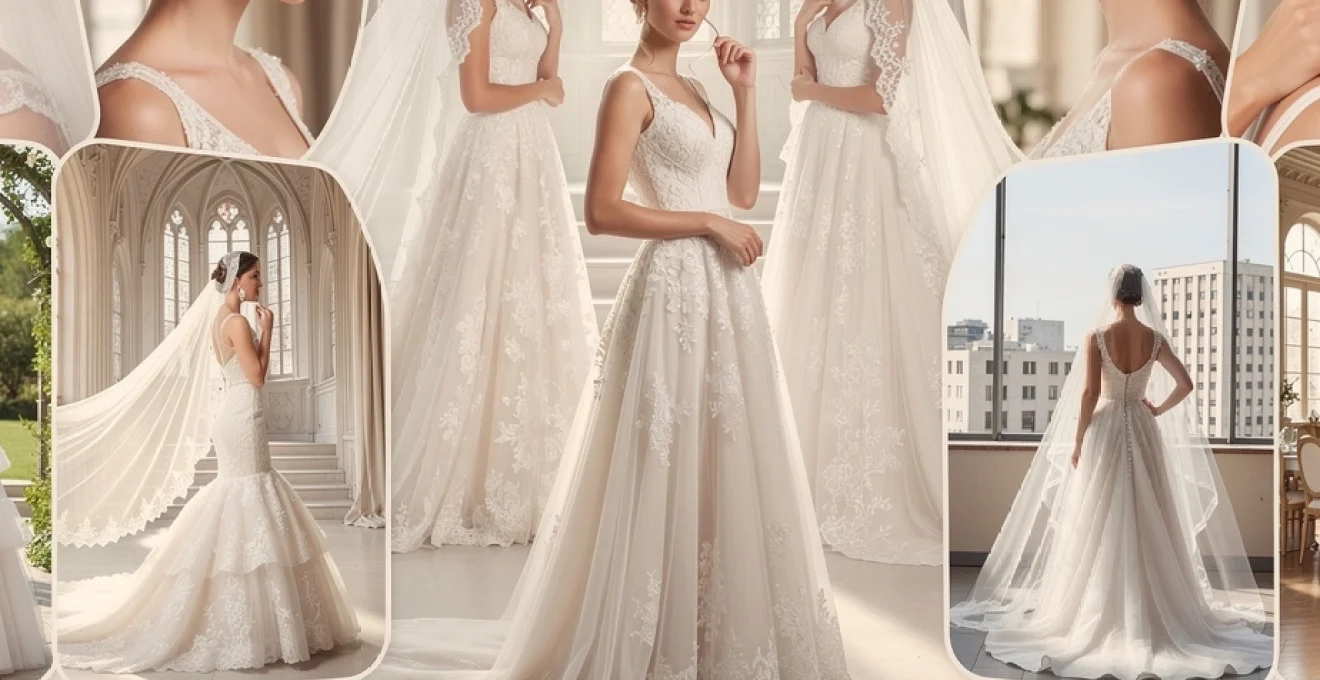
The decision to wear a wedding veil represents one of the most personal choices a bride faces whilst planning her special day. Modern bridal fashion offers unprecedented freedom, allowing each bride to express her individual style through carefully curated accessories that complement her overall aesthetic. Whether drawn to the timeless romance of flowing cathedral veils or the contemporary elegance of going bare-headed, the choice ultimately reflects your unique personality and vision for your wedding day.
Understanding the intricate relationship between face shape, dress silhouette, hairstyle, and venue creates the foundation for making this pivotal decision. The veil market has evolved significantly, with designers now offering innovative alternatives that challenge traditional expectations whilst maintaining the ceremonial significance many brides cherish. From delicate hair vines to dramatic capes, the options extend far beyond conventional tulle and lace constructions.
This comprehensive analysis examines the technical aspects of veil selection, exploring how specific design elements interact with individual features to create harmonious bridal looks. The modern bride benefits from understanding these nuanced relationships, enabling informed decisions that enhance rather than overshadow her natural beauty.
Face shape analysis and veil compatibility assessment
Understanding your facial structure provides the essential foundation for selecting veil styles that enhance your natural features rather than compete with them. Professional bridal stylists consistently emphasise that face shape compatibility remains the most overlooked aspect of veil selection, yet it significantly influences the overall harmony of your bridal look. The geometric principles governing face-flattering veil choices mirror those used in professional photography and portrait artistry.
Oval face structure and cathedral length veils
Oval faces possess naturally balanced proportions, creating versatility that accommodates virtually any veil style with exceptional results. Cathedral length veils, extending 108 to 120 inches beyond the dress hemline, create stunning vertical lines that complement the oval face’s inherent symmetry. The dramatic length draws attention downward whilst maintaining facial balance, particularly effective for formal church ceremonies or grand ballroom receptions.
The proportional harmony achieved between oval facial features and cathedral veils creates an ethereal, princess-like aesthetic that photographs beautifully from multiple angles. Consider selecting cathedral veils with minimal embellishment to avoid overwhelming your features, allowing your natural beauty to remain the focal point whilst the veil provides elegant movement and drama.
Round face contouring with fingertip length options
Round faces benefit significantly from fingertip length veils, which typically measure 36 inches from the crown and create elongating vertical lines. This strategic length draws the eye downward, visually lengthening the face whilst the veil’s positioning creates subtle contouring effects. The fingertip veil’s proportions work particularly well with updos that add height, further enhancing the lengthening effect.
Selecting veils with strategic embellishment placement along the edges can enhance this contouring effect. Delicate beading or lace trim positioned along the veil’s perimeter creates definition that complements round facial features without adding unwanted width. Avoid voluminous or heavily gathered veils that might emphasise the face’s natural roundness.
Square jawline softening through mantilla styles
Square faces, characterised by strong jawlines and broad foreheads, achieve beautiful softening effects through mantilla-style veils with curved or scalloped edges. The mantilla’s traditional Spanish design incorporates gentle curves that counterbalance angular facial features, creating romantic femininity that enhances rather than competes with strong bone structure.
The curved silhouette of mantilla veils naturally frames the face whilst the delicate lace edging adds textural interest that softens harsh lines. This style works exceptionally well with hair worn partially down, allowing soft tendrils to further soften angular features whilst the veil provides elegant coverage and movement.
Heart-shaped face balance with waltz length veils
Heart-shaped faces, featuring wider foreheads and narrow chins, achieve optimal balance through waltz length veils that fall between the knee and ankle. This intermediate length creates visual weight in the lower portion of the silhouette, helping to
redistribute attention away from the upper face. When combined with soft tulle and minimal gathering at the comb, waltz length veils create a gentle vertical line that visually widens the jaw area and balances a more prominent forehead.
For heart-shaped faces, avoid heavy embellishment or volume around the crown, which can exaggerate width at the temples. Instead, look for veils where any lace or beadwork starts below the shoulders, ensuring the most detailed elements sit closer to the waist and hips. This subtle shift in visual weight harmonises facial proportions and creates a cohesive, face-flattering bridal style.
Long face proportion correction using blusher layers
Long or rectangular face shapes, defined by extended vertical proportions and often a higher forehead, benefit from veil styles that introduce horizontal balance. Blusher veils and multi-layer constructions are particularly effective, as they add soft volume around the mid-face and shoulder line. When placed correctly, the blusher functions almost like a gentle visual “crop,” shortening the perceived height of the face in photographs.
Choose a blusher veil that falls to about the lips or just below the chin rather than extending too far down the torso. This length interrupts vertical lines and introduces softness where you need it most. Light gathering at the comb and fine tulle prevent the look from feeling heavy, while a subtle lace or beaded edge along the blusher’s hem can further break up vertical proportions and create a beautifully balanced bridal portrait.
Wedding dress silhouette and veil pairing techniques
The relationship between your wedding dress silhouette and veil style is akin to architectural planning: each element should support and enhance the other. When the veil echoes or thoughtfully contrasts the lines of your gown, the result feels intentional and cohesive rather than random. Understanding how volume, length, and embellishment interact with different silhouettes allows you to create a bridal look that feels expertly curated.
Before finalising your veil, evaluate three structural components of your gown: skirt volume, train length, and surface detailing. A well-chosen veil will either mirror these elements to amplify drama or simplify them to maintain balance. By approaching veil selection as a design partnership with your dress rather than an afterthought, you minimise styling regret and ensure your entire bridal outfit photographs as a unified whole.
A-line gown coordination with multi-tier configurations
A-line gowns, celebrated for their universally flattering shape, provide an ideal canvas for multi-tier veils. The gentle flare of the skirt pairs naturally with layered tulle, creating soft, cascading lines that echo the gown’s gradual expansion from waist to hem. Two-tier or three-tier veils introduce vertical interest without competing with the dress’s structure, particularly when the layers end at key visual points such as the waist, fingertips, and chapel length.
To maintain balance, consider the density of your gown’s embellishment. Simple satin or crepe A-line dresses can comfortably support veils with lace-edged tiers or scattered pearls, adding dimension and romance. Conversely, if your A-line gown features heavy beading or 3D appliqué, opt for tiers in sheer, unembellished tulle so the veil adds movement and softness without visually cluttering the look. The goal is to let the veil complete the silhouette, not obscure it.
Mermaid silhouette enhancement through chapel train veils
Mermaid and fit-and-flare silhouettes emphasise curves and create a strong hourglass effect, which pairs beautifully with chapel length veils. A chapel veil that extends just beyond the dress train elongates the body while preserving the gown’s sculpted lines. This combination creates a fluid continuation of the skirt’s flare, giving the illusion of extra length and luxury without the logistical challenges of a full cathedral train.
When working with a highly structured mermaid dress, look for veils with minimal gathering at the comb so the tulle falls close to the body and does not add bulk at the hips or waist. Subtle lace appliqué concentrated at the veil’s hem can mirror the flourish of the skirt flare, drawing the eye downward and reinforcing the hourglass shape. For brides seeking a sleek, contemporary feel, a single-tier chapel veil in fine tulle offers refinement and drama while keeping the focus firmly on the gown’s silhouette.
Ball gown volume management with raw edge finishes
Ball gowns already command attention with their significant skirt volume, so veil selection should focus on refinement and proportion control. Raw edge veils—those without lace or heavy trim—are particularly effective, as their clean lines prevent the overall look from becoming visually overwhelming. A fingertip, waltz, or chapel length raw edge veil will drift over the full skirt without adding extra weight or competing with the gown’s grandeur.
If your ball gown features intricate bodice detailing or a textured skirt, a sheer, unembellished veil ensures these design elements remain visible. Position the veil either at the crown for a regal effect or slightly lower on the head for a softer, more romantic impression. In both cases, the absence of a defined border allows the veil to blend seamlessly into the gown’s volume, functioning more as an ethereal layer of atmosphere than a dominant accessory.
Sheath dress elongation via drop veil placement
Sheath and column dresses emphasise streamlined, vertical lines, making them ideal partners for drop veils. A drop veil, cut as a single circle or oval of tulle that drapes smoothly over the head without visible gathering, reinforces the gown’s clean architecture. When positioned carefully, it creates a sleek “glass cylinder” effect around the body, subtly elongating the silhouette and adding refined drama to even the simplest dress.
To maximise this elongating effect, place the veil comb or anchor point closer to the crown, allowing the tulle to fall as straight as possible along the sides of the body. Choose ultra-sheer fabric and minimal embellishment so the dress’s tailoring remains visible beneath. For brides considering a veil or no veil moment with a minimalist sheath, a drop veil offers a sophisticated middle ground: you achieve the ceremonial presence of a veil without compromising the modern, architectural integrity of your gown.
Bridal hair architecture and veil attachment methods
Your bridal hairstyle functions as the structural framework for veil placement and stability. Just as an architect considers load-bearing walls before adding decorative elements, you and your stylist must plan how your hair will support the veil throughout the day. The interaction between hairstyle, veil weight, and attachment method determines not only aesthetics but also comfort and security, especially during movement, hugs, and outdoor conditions.
Discuss veil or no veil preferences early in your hair trial so your stylist can design sufficient anchor points. Veil combs, discreet elastic loops, and reinforced bobby pin grids all play distinct roles in securing different veil types. When executed well, the attachment becomes invisible, allowing the eye to focus on your face and gown while your veil appears to “float” effortlessly in place.
Low chignon structures with comb positioning
Low chignons and classic nape buns offer one of the most stable foundations for veil attachment. The coiled structure of the hair creates natural anchor points where the teeth of a veil comb can lock in securely. For brides choosing heavier cathedral or chapel veils, this hairstyle provides critical support that reduces tugging and discomfort at the scalp, particularly during the ceremony processional.
You can position the veil comb either above or below the chignon, depending on the desired visual effect. Placing the veil above the bun produces a more traditional, crown-like drape over the shoulders, while positioning it beneath the bun allows the hairstyle to remain fully visible and gives the veil a more contemporary “waterfall” fall from the back of the head. In both cases, your stylist will typically backcomb a small section of hair and create a horizontal “track” of crossed bobby pins to receive the comb and lock it into place.
High updo configurations and bobby pin techniques
High updos—such as elevated buns or intricate top knots—create a striking canvas for dramatic veils but require precise engineering. Because the veil comb sits closer to the crown, gravity exerts more pull, making robust bobby pin techniques essential. Your stylist will often build a subtle internal framework of pins and elastics within the updo, similar to the internal structure of a couture gown, to stabilise the veil attachment point.
For brides planning energetic dancing or outdoor photography, ask your stylist to create a dedicated “anchor shelf” of tightly secured bobby pins at the base of the updo. The veil comb then slides under this shelf and is locked in by additional pins running perpendicular to the comb teeth. This cross-bracing method distributes weight evenly, reducing the risk of the veil slipping or pivoting, even with longer, heavier styles like cathedral veils.
Loose wave styling with hidden hairpiece integration
Soft, loose waves and half-down styles remain exceptionally popular for brides seeking a relaxed, romantic look, but they present unique challenges for veil attachment. Without the inherent structure of an updo, the hair must be subtly reinforced to support the veil comb. Stylists often incorporate hidden mini braids or small twist sections at the crown, providing “anchors” that are later concealed under surface waves.
If you are torn between veil or no veil and prefer a free-flowing hairstyle, consider a lighter single-tier fingertip or waltz length veil. These options place less strain on the attachment point and blend harmoniously with the movement of your hair. Your stylist may also recommend an integrated hairpiece—such as a comb adorned with crystals or florals—that is permanently attached to the veil. This creates a single, decorative focal point that secures the tulle while appearing as a deliberate part of your hairstyle rather than a separate accessory.
Braided crown designs and veil anchor points
Braided crowns, halo braids, and bohemian plaits provide both aesthetic interest and exceptional structural integrity for veil placement. The woven sections act like natural “hooks” for bobby pins, enabling stylists to distribute veil weight along a larger surface area. This is particularly advantageous for brides choosing longer veils or planning outdoor ceremonies where wind may test the attachment.
When working with a braided crown, the veil can be anchored either just behind the highest point of the braid for a traditional fall or beneath the braid at the occipital bone for a more relaxed, cascading effect. In both scenarios, your stylist will typically weave pins through the base of the braid and over the veil comb in alternating directions, creating a secure lattice. This method ensures the veil remains stable without visible hardware, allowing the intricate braiding to remain the star when viewed from the side and front.
Venue-specific veil selection strategies
Your ceremony and reception environments play a crucial role in determining whether a veil will feel practical, comfortable, and visually cohesive. The same cathedral veil that looks majestic in a historic cathedral might prove cumbersome on a windy cliffside or crowded rooftop terrace. Considering venue logistics—ceiling height, floor surface, climate, and available space—helps you decide not only veil or no veil, but also which length and style best support your overall experience.
For indoor venues with grand architecture, such as ballrooms or traditional churches, longer veils often harmonise with the scale of the space and frame your walk down the aisle like a moving architectural detail. In contrast, outdoor or adventure venues may call for shorter veils, birdcage styles, or no veil at all, prioritising freedom of movement and reduced snag risk. Many modern brides adopt a hybrid strategy: a statement veil for the ceremony and portraits, followed by removal or a switch to a lighter headpiece for the reception.
Cultural heritage integration in veil design choices
For many brides, the veil decision extends beyond aesthetics into the realm of cultural symbolism and family tradition. In various cultures, specific head coverings—whether veils, mantillas, dupattas, hijabs, or ceremonial crowns—carry historical and spiritual significance. Integrating these elements into your modern bridal look allows you to honour your heritage while still expressing your personal style, whether you ultimately lean toward a veil or no veil primary look.
If you are incorporating cultural headwear, consider how it will interact with your dress silhouette and chosen hairstyle. A lace mantilla draped over a comb can beautifully echo Spanish or Latin heritage, while a richly embroidered dupatta or sheer over-veil can complement South Asian bridalwear. Collaborating with a designer or skilled alterations specialist can help you adapt heirloom pieces—such as a grandmother’s veil or traditional scarf—into updated designs, preserving sentiment while aligning with contemporary bridal fashion.
Alternative headpiece solutions for modern brides
For brides who decide that a traditional veil does not align with their vision, the spectrum of alternative headpieces has expanded dramatically in recent seasons. From sculptural headbands to minimalist pins, these accessories can deliver the same sense of occasion and intentionality as a veil while feeling more aligned with a modern, editorial, or laid-back bridal aesthetic. The key is to treat your headpiece as an integrated design element rather than an afterthought, ensuring it complements both your face shape and dress silhouette.
Popular alternatives include padded satin headbands for a contemporary, fashion-forward look, delicate hair vines woven through braids for bohemian ceremonies, and pearl-studded combs that offer subtle sparkle without extra fabric. For city hall or micro-weddings, structured hats, birdcage veils, or chic fascinators can add personality and polish. Whether you ultimately choose veil or no veil, approaching your headwear with the same level of consideration you give your gown ensures your final bridal style feels cohesive, intentional, and unmistakably your own.