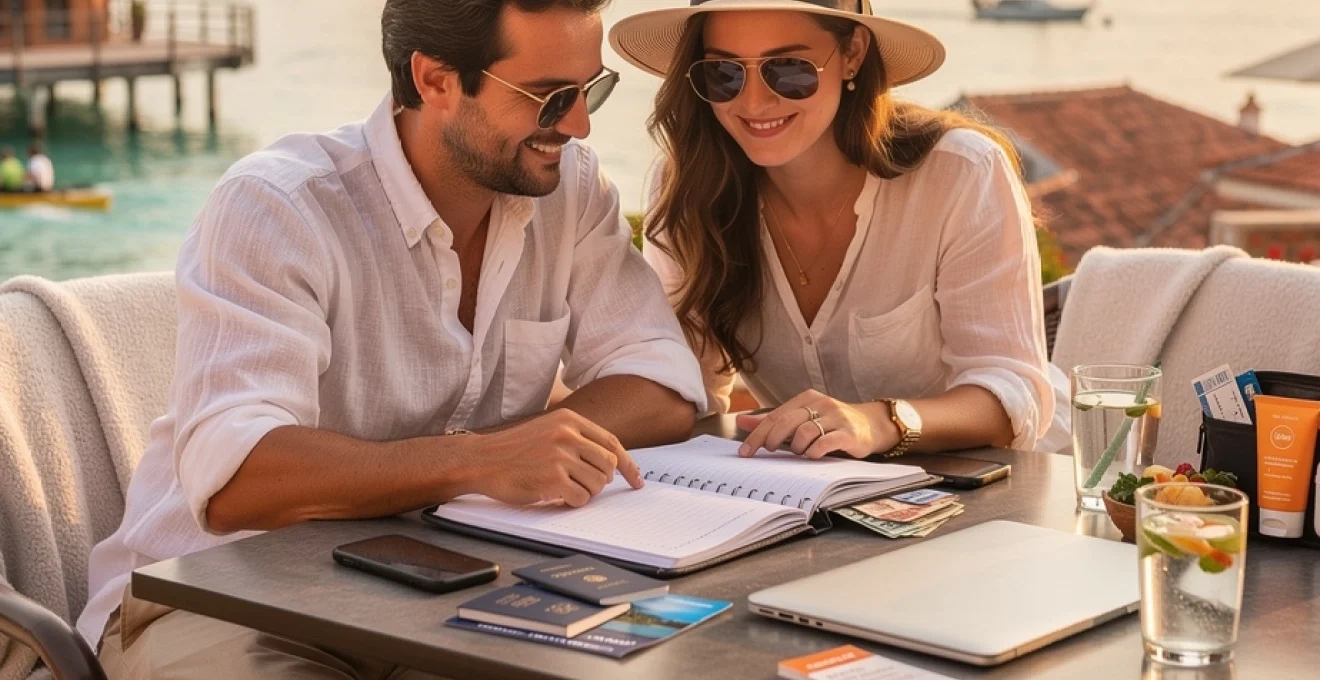
Your honeymoon represents one of the most significant milestones in your relationship, marking the transition from engaged couple to married partners whilst celebrating your union in an intimate setting. However, without proper preparation and thoughtful planning, this once-in-a-lifetime experience can quickly transform from romantic bliss into a source of unexpected tension and frustration. The key to ensuring your honeymoon remains a cherished memory lies in understanding potential stressors before they arise and implementing strategic measures to address them proactively. From budget considerations and destination selection to health preparations and communication strategies, creating a stress-free honeymoon experience requires attention to detail combined with realistic expectations and flexible planning approaches.
Pre-departure planning strategies to minimise honeymoon stress
The foundation of any stress-free honeymoon begins months before you actually depart, with comprehensive planning that addresses every conceivable detail of your journey. Effective pre-departure preparation serves as your insurance policy against unexpected challenges and allows you to focus entirely on enjoying each other’s company rather than managing logistics. Research consistently shows that couples who invest time in thorough planning report 40% higher satisfaction rates with their honeymoon experience compared to those who leave arrangements to chance.
Creating a detailed timeline for your planning process helps ensure nothing falls through the cracks during the often chaotic weeks leading up to your wedding. Begin by establishing booking deadlines at least six to eight months in advance, as popular honeymoon destinations frequently experience high demand during peak seasons. This extended planning period also provides opportunities to secure early booking discounts and ensures availability at your preferred accommodations and restaurants.
Travel documentation and visa requirements for popular honeymoon destinations
Nothing dampens honeymoon excitement quite like discovering passport or visa issues at the airport, making document preparation one of your highest priorities. Many couples underestimate the complexity of international travel requirements, particularly when visiting multiple countries or destinations with specific entry restrictions. Current processing times for new passports can extend up to 12 weeks during busy periods, whilst visa applications may require additional documentation and processing time.
Ensure both partners possess valid passports with at least six months remaining before expiration, as many countries enforce this requirement regardless of planned stay duration. Research specific visa requirements for your chosen destination well in advance, as some countries offer visa-on-arrival services whilst others require pre-approved applications submitted weeks beforehand. Digital copies of all important documents stored securely in cloud storage provide essential backup should physical documents become lost or stolen during travel.
Comprehensive travel insurance coverage for couples
Travel insurance represents one of the most overlooked yet crucial elements of honeymoon planning, providing financial protection against unforeseen circumstances that could otherwise derail your entire trip. Comprehensive coverage should include trip cancellation protection, medical emergencies, lost luggage compensation, and flight delay reimbursement. Many couples mistakenly assume their existing health insurance provides adequate international coverage, when in reality most domestic policies offer limited or no protection abroad.
Premium travel insurance policies often include honeymoon-specific benefits such as coverage for wedding-related delays or cancellations that might impact departure dates. These specialised policies recognise the unique timing challenges faced by newlyweds and provide additional flexibility in rescheduling arrangements without significant financial penalties.
Budget allocation and financial contingency planning
Financial stress represents one of the primary relationship challenges during honeymoons, often stemming from inadequate budgeting or unrealistic expectations about destination costs. Establishing a comprehensive budget that accounts for all anticipated expenses plus a 20% contingency fund helps prevent overspending whilst allowing for spontaneous romantic gestures and unexpected opportunities. This financial framework should encompass accommodation, transportation, meals, activities, shopping, tips, and emergency reserves.
Consider implementing a daily spending allowance system that provides structure without restricting enjoyment, helping couples stay within budget whilst maintaining flexibility for special experiences. Pre-paying for major expenses such as accommodation, tours, and restaurant reservations reduces daily financial decision-making and allows you to focus on creating memories rather than calculating costs.
Accommodation booking confirmation and room upgrade negotiations
Securing appropriate accommodation forms the cornerstone of your honeymoon experience, requiring careful research beyond attractive photographs and marketing descriptions. Read recent guest reviews
Read recent guest reviews published within the last six to twelve months, paying particular attention to comments about noise levels, cleanliness, customer service, and the accuracy of room descriptions. Honeymooners often value privacy and tranquillity more than other travellers, so look for mentions of adult-only sections, quiet wings, or suites with private pools or jacuzzis. Once you have chosen your property, confirm all booking details in writing, including bed type, view category, and any special honeymoon packages or inclusions offered. A week before departure, email the hotel to reconfirm your stay, advise them that this is your honeymoon, and politely enquire about the possibility of a complimentary room upgrade or late check-out. Hotels frequently grant such requests when occupancy allows, and a respectful, appreciative tone in your communication can significantly improve your chances.
Destination selection psychology and stress-free location matching
Choosing the right destination is not just a logistical decision; it is also a psychological one that can make or break a stress-free honeymoon. The destination you select should align with both partners’ emotional needs, expectations, and energy levels after the wedding. Think of it as matching your “couple personality” to a location: some newlyweds thrive on bustling cities and cultural immersion, while others need quiet beaches and minimal decision-making. Identifying your shared priorities early helps narrow the options and prevents last-minute disagreements or resentment. By intentionally matching destination characteristics to your relationship dynamics, you dramatically reduce the risk of tension once you arrive.
Climate compatibility assessment for maldives vs mediterranean destinations
Weather is one of the most underestimated sources of honeymoon stress, especially when couples book purely based on photos rather than climate data. For example, the Maldives offers postcard-perfect overwater villas and turquoise lagoons, but the tropical climate brings high humidity, intense sun, and seasonal monsoons that can limit outdoor activities. In contrast, Mediterranean destinations such as Santorini, Amalfi Coast, or the Greek Islands generally provide milder, drier conditions with warm days and cooler evenings during late spring and early autumn. Before committing, research average temperatures, rainfall, and hurricane or monsoon seasons for your chosen travel dates, rather than just the month in general.
Ask yourselves honestly: do you both enjoy heat and humidity, or do you tend to feel drained and irritable when it is very hot? If one of you loves baking in 32°C sun while the other prefers 24°C and a breeze, a compromise destination like the Mediterranean in shoulder season might be more harmonious than the Maldives in peak summer. Climate compatibility is a bit like mattress firmness in a shared bed—if it suits only one of you, nobody sleeps well. Prioritising a climate where you both feel physically comfortable will naturally support better moods, smoother communication, and a genuinely relaxing honeymoon.
Activity preference alignment between adventure and relaxation-focused partners
Many couples find that their preferred travel styles differ: one partner dreams of scuba diving, hiking, and city tours, while the other imagines lazy mornings, spa days, and long lunches by the sea. Rather than treating this difference as a problem, view it as an opportunity to design a honeymoon itinerary that honours both personalities. Start by listing your individual “non-negotiables” and then identify overlaps: perhaps you both love good food, sunsets, or live music. Build your core schedule around these shared pleasures, and then allocate specific windows of time where each partner can indulge in their preferred activities without pressure.
A useful approach is to divide days into “together time” and “optional solo adventures” so neither of you feels dragged into something you will resent. For instance, you might agree on two half-days of adventure excursions balanced with two half-days of doing absolutely nothing. Think of your itinerary as a seesaw: the goal is not perfect symmetry but sustainable balance that avoids emotional whiplash. This structured flexibility helps avoid arguments like “we are doing too much” versus “we are wasting time,” since expectations around activity levels have been negotiated before you leave home.
Cultural immersion tolerance and language barrier considerations
Immersing yourselves in a new culture can be deeply rewarding, but for some couples it can also be overwhelming and therefore stressful, especially right after an emotionally intense wedding. Consider how comfortable you both feel navigating unfamiliar public transport, foreign languages, and different social norms. Are you energised by discovering local markets and street food, or do you become anxious in chaotic, crowded environments? Being honest about your cultural immersion tolerance will help you choose between a fully local experience and a more curated, resort-style setting.
Language barriers can add additional stress, particularly when arranging transport, ordering food with dietary restrictions, or seeking medical assistance. To reduce friction, choose destinations where at least one of you speaks the local language or where English is widely used in tourism areas. Download offline translation apps and carry a small phrasebook for essential expressions such as greetings, directions, and emergency requests. Think of these tools as your “emotional shock absorbers”: they do not remove all bumps, but they smooth enough of them that cultural differences become part of the adventure instead of a source of constant tension.
Time zone adjustment strategies for long-haul destinations like bali and fiji
Long-haul flights to dream destinations such as Bali, Fiji, or French Polynesia often involve significant time zone shifts that can leave you exhausted, irritable, and wide awake at 3 a.m. To avoid spending the first half of your honeymoon feeling jet-lagged, incorporate time zone adjustment strategies into your travel plan. If possible, start shifting your sleep schedule by one to two hours in the days leading up to departure, aligning more closely with your destination’s time. On the flight, adjust your watch to local time as soon as you board and try to sleep during the destination’s night period, using eye masks and earplugs to improve rest.
Once you arrive, prioritise exposure to natural daylight, light meals, and gentle movement such as walking or swimming to help reset your internal clock. Avoid scheduling complicated excursions or early morning tours on your first full day; instead, treat it as an “acclimatisation day” with flexible plans. A helpful rule of thumb is to allow one day of adjustment for every three to four hours of time difference. By managing jet lag proactively, you protect your moods, energy levels, and intimacy—ensuring the honeymoon feels like a romantic escape rather than a recovery mission.
Communication framework development for couples during travel
Clear, compassionate communication is one of the most powerful tools for avoiding stress during your honeymoon, yet it is rarely planned as intentionally as flights or hotels. Before you travel, agree on a simple communication framework that outlines how you will handle disagreements, decision-making, and daily check-ins. For example, you might decide to have a brief “morning huddle” each day where you review plans, budget, and energy levels, and an evening check-in to share highlights and discuss any frustrations. This small ritual can prevent minor irritations from snowballing into major conflicts.
Establish ground rules such as avoiding blame-focused language (for instance, saying “I feel overwhelmed when we rush” instead of “You are always late”) and committing to pause arguments if either partner needs a moment to cool down. It can also be useful to appoint one partner as the primary “logistics lead” and the other as the “experience curator,” then swap roles mid-trip. This division of labour reduces decision fatigue and resentment about who is doing the mental load. By treating communication as part of your travel toolkit—just as essential as your passport—you give yourselves a practical framework to navigate inevitable stressors together rather than turning on each other.
Health and wellness optimisation for romantic getaways
Physical well-being plays a major role in how much you actually enjoy your honeymoon, no matter how beautiful the destination may be. Late nights, wedding cocktails, and last-minute planning often leave couples run down before they even board the plane. Prioritising health and wellness in the lead-up to and during your trip is one of the most effective ways to avoid stress, illness, and disappointment. Instead of viewing wellness as an optional extra, think of it as the foundation that allows all the romantic moments, adventurous excursions, and intimate evenings to unfold smoothly.
Preventative healthcare measures for tropical destinations
Tropical honeymoons in places like the Caribbean, Seychelles, or Southeast Asia offer stunning scenery but also introduce specific health risks such as mosquito-borne illnesses, dehydration, and sunburn. Schedule a travel health consultation at least six weeks before departure to discuss recommended vaccinations, malaria prophylaxis if relevant, and region-specific precautions. Pack a compact but comprehensive travel health kit including high-SPF sunscreen, insect repellent containing DEET or picaridin, rehydration salts, antiseptic wipes, and basic medications for pain, allergies, and gastrointestinal upsets.
During your trip, be mindful of water safety guidelines: in many destinations, it is safer to drink bottled or filtered water and avoid ice in drinks unless you are confident about the source. Alternate alcoholic beverages with water to stay hydrated, particularly if you are spending long hours in the sun. Treat shade breaks and midday rest like built-in “insurance policies” for your honeymoon: they may feel like you are doing less, but they dramatically reduce the risk of heat exhaustion or sunstroke derailing your plans.
Dietary restriction management in foreign cuisines
Navigating foreign menus can be stressful if you or your partner have food allergies, intolerances, or ethical dietary preferences such as vegetarian, vegan, or halal. To minimise anxiety, research local cuisine in advance and identify common dishes you can safely enjoy. Many hotels and resorts are well-equipped to handle dietary requests, but clear communication is vital. Email your accommodation before arrival outlining your restrictions, and carry a printed card explaining your dietary needs in the local language to show in restaurants.
Translation apps can help, but a simple phrase card often proves more reliable in noisy or busy environments. When in doubt, choose simpler dishes with fewer ingredients, and avoid raw foods or street food if you have a highly sensitive system. Think of dietary planning as similar to mapping out your budget: a little preparation up front saves you from constant on-the-spot calculations and allows you to relax and enjoy the culinary side of your honeymoon without fear of getting sick or going hungry.
Sleep schedule synchronisation and jet lag mitigation techniques
Good sleep is one of the greatest protectors against stress, yet it is often sacrificed during a honeymoon in favour of late nights, early tours, or long travel days. To keep tension at bay, aim to synchronise your sleep schedules as much as possible, especially if one of you is naturally an early bird and the other a night owl. Discuss your ideal rhythm before you travel and agree on realistic compromises—for example, planning most activities for late morning onwards and reserving one or two nights for staying out late.
To minimise jet lag and sleep disturbances, maintain consistent pre-bed routines such as warm showers, light stretching, or reading, even when you are in a new environment. Limit heavy meals and alcohol close to bedtime, as both can fragment sleep quality. Consider using gentle sleep aids such as herbal teas or melatonin (after consulting a healthcare professional) rather than relying on strong sedatives, which can leave you groggy the next day. When you both wake feeling rested, small annoyances feel manageable, and you will be better able to stay patient and present with each other.
Physical intimacy preparation and stress reduction methods
Honeymoons are often idealised as a time of effortless intimacy, but the reality is that fatigue, nerves, or health issues can sometimes make physical closeness feel pressured rather than spontaneous. To avoid unnecessary stress, talk openly before your trip about expectations around intimacy, especially if one of you is anxious or if this will be your first time living closely together for an extended period. Emphasise that the goal of the honeymoon is connection, not performance, and that rest, cuddling, and emotional closeness are just as valid as more stereotypical “honeymoon activities.”
Practical preparation can also make a difference: pack any contraception or personal products you use regularly, and consider bringing comfortable loungewear rather than only lingerie or outfits that do not feel like “you.” Gentle relaxation techniques such as breathing exercises, short guided meditations, or couples’ massages can help shift you both out of wedding-planning mode and into a more relaxed, intimate headspace. Think of intimacy on your honeymoon like a slow-cooked meal rather than fast food—the more time and care you give to building emotional safety and relaxation, the more satisfying the experience will be for both of you.
Technology integration and digital detox balance strategies
Smartphones, tablets, and laptops can either enhance or undermine your honeymoon experience depending on how intentionally you use them. On one hand, technology offers convenient navigation, instant translation, digital boarding passes, and the ability to capture cherished memories. On the other hand, constant notifications, work emails, and social media scrolling can pull your attention away from the present moment and from each other. The key is to design a balanced approach—using technology as a tool rather than a distraction.
Before departure, agree on digital boundaries: will you both log out of work email entirely, limit social media to a specific time of day, or keep phones on airplane mode except when needed for maps or confirmations? Some couples find it helpful to designate “screen-free zones” such as mealtimes, poolside loungers, or the first and last hour of each day. This does not mean you cannot take photos or share a highlight or two, but it helps ensure that your focus remains on the experience itself rather than on curating it for others. Ask yourselves: when you look back in ten years, will you value the extra hour spent perfecting a post, or the extra hour spent talking, laughing, or watching the sunset together?
Crisis management protocols and emergency response planning
Even with meticulous planning, unexpected situations such as lost luggage, cancelled flights, minor injuries, or sudden illness can arise during your honeymoon. Having clear crisis management protocols in place dramatically reduces the stress of these events and helps you respond calmly instead of panicking. Start by creating a shared digital document with copies of your passports, insurance policies, booking confirmations, and emergency contact numbers, accessible offline on both of your phones. Note the location and contact details of your country’s embassy or consulate at your destination, as well as local emergency numbers for police, medical services, and fire.
Discuss in advance how you will divide responsibilities in a crisis—perhaps one partner handles communication with airlines or hotels while the other manages insurance calls or looks after health needs. Keep a small amount of emergency cash in a separate, secure location from your main wallets in case of theft or card issues. It can be reassuring to agree on a simple mantra such as “we prioritise safety and each other over the schedule,” reminding yourselves that changing plans or missing an excursion is not a failure. By viewing crisis planning as a life jacket you hope never to use, you give yourselves the confidence to relax and fully enjoy your honeymoon, knowing that you are prepared to handle whatever comes your way together.