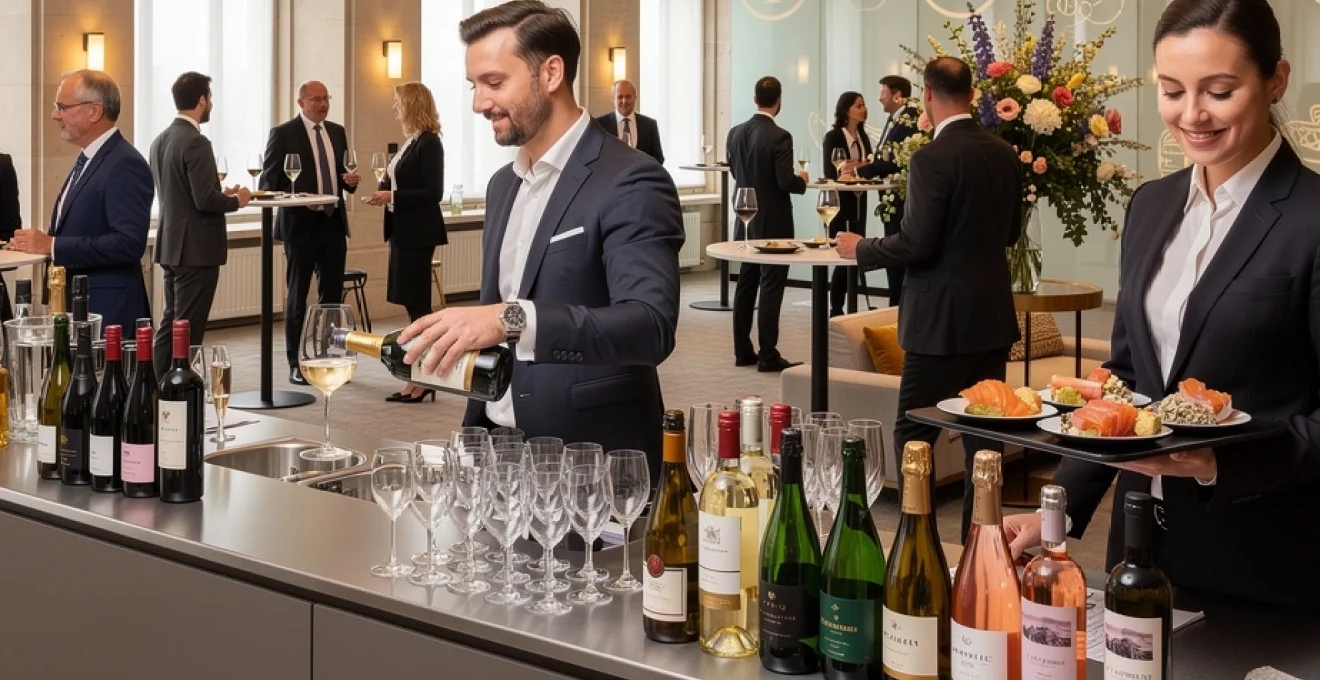
The wine of honour—known in French as the “vin d’honneur”—represents far more than a simple pre-dinner drink. This elegant reception creates the crucial bridge between a formal ceremony and the main celebration, offering guests their first opportunity to toast the occasion while mingling in a relaxed, convivial atmosphere. Whether you’re planning a wedding reception, corporate milestone, or cultural celebration, the success of your wine of honour depends on meticulous attention to beverage selection, food pairing, spatial design, and service excellence. When executed with care, this intimate gathering transforms into a memorable experience that sets the tone for the entire event, creating meaningful connections through the shared appreciation of fine wine and thoughtful hospitality.
In today’s evolving event landscape, where expectations for quality and authenticity have never been higher, understanding the nuanced elements that contribute to a successful wine of honour becomes essential. From selecting premium varietals that reflect your brand positioning to calculating precise quantities that ensure guest satisfaction without waste, every decision plays a vital role in crafting an experience that guests will remember long after the final toast.
Selecting premium wine varietals and champagne for corporate receptions
The foundation of any distinguished wine of honour begins with thoughtful beverage curation. Your selection speaks volumes about the occasion’s significance and demonstrates respect for your guests’ palates. Rather than viewing wine selection as a mere checkbox on your planning list, consider it an opportunity to craft a narrative about your event’s character and values.
Balancing red, white, and sparkling wine ratios for diverse guest preferences
Industry data suggests that optimal wine distribution for mixed receptions typically follows a 45% white, 30% sparkling, and 25% red ratio, though this varies considerably based on season, time of day, and regional preferences. For afternoon summer receptions, you might increase white and sparkling proportions to 55% and 35% respectively, reducing reds to 10%. Conversely, winter evening events often see red wine consumption rise to 40% of total volume. Understanding your specific audience demographics proves invaluable—corporate technology sector gatherings typically show higher sparkling wine preferences, whilst traditional industry events may lean toward classic reds.
Temperature and timing significantly influence guest preferences. Early afternoon receptions naturally favour lighter, refreshing options, whilst evening gatherings create appetite for more structured, full-bodied selections. Consider offering at least one premium option in each category: perhaps a Vintage Champagne, an exceptional Premier Cru Chablis, and a distinguished Bordeaux or Burgundy. This trinity ensures you address varied preferences whilst maintaining quality consistency across your offering.
Sourcing regional AOC wines versus international labels for brand positioning
The decision between regional Appellation d’Origine Contrôlée (AOC) wines and international labels carries strategic implications beyond mere taste. French AOC wines communicate heritage, terroir authenticity, and cultural sophistication—ideal when you wish to emphasize tradition or celebrate French connections. A Sancerre, Pouilly-Fumé, or Châteauneuf-du-Pape immediately signals discernment and quality commitment to knowledgeable guests.
However, international selections from regions like California’s Napa Valley, Argentina’s Mendoza, or Australia’s Barossa Valley can equally impress whilst potentially offering superior value propositions. These choices may also reflect global business connections or demonstrate progressive, forward-thinking brand values. The key lies in ensuring any international selection matches or exceeds the quality level expected from comparable French appellations. A premium New Zealand Sauvignon Blanc from Marlborough or an elegant Oregon Pinot Noir can absolutely hold their own against French counterparts when selected with expertise.
Temperature control and service standards for chardonnay, pinot noir, and prosecco
Serving temperature dramatically impacts wine expression and guest enjoyment, yet this crucial element frequently receives insufficient attention. Champagne and sparkling wines perform optimally between 6-8°C, revealing their complexity whilst maintaining refreshing character. White wines like Chardonnay benefit from slightly warmer serving temperatures of 10-12°C, which allows aromatic compounds to volatilize properly without losing their crisp structure.
Red wines present the greatest temperature
Red wines present the greatest temperature sensitivity. Pinot Noir, in particular, loses its finesse when served too warm, becoming heavy and overly alcoholic. Aim for 14-16°C to highlight its red fruit, floral notes, and silkier tannins. If your venue runs warm or you are hosting a summer wine of honour, do not hesitate to briefly chill reds in an ice bucket for 10 minutes before service. This small adjustment can make the difference between a tired, flabby glass and a vibrant, elegant one that enhances the entire reception experience.
For Prosecco and other semi-aromatic sparkling wines, maintain a service range of 6-8°C, refreshing bottles in ice buckets every 30 minutes. Always store back-up stock in refrigerated conditions rather than relying on rapid, last-minute chilling, which often results in uneven temperatures. Glassware also plays a role in perceived temperature and aroma delivery: opt for tulip-shaped sparkling wine glasses rather than narrow flutes to allow the bouquet to open while retaining bubbles. Training staff to monitor temperature throughout service—rather than only at the beginning—helps maintain a consistently premium impression.
Calculating wine quantities using the 150ml per guest per hour formula
Accurately forecasting wine quantities is both an art and a science. A widely accepted industry guideline is to allocate 150ml of wine per guest per hour for a standing reception. For a 90-minute wine of honour, most planners round this up to two glasses per person, while a two-hour reception often sees an average of three glasses. This calculation should, of course, be adapted based on your audience profile, time of day, and the availability of alternative beverages such as cocktails or non-alcoholic options.
To translate this into bottle counts, remember that a standard 750ml bottle yields five 150ml servings. For example, a 120-guest corporate reception lasting two hours would require approximately 360 glasses—equivalent to 72 bottles of wine. You then apply your chosen red, white, and sparkling ratios to this base figure. It is prudent to build in a 10–15% buffer stock for high-energy events or where networking is a primary objective, as guests often linger with a glass in hand during extended conversations. Surplus stock can usually be returned to suppliers by prior agreement or reallocated to subsequent company functions.
Magnums and larger-format bottles can be particularly impactful at a wine of honour, both visually and logistically. One 1.5L magnum replaces two standard bottles, simplifying ice-bucket management and bar throughput during peak service waves. However, large formats may slow individual service if there are too few experienced pourers, so they should complement—not completely replace—standard bottles. Regardless of format, always ensure a parallel supply of still and sparkling water, ideally at a one-to-one ratio with alcoholic beverages, to promote responsible, comfortable consumption for all guests.
Canapé pairing strategies and gastronomy integration
A truly successful and convivial wine of honour harmonises what is in the glass with what is on the plate. Thoughtful canapé pairing goes far beyond simple sustenance; it shapes the rhythm of conversation, encourages guests to explore different wines, and subtly underscores your brand’s culinary positioning. Instead of treating food and wine as independent cost items, approach them as an integrated gastronomic journey, even if the reception lasts only one or two hours. Carefully chosen combinations create talking points that naturally break the ice between unfamiliar guests.
When designing your canapé menu, seek balance across flavour intensity, texture, and dietary preferences. Light, citrus-driven whites flatter delicate seafood bites, while structured reds support richer charcuterie and aged cheeses. Vegetarian and vegan options are no longer “nice-to-have” additions but central components for inclusive hospitality. By aligning wine choices with each category of canapé, you ensure that every guest, regardless of preference or restriction, feels considered and catered for.
Matching sancerre and chablis with seafood and smoked salmon canapés
Classic Loire Valley Sancerre and Burgundy’s Chablis rank among the most versatile and reliable partners for seafood-focused wine of honour menus. Their high acidity, mineral backbone, and citrus-led aromatics cut through the natural richness of smoked salmon, blinis with crème fraîche, or delicate crab and shrimp bites. When you pair Sancerre with goat’s cheese tartlets or salmon rillettes, the wine’s subtle herbaceous notes echo the freshness of chives, dill, or lemon zest often used in garnishes.
Chablis, particularly from quality-driven producers or Premier Cru sites, offers a flinty, saline profile that mirrors the maritime character of oysters, scallops, and prawn skewers. Serving Chablis at 10–12°C allows its subtle complexity to shine without overwhelming these refined canapés. For corporate receptions where guests may not be wine experts, simple, elegant descriptions on menu cards—such as “Chablis: crisp, mineral, ideal with our seafood selection”—help guide pairings without technical jargon. This gentle education enhances perceived value and encourages guests to be more adventurous in their choices.
Pairing bordeaux and rioja with charcuterie and aged cheese selections
For heartier bites such as charcuterie boards, mini beef tartlets, or aged Comté and Manchego, medium- to full-bodied reds from Bordeaux and Rioja excel. Their tannic structure and savoury complexity act like culinary “seasoning,” amplifying the depth of cured meats and mature cheeses. A well-chosen Left Bank Bordeaux with Cabernet Sauvignon dominance brings blackcurrant, cedar, and graphite tones that stand up gracefully to cured ham, saucisson, and firm cow’s milk cheeses.
Rioja, especially Crianza and Reserva styles, introduces a softer, more approachable profile, with red fruit, vanilla, and spice derived from extended oak aging. These notes complement smoked chorizo, jamón ibérico, and aged sheep’s cheese, creating a harmonious, almost nostalgic flavour combination that many guests recognise and appreciate. To ensure conviviality rather than palate fatigue, avoid excessively powerful or high-alcohol reds during early afternoon wine of honour receptions; opt instead for balanced, food-friendly cuvées that encourage a second conversation as much as a second glass.
Vegetarian and vegan canapé options with appropriate wine accompaniments
As plant-based dining becomes mainstream, a successful wine of honour must offer vegetarian and vegan canapés that feel as generous and imaginative as their meat-based counterparts. Think mini tartlets with caramelised onion and roasted peppers, cucumber cups filled with herbed hummus, or skewers of grilled vegetables with balsamic reduction. These bites pair beautifully with aromatic whites such as Pinot Grigio, Albariño, or off-dry Riesling, which refresh the palate and highlight the natural sweetness of roasted vegetables.
For vegan guests who prefer red wine, consider lighter, low-tannin options like Gamay from Beaujolais or a cool-climate Pinot Noir. Their bright fruit and subtle earthiness complement mushroom arancini, truffle-infused polenta bites, or roasted aubergine rolls far better than muscular, oak-heavy reds. Where possible, clearly label canapés as vegetarian or vegan and recommend a matching wine on discreet menus or table cards. This small gesture not only avoids repeated questions to serving staff but also signals a thoughtful, inclusive approach to hospitality that guests will remember positively.
Timing canapé service waves to sustain guest engagement throughout the event
The tempo of canapé service can be as important as the recipes themselves. Serve everything in the first 20 minutes, and guests may peak too early, leaving the final half of the wine of honour feeling flat. Stretch canapés too thinly, and you risk hungry, distracted attendees focusing more on locating food than on meaningful conversations. A practical framework is to divide service into three waves: a light, refreshing opening, a more substantial middle passage, and a final, playful round of small bites that bridges to the next part of the event.
In the first 15–20 minutes, prioritise cold canapés that are easy to eat standing up—think smoked salmon blinis, vegetable crudités, or bite-size bruschetta—paired with sparkling wine and crisp whites. The second wave, starting around the 30-minute mark, can introduce warmer, more filling options such as mini quiches, skewers, or savoury tartlets, supported by both whites and reds. A concluding wave in the last 20 minutes might feature lighter, flavourful bites such as cheese cubes, olives, or fruit skewers, allowing guests to reset their palate before the transition to dinner or speeches. This rhythmic approach keeps energy levels high, supports steady wine consumption rather than spikes, and ensures hospitality feels continuous rather than sporadic.
Venue layout and flow optimisation for guest circulation
A convivial wine of honour depends as much on how people move and mingle as on what they drink. Poor layout creates bottlenecks at the bar, crowded doorways, and isolated guests clinging to the nearest wall. A well-considered floor plan, by contrast, encourages natural circulation, facilitates networking, and subtly redistributes guests across the space. When planning your venue layout, imagine it from a guest’s perspective: where will they first set down their coat, receive a glass, and gravitate for conversation?
The aim is to design a space that feels both dynamic and comfortable. Multiple service points, clear sightlines, and varied seating options all contribute to an atmosphere where guests feel free to move, explore, and engage. Even in historic or architecturally constrained venues, simple adjustments in bar placement, furniture clustering, and signage can transform a static hall into a flowing, sociable environment perfectly suited to a wine of honour.
Strategic positioning of multiple bar stations to prevent bottlenecks
Centralising all beverage service at a single bar may appear efficient on paper, but during a busy wine of honour it almost guarantees lengthy queues and frustrated guests. Instead, aim for at least one bar station per 60–80 guests, strategically dispersed to draw people into different areas of the room or terrace. For larger corporate receptions, satellite stations offering limited selections—such as one sparkling-focused bar and another highlighting reds and whites—can further distribute demand and create opportunities for curated experiences.
Separate the main welcome point from the primary bar by at least several metres to avoid crowding at the entrance. Hand guests a first glass of sparkling wine on arrival, then guide them visually and verbally toward secondary stations with clear signage or subtle lighting cues. If your venue layout permits, positioning a smaller bar near focal points—such as a view, art installation, or branded photowall—encourages natural circulation and extends the perceived size of the space. Remember that a smooth, queue-free experience at the bar strongly influences overall satisfaction with the wine of honour.
Creating conversation zones with high tables and lounge furniture clusters
Standing receptions can quickly become tiring if guests have nowhere to set down their glass or rest briefly. Integrating a mix of high cocktail tables, leaners, and a few lounge-style clusters helps structure the space into distinct “conversation zones.” Think of these zones as islands in a flowing river: they give guests an anchor point while still allowing easy movement and chance encounters. High tables positioned near, but not directly beside, bar stations allow small groups to gather without obstructing service.
Lounge furniture—low sofas, armchairs, and coffee tables—works best against walls or in quieter corners, catering to senior guests, VIPs, or those who prefer more in-depth discussions. Resist the temptation to overload the room with seating; a good benchmark is to provide seats for 20–30% of guests during a wine of honour, encouraging circulation rather than static clusters. By curating these micro-environments, you create natural opportunities for networking and strengthen the convivial spirit that defines a successful wine of honour.
Acoustic management in historic venues versus modern conference spaces
Noise levels can make or break the atmosphere of a reception. In historic venues with stone walls, vaulted ceilings, or parquet floors, sound tends to bounce and amplify, sometimes turning pleasant background chatter into an overwhelming roar. Modern conference spaces, by contrast, may feature extensive acoustic treatment but risk feeling sterile or echoey if sparsely furnished. In both cases, proactive acoustic management is essential to ensure guests can comfortably converse without raising their voices.
Soft furnishings are your first line of defence: rugs, curtains, upholstered seating, and fabric-covered panels absorb ambient noise and reduce reverberation. In historic spaces where you cannot alter the architecture, additional drapery or temporary acoustic panels discretely placed behind staging or branding backdrops can significantly improve sound quality. In modern venues, be mindful of speaker placement and background music volume; aim for a level that adds energy without competing with conversation. Remember: a convivial wine of honour is one where guests can hear each other clearly across a small group, not one where they leave hoarse from shouting over the crowd.
Staffing ratios and professional service protocols
Even the most meticulously planned wine and canapé selection falls flat without professional, attentive service. Well-trained staff act as both logistical backbone and welcoming hosts, ensuring that glasses remain filled, canapés circulate evenly, and any small issues are resolved before guests even notice. Appropriate staffing ratios and clear service protocols are therefore non-negotiable elements in delivering a polished, convivial wine of honour experience.
Beyond simple numbers, the quality of staff training directly impacts how your event is perceived. Confident, knowledgeable servers can answer basic wine questions, gracefully navigate crowded spaces, and subtly read guest cues. When combined with the presence of a sommelier or wine specialist, this service layer transforms your wine of honour from a functional prelude into a memorable, value-adding component of the overall occasion.
Implementing the one server per fifteen guests standard
A widely accepted best practice for standing receptions is to allocate at least one server for every 15 guests. This ratio allows staff to maintain a steady flow of drinks and canapés without rushing, while still having the capacity to respond to individual requests. For premium corporate events or VIP-heavy guest lists, you may wish to reduce the ratio to one server per 10–12 guests to ensure even more attentive, almost personalised service.
In addition to roving servers, dedicate at least one experienced team member to each bar station whose sole responsibility is beverage service and stock management. This role includes monitoring ice levels, maintaining bottle presentation, and ensuring correct wine rotation from back-up supplies. When staffing levels fall below these benchmarks, guests will notice—empty trays, slow refills, and crowded bars quickly undermine the intended sense of generosity and ease that defines a successful wine of honour.
Training staff in proper wine pouring technique and glass handling etiquette
Professional wine service is as much about discretion and elegance as it is about efficiency. Staff should be trained to hold glassware by the stem or base, never by the bowl, to avoid fingerprints and temperature transfer. Pouring should be smooth and controlled, with bottles handled by the lower half and labels facing the guest whenever possible. For sparkling wines, a gentle, angled pour minimises foam and ensures consistent fill levels around 100–120ml per glass, prolonging each bottle’s service life without appearing stingy.
Consistency is key: agree in advance on standard pour sizes, whether you are using 150ml fills for still wines or slightly smaller tasting pours to encourage guests to sample multiple options. Brief your team on basic descriptions of each wine—grape, style, and suggested food pairing—so they can answer common questions with confidence. Simple refinements, such as wiping bottle necks between pours and avoiding overfilling glasses, contribute to a sense of professionalism that guests intuitively associate with high-quality events.
Coordinating sommelier services for wine education and interactive tastings
For receptions where wine plays a central branding role—launching a new partnership, celebrating a vineyard acquisition, or hosting international clients—engaging a sommelier can dramatically elevate the experience. Rather than limiting themselves to behind-the-bar duties, sommeliers can host brief, informal tastings at a dedicated station, guiding small groups through a comparison of two Chardonnays or a vertical of a signature estate wine. These micro-tastings act as both entertainment and education, giving your wine of honour a distinctive, value-adding dimension.
To maximise impact, coordinate with your sommelier in advance on key messages: do you wish to highlight sustainable viticulture, regional heritage, or a particular flagship cuvée? Align talking points with broader brand narratives, and keep explanations concise and engaging—no guest wants a lecture when they are there to network. Done well, interactive wine moments create memorable stories guests will share long after the event, reinforcing both your hospitality and your brand positioning.
Timeline orchestration from welcome drinks to closing remarks
A well-orchestrated timeline is the invisible framework that supports a relaxed and convivial wine of honour. Guests should feel as though the event unfolds naturally, without long lulls, rushed speeches, or abrupt transitions to the next phase. In practice, this requires careful coordination between venue, catering, speakers, and any entertainment suppliers, with the wine service acting as a unifying thread throughout.
For most events, a 60–90 minute window proves ideal: long enough for meaningful conversations and a full exploration of the wine and canapé offering, but short enough to maintain energy and anticipation for what follows. Begin with an immediate, warm welcome—ideally a tray of sparkling wine or a signature non-alcoholic option presented as guests arrive. Once a critical mass has gathered, typically after 15–20 minutes, a brief welcome address can officially open proceedings, acknowledging key stakeholders without monopolising attention.
Midway through the wine of honour, consider a short, well-timed intervention such as a toast, product reveal, or micro-tasting led by your sommelier. This creates a focal moment that brings the room together and gently resets the energy. As the end of the reception approaches, discreet cues—slightly reduced canapé circulation, softening of music, or an announcement inviting guests to move to the dining room or auditorium—signal the transition. In corporate settings, closing remarks should be concise and positive, leaving guests with a sense of momentum rather than fatigue. When the timeline is thoughtfully choreographed, the wine of honour becomes a fluid, uplifting prelude rather than a logistical hurdle.
Branding touchpoints and atmospheric design elements for memorable occasions
Beyond hospitality and logistics, a successful wine of honour also serves as a powerful branding platform. Every detail—from the choice of glassware and signage to the lighting and floral design—communicates something about your organisation’s identity and values. The aim is not to overwhelm guests with logos at every turn, but to integrate branding touchpoints so seamlessly that they feel like a natural extension of the event’s aesthetic.
Start with the most visible elements: bar fronts, backdrops, and menu cards. Subtle use of brand colours, typography, and iconography can transform these functional components into elegant expressions of your visual identity. Consider embossed or foil-stamped wine lists, custom-printed napkins, or etched glassware for high-profile events where photography and social media exposure are likely. These tactile details create a premium impression and invite guests to linger, share images, and associate positive emotions with your brand.
Atmospheric design completes the picture. Warm, layered lighting—combining ambient fixtures with candles or accent spots—flatter both the wines and the guests, while well-chosen background music sets the emotional tone. Scent can also be a subtle yet powerful tool: avoid heavy, cloying fragrances that clash with wine aromas, and instead opt for fresh, neutral notes if any scenting is used at all. Ultimately, the most effective branding at a wine of honour is experiential rather than purely visual. When guests leave saying, “That reception felt so them”—whether “them” is your company, your couple, or your cultural institution—you will know that every glass poured, canapé served, and design choice has contributed to a coherent, memorable story.