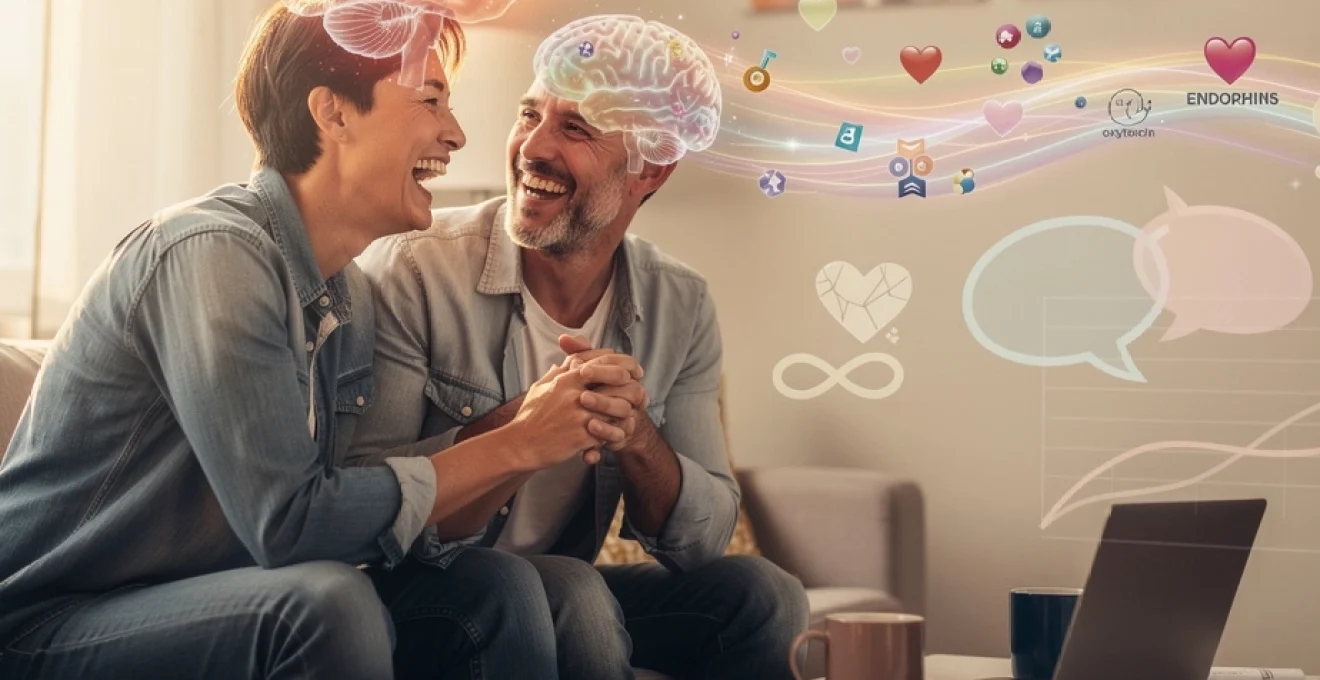
Marriage is often described as a journey filled with ups and downs, challenges and triumphs. Yet some couples seem to navigate these waters with remarkable ease, maintaining strong bonds despite life’s inevitable stresses. What sets these successful partnerships apart? Research consistently points to one surprising common denominator: laughter. Beyond mere entertainment, shared humour creates profound neurological, psychological, and social benefits that strengthen marital foundations in ways that extend far beyond momentary amusement.
The science behind laughter in relationships reveals fascinating mechanisms that operate at both conscious and unconscious levels. When couples share genuine moments of mirth, their brains undergo complex chemical cascades that promote bonding, reduce stress, and enhance emotional resilience. These biological processes work in tandem with psychological benefits, creating a powerful foundation for long-term relationship success that many couples underestimate.
Neurobiological mechanisms behind shared laughter in romantic partnerships
The human brain responds to shared laughter through intricate neurobiological pathways that fundamentally alter how partners perceive and connect with one another. When couples engage in genuine comedic moments, their neural networks activate in synchronised patterns that create lasting bonds at the most fundamental biological level.
Oxytocin and vasopressin release during comedic bonding activities
Shared laughter triggers significant releases of oxytocin, often called the “love hormone,” which plays a crucial role in pair bonding and attachment formation. During moments of genuine amusement between partners, oxytocin levels can increase by up to 200%, creating immediate feelings of closeness and trust. This neurochemical response occurs within seconds of shared laughter, establishing an instant biological foundation for emotional intimacy.
Vasopressin, another key bonding hormone, works alongside oxytocin to create long-term attachment patterns. Research indicates that couples who laugh together regularly show elevated baseline vasopressin levels, suggesting that frequent comedic interactions literally rewire the brain for deeper partnership commitment. These hormonal changes create what researchers describe as a neurochemical addiction to one’s partner, where the brain begins craving the positive chemical rewards associated with shared humorous experiences.
Mirror neuron activation in synchronised humour processing
Mirror neurons, specialised brain cells that fire both when performing an action and observing others perform the same action, become highly active during shared laughter experiences. These neural networks enable partners to literally mirror each other’s emotional states during comedic moments, creating unprecedented levels of empathy and understanding. The activation of mirror neuron systems during laughter helps explain why couples often develop similar senses of humour over time.
When one partner begins laughing, the other’s mirror neurons automatically begin firing, preparing their brain for the same emotional response. This neurological synchronisation creates a feedback loop where both partners’ emotional states become increasingly aligned. Studies using fMRI technology show that couples who laugh together display remarkably similar brain activation patterns, particularly in regions associated with reward processing and emotional regulation.
Dopamine pathway stimulation through playful couple interactions
Playful interactions between partners activate the brain’s reward system through dopamine release in the mesolimbic pathway. This neurochemical response creates positive associations with one’s partner, literally training the brain to view the relationship as a source of pleasure and satisfaction. Couples who engage in regular playful banter show increased dopamine sensitivity, meaning they require less stimulus to achieve the same rewarding feelings.
The dopamine response to partner-initiated humour becomes increasingly refined over time, with the brain developing specific neural pathways dedicated to processing and anticipating comedic interactions with one’s spouse. This neural specialisation helps explain why inside jokes and shared humorous memories become increasingly meaningful as relationships mature. The brain essentially becomes tuned to find particular joy in humour shared specifically with one’s romantic partner.
Stress hormone reduction via endorphin production during joint laughter
Laughter between partners triggers substantial endorphin release, creating natural stress relief that can last for hours after the initial comedic experience. These endorphins not only generate feelings of wellbeing but actively counteract stress hormones like cortisol and adrenaline. Research shows that couples who
who prioritise shared humour also show lower resting cortisol levels, suggesting that regular laughter acts like a long-term buffer against chronic stress. In practical terms, this means couples who routinely find ways to laugh together recover more quickly after arguments, financial pressures, or parenting challenges. Over time, this pattern of stress reduction contributes to better physical health, improved sleep, and a calmer emotional climate at home. When partners associate one another with relief rather than tension, it becomes much easier to re-engage warmly after conflict and maintain a strong, successful marriage.
Communication enhancement through humour-based conflict resolution strategies
While the neurobiology of laughter is powerful, its impact on everyday communication may be even more visible. Humour can function as a “social lubricant” that makes difficult conversations smoother and less threatening. In a successful marriage, couples learn to use jokes, playful comments, and light-hearted moments to soften hard truths and prevent disagreements from spiralling into full-blown fights. The key is not to avoid conflict, but to approach it with enough warmth and levity that both partners feel safe staying at the table.
When used intentionally, humour becomes a conflict resolution strategy that reduces defensiveness, encourages openness, and keeps both partners focused on problem-solving rather than point-scoring. This does not mean turning serious issues into a stand-up routine. Instead, it involves weaving in small, appropriately timed moments of shared fun that remind you both, “We are on the same team,” even when you disagree. Over time, this pattern helps couples build a communication style that is both honest and kind.
De-escalation techniques using self-deprecating humour approaches
One of the safest forms of humour in conflict is gentle self-deprecating humour. When you lightly poke fun at your own quirks or admit your mistakes with a smile, you send a clear signal that you are not there to attack your partner. For example, saying, “There I go again, unloading the dishwasher wrong in all 27 of my usual ways,” can invite a laugh and open the door to a more constructive conversation about household roles. This approach lowers the emotional temperature because it replaces blame with humility.
However, there is an important distinction between healthy self-deprecation and harmful self-shaming. Effective self-deprecating humour is specific, light, and focused on behaviours (“I always forget the grocery list”) rather than character (“I’m useless”). When self-directed jokes become harsh or constant, they can actually erode self-esteem and worry a spouse. Used skilfully and sparingly, though, this type of humour can defuse tension, demonstrate accountability, and model emotional maturity.
Gottman method integration with comedic timing in relationship therapy
John and Julie Gottman’s research on marital stability highlights the importance of what they call “repair attempts”—small gestures that help couples get back on track during conflict. Humour, when used respectfully, is one of the most effective repair attempts available. In Gottman Method–oriented couples therapy, therapists often help partners notice and respond to these playful bids, such as a silly face, a light-hearted remark, or a shared inside joke dropped into a heated discussion.
Comedic timing is crucial here. A well-timed humorous comment—offered after both partners have expressed their core feelings—can act like a pressure valve that releases built-up emotion. By contrast, cracking a joke while your partner is sharing something painful can feel dismissive. In therapy and at home, partners are encouraged to read each other’s cues, wait until the emotional wave peaks and starts to subside, and then use humour as a bridge back to connection rather than as an escape route from discomfort.
Non-violent communication principles enhanced by playful language patterns
Non-violent communication (NVC) emphasises four core elements: observations, feelings, needs, and requests. Integrating playful language into this framework can make difficult statements easier to hear. For instance, instead of saying, “You never listen to me,” a partner might say, “I think my words bounced off your ‘email brain’ again—I’m competing with your inbox.” The observation and need remain clear, but the playful tone softens the impact and invites empathy rather than defensiveness.
Playful language patterns also support one of NVC’s central goals: maintaining connection, even in disagreement. When couples use light metaphors, shared references, or gentle teasing to talk about sensitive topics, they can honour both honesty and kindness. The important guideline is that the humour must never target a partner’s vulnerabilities or past traumas. Instead, it should highlight the absurdity of the situation you are both in—like two tired adults arguing over whose turn it is to take out the rubbish at midnight—rather than the person you love.
Active listening skills reinforced through responsive laughter cues
Laughter is not just something we do; it is also something we respond to. In conversation, responsive laughter—chuckling at your partner’s joke, smiling when they reference an inside story, or mirroring their grin—functions as a powerful form of active listening. It communicates, “I heard you, I get you, and I’m with you.” In many successful marriages, this kind of micro-response happens dozens of times a day and quietly reinforces a sense of being emotionally seen.
These small cues also help couples navigate misunderstandings more gracefully. If you misread a joke or feel hurt, saying, “I know you were trying to be funny, but that one stung a bit,” invites clarification while still acknowledging the positive intent behind the humour. Over time, partners become more skilled at reading each other’s comedic style and adjusting in real time, which keeps both listening and laughing aligned with mutual respect.
Psychological resilience building through shared comedic experiences
Beyond communication, shared humour acts as a resilience engine within a marriage. Couples who can laugh together in hard seasons often describe humour as the “glue” that kept them from falling apart. From a psychological perspective, laughter creates a temporary emotional distance from stress, allowing both partners to catch their breath and re-group. Rather than denying pain, it gives you a brief window to look at it from a safer vantage point.
Think of it like climbing a small hill to look down on a storm instead of standing in the middle of the downpour. The storm is still real, but the perspective shift makes it feel more manageable. When partners repeatedly face adversity with this mix of realism and lightness, they develop a shared narrative: “We are the kind of couple that can get through hard things and still find a way to smile.” That narrative is a powerful foundation for long-term marital resilience.
Cognitive reframing techniques using humorous perspective shifts
Cognitive reframing involves changing the way we interpret events, and humour is one of the most effective tools for doing this together. When something goes wrong—missed flights, burnt dinners, awkward family gatherings—a couple can either treat it as a catastrophe or as a story they will eventually laugh about. Consciously asking, “How will we tell this story in five years?” invites a humorous perspective shift that reduces immediate anxiety and frustration.
This does not mean minimizing genuine hardship, such as serious illness or bereavement. Instead, it is about finding small, human moments of absurdity within difficult circumstances: the hospital food that was so bad you nickname it, or the way your suitcase always seems to end up in the wrong country. These shared reframes help both partners see themselves as allies facing external problems, rather than as enemies causing each other’s stress.
Emotional regulation strategies through laughter therapy practices
Laughter therapy and “laughter yoga” have gained attention for their ability to improve mood and reduce anxiety, and couples can adapt some of these practices at home. Intentional “laugh breaks”—where you watch a short comedy clip, recall a ridiculous memory, or do something playfully silly—can interrupt cycles of rumination and worry. Even simulated laughter, which may feel awkward at first, can trigger genuine amusement as both partners lean into the absurdity of the exercise.
From an emotional regulation standpoint, these practices activate the parasympathetic nervous system, helping the body shift from “fight or flight” to “rest and digest.” When couples use planned or spontaneous laughter moments in the middle of stressful days, they effectively reset their emotional baseline. Over time, this makes it easier to stay calm in conflict, recover faster from setbacks, and maintain a more stable emotional connection.
Attachment security strengthening via consistent playful interactions
In attachment theory, a secure bond is characterised by reliability, responsiveness, and emotional safety. Playful interactions—inside jokes, silly rituals, affectionate teasing—become part of that reliability. They are predictable micro-moments of joy that signal, “You matter to me, and I like being with you.” For many couples, a shared sense of humour is one of the earliest signs of compatibility and remains a core attachment glue for decades.
These interactions are especially powerful after conflict. When a couple can move from serious discussion back to light banter or shared laughter, it reinforces the message that the relationship is bigger than any single disagreement. Children growing up in such homes often report feeling safer and more secure as well, because they witness their parents’ ability to reconnect and have fun even under pressure. In this way, laughter does not just strengthen the marital bond; it also shapes the emotional climate of the entire family.
Coping mechanism development through joint comedy consumption
In addition to making each other laugh, many couples build resilience by consuming comedy together—watching sitcoms, listening to stand-up, or sharing funny podcasts and memes. These shared experiences create a library of references and lines that you can draw on later, especially in tense moments. Quoting a favourite character or recalling a particularly ridiculous scene can instantly transport you back to a time when you were relaxed and connected.
Joint comedy consumption also offers a low-pressure way to decompress after difficult days. Instead of rehashing every stressful detail, you sit side by side, laugh at the same jokes, and wordlessly affirm that you are in this life together. Over time, these simple routines become an important coping mechanism—one that couples often miss when they let busyness crowd out shared fun from the relationship.
Long-term relationship satisfaction metrics and humour correlation studies
Empirical research consistently supports what many couples intuitively know: humour and long-term relationship satisfaction are strongly linked. Studies published in journals such as Personal Relationships and the Journal of Research in Personality have found that couples who report frequent shared laughter also report higher levels of marital contentment, sexual satisfaction, and perceived partner support. In one large survey, partners who rated their shared sense of humour as “high” were significantly more likely to describe their marriage as “very happy” compared to those who did not.
Interestingly, it is not just the frequency of jokes that matters, but the type of humour used. Affiliative humour—jokes that bring people together and highlight shared experiences—is associated with higher intimacy and trust. Aggressive humour—sarcasm, put-downs, or jokes at a partner’s expense—is linked with resentment and lower relationship quality over time. Longitudinal studies suggest that couples who protect a culture of kind, inclusive humour tend to fare better during major life transitions such as having children, career changes, or retirement.
Cultural variations in marital humour dynamics across global populations
Although the basic physiology of laughter is universal, the way humour functions inside marriage can vary significantly across cultures. In some societies, playful teasing between spouses is a central pathway to intimacy, while in others, overt joking in front of extended family may be viewed as disrespectful or immature. What counts as “fun” or “appropriate” humour can depend heavily on religious traditions, gender norms, and broader social expectations.
Cross-cultural research on marital humour dynamics highlights both differences and common ground. For example, in many Western contexts, couples often bond over shared sarcasm or irony, whereas in some Asian and Middle Eastern cultures, humour in marriage may centre more on gentle wordplay or situational irony, keeping overt mockery to a minimum. Yet across these variations, one pattern appears consistently: when both partners feel that their style of humour is understood and respected, they report stronger emotional connection. The specific jokes may differ, but the underlying sense of “we get each other” is remarkably similar worldwide.
Therapeutic applications of laughter-based interventions in couples counselling
Given the robust links between humour and marital health, it is no surprise that many therapists now integrate laughter-based interventions into couples counselling. These techniques range from simple exercises—such as inviting partners to share their favourite funny memories together—to more structured interventions like assigning “play dates” where the only goal is to have fun. Therapists may also help partners identify humour patterns that are damaging, such as chronic sarcasm, and replace them with more constructive forms of play.
In clinical settings, guided humour can lower anxiety, making it easier for couples to tackle painful topics without becoming overwhelmed. For example, a therapist might ask partners to write a playful “mock advertisement” for their recurring argument, highlighting how absurd it is that the same script keeps playing out. This kind of creative reframing can break rigid patterns and open space for new solutions. Over time, couples learn to bring these skills home, using light-heartedness not to avoid serious conversations, but to keep their marriage strong, flexible, and deeply connected even when life is anything but easy.