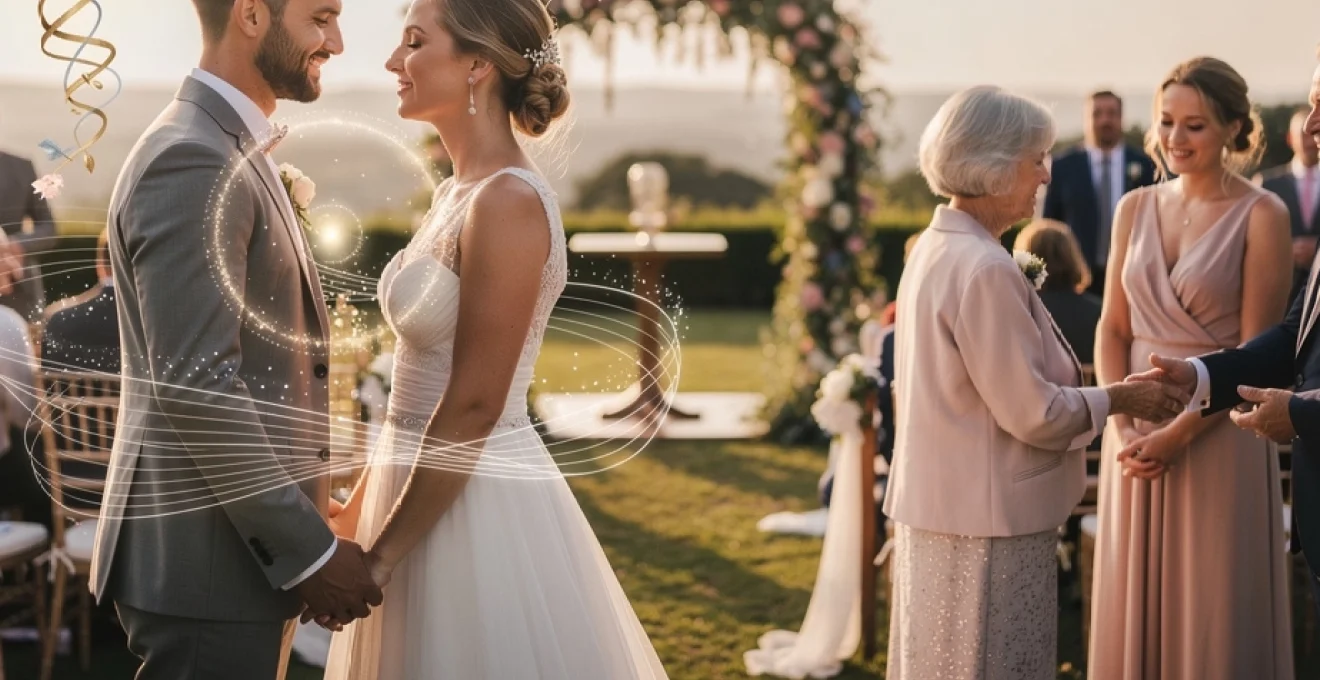
Your wedding day represents one of life’s most significant milestones, yet the difference between a joyful celebration and a stress-filled ordeal often lies not in external circumstances, but in your mental approach to the experience. The power of mindset extends far beyond positive thinking—it encompasses your ability to navigate uncertainty, manage expectations, and remain present during moments that matter most. Research in cognitive psychology demonstrates that individuals who approach major life events with adaptive mental frameworks experience greater satisfaction and reduced anxiety levels.
The modern wedding industry creates unprecedented pressure for perfection, with couples investing an average of £20,000 in their celebration while simultaneously managing complex family dynamics, vendor relationships, and logistical challenges. Yet those who develop robust psychological preparation strategies find themselves better equipped to handle inevitable hiccups whilst maintaining focus on what truly matters: celebrating their commitment surrounded by loved ones. Understanding how your mind processes stress, forms memories, and influences your overall experience can transform your wedding day from a source of anxiety into a profound celebration of love.
Psychological preparation strategies for wedding day performance anxiety
Wedding day performance anxiety affects approximately 85% of couples, manifesting through physical symptoms such as increased heart rate, sweating, and digestive disturbances. This heightened stress response occurs because your brain perceives the wedding as a high-stakes performance where multiple audiences—family members, friends, and vendors—evaluate your choices and behaviour. The key to managing this anxiety lies in reframing the event from a performance to a celebration, shifting your focus from external validation to internal joy.
Cognitive behavioural techniques for Pre-Ceremony stress management
Cognitive Behavioural Therapy (CBT) principles offer powerful tools for managing pre-wedding stress by addressing the thought patterns that fuel anxiety. The technique of thought challenging involves identifying catastrophic predictions—such as “everything will go wrong” or “people will judge our choices”—and replacing them with balanced, realistic assessments. When you notice anxious thoughts arising, pause and ask yourself: “What evidence supports this concern?” and “How likely is this worst-case scenario?”
The practice of cognitive restructuring helps you develop alternative perspectives on wedding day challenges. Instead of viewing a potential rain shower as a disaster, you might reframe it as an opportunity for intimate, cosy photographs that create unique memories. This mental flexibility builds resilience and reduces the emotional impact of unexpected situations, allowing you to maintain equilibrium throughout your celebration.
Visualisation methods for perfect wedding day execution
Mental rehearsal through visualisation creates neural pathways that prepare your brain for success, similar to techniques used by elite athletes before competitions. Spend time each day in the weeks leading up to your wedding imagining yourself moving through the day with confidence and joy. Visualise walking down the aisle feeling calm and present, exchanging vows with clarity, and celebrating with genuine happiness rather than forced smiles.
Effective visualisation involves all your senses—imagine the feeling of your partner’s hand in yours, the sound of your favourite music, and the warmth of sunlight during outdoor photographs. This comprehensive mental practice helps reduce anxiety because your brain becomes familiar with the experience before it occurs, diminishing the fear of the unknown that often drives wedding day stress.
Mindfulness meditation practices for Present-Moment awareness
Mindfulness meditation cultivates the ability to remain anchored in the present moment rather than becoming lost in worries about future scenarios or regrets about past decisions. Regular practice in the months before your wedding develops this capacity for present-moment awareness, ensuring you can fully experience the joy and significance of your celebration rather than mentally rehearsing your to-do list during the ceremony.
Simple mindfulness techniques include focused breathing exercises where you observe the sensation of air entering and leaving your body, or body scan meditations that help you notice and release physical tension. These practices become particularly valuable during transitional moments on your wedding day—such as the quiet minutes before walking down the aisle—when anxiety often peaks.
Progressive muscle relaxation for physical tension release
Physical tension and mental stress create a feedback loop where each amplifies the other, making progressive muscle relaxation an essential tool for wedding day preparation. This technique involves systematically tensing and releasing different muscle groups throughout your body, helping you recognise the difference between tension and relaxation whilst developing the ability
to consciously soften your body on command. Practise this in the evenings leading up to your wedding: start at your feet, gently tense each muscle group for 5–7 seconds, then release for 15–20 seconds while focusing on the sensation of letting go. Over time, your body learns this pattern and you can trigger a quicker relaxation response on the day itself, even if you only have a minute between photographs or before the ceremony entrance.
On the morning of your wedding, a shortened version can be enough to reset your nervous system. Sit or lie down, unclench your jaw, drop your shoulders, and cycle through tensing and releasing your hands, arms, and shoulders. Pairing this with slow exhalations activates the parasympathetic nervous system, reducing heart rate and signalling to your brain that you are safe. This physical reset makes it easier to return to the mindset you want: calm, focused, and excited rather than overwhelmed.
Reframing wedding day expectations through growth mindset principles
Even with the best planning in the world, no wedding day unfolds with absolute perfection. The couples who end the night glowing rather than drained are usually those who adopt a growth mindset towards the whole experience. Instead of seeing every hiccup as proof that they have “failed” at having the perfect wedding day, they treat challenges as opportunities to practise flexibility, humour, and connection.
Approaching your wedding with a growth mindset does not mean lowering your standards; it means changing how you define success. Rather than measuring the day by flawless logistics, you measure it by how connected you feel to your partner, how present you are during your vows, and how warmly you remember your guests’ presence. This subtle shift in expectations dramatically lowers pressure while actually increasing your satisfaction with the event.
Carol dweck’s fixed vs growth mindset theory applied to wedding planning
Psychologist Carol Dweck’s research on fixed and growth mindsets offers a powerful framework for navigating wedding planning stress. A fixed mindset whispers, “If something goes wrong, it means I’m not organised enough, not stylish enough, not good enough,” while a growth mindset reframes, “This is new, I’m learning, and challenges are part of the process.” When you are planning what might be the biggest event you’ve ever hosted, that distinction matters.
In practical terms, a fixed mindset during wedding planning might sound like, “I’m terrible at making decisions; I’m going to ruin this,” which quickly leads to decision paralysis. A growth mindset, by contrast, accepts that you have never done this before and focuses on learning: “Of course this feels hard; I’m figuring it out step by step, and I can ask for help when I need it.” Over a 12–18 month planning period, that more forgiving internal dialogue can be the difference between constant self-criticism and a calmer, more enjoyable experience.
Perfectionism paradox: embracing imperfection for authentic celebrations
The modern wedding culture of Pinterest boards and Instagram highlights fuels a specific kind of perfectionism: the belief that a wedding must be flawless to be meaningful. Yet perfectionism creates a paradox. The more you demand perfection from yourself, your partner, and your wedding day, the less able you are to relax and enjoy it. Ironically, the quest for the “perfect wedding day” often leads to less joy, not more.
Authentic, emotionally rich celebrations nearly always contain small imperfections: a slightly crooked boutonniere, a speech that runs a little long, a child shouting something unexpected during the ceremony. When you allow room for these unscripted moments, you create space for your wedding to feel alive rather than staged. Ask yourself: ten years from now, will you remember perfectly folded napkins—or the way your partner squeezed your hand when your voice shook during your vows?
Adaptive response strategies for unexpected wedding day challenges
Because weddings involve many moving parts, it is statistically unlikely that everything will go exactly to plan. A vendor may be late, the weather may shift, or a sound system may misbehave at the worst possible time. Your mindset in these moments—your immediate internal and external response—will strongly colour how you remember the entire day. Adaptive thinking gives you a flexible toolkit instead of a single rigid script.
One useful strategy is to mentally label challenges as “plot twists” rather than disasters. A delayed cake delivery becomes a chance to extend the dance set; unexpected rain becomes a reason for guests to huddle together and share umbrellas, creating intimate photos and shared stories. By quickly shifting from “Why is this happening to me?” to “How can we work with this?” you move from helplessness to agency, which preserves your sense of calm and control.
Resilience building through scenario planning and mental rehearsal
Resilience is not an inborn trait reserved for a lucky few; it is a skill you can build in advance of your wedding day. One effective method is scenario planning: intentionally considering a few likely issues (for example, a dress zip sticking, traffic delays, or a key person arriving late) and pre-deciding how you would like to respond. This does not mean obsessing over worst-case scenarios, but rather briefly and calmly mapping your “if this, then that” responses.
Combine this with mental rehearsal by picturing yourself handling each scenario with composure. For instance, imagine calmly delegating to your coordinator if the florist is delayed, or laughing with your partner if the microphone cuts during the speeches. This is similar to fire drills in a building: you hope you never need them, but having walked through the steps means that, if something does go wrong, everyone stays safer and calmer.
Emotional intelligence framework for wedding day interpersonal dynamics
Even the best-planned wedding day can quickly become emotionally charged because it brings together people from different parts of your life, sometimes with long histories and unresolved tensions. Emotional Intelligence (EQ) is your ability to recognise, understand, and manage your own emotions—and to navigate the emotions of others. High EQ on your wedding day can prevent minor issues from escalating and help you maintain a warm, inclusive atmosphere.
Research by Daniel Goleman and others suggests that people with higher emotional intelligence experience better relationship satisfaction and are more effective at conflict management. When you apply EQ principles to your wedding, you don’t just protect your own mindset; you also shape the energy of the entire event. Your calm reactions, clear boundaries, and empathetic responses become a template for how others behave.
Daniel goleman’s EQ model for managing family tensions
Goleman’s EQ model includes self-awareness, self-regulation, motivation, empathy, and social skills. All five are useful when navigating wedding-related family tensions, whether that’s divorced parents in the same room, differing cultural expectations, or relatives who feel entitled to influence your choices. The more aware you are of your own triggers, the better you can prepare not to be thrown off course when they arise.
For example, if you know a particular family member tends to make critical comments, you might plan in advance how you will respond—perhaps with a neutral phrase and a quick change of subject. You can also use empathy to see beneath unhelpful behaviour; a pushy relative may simply be anxious about feeling left out. Viewing these interactions through an EQ lens helps you respond with more grace, preserving your own peace of mind.
Conflict resolution techniques for wedding party disputes
Bridal parties, groomsmen, and close friends often come with strong opinions and big personalities. Disagreements about outfits, timings, or roles can bubble up in the final weeks, adding emotional strain just when you need clarity. Having simple conflict resolution tools ahead of time means you can address issues early, instead of letting them silently grow.
One practical approach is to establish shared expectations: clarify responsibilities, timelines, and budget boundaries as early as possible, ideally in writing. If conflict does arise, focus on interests rather than positions. Instead of arguing over who is right about a specific detail, ask what each person actually needs: comfort, inclusion, financial flexibility, or reassurance. This reframes the conversation from “winning” to finding a workable solution that supports the overall wedding day experience.
Empathetic communication strategies with vendors and suppliers
Your relationships with vendors—planners, caterers, photographers, florists, and more—directly impact how smoothly your wedding runs. Approaching these interactions with empathy and clear communication sets a collaborative tone that benefits everyone. Remember that vendors manage tight schedules, multiple clients, and complex logistics; when you understand their perspective, it becomes easier to problem-solve together.
Before the day, be explicit about your priorities: which elements truly matter to your wedding day mindset, and where you are more flexible. On the day itself, if something is not exactly as you envisioned, frame your feedback with curiosity rather than accusation: “Is there a way we could…?” instead of “Why did you…?” This small linguistic shift keeps your nervous system calmer and makes vendors more willing and able to help.
Emotional contagion theory: managing group energy and atmosphere
Emotional contagion theory suggests that moods and emotions can spread through groups like invisible waves. At a wedding, where people are already highly attuned to you as the couple, your emotional state is particularly contagious. If you are visibly tense, irritable, or frantic, your guests will unconsciously mirror that energy. Conversely, if you remain playful, grounded, and open—even when small things go wrong—others will follow your lead.
This doesn’t mean faking happiness or suppressing genuine feelings. It means tending to your own emotional state as if it were the soundtrack of the day. Taking a few mindful breaths before entering a room, sharing a private joke with your partner before the ceremony, or consciously focusing on gratitude during the speeches can subtly reset the entire room’s energy. Your mindset becomes the emotional climate in which everyone else celebrates.
Neuroplasticity and memory formation during significant life events
From a neuroscience perspective, your wedding is a powerful “memory anchor”—a day your brain is primed to record in high definition. Neuroplasticity, the brain’s ability to change and form new connections, is heightened during emotionally significant events. The emotional tone you bring to the day therefore plays a major role in how those memories are encoded and how you will feel when you revisit them years later.
When you spend the majority of your wedding day in a state of stress, your brain associates the sights, sounds, and even smells with anxiety. Those neural pathways become the default route whenever you recall the event. On the other hand, if you intentionally cultivate calm, appreciation, and connection—even amidst the inevitable glitches—you strengthen neural networks linked to joy and safety. In practical terms, this means that future anniversaries, photographs, and songs from your wedding playlist are more likely to trigger warmth rather than tension.
You can support positive memory formation with small, deliberate pauses throughout the day. For example, agree with your partner in advance that you will step aside together for five minutes after the ceremony, or stand at the edge of the dance floor for a moment simply to watch your guests enjoying themselves. Think of these pauses as “mental snapshots” where you consciously tell your brain, “This matters—remember this.” These intentional moments of presence become some of the clearest, most treasured memories from your wedding.
Stoic philosophy principles for wedding day equanimity
Stoic philosophy, originating in ancient Greece and Rome, offers surprisingly modern tools for staying calm under pressure. At its core is the distinction between what you can control and what you cannot. On your wedding day, you cannot control the weather, traffic, or other people’s behaviour—but you can control your response, your priorities, and where you place your attention.
Applying Stoic principles doesn’t mean becoming emotionally detached or pretending not to care. Rather, it means accepting that some aspects of the day will unfold outside your plans, and choosing to focus on what truly matters: your vows, your relationship, and the shared joy in the room. When you expect some degree of unpredictability, you are less shocked when it arrives and more able to meet it with humour and grace.
One Stoic practice is negative visualisation: briefly imagining that certain elements might not go as hoped (for instance, a delayed first dance or a minor wardrobe malfunction), and then reminding yourself that the core purpose of the day remains untouched. This is like emotionally “vaccinating” yourself; you experience a mild, controlled version of disappointment in your mind so that, if something similar happens, it feels less overwhelming. You can then return more quickly to equilibrium and enjoyment.
Positive psychology interventions for enhanced wedding day experience
Positive psychology focuses on what helps people thrive, not just on how to reduce distress. When applied to your wedding, it invites you to go beyond minimising stress and actively design an experience rich in meaning, gratitude, and connection. Rather than asking, “How do I avoid anything going wrong?” you begin to ask, “How can I maximise the joy and significance of what goes right?”
Simple interventions can have a profound effect. Practising gratitude in the lead-up to your wedding—by writing down three things each day that you appreciate about your partner or the planning process—can shift your focus from problems to blessings. On the day itself, you might build in a short gratitude ritual, perhaps exchanging private letters before the ceremony or taking a quiet moment together after the speeches to reflect on the people who helped you reach this point.
Another powerful tool is savouring: the deliberate, mindful enjoyment of positive experiences. You can savour during the day by slowing down to notice details—the warmth of a friend’s hug, the sound of laughter during the toasts, the feeling of your partner’s hand as you walk into the reception. After the wedding, reminiscing together, creating an album, or watching your wedding film are forms of “secondary savouring” that reinforce positive memories and strengthen your bond.
Ultimately, your mindset is the invisible architecture of your wedding day. Logistics matter, aesthetics matter, but it is your internal landscape—your ability to stay present, flexible, and connected—that determines whether you experience the day as a blur of stress or a deep, joyful milestone in your shared life. By investing as much in your mental and emotional preparation as you do in your venue and dress, you give yourself the best possible chance of a wedding day you will remember with genuine happiness for years to come.