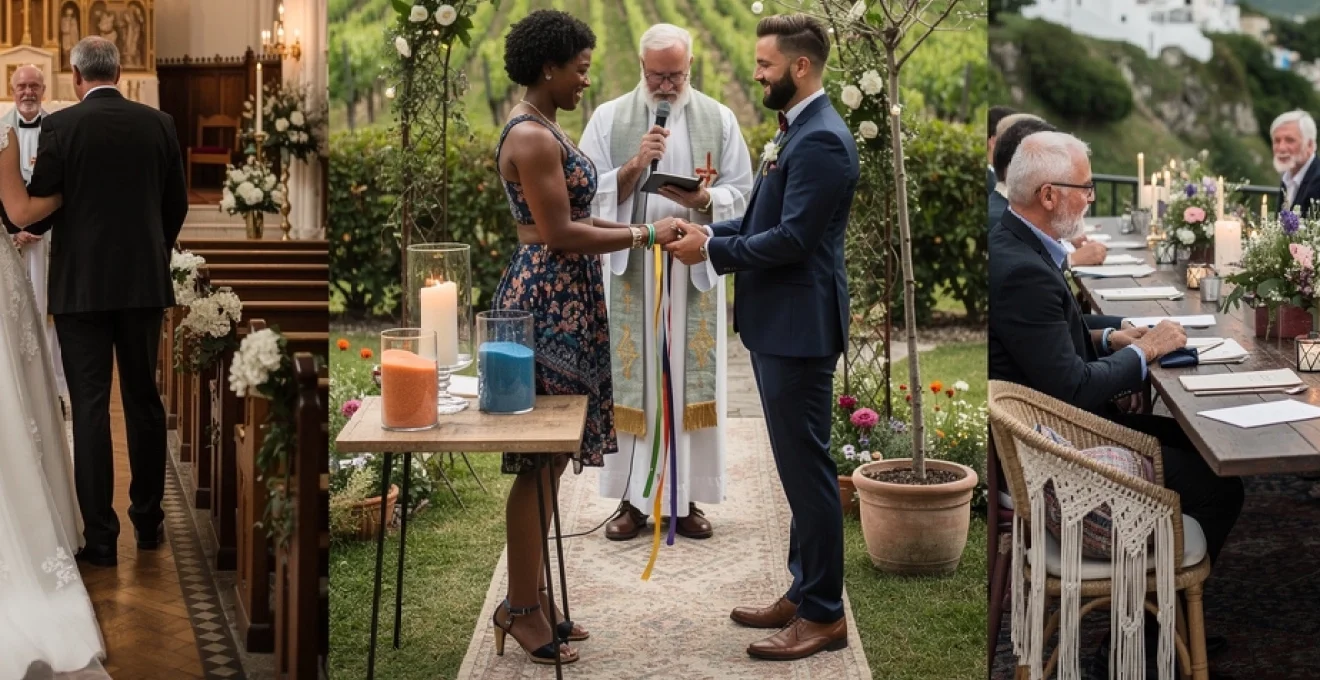
Wedding traditions that once seemed immutable are experiencing unprecedented transformation as modern couples redefine what matrimonial celebrations mean to them. From ancient rituals passed down through generations to contemporary innovations driven by technology and changing social values, the wedding landscape reflects broader shifts in society, relationships, and personal expression. Today’s couples are crafting ceremonies that blend time-honoured customs with personal touches, creating celebrations that feel authentic rather than formulaic.
This evolution represents more than mere aesthetic changes; it signals a fundamental reimagining of marriage itself. Where weddings once served primarily as social contracts between families, modern ceremonies emphasise individual choice, personal storytelling, and inclusive values. The pandemic accelerated many existing trends whilst introducing entirely new approaches to celebrating love, pushing couples to think creatively about guest experiences and ceremony formats.
Traditional wedding ceremony elements undergoing modern transformation
Contemporary couples are reimagining ceremonial elements that have defined weddings for centuries, creating hybrid celebrations that honour heritage whilst embracing innovation. These transformations reflect changing attitudes towards religion, gender roles, and the very nature of commitment ceremonies. The shift represents a broader cultural movement towards personalisation and authenticity in life’s most significant moments.
Church-based ceremonies shifting to secular and outdoor venues
The traditional church wedding, once the gold standard for matrimonial celebrations, is increasingly being replaced by secular ceremonies in unique venues. According to recent ONS data, only 22% of weddings in England and Wales now take place in religious buildings, compared to 51% in 1990. This dramatic shift reflects declining religious observance and growing desire for personalised ceremonies that reflect couples’ individual beliefs and values.
Outdoor venues have become particularly popular, with couples choosing everything from historic gardens and beachfronts to converted barns and industrial spaces. These settings offer greater flexibility for customisation whilst often providing more dramatic backdrops for photography. The trend towards destination ceremonies has also contributed to this shift, as couples seek memorable experiences that combine their wedding with travel adventures.
Handfasting rituals and celtic traditions in contemporary british weddings
Ancient Celtic handfasting ceremonies are experiencing remarkable revival in modern British weddings, particularly among couples seeking meaningful rituals that predate organised religion. This tradition, where couples’ hands are literally bound together with cords or ribbons, symbolises their union and gives origin to the phrase “tying the knot”. The practice offers couples authentic connection to British heritage whilst allowing for personalisation through choice of binding materials and accompanying vows.
Modern handfasting ceremonies often incorporate family heirloom fabrics, tartan representing clan heritage, or specially commissioned cords in meaningful colours. The ritual typically involves family members or close friends participating by adding additional bindings, creating a powerful visual representation of community support for the union. This participatory element appeals to couples seeking interactive ceremony components that engage guests beyond passive observation.
Unity candle ceremonies replaced by sand blending and tree planting rituals
Traditional unity candle ceremonies are being superseded by more creative symbolic rituals that better reflect couples’ personalities and values. Sand blending ceremonies, where partners pour different coloured sands into a single vessel, create lasting keepsakes whilst symbolising the permanent merger of two lives. The visual impact proves particularly striking in outdoor settings, and the resulting artwork becomes a meaningful home decoration.
Tree planting ceremonies represent another emerging trend, particularly among environmentally conscious couples. These rituals involve planting a sapling together during the ceremony, creating living symbols of their growing relationship that will flourish over time. The practice resonates with couples prioritising sustainability and environmental responsibility, whilst providing opportunities for future anniversary celebrations as they watch their tree mature alongside their marriage.
Walking down the aisle: Gender-Neutral processional arrangements
The traditional processional, where fathers “give away” brides to waiting grooms, is evolving to reflect contemporary views on gender equality and family dynamics. Many couples now choose to walk down the aisle together, symbolising their equal partnership and mutual choice to marry. This arrangement eliminates potentially uncomfortable dynamics around ownership and transfer whilst creating more balanced visual presentations.
Alternative processional arrangements include both parents
walking a bride or groom down the aisle, siblings sharing the role, or close friends serving as attendants rather than strictly gendered bridesmaids and groomsmen. Same-sex couples often design entirely new procession formats, entering from opposite sides of the venue or meeting in the middle. Increasingly, we also see children, step-parents, and grandparents included, reflecting the complexity of modern families and the desire to honour multiple important relationships during the ceremony.
Digital technology integration in modern wedding planning and execution
Digital tools have become central to how couples plan, coordinate, and even experience their weddings. What once required bulky folders, physical mood boards, and countless phone calls can now be managed from a smartphone. This integration of technology into weddings is not merely a convenience; it fundamentally reshapes timelines, expectations, and guest interaction, especially for those planning a modern wedding in the UK and beyond.
Wedding planning apps: bridebook, WeddingWire, and the knot revolutionising organisation
Wedding planning apps such as Bridebook, WeddingWire, and The Knot have transformed how couples manage logistics, budgets, and suppliers. These platforms function like digital command centres, offering checklists, guest list managers, seating chart tools, and budgeting calculators that update in real time. For busy couples juggling careers and family responsibilities, having everything accessible in one place can significantly reduce planning stress.
Many of these apps also feature supplier directories and review systems, making it easier to compare photographers, florists, and venues based on verified feedback. Instead of relying solely on word of mouth, couples can browse portfolios, message vendors, and even sign contracts within the same interface. This level of organisation is particularly valuable for destination weddings or micro-weddings, where timelines are tighter and every decision has more impact.
Another advantage is collaboration. Partners, family members, and even planners can be given shared access to the planning space, ensuring everyone works from the same information. Rather than endless email threads, updates are centralised, which makes it easier to track deadlines, payments, and guest responses without anything slipping through the cracks.
Live streaming platforms for remote guest participation during COVID-19 era
The COVID-19 pandemic accelerated the use of live streaming in weddings, turning tools like Zoom, YouTube Live, and Facebook Live into essential components of the modern ceremony. During the height of restrictions, many couples chose to proceed with small, legally compliant gatherings while inviting broader circles of friends and family to attend virtually. This hybrid wedding model, once a necessity, has remained popular as a way to include international or vulnerable guests.
Professional live-streaming services have since emerged, offering multi-camera setups, microphones, and dedicated technicians to ensure smooth broadcasts. For couples with relatives abroad or older family members unable to travel, this can be the difference between them “being there” or missing the day entirely. It also raises interesting questions about how we define a guest: does someone watching from their living room count as attending?
Even as restrictions have eased, many couples now automatically add a live-stream link to their invitations or wedding website. In a sense, the virtual guest list has become as normal as the physical one. As technology improves, with 4K streaming and interactive chat features, virtual attendance may feel less like a compromise and more like an integrated part of the overall wedding experience.
QR code menu systems and contactless payment solutions at receptions
Health concerns during the pandemic encouraged venues to adopt contactless solutions, many of which have now become standard for modern receptions. QR code menus allow guests to scan using their smartphones to view food and drink options, replacing printed cards at each place setting. This not only reduces paper waste but also allows caterers to update items in real time, which is particularly useful when dealing with seasonal produce or changing dietary requests.
Contactless payments have also changed how bars and additional services operate at weddings. Rather than running large, complex tabs, guests can pay via card or mobile wallet, speeding up service and reducing the need for cash handling. Some couples still choose to host an open bar, but contactless systems make it easier to set limits or offer tokens and vouchers for specific drinks.
For food trucks, pop-up coffee stands, and late-night snack stations, these technologies make logistics simpler and queues shorter. They also provide valuable data for venues and caterers, who can track which options proved popular and plan more efficiently for future events. Think of it as bringing the convenience of a modern restaurant or festival into the wedding environment, without losing the sense of occasion.
Social media integration: instagram wedding hashtags and Real-Time photo sharing
Social media has become deeply intertwined with wedding culture, from proposal announcements to honeymoon photo dumps. Custom Instagram wedding hashtags allow couples to collect guests’ photos and videos in one easily searchable place, creating a crowd-sourced digital album alongside the professional photography. For many, checking the hashtag the next morning is almost as exciting as receiving the official images weeks later.
Real-time photo sharing platforms, such as shared albums in Google Photos or specialised wedding photo apps, encourage guests to upload their candid shots during or after the event. This creates a more inclusive story of the day, capturing angles and moments the photographer might miss. However, couples must decide where they stand on phone usage and posting during the ceremony itself, with some opting for “unplugged ceremonies” to keep attention focused on the vows.
From an etiquette standpoint, it is increasingly common for couples to include a short note on invitations or ceremony programmes outlining their social media preferences. Do they want guests to post freely, wait until the evening, or avoid posting altogether? Clear guidance helps avoid awkward situations, like someone sharing the first kiss before the couple has posted anything themselves.
Personalisation trends replacing standardised wedding formats
Perhaps the most significant shift in the evolution of weddings is the move away from one-size-fits-all formats towards fully personalised celebrations. Rather than asking “What are we supposed to do?”, couples are now more likely to ask “What actually feels like us?”. This mindset affects everything from guest numbers and locations to décor, entertainment, and ceremony wording, resulting in weddings that serve as genuine reflections of each couple’s story.
Micro-weddings and intimate gatherings: guest list limitations below 30 attendees
Micro-weddings, typically defined as celebrations with fewer than 30 guests, have surged in popularity across the UK. Initially driven by legal restrictions during the pandemic, they have remained appealing for couples who value intimacy, meaningful interaction, and budget flexibility. With a shorter guest list, you can often allocate more budget per person, choosing higher-end catering, bespoke décor, or a more exclusive venue that might not be feasible for 150 guests.
Micro-weddings also tend to feel less scripted and more conversational. There is more time to speak with each guest, more freedom to rearrange the schedule on the day, and less pressure to entertain a large crowd. For some couples, it feels more like a beautiful family gathering than a performance. Could a smaller guest list be the key to actually enjoying your wedding instead of merely hosting it?
From an organisational standpoint, micro-weddings are often easier to plan, especially for those managing everything themselves without a full-service planner. Seating plans, transport, and accommodation all become simpler. This does not mean they are any less special; if anything, the smaller format often encourages couples to invest in highly personal touches, like handwritten notes at each place setting or customised menus featuring favourite dishes.
Destination wedding packages in tuscany, santorini, and scottish highlands
Destination weddings have evolved from niche luxury choices into mainstream options for couples seeking unique backdrops and extended celebrations. Locations such as Tuscany, Santorini, and the Scottish Highlands are especially popular for UK couples, offering dramatic scenery, distinctive local cuisine, and the sense of a shared holiday with loved ones. Often, the wedding day becomes the centrepiece of a multi-day itinerary including welcome dinners, tours, and relaxed post-wedding brunches.
All-inclusive destination wedding packages help simplify the process by bundling venue hire, catering, accommodation, and sometimes even photography and styling. For couples who might feel overwhelmed coordinating multiple suppliers in another country, having a local planner or on-site coordinator is invaluable. However, it is crucial to factor in travel costs and accessibility for guests, particularly older family members or those with young children.
Legal requirements for marrying abroad can be complex, leading some couples to complete the legal ceremony in the UK and hold a symbolic celebration overseas. This hybrid approach offers the best of both worlds: a straightforward civil ceremony at home and a personalised, scenic event in a dream location. As with all destination weddings, clear communication about logistics, dress codes, and expectations is key to ensuring guests feel prepared and excited rather than stressed.
Themed wedding concepts: harry potter, vintage industrial, and Boho-Chic aesthetics
Themed weddings have become a creative avenue for couples to express shared interests and aesthetics, ranging from subtle inspiration to full-scale immersion. Harry Potter-inspired celebrations might feature long banquet tables, candlelit décor, and nods to Hogwarts house colours, while still feeling elegant rather than costumey. Vintage industrial weddings often pair exposed brick and metal fixtures with soft florals and warm lighting, striking a balance between urban edge and romantic charm.
Boho-chic weddings, meanwhile, lean into natural textures, dried flowers, macramé details, and relaxed silhouettes, creating a free-spirited atmosphere. These themes work particularly well for outdoor or barn venues, where the surrounding landscape becomes part of the design. The key is to treat the theme as a guiding thread rather than a strict costume party, ensuring the focus remains on the couple and their story.
When executed thoughtfully, themed weddings can feel like stepping into a curated world, much like a well-designed film set. However, it is important not to let the concept overshadow practical considerations such as guest comfort, accessibility, and budget. A helpful approach is to identify three or four core elements that signal the theme strongly—such as stationery, table styling, lighting, and key décor pieces—rather than trying to theme every single detail.
DIY wedding elements: handcrafted invitations, homemade centrepieces, and artisan favours
DIY wedding elements have gained traction as couples look for ways to add personal touches and manage costs. Handcrafted invitations created using calligraphy, illustration, or digital design software can set the tone for the day and feel far more unique than off-the-shelf options. For creative couples, the design process becomes an enjoyable pre-wedding project that reflects their aesthetic and story.
Homemade centrepieces and décor—such as hand-painted signs, repurposed glass bottles, or dried flower arrangements—offer both budget savings and a sense of achievement. However, DIY can be a double-edged sword: without careful planning, last-minute crafting can add significant stress in the weeks before the wedding. A useful rule of thumb is to test ideas well in advance and keep projects manageable in scale.
Artisan favours sourced from local makers, such as small-batch candles, jams, or chocolates, strike a middle ground between fully DIY and off-the-shelf gifts. They support local businesses while still offering something thoughtful and distinctive. Ultimately, the goal of DIY wedding elements is not perfection but personality: guests are unlikely to notice small imperfections, but they will remember favours or décor that clearly reflect who you are as a couple.
Sustainable and Eco-Conscious wedding practices gaining prominence
As environmental awareness grows, many couples are rethinking the ecological footprint of their wedding day. Large events can generate significant waste—from single-use décor and excess food to travel emissions—yet with thoughtful planning, it is possible to reduce impact without sacrificing style. In many ways, sustainable weddings mirror broader lifestyle shifts towards conscious consumption and responsible choices.
Key strategies include choosing venues that prioritise renewable energy, recycling, and local sourcing, as well as selecting seasonal, locally grown flowers rather than imported blooms. Hiring rather than buying décor and furniture reduces waste and storage issues, especially for items you are unlikely to use again. Even small changes, such as opting for biodegradable confetti, reusable signage, or potted plants instead of cut flowers, can add up across the course of an event.
Catering offers another powerful opportunity to reduce environmental impact. Buffet-style service can lead to higher food waste, whereas plated meals or shared family-style dishes allow more accurate portioning. Some couples now incorporate plant-based or low-meat menus, not only to accommodate diverse dietary preferences but also to lower the carbon footprint of their wedding breakfast. Communicating these choices positively—focusing on flavour, quality, and ethics—helps guests feel part of a shared effort rather than restricted by it.
Evolving guest expectations and experiential wedding entertainment
Guests today often arrive with different expectations than in previous decades. Rather than simply attending a ceremony and sitting through a formal meal, many anticipate more interactive, experience-driven celebrations. This shift reflects broader trends in leisure and hospitality, where memorable experiences are valued as highly as traditional markers of luxury.
As a result, couples are increasingly investing in entertainment that goes beyond the classic DJ-and-dancefloor format. Live bands, acoustic performers, magicians, caricature artists, photo booths, and lawn games help break the ice and give guests multiple ways to engage with the event. For outdoor or festival-style weddings, you might see fire pits, street-food vans, and chill-out areas with lounge furniture and blankets, creating a relaxed, sociable atmosphere.
Timelines are also evolving to keep energy levels high and boredom at bay. Long gaps between the ceremony and reception are being shortened or filled with canapés, live music, or guided activities such as cocktail-making stations or wine tastings. Asking yourself “What will our guests be doing for each part of the day?” can be a helpful planning tool, ensuring no one is left standing around unsure of what happens next.
Contemporary bridal fashion departing from traditional white gown standards
Bridal fashion has undergone one of the most visible transformations in the evolution of weddings. While the white gown remains a beloved classic, it is no longer the only acceptable option. Modern brides are embracing colour, texture, and unconventional silhouettes, ranging from soft blush and champagne tones to bolder hues like pale blue or even rich jewel shades. Jumpsuits, separates, and short dresses are gaining ground, especially for civil ceremonies, elopements, or second looks for the evening.
Comfort and wearability are also major priorities. Lightweight fabrics, pockets, and adjustable elements allow brides to move, dance, and enjoy their day without feeling constrained. Many designers now offer inclusive sizing and customisation, reflecting a growing understanding that bridalwear should serve real bodies and real personalities. The rise of sustainable bridal fashion—through vintage gowns, rental options, and ethically produced dresses—further underscores this shift.
Grooms’ and wedding party fashion have followed a similar trajectory towards variety and self-expression. Tailored suits in shades of green, burgundy, or soft beige, patterned ties, statement shoes, and mix-and-match bridesmaid outfits all signal a move away from rigid uniformity. Ultimately, contemporary bridal fashion is less about adhering to a strict dress code and more about answering a simple question: “What makes us feel genuinely ourselves on this day?”