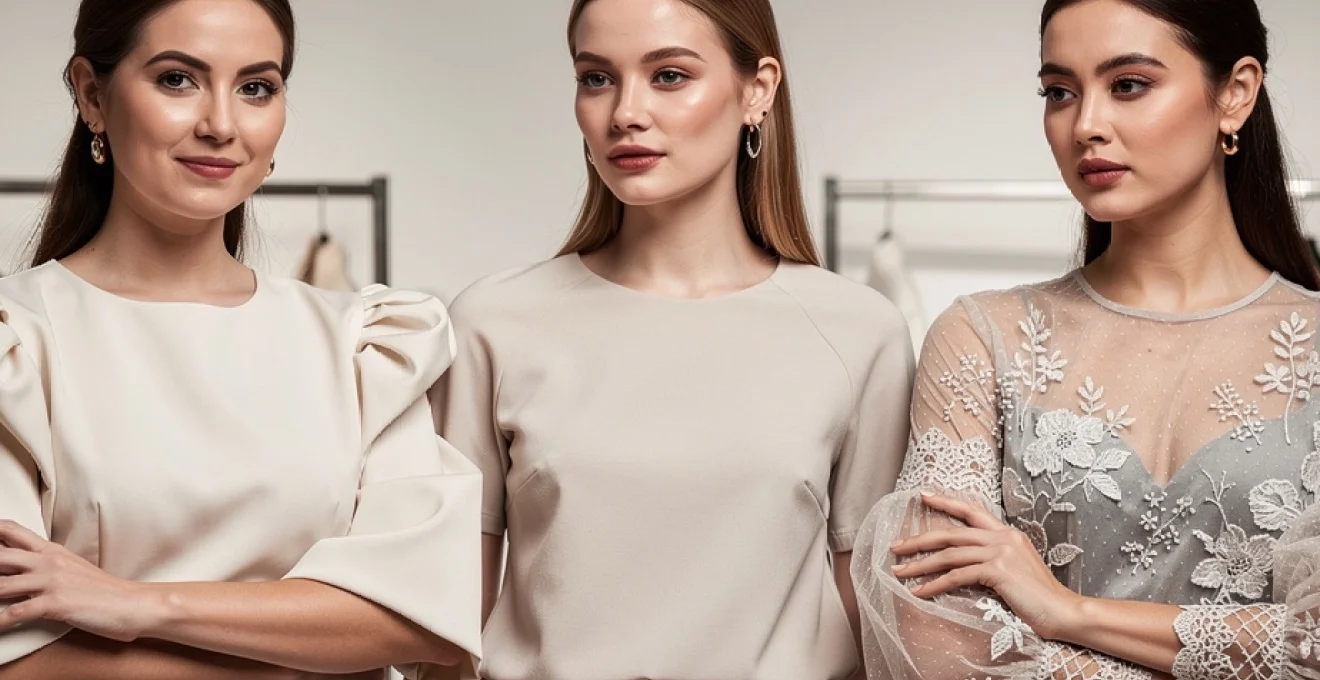
Fashion moves in cycles, yet certain elements remain perennially appealing. Statement sleeves evoke theatrical drama, minimalist cuts channel refined simplicity, and lace brings timeless romance to contemporary wardrobes. Understanding which trend suits your personal style, body type, and lifestyle requirements transforms these design elements from fleeting fads into enduring wardrobe investments. The key lies not in following trends blindly, but in recognising how specific silhouettes, fabrications, and construction techniques align with your individual proportions and daily needs.
Today’s fashion landscape offers unprecedented choice. Runways showcase everything from dramatically puffed bishop sleeves to the clean lines of Scandinavian minimalism, whilst lace continues its renaissance through artisanal techniques and modern applications. Each approach carries distinct advantages depending on your frame, colouring, and the occasions you dress for most frequently. Making informed choices requires understanding the historical context, technical construction, and practical implications of these design philosophies.
Understanding your body shape and proportions for sleeve selection
Before exploring specific trends, establishing a clear understanding of your body’s proportions provides the foundation for successful styling. The relationship between shoulder width, torso length, and hip measurement determines how volume, structure, and embellishment will appear on your frame. This isn’t about conforming to outdated body ideals—it’s about recognising the visual effects created by different design elements and using them strategically.
Apple body shape: balancing statement sleeves with torso definition
For those with fuller midsections and narrower hips, statement sleeves serve a dual purpose. They draw the eye upward whilst creating visual balance across the shoulders and bust. Bishop sleeves and balloon sleeves work particularly well when paired with dresses that define the waist through strategic seaming or belting. The volume at the shoulder creates a counterbalance to the torso, establishing proportion without adding bulk where it’s least wanted.
Minimalist cuts benefit apple shapes when they incorporate vertical design lines—think princess seams or strategically placed darts that create the illusion of length through the torso. Avoid boxy, shapeless minimalism that obscures natural curves. Instead, seek pieces with subtle waist definition and clean shoulder lines. Lace works beautifully when used in panels or overlays that create vertical interest, particularly in darker tones that provide gentle structure.
Pear and hourglass figures: maximising statement sleeve impact
Bodies with defined waists and fuller hips benefit tremendously from statement sleeves, which naturally balance proportions by adding volume to the upper body. Puffed sleeves, Juliet sleeves, and leg-of-mutton constructions create shoulder emphasis that harmonises with wider hips, resulting in a balanced silhouette. The key lies in ensuring the sleeve volume doesn’t extend too far beyond the natural shoulder line, which can create a costume-like appearance rather than sophisticated drama.
For hourglass figures specifically, emphasising the waist whilst showcasing statement sleeves creates stunning visual harmony. Dresses with fitted bodices and voluminous sleeves highlight natural curves without overwhelming them. Lace fabrications in structured forms—such as guipure or chemical lace—provide enough body to support the silhouette whilst delivering romantic detail. Minimalist approaches work when they feature thoughtful tailoring that acknowledges curves rather than ignoring them entirely.
Rectangle and inverted triangle silhouettes: strategic volume placement
Straight-up-and-down body types benefit from creating the illusion of curves through strategic volume placement. For rectangle shapes, statement sleeves combined with gathered or tiered skirts establish visual interest at both shoulder and hip levels, suggesting curves through fabric manipulation. Choose sleeve styles with moderate volume—bell sleeves or subtle puffed variations—rather than extremely dramatic options that might overwhelm a smaller frame.
Inverted triangle figures, characterised by broader shoulders relative to hips, require careful consideration when approaching statement sleeves. Whilst not off-limits, sleeves should be chosen to soften rather than exaggerate shoulder width.
Look for sleeve shapes that bring softness rather than width: gentle bishop sleeves in fluid fabrics, slim long sleeves with a slight flare at the cuff, or raglan sleeves that visually « round off » the shoulder line. Balance is created by adding subtle volume or detail at the hip or hem—wrap skirts, bias-cut midi lengths, or peplum details help to harmonise your proportions. Minimalist cuts should prioritise impeccable shoulder fit and sculpted side seams, while lace is often most successful when confined to sleeves or yokes rather than extending across the entire upper torso.
Petite frame considerations: scale and proportion in sleeve drama
For petite frames, statement sleeves can be both powerful and perilous. The main consideration is scale: oversized balloon sleeves, extreme leg-of-mutton silhouettes, or heavy layered ruffles risk overwhelming a shorter figure. Instead, opt for compact versions of the same ideas—cropped puff sleeves that sit above the elbow, softly flared bracelet sleeves, or slim bishop sleeves with a delicate cuff.
Hemline and sleeve length should work together to elongate the body visually. A mid-thigh or midi dress with three-quarter sleeves often creates more length than a full-length sleeve paired with a maxi hem on a petite body. Minimalist cuts are particularly effective for petites when they employ high waistlines, vertical seams, and uninterrupted colour blocking. Lace can be used strategically in panels or as a sheer overlay to add interest without adding visual weight; fine Chantilly lace and narrow motifs will feel lighter than large, bold patterns.
Statement sleeves: from victorian gigot to contemporary balloon silhouettes
Statement sleeves have travelled a long path from the exaggerated gigot shapes of the Victorian era to today’s refined balloon, bishop, and Juliet interpretations. While the silhouettes may change, the core idea remains constant: using architectural volume and fabric manipulation to frame the upper body and create impact. In contemporary collections, designers blend historical references with modern fabrics and construction methods, producing statement sleeves that feel dramatic yet wearable.
Understanding the distinctions between sleeve types helps you choose designs that align with your personal style and body shape. A sleeve that looks theatrical on the runway can translate beautifully into real life when scaled appropriately and balanced with a complementary neckline and hem. As we explore the key statement sleeve families, consider not just the visual effect but also your lifestyle: do you need sleeves that fit under a blazer, or are you shopping for a dress that exists purely to make an entrance?
Bishop sleeves and puffed variations: historical revival in modern garments
Bishop sleeves, with their full length and gathered cuffs, trace their origins to ecclesiastical dress and 19th-century romanticism. Today, they appear across everything from bohemian maxis to sharp minimalist midis, often executed in lightweight chiffon, organza, or silk crepe. The volume through the arm creates soft movement, while the fitted cuff reins in the drama, making bishop sleeves one of the most versatile statement options.
Puffed variations—whether at the shoulder, mid-arm, or cuff—offer more directional drama. Designers frequently use elasticated or ruched heads at the sleeve cap to create lift, sometimes reinforcing the puff with organza underlayers or interfacing for added structure. For everyday wear, look for moderate puff that sits neatly within your shoulder line; for occasion dressing, you can experiment with larger, sculptural shapes that echo Victorian gigot sleeves or 1980s power dressing. The key is to balance a voluminous upper sleeve with a streamlined bodice and defined waist.
Bell sleeves and flared cuffs: bohemian influence in contemporary design
Bell sleeves and flared cuffs are rooted in 1960s and 1970s bohemian fashion, yet they continue to resurface in modern collections due to their easy elegance. Typically, the sleeve is fitted through the upper arm and then flares out from the elbow or mid-forearm, creating a gentle, swaying silhouette. Designers often pair bell sleeves with lace, crochet, or lightweight woven fabrics to accentuate movement and texture.
In contemporary wardrobes, bell sleeves work well for those who prefer softer statement details over overt puff or architectural construction. They pair beautifully with minimalist cuts—imagine a clean column dress with a single flared sleeve—or with romantic prints for a more relaxed aesthetic. When considering practicality, think about sleeve length relative to your daily activities: exaggerated bells that dip into your coffee cup may be better reserved for evening wear, while cropped or bracelet-length flares offer drama without sacrificing functionality.
Leg-of-mutton construction: architectural tailoring techniques
Leg-of-mutton sleeves, also known as gigot sleeves, are defined by extreme volume at the upper arm that tapers sharply to a fitted forearm. Historically popular in the late 19th century and reimagined in the 1980s, they have returned in recent seasons as a favourite of designers exploring sculptural silhouettes. The construction relies on careful pattern cutting: excess fabric is built into the sleeve head through pleats or gathers, then shaped with internal supports or layered fabrics to maintain height and structure.
This sleeve type is inherently architectural, making it best suited to medium-to-heavyweight fabrics like taffeta, faille, or structured silk blends. For wearers, leg-of-mutton sleeves deliver instant presence but demand thoughtful styling. Pair them with a simple neckline, clean skirt, and minimal accessories to avoid visual overload. If your shoulders are already broad, consider softer variations with reduced volume, or choose leg-of-mutton designs where the drama is focused more on the mid-arm than the shoulder cap.
Juliet sleeves and renaissance-inspired detailing
Juliet sleeves take their cues from Renaissance costume, combining a softly puffed upper sleeve with a slim, fitted lower section. The effect is romantic rather than theatrical, especially when crafted in fluid crepe, chiffon, or fine lace. Because the volume is concentrated near the shoulder, Juliet sleeves can subtly broaden a narrow upper body or balance a fuller hip, making them an intelligent choice for pear-shaped figures and those who enjoy vintage-inspired dressing.
Modern interpretations often incorporate delicate detailing such as covered buttons along the forearm, ladder lace inserts, or subtle pleating at the sleeve head. These elements enhance the sleeve’s historical reference while keeping the overall silhouette refined. When integrating Juliet sleeves into your wardrobe, pay close attention to the neckline: square, sweetheart, or modest scoop necks complement the romantic mood, while extremely high or heavily embellished collars may compete for attention.
Minimalist cuts: scandinavian design philosophy and clean line aesthetics
Minimalist cuts draw heavily on Scandinavian design principles: clarity of line, functional simplicity, and a focus on quality materials over decoration. In clothing, this translates to garments with reduced seam lines, restrained palettes, and silhouettes that skim rather than encase the body. Far from being boring, true minimalism relies on precision—every dart, seam, and sleeve head is carefully considered to create a quiet yet powerful impact.
For those who prefer a timeless wardrobe, minimalist dresses and tops with subtle sleeve detailing can form the backbone of a versatile closet. The absence of loud embellishment makes these pieces ideal canvases for statement jewellery, sculptural bags, or bold footwear. The challenge is ensuring that simplicity does not veer into shapelessness: well-executed minimalist cuts respect the body’s natural curves and movement, using tailoring techniques to create structure without fuss.
Japanese tailoring techniques: comme des garçons and issey miyake influence
Japanese designers such as Comme des Garçons and Issey Miyake have profoundly influenced modern minimalist fashion, particularly in how we think about volume, negative space, and construction. Rather than relying on overt decoration, these designers use innovative pattern cutting—draping from a single piece of fabric, folding, or pleating—to create sculptural forms that remain deceptively simple on the hanger. Sleeves are often integrated into the body of the garment through kimono or dolman constructions, reducing seam lines and emphasising fluid movement.
For everyday wear, you can borrow from this philosophy by choosing dresses and tops with seamless shoulders, integrated sleeves, or origami-like pleats that provide subtle interest. These techniques are especially flattering on rectangle and apple shapes, as they create gentle structure around the torso without clinging. When combined with a restrained colour palette—navy, charcoal, ecru—the result is a minimalist sleeve trend that feels artistic yet wearable, ideal for those who want their clothes to whisper rather than shout.
Bauhaus principles in contemporary garment construction
Bauhaus principles, summarised by the mantra « form follows function », have also shaped contemporary minimalist cuts. In garment construction, this means that every sleeve, seam, and panel should serve a purpose—whether providing ease of movement, structural support, or visual balance. Unnecessary details are stripped away, leaving a silhouette that feels clean and intentional. You often see this in sheath dresses with subtle set-in sleeves, or in tunic styles where the sleeve line echoes the body’s natural angles.
Designers who embrace Bauhaus thinking pay close attention to ergonomics. Sleeve heads are drafted to allow comfortable arm lift without excess fabric, cuffs are sized to slide easily over the hand, and armholes are shaped to minimise bulk under jackets. For you, the benefit is a wardrobe of minimalist pieces that feel as good as they look. When you’re evaluating a sleeve through this lens, ask yourself: does this design element improve comfort, mobility, or proportion? If not, a simpler alternative may better align with true minimalist values.
Raglan sleeves and seamless integration methods
Raglan sleeves, which extend in one piece from collar to underarm, are a key element in many minimalist wardrobes due to their seamless appearance and ease of movement. Originally developed for sportswear, they have been embraced by designers for their ability to create a soft shoulder line that flatters a wide range of body shapes. In minimalist cuts, raglan sleeves are often executed without visible topstitching, allowing the fabric to flow smoothly over the shoulder.
From a practical standpoint, raglan sleeves excel in layering: they sit comfortably under coats and blazers without the bulk associated with heavily structured shoulder pads. They also suit those who find traditional set-in sleeves restrictive through the upper arm. When paired with clean necklines—boat, crew, or minimalist V—raglan designs create a contemporary, unfussy look that can easily be dressed up or down. For petite or narrow-shouldered wearers, they offer a way to enjoy sleeve coverage without strong shoulder emphasis.
Set-in sleeves: classic tailoring for timeless sophistication
Set-in sleeves remain the gold standard of classic tailoring, particularly in professional and formal contexts. Inserted into a defined armhole with carefully distributed ease at the cap, they create a sharp, structured shoulder that instantly elevates even the simplest dress. When well fitted, set-in sleeves enhance posture and lend an air of polish that aligns perfectly with minimalist aesthetics.
The sophistication of a set-in sleeve lies in its precision. Too much ease at the cap creates puckering; too little restricts movement. Luxury brands invest significant time in perfecting this balance, which is why their minimalist dresses often hang so beautifully. If your style leans toward quiet luxury, prioritise garments with well-cut set-in sleeves in high-quality fabrics—wool crepe, heavy silk, or structured cotton. These pieces provide a neutral base that can be combined with statement jewellery, lace accessories, or bold outerwear when you want to nod to other trends.
Lace fabrication: from alençon to venetian needlepoint techniques
Lace has evolved far beyond its historical associations with bridal wear and evening gowns. Today’s designers integrate lace into everything from casual shirtdresses to sharply tailored blazers, leveraging its ability to add texture, transparency, and visual depth. Understanding the main lace fabrication techniques—needle, bobbin, chemical, and crochet—helps you select pieces that align with your aesthetic and durability requirements.
At the more traditional end of the spectrum, handworked laces such as Alençon and Venetian needlepoint remain coveted for their intricate motifs and three-dimensional corded outlines. Machine-made alternatives offer similar visual effects at accessible price points, using modern technology to replicate historical patterns. The choice between delicate, openwork designs and dense, architectural laces will significantly affect how romantic or modern your outfit feels.
Chantilly lace: delicate floral motifs for romantic styling
Chantilly lace is renowned for its fine mesh ground and soft, scrolling floral motifs, often outlined with a subtle cord for definition. Originating in France, it has become synonymous with romance and femininity, making it a popular choice for occasion dresses, bridal gowns, and evening sleeves. Because Chantilly is lightweight and sheer, it drapes beautifully, conforming gently to the body’s curves without adding bulk.
When incorporating Chantilly lace into everyday wardrobes, consider partial applications rather than full dresses if you prefer understated styling. Sheer Chantilly sleeves on a minimalist sheath, or a lace yoke paired with a clean crepe skirt, provide a tasteful nod to the lace trend without feeling overtly formal. Colour also plays a role: while ivory and black remain classics, contemporary designers increasingly use muted tones—dusty rose, slate blue, champagne—to soften the contrast against skin and modernise the overall look.
Guipure and chemical lace: structured alternatives for modern silhouettes
Guipure lace, sometimes produced via chemical processes that dissolve a backing fabric, differs from Chantilly in that it has no net ground. Instead, motifs are connected by bars or plaits, creating a denser, more architectural structure. The result is a lace that holds its shape, making it ideal for sculpted dresses, structured sleeves, and minimalist silhouettes that need textural interest without losing form.
Because of its inherent rigidity, guipure lends itself well to statement sleeves—think cropped puff sleeves, tailored bell cuffs, or geometric cut-out panels. It pairs particularly effectively with minimalist cuts, where clean lines allow the lace texture to shine. For those wary of lace feeling too « sweet », guipure in deep, saturated colours or graphic patterns offers a distinctly modern interpretation. You can also experiment with layering guipure over tonal linings to create subtle depth rather than high contrast.
Crochet and macramé: artisanal texture in contemporary fashion
Crochet and macramé bring a hand-crafted, artisanal quality to the lace trend, aligning perfectly with the growing interest in slow fashion and sustainable wardrobes. Crochet fabric, formed by interlocking loops of yarn, can range from delicate openwork to dense, almost knit-like textures. Macramé, created through knotting rather than stitching, often features bold geometric patterns and fringe details that add movement.
These techniques are particularly suited to casual and resort wear: think breezy crochet midi dresses, macramé-trimmed kaftans, or statement sleeves with knotted lattice panels. When styled thoughtfully, they can also appear in urban wardrobes—layer a crochet top with minimalist tailoring, or use a macramé sleeve detail to soften a sharp blazer. Because many crochet and macramé pieces are handmade or small-batch produced, they carry an inherent uniqueness that appeals to those seeking individuality within broader trends.
Matching trends to lifestyle and occasion requirements
Choosing between statement sleeves, minimalist cuts, and lace isn’t just a question of aesthetics; it’s also about aligning your wardrobe with your daily reality. A corporate professional with a strict dress code will have different priorities from a creative freelancer or someone whose calendar leans heavily toward social events. By analysing where you spend most of your time, you can allocate your fashion budget accordingly—investing in pieces that work hard while still expressing your personal style.
It can be helpful to think of your wardrobe as a portfolio: a core of reliable, minimalist garments; a selection of high-impact statement sleeve pieces for special occasions; and a curated assortment of lace items that add romance and texture when desired. Asking yourself simple questions— »Can I sit comfortably at a desk in this sleeve? », « Will this lace snag in my everyday environment? »—will guide you toward smarter purchases that you actually wear.
Corporate environments: integrating statement details within professional dress codes
In corporate settings, professionalism and subtlety typically take precedence, but that doesn’t mean you must abandon trends altogether. Statement sleeves can be incorporated through controlled details: a slight puff at the shoulder, a modest bishop sleeve gathered into a neat cuff, or a bracelet-length bell sleeve that doesn’t interfere with typing. Keep fabrics matte and structured—wool blends, cotton sateen, or crepe—to maintain a polished impression.
Minimalist cuts are naturally at home in the office. Tailored sheath dresses with clean set-in sleeves, shirt dresses with restrained raglan cuts, and streamlined blazers over simple column dresses all project authority. Lace should be handled lightly: consider lace-panel blouses layered under suiting, or dresses with lined lace sleeves that provide texture without transparency. When in doubt, follow the « one statement per outfit » rule to ensure your look remains boardroom-appropriate.
Evening wear and formal events: maximalist versus minimalist approaches
Evening and formal occasions are where you can fully embrace the drama of statement sleeves, rich lace, or sculptural minimalism. Maximalists might gravitate toward exaggerated leg-of-mutton sleeves in satin, full-length bishop sleeves in sheer Chantilly, or bold guipure lace gowns with architectural shoulder details. These pieces photograph beautifully and create memorable entrances, particularly at weddings, galas, or red-carpet-style events.
Minimalists, meanwhile, may prefer column dresses with impeccably cut long sleeves, bias-cut silk gowns with subtle raglan construction, or crepe midis with a single design flourish—perhaps a softly flared cuff or a minimalist Juliet sleeve. Lace can bridge the gap between the two extremes: a simple silhouette rendered in luxurious Venetian needlepoint lace offers high impact without overt volume. Consider your personal comfort level: if you feel self-conscious in very dramatic sleeves, a refined lace or sculpted minimalist dress will likely serve you better in the long term.
Casual and weekend dressing: balancing comfort with fashion-forward elements
For casual and weekend wardrobes, ease of movement and care requirements join style at the top of the priority list. Statement sleeves work well in relaxed fabrics—cotton poplin, lightweight denim, soft knits—where volume feels playful rather than formal. Think cropped puff-sleeve blouses with high-waisted jeans, or jersey dresses with gentle balloon sleeves that add interest without sacrificing comfort.
Minimalist cuts shine in off-duty dressing when they prioritise breathable materials and relaxed silhouettes: T-shirt dresses with clean set-in sleeves, linen shift dresses with subtle raglan construction, or oversized shirt dresses that can be belted or worn loose. Lace and crochet come into their own in warm-weather casual looks: a crochet-trimmed sleeve on a sundress, a lace-insert top paired with tailored shorts, or a macramé cardigan layered over a slip dress. The goal is to mix trend-led details with pieces you can wash, pack, and rewear without fuss.
Seasonal adaptability and fabric weight considerations
Seasonality plays a major role in how successful any trend feels in practice. The same bishop sleeve that looks ethereal in summer organza can feel cumbersome in heavy velvet if worn on the wrong occasion. Understanding fabric weights and their interaction with sleeve volume, minimalist lines, and lace transparency helps you build a wardrobe that functions year-round.
As a general rule, lighter fabrics such as cotton voile, chiffon, and openwork lace suit warmer months and airy statement sleeves, while medium-to-heavyweight materials like wool crepe, velvet, and lined guipure excel in cooler weather. Minimalist cuts are particularly adaptable: by shifting from linen and lightweight cotton in summer to ponte and double-faced wool in winter, you can maintain a consistent aesthetic while staying comfortable.
Summer fabrics: organza, cotton voile, and breathable lace constructions
In summer, breathable fabrics are essential, especially if you’re drawn to statement sleeves or lace. Organza offers crisp volume without weight, making it ideal for puffed or bishop sleeves that hold their shape yet allow airflow. Cotton voile and lightweight poplin create gentle structure in bell or flared sleeves while remaining cool against the skin, perfect for day dresses and casual tops.
For lace, look for open constructions and natural fibres—cotton or linen-based laces and airy crochet patterns allow the skin to breathe. Sheer Chantilly sleeves layered over minimalist camisoles can provide coverage without overheating, while unlined macramé details work well for beach or resort wear. When temperatures rise, keep silhouettes away from the body where possible: a loose, minimalist dress with flutter sleeves in cotton voile will feel far more comfortable than a tight-fitting, synthetic alternative.
Transitional seasons: layering statement sleeves with minimalist outerwear
Transitional seasons—spring and autumn—are ideal for experimenting with layering, combining dramatic sleeves with clean-lined outerwear. The trick is to select coats and jackets that either accommodate sleeve volume or deliberately contrast with it. For example, a structured trench or minimalist wrap coat worn open over a bishop-sleeve dress allows the sleeve to billow without bunching, while a sleeveless gilet or longline vest can showcase a statement sleeve unimpeded.
Minimalist outerwear in neutral tones—camel, navy, charcoal—acts as a grounding layer for more expressive lace or sleeve details underneath. Raglan-sleeve coats and softly tailored blazers tend to be more forgiving over subtle puff or bell sleeves than sharply padded shoulders. As temperatures fluctuate, lightweight knits with slim long sleeves can be layered beneath lace dresses or sleeveless minimalist pieces, extending their wear across multiple seasons.
Winter styling: heavy lace, velvet puffed sleeves, and thermal minimalism
In winter, fabric weight and insulation become priorities, but that doesn’t mean style must be sacrificed. Heavy laces—such as densely patterned guipure or embroidered tulle with substantial backing—work beautifully for eveningwear, especially when paired with long sleeves and partial linings to maintain warmth. Velvet, too, lends itself to statement sleeves; puffed or Juliet sleeves in rich jewel tones feel luxurious and seasonally appropriate.
For daytime and professional settings, thermal minimalism comes into play: think merino or cashmere blend dresses with clean set-in or raglan sleeves, layered under tailored coats. Here, the interest comes from texture and cut rather than overt decoration. You can still reference trends through accessories—lace tights, a puff-sleeve knit layered over a slim turtleneck, or a minimalist dress worn with a structured, bishop-sleeve coat. By treating sleeve shapes, lace techniques, and minimalist cuts as complementary tools rather than competing trends, you can adapt your style gracefully to every season.