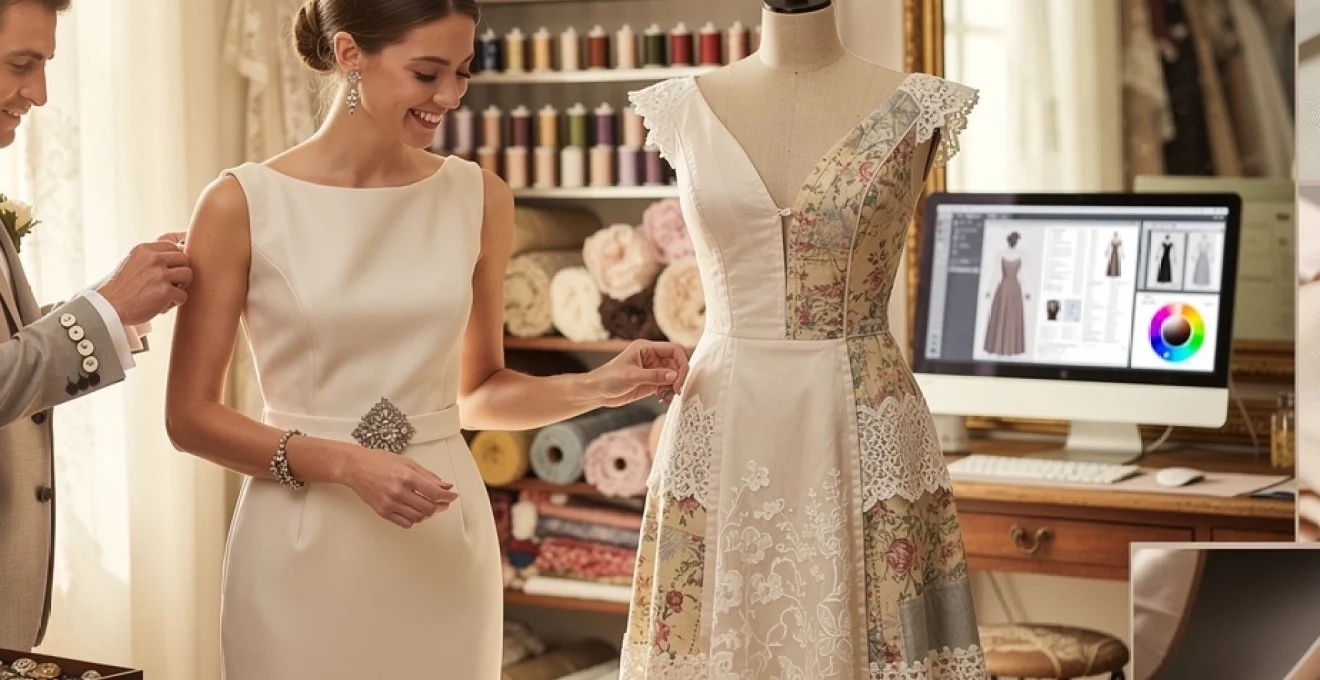
Your wedding day represents one of life’s most significant milestones, deserving attire that reflects your unique love story and personal heritage. Beyond selecting a beautiful dress or elegant suit, the art of personalisation transforms standard wedding garments into deeply meaningful heirlooms that capture your individual journey. Today’s couples increasingly seek ways to infuse their wedding attire with sentimental value, creating pieces that tell their story through carefully chosen details, inherited treasures, and custom embellishments.
The modern approach to wedding fashion embraces both tradition and innovation, allowing couples to honour their past whilst creating new memories. From incorporating grandmother’s vintage lace into contemporary gowns to embedding family crests in custom cufflinks, personalisation options have expanded dramatically. Professional seamstresses and designers now offer sophisticated techniques for integrating meaningful elements without compromising the garment’s structural integrity or aesthetic appeal.
Contemporary couples understand that wedding attire personalisation extends far beyond simple monogramming. Each customised element serves as a tangible connection to cherished memories, beloved family members, and significant moments that have shaped their relationship. Whether through subtle embroidered initials or bold heritage fabric applications, these personalised touches create wedding ensembles that remain treasured keepsakes long after the celebration ends.
Heirloom integration techniques for contemporary wedding attire
The seamless integration of family heirlooms into modern wedding attire requires careful planning and expert craftsmanship. Professional alterations specialists have developed sophisticated techniques that preserve the integrity of both vintage pieces and contemporary garments whilst creating harmonious combinations. These methods ensure that cherished family treasures become integral parts of your wedding ensemble rather than awkward additions.
Understanding fabric compatibility represents a crucial first step in successful heirloom integration. Vintage materials often possess different weights, textures, and care requirements compared to modern fabrics. Expert seamstresses conduct thorough assessments of both old and new materials to determine optimal integration methods that will withstand the demands of your wedding day. This professional evaluation prevents potential issues such as fabric pulling, colour bleeding, or structural weakness that could compromise your garment’s appearance or durability.
Victorian lace incorporation methods for modern bridal gowns
Victorian lace presents unique challenges and opportunities when incorporating into contemporary bridal designs. The intricate patterns and delicate construction of antique lace require specialised handling techniques to prevent damage whilst achieving seamless integration. Professional seamstresses often employ museum-quality preservation methods, including gentle cleaning processes and strategic reinforcement techniques that maintain the lace’s historical integrity.
The placement of Victorian lace within modern gown designs demands careful consideration of both aesthetic balance and structural support. Successful integration often involves creating complementary design elements that bridge the gap between vintage and contemporary styling. This might include using modern lace with similar motifs to create transition areas, or incorporating the antique lace as focal points within strategically designed panels or overlays.
Antique button placement strategies on tailored wedding suits
Incorporating antique buttons into modern tailored suits requires understanding both historical button styles and contemporary suiting construction. Professional tailors assess the size, weight, and attachment requirements of vintage buttons to determine optimal placement strategies. This evaluation ensures that the buttons function properly whilst maintaining the suit’s clean, modern silhouette.
Strategic placement options include sleeve buttons, waistcoat fronts, or pocket details, each offering different visual impacts and practical considerations. The key lies in selecting positions that honour the button’s historical significance whilst complementing the suit’s overall design aesthetic. Expert tailors often create custom buttonholes sized specifically for antique buttons, ensuring proper fit and professional appearance.
Grandmother’s jewellery seamless integration with designer pieces
Combining inherited jewellery with contemporary wedding accessories requires understanding design principles, metal compatibility, and styling balance. Professional stylists work with couples to identify which pieces can be worn together harmoniously, often creating layered looks that honour multiple generations. This approach allows brides to wear meaningful pieces without creating visual confusion or stylistic conflicts.
Modification techniques for vintage jewellery might include resizing rings, shortening necklaces, or converting brooches into hair accessories. These alterations preserve the piece’s essential
sentiment and craftsmanship while adapting it for contemporary wear, ensuring the heirloom feels intentional rather than forced. For example, a vintage diamond brooch might be subtly integrated into a modern hair comb, or a strand of pearls could be layered with a minimalist gold chain to create a balanced, fashion-forward look that still feels deeply personal.
When pairing grandmother’s jewellery with designer pieces, proportion and metal tone are crucial considerations. Mixing warm-toned vintage gold with cool-toned modern platinum requires careful styling to avoid visual discord. Professional jewellers can also reset stones from heirloom pieces into new settings that mirror your wedding outfit’s design language. This approach allows you to preserve the emotional core of the original jewellery while aligning it with your contemporary bridal or groom style.
Heritage fabric patchwork applications in wedding dress construction
Heritage fabric patchwork allows you to weave literal pieces of your family history into your wedding dress construction. Rather than using a single large panel of vintage fabric, designers often recommend small, strategically placed patches that can be reinforced and blended into the gown’s existing structure. This might include lining a pocket with your grandfather’s shirt, adding a strip of your mother’s wedding veil to the hem, or incorporating tartan or cultural textiles into underskirts or bodice linings.
To maintain both comfort and durability, seamstresses will typically stabilise older fabrics with lightweight interfacing or mount them onto a base cloth. Think of it as creating a subtle collage beneath the surface of your dress—almost like a secret scrapbook you can wear. These heritage patches can be cut into meaningful shapes, such as hearts, initials, or symbolic motifs from your cultural background, ensuring that the sentimental elements are both secure and aesthetically cohesive.
Custom embroidery and monogramming solutions for wedding garments
Custom embroidery and monogramming offer some of the most refined ways to personalise your wedding outfit with meaningful details. From hidden initials on the inside of a waistband to elaborate motifs cascading down a veil, embroidery transforms fabric into a storytelling canvas. Increasingly, couples are combining traditional handwork with modern technology to create designs that are both precise and emotionally resonant.
When planning embroidered wedding garments, it helps to think in layers: what do you want the world to see, and what do you want reserved just for the two of you? Highly visible monograms on trains or veils can anchor your overall aesthetic, while subtle stitched dates inside cuffs or seams remain intimate reminders of your commitment. The key is to balance sentiment with sophistication, ensuring the embroidery enhances rather than overwhelms your wedding look.
Hand-stitched initials using traditional whitework techniques
Traditional whitework embroidery—stitching white thread on white fabric—offers a timeless, understated way to personalise wedding dresses and shirts. Techniques such as satin stitch, stem stitch, and French knots create raised, tactile initials that are only noticeable on closer inspection. This subtlety makes whitework ideal for brides and grooms who prefer quiet luxury over bold statements.
Common placement areas for hand-stitched initials include the dress hem, inner bodice, shirt cuff, or the underside of a collar. Because whitework relies on texture rather than contrast, it pairs beautifully with minimalist gowns and classic shirts, adding depth without disrupting clean lines. If you love the idea of a “secret message,” you might even choose to embroider a small phrase or intertwined initials near your heart, where only you know it exists.
Computerised embroidery machine programming for wedding date integration
For precise, repeatable motifs—such as your wedding date, coordinates of your proposal spot, or a shared phrase—computerised embroidery offers remarkable control. Designers can program your chosen font, size, and layout into an embroidery machine to achieve clean, consistent stitching on veils, linings, ties, or pocket squares. This approach is especially useful if you want the same personalised detail replicated across multiple garments, such as matching bridesmaids’ robes or groomsmen’s pocket squares.
Machine embroidery also opens up possibilities for complex layouts that would be incredibly time-consuming by hand, like a date repeated as a border or a subtle pattern on a train. The process usually begins with a digital mock-up, allowing you to see how the monogram or date will sit within the garment’s design before a single stitch is made. Think of it as drafting your love story in pixels before translating it into thread.
Goldwork thread application for surname monograms
Goldwork embroidery uses metallic threads—often real metal wire or high-quality metallic fibres—to create rich, dimensional designs. When applied to surname monograms on jackets, veils, capes, or sashes, goldwork adds a regal, heirloom-quality finish. Because goldwork is weightier and more sculptural than standard embroidery, it is best placed on structurally sound areas, such as a jacket back panel, belt, or detachable overskirt.
Due to its complexity, goldwork is typically executed by specialist embroiderers who understand how to manage the added weight and rigidity of metallic threads. The result is a monogram that catches the light in photographs and feels akin to jewellery embedded in fabric. If you imagine your wedding outfit as a piece of wearable art, goldwork surname monograms can serve as the signature at the corner of the canvas—discreet yet undeniably special.
Cross-stitch memorial messages on wedding dress linings
Cross-stitch, with its grid-like precision and nostalgic feel, is a beautiful way to include memorial messages or names of loved ones inside your wedding dress lining. Because cross-stitch is typically done on even-weave fabrics like aida or linen, seamstresses often create a small stitched panel first, then carefully sew it into the lining or inner corset area of the gown. This allows for detailed messages—names, dates, or short quotes—without disturbing the outer silhouette.
Many couples choose to honour grandparents, parents, or close friends who cannot attend the wedding through these hidden memorials. Imagine it as a quiet chorus of support stitched into the architecture of your dress, literally backing you as you walk down the aisle. If you enjoy handcrafts, stitching the message yourself can become a meditative pre-wedding ritual, turning the garment into a collaborative piece between you and the people you love.
Bespoke colour coordination using personal significance palettes
Colour is one of the most powerful tools for personalising your wedding outfit, especially when you move beyond standard bridal white and black-tie navy. A personal significance palette—colours chosen for their emotional or symbolic meaning—can be subtly woven into linings, accessories, embroidery, and even shoe soles. Perhaps it’s the deep blue of the sea where you got engaged, the soft pink of your childhood bedroom, or the green of your family’s homeland; these hues can appear as quiet accents or bold focal points.
Working with a stylist or designer, you can develop a cohesive palette that links your outfit to your partner’s look and to your broader wedding design. For instance, a groom’s tie might echo the embroidery on the bride’s veil, while bouquet ribbons reflect the same tones as monogrammed shirt cuffs. Treat colour like a shared language: each shade carries part of your story, and together they translate your relationship into something guests can see and feel.
Accessory customisation through meaningful symbol integration
Accessories are often the easiest place to experiment with meaningful details because they can be customised without altering the main wedding dress or suit. Think of cufflinks, hairpieces, shoes, and boutonnieres as small canvases for symbolism—each one capable of holding a family crest, a secret inscription, or a reference to your shared passions. When chosen with intention, these pieces become future heirlooms that you can wear again and again.
Symbol integration can be literal, like engraving a coat of arms, or more abstract, such as using a particular flower to represent a cultural tradition. The key is coherence: if every accessory tells a wildly different story, the overall look can feel disjointed. By choosing one or two guiding themes—heritage, location, or shared hobbies—you can ensure that your customised accessories feel like chapters of the same book rather than separate volumes.
Engraved cufflink design featuring family crests
Engraved cufflinks featuring family crests or meaningful symbols are a sophisticated way to personalise groom or bride suits. Modern jewellers can work from historical references, old wax seals, or even digital artwork to recreate crests with remarkable detail. Once engraved, the cufflinks become a tangible link between your present celebration and generations who came before.
Beyond traditional crests, couples increasingly opt for icons that reflect their shared life—a tiny sailboat for avid sailors, a skyline for city lovers, or intertwined initials in a bespoke typeface. Because cufflinks are small and often viewed up close, they encourage discovery: guests who notice them are rewarded with a glimpse into your story. Consider them miniature signposts pointing to your roots and your future.
Handcrafted wedding shoe sole messages and date inscriptions
Personalising the soles of your wedding shoes creates an intimate detail that’s revealed only in certain moments—during getting-ready photos, when you sit down, or in a playful kick on the dance floor. Messages can be hand-painted, burned into leather, or added via vinyl decals, ranging from your wedding date to a meaningful lyric or private joke. Some couples even write notes on each other’s soles the morning of the wedding, capturing those last pre-ceremony thoughts.
If you’re concerned about durability, discuss materials and sealants with a bespoke shoe artist or cobbler. Much like a handwritten dedication inside a favourite book, these sole inscriptions stay with you wherever you go. Every time you wear the shoes again—for anniversaries or special occasions—you’ll quite literally walk on memories of your wedding day.
Personalised hair accessory creation using vintage brooches
Transforming vintage brooches into personalised hair accessories is an elegant way to integrate heirlooms without altering your main wedding outfit. Jewellers or accessory designers can mount brooches onto combs, pins, or headbands, often adding complementary crystals, pearls, or ribbons to harmonise with your hairstyle and dress. This technique works especially well if you have multiple small brooches from different relatives, which can be clustered into a single statement piece.
Because hair accessories are highly visible in photographs—particularly during close-ups and first-look shots—they offer a prime opportunity for meaningful detail. Imagine your grandmother’s brooch nestled in a modern updo, or a cluster of inherited pieces woven into a boho braid. The result feels like your family literally crowning you on your wedding day, yet the look remains polished and intentional.
Custom boutonnière assembly with symbolic flower varieties
Boutonnières may be small, but they carry significant symbolic potential. Florists can design custom pieces using blooms and foliage that represent your cultural background, favourite places, or cherished memories. For example, rosemary for remembrance, myrtle for love, or a sprig from a family garden can all be incorporated into a groom’s or bride’s lapel.
You might also choose flowers that echo those in your partner’s bouquet or wear a bloom associated with a loved one you wish to honour. To enhance personalisation further, ribbon wraps can be made from heirloom fabrics or embroidered with initials and dates. In this way, a boutonnière becomes more than just a decorative touch; it’s a wearable symbol of the people and stories you carry with you into marriage.
Professional alteration techniques for vintage wedding dress transformation
Transforming a vintage wedding dress into a garment that feels contemporary and authentically “you” requires both technical expertise and creative vision. Professional bridal alteration specialists start by assessing the gown’s fabric condition, internal structure, and potential weak points. Much like an architect inspecting a historic building, they determine which elements can be preserved, which need reinforcement, and where modern updates are feasible without compromising integrity.
Common transformation techniques include reshaping necklines, updating sleeve styles, and adjusting skirt volumes to better suit modern silhouettes. For instance, a high Victorian neckline might be softened into a scoop, or voluminous sleeves slimmed into elegant fitted shapes. Linings can be replaced for comfort, and discreet gussets added for ease of movement. Throughout this process, the goal is to respect the original design while gently guiding it into the present day.
In some cases, only select components of a vintage gown—such as lace appliqués, buttons, or beaded panels—are salvaged and incorporated into a new, custom-made dress. This hybrid approach allows you to honour the sentimental value of an heirloom while ensuring your wedding outfit aligns with your personal style and fits flawlessly. If you’re unsure what’s possible, schedule a consultation well in advance; many complex transformations require multiple fittings and careful, staged work.
Digital design tools for wedding outfit personalisation planning
As wedding fashion becomes more personalised, digital design tools have emerged as powerful allies in planning meaningful details. From 3D dress configurators to monogram generators and colour-palette apps, these tools let you experiment with ideas before committing to fabric, thread, or metal. Think of them as a digital sketchbook where you can test how a Victorian lace panel might look on a modern neckline or how a goldwork monogram will sit on a veil.
Many bridal boutiques and designers now offer virtual consultations that include digital mock-ups of embroidery placements, accessory designs, and alteration proposals. You can share mood boards, upload photos of heirlooms, and receive visual proposals showing how everything could work together. This collaborative, tech-assisted process not only reduces uncertainty but also helps you communicate your vision clearly to your creative team.
For couples who enjoy planning together, exploring these tools can become part of the pre-wedding experience—almost like designing your own limited-edition collection. By the time you move from screen to seam, you’ll have a cohesive, carefully considered personalisation plan. The result is a wedding outfit that feels less like a standard “look” and more like a bespoke chapter of your love story, crafted with intention from the first digital sketch to the final stitched detail.