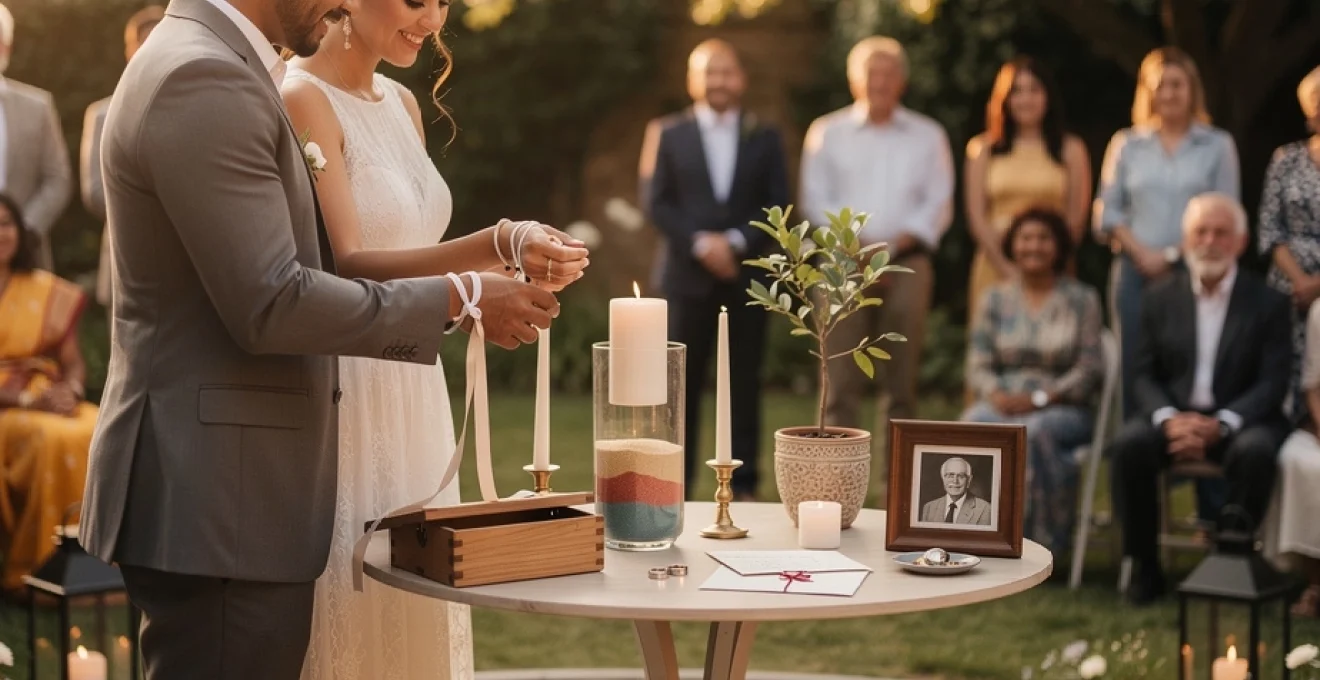
Modern couples increasingly seek ceremonies that reflect their unique identity and values, moving beyond traditional formalities to create deeply personal experiences. The incorporation of meaningful rituals transforms standard ceremonial proceedings into transformative moments that resonate with participants and guests alike. These symbolic elements serve as emotional anchors, creating lasting memories while establishing the foundation for new chapters in life. Understanding the psychological and cultural significance of ceremonial rituals enables couples to craft celebrations that authentically represent their journey together, fostering deeper connections with their community and strengthening their bond as they transition into marriage.
Understanding ceremonial psychology and emotional architecture
The human brain processes ritualised behaviour differently than everyday activities, triggering profound emotional and psychological responses that create lasting impact. Contemporary neuroscience reveals how ceremonial elements activate multiple brain regions simultaneously, enhancing memory formation and emotional processing. This neurological foundation explains why couples often describe their wedding ceremonies as transcendent experiences that feel both timeless and intensely present.
Neurological responses to ritual engagement and memory formation
Research demonstrates that ritual participation stimulates the release of oxytocin and dopamine, creating powerful associations between specific actions and emotional states. When couples engage in symbolic activities like handfasting or unity candle lighting, their brains form enhanced episodic memories that become more vivid and emotionally significant over time. These neurochemical responses explain why seemingly simple acts, such as blending sand or exchanging personalised vows, can produce overwhelming emotional reactions.
The repetitive and structured nature of rituals also activates the brain’s pattern recognition systems, creating a sense of order and predictability during times of significant transition. This neurological response helps reduce anxiety and provides emotional stability, allowing participants to fully engage with the ceremonial experience rather than feeling overwhelmed by the magnitude of the occasion.
Cultural anthropology frameworks: turner’s liminality theory in practice
Victor Turner’s concept of liminality provides crucial insight into why ceremonial rituals hold such transformative power. The liminal phase represents a threshold state where participants exist between their previous identity and their emerging status. Wedding ceremonies exemplify this transitional space, where two individuals shed their single identities to become a unified partnership. Symbolic rituals facilitate this transformation by providing concrete actions that represent abstract concepts.
The incorporation of cultural elements from different backgrounds creates what anthropologists term « cultural fusion, » allowing couples to honour their heritage while establishing new traditions. For instance, combining a Celtic handfasting ceremony with a Chinese tea service creates a unique liminal space that acknowledges multiple cultural identities while forging something entirely new.
Psychological safety through structured ceremonial elements
Rituals create psychological safety by establishing predictable frameworks within which emotional vulnerability can be expressed. The structured nature of ceremonial elements provides participants with clear expectations and defined roles, reducing performance anxiety and allowing authentic emotional expression. This safety enables couples to share intimate vows, exchange meaningful objects, or participate in symbolic actions without fear of judgement or uncertainty.
The communal aspect of ritual participation also enhances psychological safety by involving trusted family members and friends as witnesses and participants. When guests engage in activities like ring warming or blessing ceremonies, they create a supportive environment that validates and celebrates the couple’s commitment while strengthening community bonds.
Attachment theory applications in relationship ceremonies
Attachment theory principles explain how ceremonial rituals strengthen emotional bonds between partners and extend these connections to their broader social network. Secure attachment behaviours, such as mutual caregiving and emotional responsiveness, can be symbolically represented through rituals like washing each other’s hands or feet, demonstrating vulnerability and trust. These actions reinforce positive attachment patterns while creating shared meaning systems that support long-term relationship stability.
The inclusion of family members in ceremonial rituals also addresses attachment needs by acknowledging existing bonds while establishing new family structures. Blended family ceremonies, for instance, can incorporate children through sand ceremonies or tree planting rituals, helping them feel valued and included in the new family configuration while addressing potential attachment concerns.
Traditional wedding rituals and their contemporary adaptations
Traditional wedding rituals have evolved significantly to meet the needs of modern couples while maintaining their symbolic significance. These time-tested ceremonies provide rich foundations for personalisation, allowing couples to honour cultural heritage while reflecting
their present-day values, lifestyles, and relationship dynamics. By reimagining these rituals with inclusive language, contemporary symbolism, and flexible formats, couples can transform familiar traditions into meaningful, modern expressions of their commitment.
Unity candle ceremonies: symbolism and practical implementation
The unity candle ceremony remains one of the most recognisable wedding rituals, yet it is highly adaptable for modern, meaningful ceremonies. Traditionally, two taper candles representing each partner are used to light a central pillar candle, symbolising the formation of a new shared life. In contemporary practice, this ritual can be adapted for same-sex couples, blended families, or secular settings simply by adjusting the wording and the participants involved.
When planning a unity candle ceremony, it is important to consider the venue, logistics, and symbolism. Outdoor weddings may require hurricane vases or LED candles to protect against wind while preserving the ritual’s visual impact. Couples can invite parents, children, or other significant figures to light the initial taper candles, representing the support systems that have shaped them. Clear and concise wording from the celebrant helps guests understand the meaning behind the action, reinforcing the emotional impact of the moment.
For couples who value sustainable or non-religious wedding rituals, the unity candle can be framed as a metaphor for shared intention rather than spiritual union. The flame becomes a symbol of joint purpose, mutual care, and the warmth of the home they plan to build together. Some couples choose to relight their unity candle on anniversaries or during challenging times as a personal ritual to reconnect with their wedding promises and re-anchor their relationship.
Handfasting traditions: celtic origins and modern interpretations
Handfasting is an ancient Celtic ritual that has experienced a strong revival among couples seeking a visually striking and symbolically rich ceremony element. Historically, handfasting functioned as a betrothal or temporary union, with hands bound together to signify a promise to wed. Contemporary handfasting rituals, however, are usually incorporated into the wedding ceremony itself, aligning the “tying of the knot” with the exchange of vows or rings.
Modern handfasting traditions allow couples to select ribbons or cords in colours that reflect their values, heritage, or shared story. For example, green may symbolise growth and fertility, blue can represent loyalty and calm, and gold might stand for prosperity and joy. Each ribbon can be placed by a different family member or friend, giving loved ones an active role in “weaving” the couple’s future together. This flexible format makes handfasting particularly suitable for inclusive and personalised wedding ceremonies.
From a practical standpoint, timing and choreography are crucial. The celebrant should guide hand placement, explain the meaning of each ribbon, and ensure that the binding is comfortable and safe. Some couples choose to keep the cords after the ceremony, displaying them at home or placing them in a memory box as a tangible reminder of their wedding ritual. Whether used as the central focus of the ceremony or as a brief symbolic gesture, handfasting offers a powerful blend of tradition, artistry, and emotional depth.
Sand ceremony variations: blended family integration techniques
Sand ceremonies have become particularly popular in blended family weddings because they visually represent unity while allowing multiple participants to take part. In its classic form, each person pours coloured sand into a central vessel, creating layers that can never be completely separated again. This simple image carries strong emotional weight, especially for children who may be anxious about changes in family structure.
To design a meaningful sand ceremony for a blended family, couples can assign specific colours to each participant and explain their symbolism in the ceremony script. For example, one child’s sand might represent creativity and humour, another’s might stand for resilience and kindness, and the parents’ sands can symbolise love and protection. As everyone pours their sand, the celebrant can narrate these qualities, reinforcing each person’s unique contribution to the new family unit.
Practical considerations include choosing a stable, wide-necked container, testing the pouring order in advance, and deciding where the finished vessel will be displayed at home. Couples may also incorporate local or meaningful sand, such as from a favourite beach, to give the ritual a strong sense of place. In secular and non-religious wedding ceremonies, sand rituals offer a gentle, accessible way to help children feel included, heard, and symbolically “held” within the new family configuration.
Ring warming rituals: community involvement strategies
Ring warming ceremonies invite guests to participate directly in blessing the couple’s wedding bands, deepening the sense of community involvement. Typically, the wedding rings are passed among guests, who silently hold them for a moment and offer a wish, blessing, or positive thought. By the time the rings reach the couple, they are imbued with the collective goodwill of their closest family and friends.
To implement this ritual smoothly, it is essential to consider guest numbers, seating layout, and time constraints. For smaller ceremonies, the rings can move through the entire gathering; for larger weddings, the celebrant may limit the ritual to immediate family or the front few rows. Using a small dish, pouch, or ribboned cushion helps avoid dropped rings and adds a visual element to the process.
Clear explanation is key to making a ring warming ceremony meaningful rather than confusing. The celebrant should briefly describe what guests are being asked to do and emphasise that silent or internal wishes are perfectly acceptable. For couples who prioritise community and connection, this ritual can feel like a collective “embrace” at the heart of the ceremony, reminding everyone that marriage is supported and sustained by a wider network of relationships.
Cultural fusion ceremonies: Hindu-Christian and Jewish-Muslim examples
Cultural fusion ceremonies are increasingly common as more couples come from different religious, cultural, or ethnic backgrounds. These rituals aim to honour each partner’s heritage while crafting a cohesive, respectful, and personalised wedding experience. Rather than compromising or diluting traditions, effective fusion ceremonies highlight shared values such as love, family, commitment, and hospitality, using familiar symbols in new, inclusive ways.
In a Hindu–Christian wedding, for instance, a couple might combine the lighting of a unity candle with the Hindu ritual of circling a sacred fire. The fire can symbolise divine presence and transformative energy, while the candle reflects shared light and mutual support. Scripture readings or blessings from both traditions can be selected for their universal themes, and family members from each side may be invited to participate in ways that feel authentic and comfortable.
Similarly, a Jewish–Muslim ceremony might integrate the signing of a ketubah (marriage contract) with the recitation of selected verses from the Qur’an that emphasise compassion, partnership, and mercy. A glass-breaking ritual could be followed by a shared cup of non-alcoholic drink, echoing Muslim hospitality customs. The key to successful cultural fusion is open communication, sensitivity to religious boundaries, and collaboration with a celebrant who understands how to frame each element so that all guests feel welcomed and respected.
Non-religious ceremonial elements for secular celebrations
Many modern couples identify as spiritual-but-not-religious or fully secular, yet still desire depth, symbolism, and emotional resonance in their ceremonies. Non-religious wedding rituals offer a way to create meaning without relying on specific doctrines or sacred texts. By focusing on universal themes such as growth, memory, connection, and legacy, secular ceremonies can be just as powerful as traditional religious services.
Thoughtfully chosen symbolic actions can help you express your shared values and vision for the future. Whether you are passionate about environmental stewardship, family history, or creative expression, there is likely a ritual format that can reflect your priorities. The following non-religious ceremony ideas highlight how simple actions, framed with clear language, can transform your wedding into a deeply personal rite of passage.
Tree planting ceremonies: environmental symbolism and growth metaphors
Tree planting ceremonies are ideal for eco-conscious couples who want their wedding ritual to reflect a commitment to sustainability and long-term growth. Planting a tree together symbolises the relationship taking root, with the trunk representing shared strength and the branches signifying the many directions your life together may grow. This living symbol continues to develop long after the wedding day, serving as a physical reminder of your vows.
Practically, couples can plant a sapling during the ceremony if the venue allows, or symbolically add soil and water to a potted tree that will later be transplanted. Soil can be gathered from meaningful locations—each partner’s childhood home, for example—to highlight the merging of histories and families. The celebrant’s wording can draw explicit parallels between nurturing the tree and caring for the relationship: both require patience, attention, and protection from harsh conditions.
Tree planting rituals blend seamlessly into outdoor weddings, but they can also be adapted for indoor ceremonies using containers and houseplants. Over time, the tree or plant becomes a living anniversary marker, its growth reflecting the evolving nature of your partnership. For couples seeking a non-religious but deeply symbolic ritual, this environmental metaphor offers both beauty and lasting relevance.
Time capsule creation: Future-Focused ritual design
Time capsule ceremonies invite couples to think beyond the wedding day and consciously design a ritual that speaks to their future selves. During the ceremony, you place selected items—letters, photographs, small mementoes, or meaningful objects—into a box or container that will be sealed and opened on a specific anniversary. This forward-looking ritual turns your ceremony into a bridge between the present moment and your future life together.
To create a meaningful wedding time capsule, consider including handwritten letters describing your hopes, fears, and promises. You might also add a copy of your vows, a favourite poem or song lyrics, or small tokens that represent your current hobbies and dreams. Some couples invite close family or friends to contribute notes or keepsakes, transforming the capsule into a collective snapshot of your community at that point in time.
The act of sealing the capsule during the ceremony underscores the idea that marriage is an ongoing story rather than a single event. Agreeing on when and how you will open it—on your fifth or tenth anniversary, or after overcoming a significant challenge—creates a shared milestone to look forward to. This simple but powerful ritual can help anchor your relationship in a sense of continuity, reminding you that the choices you make today shape the memories you will revisit tomorrow.
Letter exchange ceremonies: private vow alternatives
Not every couple feels comfortable sharing ultra-personal vows in front of an audience, yet many still want to honour the intimacy of their commitment. Letter exchange ceremonies offer a thoughtful compromise: each partner writes a private letter to the other, which may be read silently during the ceremony or exchanged and saved for a later, more private moment. This ritual preserves emotional authenticity while maintaining boundaries around what is shared publicly.
During the ceremony, the celebrant can briefly explain the significance of the letters without revealing their content. You may choose to place the letters in a decorative box, along with a favourite bottle of wine or tea, creating a “relationship care package” to be opened on a future anniversary or during a time when you need to reconnect. This structure can help you manage conflict and stress, giving you a built-in ritual for revisiting your original intentions and rekindling emotional closeness.
For couples looking for non-religious vow alternatives, letter exchanges are flexible and accessible. You can write in any style—poetic, humorous, reflective—and choose whether to share parts of the letters with guests or keep everything entirely private. Either way, the act of writing encourages deep reflection on why you are choosing to marry, making it one of the most meaningful preparatory rituals you can undertake.
Memorial incorporation: honouring deceased family members
For many couples, the absence of loved ones who have died is acutely felt on their wedding day. Incorporating subtle memorial rituals into the ceremony can provide comfort, acknowledge grief, and weave these important relationships into your new chapter. Rather than overshadowing the celebration, these gestures often deepen the sense of gratitude and presence, reminding everyone that love extends beyond physical boundaries.
Common non-religious memorial elements include lighting a candle in honour of the deceased, placing a framed photograph on a dedicated table, or including a brief moment of silence within the ceremony script. Some couples reserve a seat with a flower or special item to symbolise the person’s place in their lives. The wording can be simple and inclusive, such as acknowledging “those who cannot be with us today but live on in our hearts and stories.”
Memorial rituals should be tailored to your emotional needs and comfort level. If you are concerned about becoming overwhelmed, consider a quieter, more private gesture—such as carrying a piece of jewellery, a handkerchief, or a small token belonging to the person. By thoughtfully integrating remembrance into your wedding ceremony, you create a meaningful bridge between past and future, honouring the people who helped shape you while stepping into your life together.
Personalisation strategies for unique ceremonial experiences
Personalising your ceremony is about more than choosing readings and music; it involves designing rituals and structures that genuinely reflect who you are as individuals and as a couple. Just as no two relationships are identical, no two meaningful ceremonies should be exactly alike. The most memorable weddings often blend traditional frameworks with highly specific details that only make sense for that particular couple.
One effective strategy is to start with your shared values and interests rather than with the rituals themselves. Ask yourselves: What do we care about most? Community, creativity, nature, humour, activism, or family history? Once you have identified your core themes, you can select or design ceremonial elements that express these priorities. For instance, a couple passionate about music might include a communal singalong, whereas avid hikers might exchange vows during a symbolic “rope-tying” or “map-folding” ritual.
Another powerful tool is storytelling. Your celebrant can weave key moments from your relationship—how you met, pivotal challenges, or funny anecdotes—into the ceremony narrative. Rituals can then be anchored to these stories: a wine blending ritual based on your first date, a seed blending or tree planting ceremony linked to a favourite walk, or a “sharing circle” where a few guests offer short reflections on your journey together. By connecting actions to personal stories, you ensure that every element of the ceremony feels intentional rather than decorative.
Finally, consider accessibility and inclusion as part of personalisation. If you or your guests have mobility, sensory, or neurodiversity needs, adapt rituals to ensure everyone can participate comfortably. This might mean shortening standing sections, providing clear visual cues, or replacing spoken responses with gestures. When personalisation includes practical care as well as symbolism, the entire ceremony becomes a lived expression of the way you intend to look after each other and your community.
Ceremonial timing and flow architecture
The emotional impact of your rituals depends not only on what you do, but when and how you do it. Thoughtful “flow architecture” ensures that the ceremony has a natural rhythm, guiding everyone through anticipation, peak emotion, and gentle resolution. Rather like composing a piece of music, you and your celebrant can choreograph the timing of each element to support attention, engagement, and emotional safety.
Most meaningful ceremonies follow a loose arc: welcome and orientation, storytelling and reflection, commitment and transformation, and finally, celebration and closure. Placing more introspective rituals—such as letter exchanges, unity candles, or handfasting—near the central commitment section (vows and ring exchange) helps anchor those actions to the core promises. Lighter or more interactive elements, like communal responses or joyful songs, work well at the beginning to warm up the room or at the end to lift the energy.
It is also important to consider pacing. Overloading the ceremony with too many rituals can dilute their impact and cause fatigue, while too few elements may leave the event feeling flat or rushed. As a rule of thumb, most ceremonies benefit from two to four key symbolic actions, each with clearly articulated meaning. Allowing brief pauses for silence, eye contact, or music between rituals gives participants time to process what they have just experienced, helping important moments settle into long-term memory.
Logistics should support, not overshadow, your ritual design. Ensure that props (candles, sand, ribbons, microphones) are easily accessible, that everyone knows where to stand, and that transitions between elements are smooth. A well-structured flow reduces anxiety for you, your celebrant, and your guests, creating the psychological space needed for genuine emotion. When timing and architecture are handled with care, the ceremony feels coherent and immersive, rather than disjointed or performative.
Guest participation models and inclusive ritual design
Guests are not just spectators; they are an integral part of the emotional and social fabric of your ceremony. Inclusive ritual design invites them into the experience in ways that feel authentic and manageable, strengthening the sense of community around your marriage. The challenge is to strike a balance between meaningful participation and clear, simple instructions so that guests feel comfortable rather than put on the spot.
One model involves collective gestures that require minimal individual attention, such as a group affirmation (“We will support you”), a moment of shared silence, or a communal blessing where everyone is invited to raise a hand or stand. These actions are easy to follow and create a visible sense of unity. More interactive participation can include ring warming, group singing, or short readings shared among several guests, each representing a different aspect of your lives.
When designing guest participation, consider diversity in age, culture, language, and physical ability. Are there rituals that might be confusing or uncomfortable for some attendees? Can you provide alternatives, such as inviting people to participate “in whatever way feels right to you,” whether that is speaking aloud, silently reflecting, or simply bearing witness? Clear guidance from the celebrant, perhaps with a touch of gentle humour, helps everyone understand what is expected and reduces social anxiety.
Ultimately, inclusive guest participation models reinforce the idea that your marriage exists within a wider network of support. By giving your loved ones a role in the ceremony—whether symbolic, verbal, or practical—you transform them from observers into co-creators of the moment. This shared investment often lingers long after the day itself, strengthening relationships and grounding your marriage within a living, responsive community.