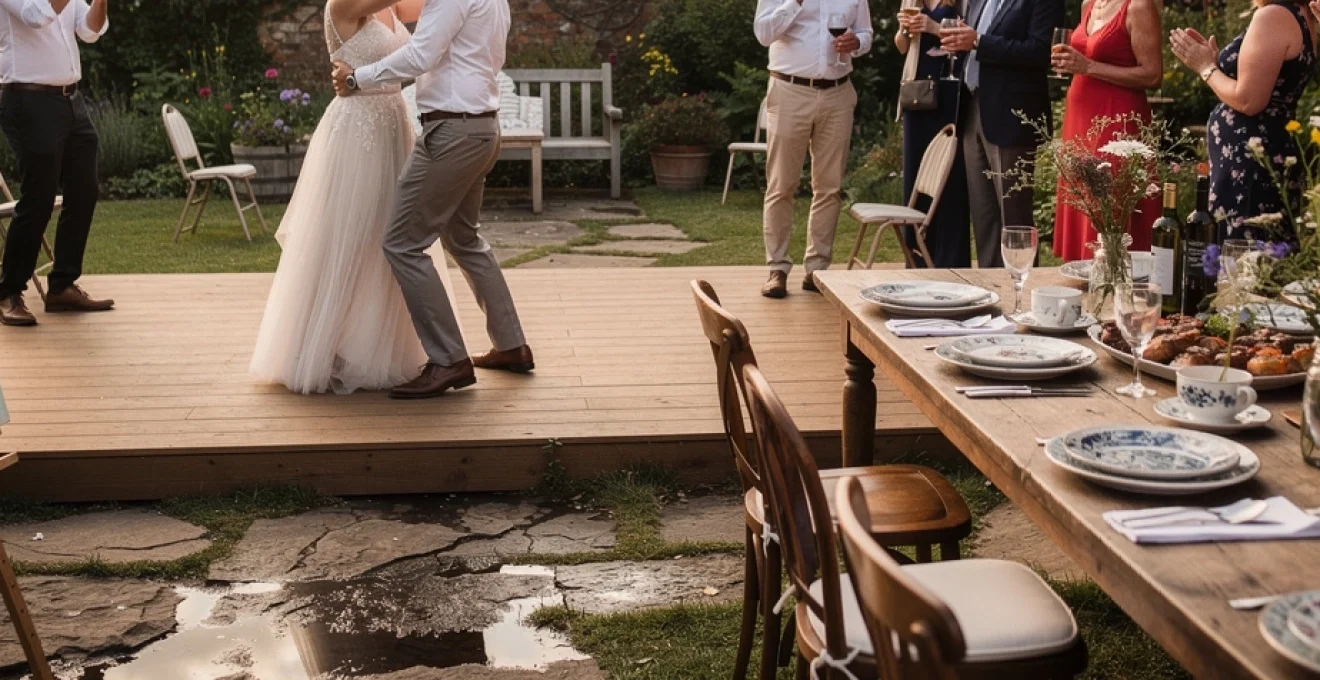
The wedding industry has cultivated an unattainable standard: flawless hair cascading perfectly down your back, every centrepiece precisely positioned, timelines executed with military precision, and weather that cooperates like a paid actor. Yet the couples who look back most fondly on their wedding days rarely remember perfection. They remember laughter during unexpected moments, spontaneous embraces when plans went sideways, and the authentic warmth of loved ones gathering without pretence. When you release the stranglehold of perfection, something remarkable happens: your wedding transforms from a stage-managed production into a living, breathing celebration that reflects who you actually are rather than who Pinterest suggested you should be.
Research from the Wedding Report indicates that couples now spend an average of £30,000 on their wedding day, yet satisfaction studies reveal that expenditure and perfection-seeking correlate inversely with long-term happiness about the event. The couples who report the highest satisfaction levels eighteen months after their wedding consistently describe their day using words like « relaxed, » « genuine, » and « fun » rather than « flawless » or « perfect. » This disconnect between aspiration and fulfilment reveals something profound about how we experience joy: authentic connection matters infinitely more than choreographed aesthetics.
Understanding why imperfection creates memorability requires examining how human beings process and retain experiences. Neurological studies demonstrate that our brains encode emotionally charged moments far more deeply than pleasant but unremarkable ones. A perfectly executed timeline that proceeds without incident creates no emotional peaks—nothing for your memory to anchor itself to. Conversely, the moment when your grandmother spontaneously joins the dance floor despite her walker, or when an unexpected downpour sends everyone scrambling for cover whilst laughing hysterically, becomes neurologically unforgettable precisely because it deviates from the expected script.
Authentic emotional moments over choreographed perfection
The most powerful wedding memories emerge not from executed plans but from unguarded moments when genuine emotion surfaces. When couples obsessively choreograph every moment—scripting speeches word-for-word, rehearsing dance moves until spontaneity vanishes, orchestrating photo sessions that consume hours—they inadvertently create emotional distance. Guests sense the performance anxiety. The couple themselves become so focused on executing the plan that they struggle to inhabit the present moment. By contrast, weddings that permit imperfection create space for authenticity, and authenticity generates the emotional resonance that transforms a well-planned event into an unforgettable shared experience.
Consider the difference between a couple who practices their first dance until it resembles a professional performance versus partners who simply hold each other and move naturally to music they love. The former might look impressive on video, but the latter communicates something far more valuable: vulnerability, trust, and the willingness to be genuinely seen. Guests don’t attend weddings to watch polished performances; they come to witness two people making themselves vulnerable before their community. Imperfection facilitates that vulnerability in ways that choreographed precision never can.
Spontaneous first dance stumbles create genuine laughter
When couples stumble during their first dance, something magical happens: the room erupts in affectionate laughter, tension dissolves, and everyone suddenly feels permission to be imperfect themselves. Professional wedding photographers consistently report that the most treasured images aren’t the perfectly posed portraits but the candid shots capturing authentic laughter after someone trips over a dress hem or forgets their place in the choreography. These moments reveal character, demonstrate the couple’s ability to laugh at themselves, and create shared joy that ripples through the entire gathering.
One couple who incorporated karaoke into their first dance—abandoning it after forty seconds to sing along with their groomsmen—created a memory that their guests still reference years later. The perfection-seekers in attendance might have winced, but everyone else recognised the moment for what it truly was: two people prioritising fun and connection over appearances. That willingness to deviate from convention communicated more about their relationship than any flawlessly executed waltz ever could.
Unscripted toast rambles that reveal true relationships
Perfectly scripted wedding speeches often feel hollow because they’ve been sanitised of anything genuinely revealing. When a best man speaks extem
poraneously but from the heart, they often stumble over words, go off on tangents, and reveal inside jokes that only a handful of people understand. Far from diminishing the moment, these « imperfect » toasts are usually the ones couples remember and rewatch. They showcase the messy, layered reality of your relationships rather than a polished highlight reel designed for social media. A slightly rambling toast that accidentally makes everyone cry, then laugh, then cry again, carries more emotional weight than a flawlessly delivered speech that could have been written by a copywriter.
If you want to encourage this kind of authentic connection, give your speakers a loose brief instead of a script. Invite them to share a favourite story, a moment when they saw your relationship grow, or something they hope for your future together. Will every toast be perfectly timed and Instagram-ready? Probably not. But the honest emotion that comes through when people speak in their own words is exactly what makes your wedding day feel real and deeply personal.
Candid photography versus overly posed portrait sessions
Photography is one of the clearest areas where the tension between perfection and authenticity shows up. Many couples feel pressured to curate an extensive shot list and schedule a long, highly posed portrait session in the hope of getting « perfect » images. The irony is that the more time you spend stepping away from your guests and staging photos, the fewer authentic moments your photographer can actually capture. When you’re busy holding a rigid pose, you’re not laughing with your friends, hugging your grandparents, or wiping away happy tears.
Candid, documentary-style photography embraces imperfection as part of the story. A slightly windswept veil, a crooked boutonnière, a flower girl mid-tantrum: all of these details contribute to a rich visual record of what your day felt like, not just what it looked like. Many experienced photographers now recommend limiting formal portrait time to a short, focused window and trusting them to capture the rest as it naturally unfolds. If your goal is a wedding album you’ll actually want to revisit in ten years, prioritising real interactions over perfect poses is almost always the better investment.
Natural weather elements adding character to outdoor ceremonies
Weather is one of the biggest sources of anxiety for couples planning an outdoor ceremony, yet it’s also one of the elements that can add the most character to your wedding day. A light breeze that plays with your veil, dramatic clouds that give your photos mood and depth, or even a sudden shower that sends everyone reaching for umbrellas can become the stories guests tell for years. In many cultures, rain on your wedding day is still considered good luck, not a catastrophe to be feared. When you decide in advance to embrace whatever the sky offers, you remove a huge source of stress from your planning process.
Practically, embracing weather doesn’t mean ignoring logistics. It means building flexible plans that allow for shelter, blankets, parasols, or a quick location switch if needed. Instead of chasing the impossible dream of « perfect wedding weather », consider how different conditions might actually enhance your experience. A winter ceremony lit by candles, a summer reception where guests kick off their shoes on warm grass, or an autumn day where everyone gathers closer under blankets can all feel far more intimate and memorable than a generic sunny backdrop. The weather becomes part of your wedding’s personality rather than its enemy.
DIY wedding details and their charming imperfections
DIY wedding details are often where couples feel the most pressure to achieve perfection, especially in an era of meticulously styled Pinterest boards. Yet it’s precisely the slightly uneven edges, the hand-tied bows, and the not-quite-matching shades that give homemade elements their charm. When guests see that you painted, folded, or arranged something yourself, they’re not evaluating your craftsmanship; they’re responding to the care and personality behind it. A wedding that looks like a magazine spread might impress, but a wedding that looks like you tends to be the one people remember.
From an emotional perspective, DIY details function like artefacts of your engagement season. Each hand-painted sign or assembled favour represents hours you spent together (or with loved ones) preparing for the celebration. Those tiny imperfections are like brushstrokes in a shared memory. And from a practical standpoint, leaning into « good enough » rather than « perfect » when it comes to DIY can also protect your mental health and your wedding budget. You’re planning a marriage, not launching a luxury brand.
Hand-painted signage with intentional brushstroke variations
Hand-painted wedding signs have become popular not because they look flawless, but because they feel warm and human. When you stand back from a welcome sign or seating chart, you rarely notice that one letter is a bit larger than the others or that a line isn’t perfectly straight. What you notice is the colour palette, the playful strokes, and the fact that someone took the time to create it. Those visible brushstrokes signal that your wedding is a personal celebration, not a corporate event.
If you’re not a confident painter, you can still create beautiful signage by embracing a looser, illustrative style instead of trying to mimic professional calligraphy. Trace letters lightly in pencil first, use stencils for headings, or keep phrases short and bold. The goal is clarity and personality, not perfection. Guests will remember the sign that made them smile as they walked in far more than they’ll remember whether every swirl of every letter matched exactly.
Mismatched vintage china settings creating visual interest
Mismatched vintage china is a perfect example of how letting go of uniformity can create a richer visual experience. Rather than every place setting being identical, each plate, cup, or saucer becomes a small conversation piece. Guests compare patterns, swap pieces, and notice details they’d otherwise overlook. The table feels collected and storied, as if you’ve gathered fragments from different eras and families into one place for this one special meal.
From a design perspective, the key is to establish a loose colour palette—say, blues and golds or soft pastels—and then allow variations within that. Think of it like a patchwork quilt: harmony comes from the whole, not from each square being the same. This approach not only reduces the pressure to source large matching sets, it also gives you flexibility to rent, borrow, or thrift your items over time. The result is a reception that feels cosy, layered, and wonderfully imperfect.
Homemade floral arrangements with asymmetrical beauty
Professional florists create stunning arrangements, but homemade flowers have their own distinctive magic. An asymmetrical bouquet where one stem leans a little further than the others, or a table arrangement that’s a touch wild, can feel more like something gathered from a garden than constructed in a studio. This organic look is actually at the heart of many modern floral trends, which favour texture, movement, and variation over rigid symmetry. Nature itself is not perfectly balanced; your wedding flowers don’t need to be either.
If you’re considering DIY florals, focus on forgiving elements: greenery, seasonal blooms, and a few statement flowers. Work in odd numbers, allow some stems to be longer than others, and resist the urge to trim everything into a uniform dome. Your arrangements should look alive and slightly untamed, not factory-produced. Will a florist spot the imperfections? Maybe. Will your guests care that one rose is facing the « wrong » direction? Not at all. They’ll be too busy enjoying the atmosphere those flowers help create.
Handwritten place cards showing personal touch over calligraphy precision
Handwritten place cards are one of the simplest ways to infuse your wedding day with intimacy. Seeing their own name written by your hand signals to guests that you considered them individually, not just as part of a seating plan spreadsheet. The letters might not all be identical; the ink might blot here and there. But those tiny imperfections are precisely what distinguish a human-made detail from a mass-produced one. In an age of digital everything, the sight of real handwriting can feel surprisingly special.
If your handwriting makes you self-conscious, remember that legibility matters more than artistry. Choose a good pen, keep the design minimal, and perhaps add a small note or symbol for guests who are especially important to you. You can even ask family members to help write cards, turning the process into a shared activity. When those place cards appear on the tables, they’ll represent more than names and seat assignments—they’ll represent time, thought, and love.
Guest participation creating unpredictable memorable experiences
Some of the most memorable wedding moments arise when guests actively shape the celebration, rather than simply watching from the sidelines. When you invite participation—whether through interactive games, open-mic toasts, song requests, or spontaneous dance-offs—you relinquish a degree of control. That can feel risky if you’re aiming for perfection, but it’s precisely this unpredictability that often leads to the best stories. Guests leave feeling like they contributed to your day, not just consumed it.
Think about the difference between a reception where everyone follows a strict timetable and one where there’s room for organic energy to build. At the latter, a friend might pull out a guitar for an impromptu singalong, a grandparent might decide to share a last-minute blessing, or a group of university friends might recreate an old inside joke on the dance floor. None of this can be storyboarded in advance, and yet these are the very moments that lodge most firmly in your memory. By designing your wedding with participation in mind, you create space for connection that no amount of styling can replace.
Embracing venue quirks instead of pinterest-perfect aesthetics
Venues, like people, come with quirks: slightly uneven floors, unexpected architectural features, dated carpets, or odd nooks that defy standard layouts. The pressure to achieve a Pinterest-perfect wedding can make these quirks feel like flaws to be disguised at all costs. But often, the most characterful weddings are those that lean into a venue’s personality rather than fighting it. A slightly creaky barn, a city hall with retro tiling, or a pub with mismatched chairs can all provide a distinctive sense of place that a blank white box simply can’t match.
Instead of asking, « How can we hide this? », try asking, « How can we use this? » Could that narrow staircase become a dramatic entrance route? Could the old fireplace host clustered candles and family photos? Could the quirky courtyard host lawn games or an intimate first look? When you work with your venue rather than against it, you free yourself from the exhausting quest to make everything look like someone else’s inspiration board. Your wedding begins to feel grounded in real space and real time—a one-off event that could only have happened there, with those people, on that day.
Timeline flexibility reducing stress and increasing joy
A rigid wedding timeline may look efficient on paper, but in practice it often creates unnecessary pressure. Live events are inherently unpredictable: traffic delays guests, small children melt down, speeches overrun, and weather changes your plans at the last minute. When your schedule is so tight that any deviation feels like a disaster, you spend the day watching the clock instead of each other. Yet with a flexible timeline that anticipates imperfection, those same deviations simply become part of the story.
Approaching your wedding schedule like a well-planned but relaxed journey, rather than a minute-by-minute military operation, instantly changes the energy of the day. You build in cushions where they matter, identify which moments are non-negotiable, and let everything else breathe. This doesn’t mean you abandon organisation; it means you prioritise experience over punctuality. After all, no one toasts at your anniversary dinner to the fact that you cut the cake exactly at 8:17 p.m.
Buffer periods accommodating unexpected ceremony delays
One of the simplest yet most effective ways to reduce wedding-day stress is to build buffer periods into your schedule. Instead of planning events back-to-back with no room for slippage, allow small gaps between key moments: extra time between the ceremony and photos, a cushion before dinner, or a quiet 10–15 minutes just for the two of you after you’ve said your vows. These buffers act like shock absorbers in a car, smoothing out the bumps so you don’t feel every jolt.
Practically, this might mean telling hair and makeup to finish 30 minutes earlier than you technically need, or scheduling your ceremony slightly earlier so late arrivals don’t derail the rest of the day. Will everything still run a bit late? Very likely. But with buffer periods, those delays are absorbed without panic. You and your guests experience the day as calm and considered rather than rushed, which is far more likely to create the relaxed, memorable wedding you actually want.
Relaxed cocktail hours allowing organic guest mingling
Cocktail hour is often where perfectionism tries to take over: complex canapés, tightly scheduled photo sessions, and carefully orchestrated entertainment. Yet some of the best feedback couples receive after their weddings is that guests appreciated the chance to simply talk, drink, and wander. A relaxed cocktail hour—with simple, plentiful food and unfussy drinks—gives people space to connect across friendship groups and generations. It’s the social glue that bonds your two communities into one.
To foster this kind of organic mingling, resist the urge to overschedule. Provide comfortable seating clusters, background music, and perhaps one or two low-key activities (like a guest book table or lawn games) rather than a packed agenda. If your photographer needs time for family portraits, try to keep them efficient so you can spend at least part of cocktail hour with your guests. When people have time to settle in, conversations deepen, laughter grows, and by the time dinner starts, the room already feels warm and familiar.
Open-ended reception schedules versus military precision timelines
Many couples feel pressured to cram their reception with « must-do » moments: entrance, first dance, parent dances, cake cutting, bouquet toss, games, sparkler exit—the list keeps growing. Trying to execute all of this on a minute-by-minute schedule can make the evening feel more like a production than a party. An open-ended reception schedule, by contrast, focuses on a few meaningful anchor points and leaves the rest of the night to unfold naturally. Think of it as setting the stage rather than scripting every scene.
In practice, this might mean grouping formalities early in the evening and then allowing the dance floor, conversation, and spontaneous antics to take over. You can still coordinate with your DJ or band to pace the energy, but you’re not stopping the fun every 20 minutes for another orchestrated moment. Guests are free to follow their own rhythms: some will dance all night, others will linger over dessert, and a few might find a quiet corner to catch up with old friends. This flexibility acknowledges that different people enjoy weddings in different ways—and that’s perfectly okay.
Real food service over instagram-worthy plating presentation
Food is one of the most tangible ways guests experience your wedding, yet the social media era has shifted focus from flavour and generosity to appearance. Perfectly balanced micro-portions arranged like art on oversized plates may photograph beautifully, but if guests leave hungry or confused about what they just ate, the impact is lost. Real, satisfying food—served in generous portions and designed to be enjoyed rather than admired—creates the kind of comfort and contentment that underpins a truly memorable celebration.
When planning your menu, consider how you want people to feel as much as what you want them to see. Do you want guests raving about the slow-cooked main course, the late-night pizza delivery, or the dessert table that felt like a childhood dream? Family-style platters, hearty buffets, or well-executed simple dishes often win more genuine praise than the most intricate fine-dining plates. You’re feeding a room full of real people, not curating a food photography portfolio.
There’s also a relational element to « real » food service. Shared platters encourage conversation and collaboration (« Can you pass the potatoes? »), while late-night snacks keep energy levels high on the dance floor. Accommodating dietary needs with care, rather than as an afterthought, tells your guests that you see them and value their comfort. None of this requires perfection; it requires thoughtfulness. In the end, a slightly messy but delicious plate will always be more warmly remembered than a flawless but forgettable one.