# Why Smaller Guest Lists Are Becoming Increasingly Popular
The traditional vision of a wedding—hundreds of guests filling grand ballrooms, elaborate multi-tiered cakes, and reception lines that stretch for what feels like hours—is undergoing a profound transformation. Across the United Kingdom and beyond, couples are reimagining what their special day should look like, with an unmistakable trend emerging: smaller, more intimate celebrations are capturing hearts and reshaping the wedding industry. This shift isn’t merely about budget constraints or pandemic-era restrictions that lingered longer than expected. Instead, it represents a fundamental reconsideration of what makes a wedding truly meaningful. Whether you’re in the early stages of planning your own celebration or simply curious about evolving social traditions, understanding why couples are deliberately choosing reduced guest lists reveals fascinating insights about contemporary values, economic realities, and our changing relationship with life’s milestone events.
Micro-wedding demographics: the millennial and gen Z shift towards intimate celebrations
The demographic driving the micro-wedding movement tells a compelling story about generational priorities. Millennials, now aged between their late twenties and early forties, have become the largest cohort of couples getting married, and their preferences differ markedly from previous generations. Research indicates that approximately 68% of couples getting married in 2024 opted for guest lists under 100 people, with nearly 35% choosing celebrations with fewer than 50 attendees. This represents a dramatic shift from just a decade ago, when the average UK wedding hosted around 140 guests.
Gen Z couples, though only beginning to enter the wedding market in significant numbers, show even stronger preferences for intimate gatherings. Surveys suggest that over 70% of Gen Z respondents envision their ideal wedding with fewer than 75 guests. This generation has grown up witnessing their older siblings and friends navigate the financial and emotional pressures of large-scale weddings, and they’re drawing different conclusions about what constitutes a successful celebration. The authenticity that both generations prize in their daily lives extends naturally to how they approach their wedding day.
What makes these demographic shifts particularly interesting is the reasoning behind them. Younger couples consistently report that they’d rather spend meaningful time with each guest than feel obligated to make brief, superficial rounds greeting distant acquaintances. They view their wedding as an opportunity to deepen existing relationships rather than fulfill social obligations to extended networks. This philosophy reflects broader generational attitudes about quality over quantity in social connections, a perspective reinforced by how social media has paradoxically made us more selective about our closest relationships even as our digital networks expand.
Economic factors driving the reduction in wedding guest count
Financial considerations play an undeniably significant role in the move toward smaller celebrations, though perhaps not in the way you might initially assume. The economics of modern weddings have become increasingly complex, with multiple factors converging to make reduced guest lists not just sensible but often strategically advantageous for couples who want to maximise the impact of their celebration budget.
Per-head catering costs and venue capacity pricing models
Catering represents one of the single largest expenses in any wedding budget, typically accounting for 30-40% of total costs. In the UK, per-person catering charges for wedding receptions range dramatically depending on location and service style, from £45-£65 for buffet-style meals to £80-£150 for plated multi-course dinners. When you multiply these figures across a guest list of 150 people versus 40, the difference becomes immediately apparent—potentially saving anywhere from £6,000 to £16,500 on food alone.
Venue pricing models have also evolved in ways that favour smaller gatherings. Many exclusive venues that once required minimum guest counts of 100 or more have introduced tiered pricing structures or separate spaces designed specifically for intimate celebrations. Boutique hotels, historic properties, and restaurant private dining rooms have recognised the micro-wedding market’s potential, creating packages that provide premium experiences without the overhead costs associated with larger events. This shift means you can now access venues that might have been financially or logistically impossible with a traditional guest list.
The rising influence of inflation on wedding budgets since 2022
The inflationary pressures that began mounting in 2022 have had a pronounced
effect on wedding budgets. Rising costs for ingredients, staffing, energy, and transport have pushed suppliers to increase their prices, often by 10–25% compared with pre-2020 figures. Couples quickly realise that every extra guest now carries a higher price tag than it did even a few years ago, not just in catering but also in areas like stationery, favours, and late-night snacks. In this climate, trimming the guest list can feel less like a sacrifice and more like a pragmatic way to protect the quality of the overall experience.
Inflation has also changed how couples think about value. Many are asking themselves: is it worth spending several thousand pounds so that people we barely know can attend, or would we rather invest that money in something long-lasting, such as a house deposit or extended honeymoon? In a period where everyday living costs—rent, mortgages, and utilities—have climbed steeply, the idea of spending tens of thousands on one day can feel out of step. Smaller weddings allow couples to reconcile their desire for a beautiful celebration with the need for financial stability in the years that follow.
Cost-per-guest analysis: comparing 150-person versus 50-person weddings
When you move beyond abstract figures and look at a simple cost-per-guest breakdown, the logic behind smaller guest lists becomes even clearer. Imagine a mid-range UK wedding with a total budget of £30,000 for 150 guests. Once you divide that figure, you are effectively spending around £200 per person, often without even realising it. That £200 has to cover catering, venue hire, decorations, entertainment, cake, stationery, favours, and sometimes accommodation support.
Now apply the same total budget to a 50-person micro-wedding. Suddenly, you have £600 to spend per guest if you choose to keep the overall figure the same. Even if you decide to reduce the total budget to £18,000 to reflect the smaller scale, you are still at £360 per person—almost double the spend of the larger wedding. This allows you to upgrade nearly every element of the day without increasing your overall financial burden. It is the difference between a standard three-course meal and a chef-curated tasting menu with paired wines, or between basic décor and immersive, design-led styling.
Another way to view this is through the lens of opportunity cost. For many couples, cutting 50 to 100 guests from the list can free up £10,000 or more. That amount could cover a luxury photographer and videographer, an extended weekend celebration instead of a single-day event, or even business-class flights for a once-in-a-lifetime honeymoon. When couples sit down and run these numbers, a smaller guest list often emerges as the option that offers the greatest emotional and financial return.
Budget reallocation strategies: premium experiences over guest volume
Rather than simply “saving money,” many couples are choosing to reallocate funds from guest volume to guest experience. This shift is one of the defining characteristics of the micro-wedding era. Once the guest list is reduced, couples can think creatively about what will make their celebration feel unforgettable, not just impressive in photos. The guiding question becomes: how can we make every person in the room feel truly cherished?
Common budget reallocation strategies include investing in elevated food and drink, such as open bars with craft cocktails, late-night gourmet street food, or interactive dessert stations. Others prioritise high-impact visual elements like lush floral installations, bespoke lighting, or custom-built ceremony backdrops that double as photo opportunities. Some couples channel savings into live entertainment—string quartets, acoustic duos, or full bands—that transform the atmosphere, or into guest-centric touches like luxury welcome bags for those travelling from afar.
There is also a growing emphasis on experiences that extend beyond the wedding day itself. With fewer guests to manage, couples can host additional events such as welcome dinners, post-wedding brunches, or group excursions, particularly for destination weddings. These add-ons deepen the sense of connection and turn the wedding into a shared mini-holiday rather than a single, high-pressure event. In this way, a smaller guest list becomes the foundation for a richer, more immersive celebration tailored to the people who matter most.
Social media influence and the pinterest-perfect small wedding aesthetic
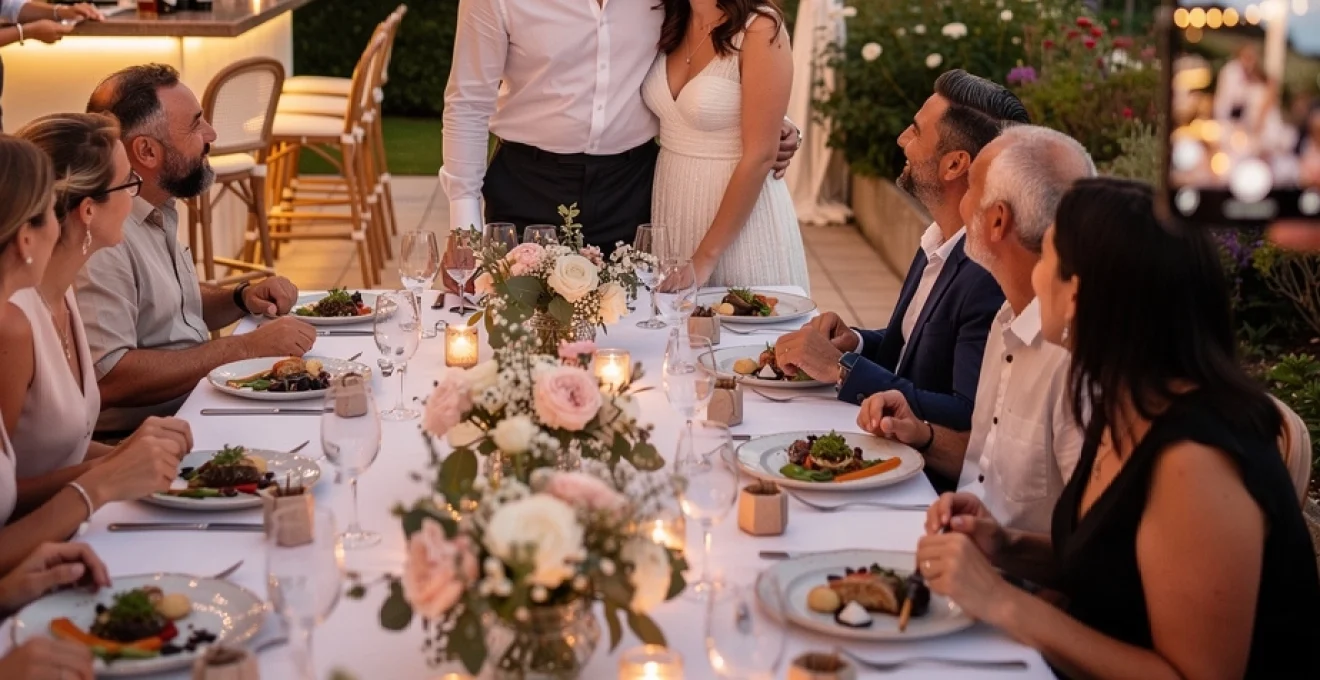
Social media has played a powerful role in normalising—and glamorising—smaller guest lists. Platforms like Instagram, Pinterest, and TikTok are filled with beautifully styled images of micro-weddings and intimate celebrations that look anything but scaled back. Instead of warehouse-style ballrooms packed with people, we see candlelit dinners under fairy lights, long farmhouse tables in secluded gardens, and minimalist city ceremonies followed by chic restaurant receptions. These visual narratives subtly communicate that “dream weddings” can absolutely happen with 20, 40, or 60 guests.
For couples in the early planning stages, this constant stream of inspiration shapes expectations. When you repeatedly see carefully curated, small-scale celebrations going viral, it becomes easier to question the assumption that a successful wedding must be large. Social media also makes it simpler to find vendors who specialise in micro-weddings, from photographers who love intimate storytelling to planners who offer elopement or small-wedding packages. In effect, the algorithms are reinforcing the idea that intimate weddings are not a compromise but a desirable, aspirational choice.
Instagram’s impact on curated guest list curation
Instagram, in particular, has influenced how couples think about their guest lists. The platform thrives on storytelling and aesthetics, and many of the most engaging wedding accounts showcase close-knit gatherings where every face feels familiar. When couples see photos of brides and grooms genuinely laughing with each person in the room, it highlights the emotional benefits of a curated guest list. You begin to ask yourself: do I want a sea of faces, or a collection of people whose presence genuinely adds to the story of our day?
There is also a subtle psychological effect at play. Instagram encourages us to present a distilled version of our lives, highlighting what feels most authentic and aligned with our personal brand. That mindset naturally spills over into wedding planning. Couples are more inclined to invite those who have a consistent, meaningful presence in their lives rather than acquaintances they have not spoken to in years. In this way, the same instinct that drives you to curate your follower list and close-friends stories can also influence how you approach your wedding invitations.
At the same time, Instagram provides practical tools for guest communication. Close-friends lists, group messages, and shared hashtags allow couples to involve a wider circle in the lead-up to the event without necessarily inviting everyone in person. This helps ease the guilt of not extending every possible invitation, while still allowing friends and extended family to feel included through online updates, sneak peeks, and professional images shared after the day.
Trending hashtags: #MicroWedding and #IntimateWedding performance metrics
The data behind popular wedding hashtags tells a clear story. Hashtags like #microwedding, #intimatewedding, and #smallwedding have collectively amassed millions of posts and views across Instagram and TikTok, with engagement rates often outperforming more generic tags such as #bigwedding or #weddingday. This suggests that audiences are not just passively accepting smaller weddings—they are actively seeking out this style of celebration for inspiration.
Content under these hashtags tends to perform well because it feels relatable and attainable. Instead of vast, impersonal ballrooms, viewers see settings that look like real homes, gardens, local restaurants, or small venues in their own cities. The scale feels approachable, while the styling remains aspirational. The result is a feedback loop: as more couples share their intimate weddings under these tags, more engaged couples encounter and save those posts, increasing demand for similar setups and reinforcing the popularity of smaller guest counts.
For anyone planning a wedding today, browsing these hashtags can be both inspiring and instructive. You can see how other couples have used a limited number of guests to their advantage—creating U-shaped tables so everyone can see each other, designing small but impactful ceremony spaces, or building entire themes around shared interests. The visual evidence makes it easier to imagine your own celebration working beautifully with a reduced guest list.
Influencer-driven elopement content and audience engagement rates
Influencers and content creators have also championed the idea of elopements and micro-weddings as stylish, emotionally rich alternatives to traditional ceremonies. Travel influencers share cinematic reels of cliffside vows in Scotland or beachside elopements in Greece, often with just a photographer, videographer, and celebrant in attendance. Lifestyle and fashion influencers showcase chic civil ceremonies followed by intimate dinners, positioning small weddings as on-trend rather than second-best.
Interestingly, these posts often generate high engagement rates—likes, comments, shares, and saves—because they tap into deeper desires: freedom from social pressure, the romance of adventure, and the appeal of a day focused entirely on the couple. Followers frequently comment that these weddings “feel more real” or “less stressful” than the large events they are used to seeing. This type of feedback reinforces the perception that going small is not only acceptable but admirable.
For couples who may be hesitant to break with family expectations, seeing admired creators choose micro-weddings can be quietly empowering. It provides social proof that you can have a meaningful, visually stunning celebration with a very small circle—and still receive plenty of love and support, both online and off. Influencer content, in this sense, becomes more than entertainment; it functions as permission to design a wedding that genuinely suits your personality and priorities.
Post-pandemic event psychology and guest list anxiety
The Covid-19 pandemic fundamentally altered how we think about gatherings, and its impact on wedding culture continues to be felt. Even as restrictions have lifted, many couples and guests retain a heightened awareness of health, personal space, and emotional bandwidth. The idea of spending an entire day in a crowded room with 150–200 people—many of them relative strangers—no longer feels automatically appealing. Instead, smaller guest lists can help create a sense of psychological ease that is as important as the aesthetic or logistical benefits.
For some, the experience of attending socially distanced ceremonies and tightly capped receptions during the pandemic served as an unexpected revelation. Couples discovered that weddings with 15, 30, or 50 guests could be just as joyful, if not more so, than the large events they had initially planned. Guests, too, noticed the difference: more time with the couple, less noise, fewer social obligations, and a calmer atmosphere overall. These positive experiences have left a lasting imprint on how people approach wedding planning today.
Social distancing protocols reshaping wedding planning norms
During the height of the pandemic, government regulations and venue protocols forced couples to rethink almost every aspect of their celebrations. Guest lists were reduced to core groups, seating plans had to accommodate distancing, and many standard wedding traditions—buffets, crowded dance floors, receiving lines—were temporarily paused. While this period was undeniably challenging, it also pushed the industry to experiment with new formats and priorities.
Outdoor ceremonies and receptions became the norm, sparking renewed interest in gardens, courtyards, rooftops, and countryside venues that naturally suit smaller parties. Staggered timelines, split receptions, and multiple mini-events replaced single large gatherings, allowing couples to spend more focused time with different groups of guests. Many of these adaptations have persisted because they simply work better for couples who value connection and comfort over spectacle.
As a result, the default planning assumptions have shifted. Instead of starting with a 150-person guest list and working down, more couples now begin by identifying their “non-negotiable” core group—perhaps 20 to 60 people—and building the celebration around that number. Large weddings remain an option, but they are no longer seen as the automatic standard. The idea that a wedding can be intentionally small, for reasons beyond health rules, has become deeply embedded in our planning culture.
Psychological safety and controlled guest environments
Psychological safety has become a key consideration in event planning, even if couples do not always use that phrase. Many people still feel more relaxed in smaller groups where they know most of the attendees personally. With fewer guests, it is easier to manage comfort levels, from simple considerations like crowding and ventilation to more personal factors such as social anxiety or neurodiversity.
For introverted couples in particular, the prospect of saying vows in front of hundreds of people can be daunting. A micro-wedding allows them to express their emotions more freely, without the sense of performing on a large stage. Guests often feel this difference too; they are more likely to open up, share stories, and participate in meaningful moments when they are not surrounded by unfamiliar faces. In this way, a reduced guest list can help everyone feel safe enough to be genuinely present.
Smaller weddings also make it easier to set and communicate boundaries around health and behaviour. If you need to ask guests to take tests, follow certain guidelines, or respect a more relaxed schedule, it is far simpler to do so with 40 invitations than with 200. That sense of control over the environment can significantly reduce pre-wedding anxiety for couples who are still mindful of health risks or who simply prefer a calmer, more predictable setting.
Vendor flexibility: how caterers and planners adapted to smaller formats
The wedding industry itself has adapted to these changing preferences in notable ways. Planners, caterers, photographers, and venues have developed specialised packages for micro-weddings and elopements, making it easier than ever to organise a high-quality event for a smaller group. What once might have been treated as an exception—“we don’t usually work with such small numbers”—is now a core part of many vendors’ business models.
Caterers, for example, have designed menus that work beautifully for 20–50 guests, often incorporating more complex dishes that would be impractical at scale. Planners have become adept at orchestrating multi-day itineraries for small parties, from welcome drinks to farewell brunches, with a focus on personal detail. Photographers and videographers, meanwhile, lean into documentary-style coverage that captures the emotional nuance of intimate gatherings rather than relying solely on grand, staged shots.
This increased flexibility has two important implications for couples. First, it is now easier to find professionals who genuinely enjoy and understand smaller weddings, rather than viewing them as downsized versions of “the real thing.” Second, the market has become more competitive in this space, which can translate into better value, more creative ideas, and a wider range of options for couples committed to keeping their guest lists modest.
The normalisation of intimate gatherings in event culture
Beyond weddings, we have seen a broader cultural shift towards smaller, more intentional gatherings. From curated dinner parties to boutique retreats, there is growing appreciation for events where everyone can participate fully and no one feels lost in the crowd. Weddings are naturally following this trend. Once it became socially acceptable—thanks in part to pandemic restrictions—to have a ceremony with just immediate family and a few close friends, the social stigma around “not inviting everyone” started to fade.
Today, when a couple announces that they are having a micro-wedding or a very small ceremony followed by a larger celebration later, most people understand and respect the choice. Friends are less likely to take exclusion personally, especially when they have seen similar decisions within their own social circles. In some cases, micro-weddings have even become aspirational, with guests commenting that they wish they had felt able to do the same when they married.
This normalisation reduces a major source of stress for couples: fear of disappointing others. When intimate weddings are common, it is easier to prioritise your own wellbeing and values. You can focus on crafting a day that feels authentic rather than designing an event primarily to manage other people’s expectations.
Venue accessibility: exclusive locations favouring smaller party sizes
One of the most compelling advantages of a smaller guest list is the expanded range of venue options it unlocks. Many of the most atmospheric and characterful spaces simply cannot accommodate large numbers—whether due to planning restrictions, layout, or the desire to maintain an intimate feel. By capping your guest count, you can consider settings that would otherwise be impossible, from historic townhouses to private estates and design-led restaurants.
This shift towards smaller venues aligns with broader lifestyle trends. Couples increasingly want their wedding to feel like a reflection of their everyday tastes: the kind of places where they would actually choose to spend time, rather than a generic hall selected purely for capacity. With fewer guests to seat and feed, you can prioritise ambience, architecture, and location over square footage alone.
Boutique hotels and private estates with limited capacity
Boutique hotels and private estates are among the biggest beneficiaries of the micro-wedding movement. Many of these properties have strict capacity limits—often between 30 and 80 guests—for both practical and atmospheric reasons. For couples willing to keep numbers low, however, they offer something invaluable: exclusivity and immersion. You are not just booking a room; you are often taking over an entire property for the weekend.
In a boutique hotel, your nearest and dearest can stay on-site, turning the wedding into a relaxed, multi-day house party. Shared breakfasts, late-night conversations in the bar, and informal gatherings in the garden all become part of the overall experience. On private estates, you may have access to multiple indoor and outdoor spaces—perfect for holding the ceremony in one spot, drinks in another, and dinner somewhere else entirely, without the need for complex logistics.
These venues often have strong relationships with local caterers, florists, and planners who understand how to make the most of the setting. With fewer guests to manage, you can lean into the unique features of the property, whether that means dining in a walled garden, hosting cocktails in a library, or using a grand staircase as the backdrop for your entrance.
Destination wedding logistics: streamlined travel for core guests
Destination weddings are another area where smaller guest lists shine. Coordinating travel, accommodation, and activities for 150 people in another country can be an overwhelming logistical challenge. When you narrow the list to your closest circle—perhaps 20 to 50 guests—you can choose locations that would otherwise be unrealistic, such as remote villas, mountain lodges, or small coastal towns.
With fewer people involved, it becomes easier to secure group rates on flights or accommodation, arrange airport transfers, and plan shared excursions. You can also be more confident that those who attend are truly invested in being there, willing to travel and take time off work to celebrate with you. The result often feels less like a traditional wedding and more like an intimate holiday with a meaningful ceremony at its heart.
Destination micro-weddings also provide built-in opportunities for extended connection. Rather than trying to catch up with guests during a single reception, you can enjoy days of shared meals, local experiences, and relaxed downtime. For couples who value quality time over fleeting interactions, this style of celebration aligns perfectly with their priorities.
Non-traditional venues: restaurants, gardens, and gallery spaces
Non-traditional venues—restaurants, gardens, galleries, city rooftops, and even private homes—are among the most exciting options unlocked by smaller guest lists. Many of these spaces have strict capacity limits but offer exceptional atmosphere, design, or culinary experiences in return. For example, hiring your favourite restaurant for an afternoon or evening can transform your wedding meal into an elevated version of how you already love to eat together.
Garden weddings and greenhouse ceremonies offer a sense of natural beauty that pairs particularly well with intimate celebrations. With fewer chairs and tables to set up, you can focus on thoughtful styling—soft lighting, seasonal flowers, comfortable lounge areas—that enhances the setting without overwhelming it. Gallery spaces and studios, meanwhile, appeal to couples who appreciate art and contemporary design, providing a minimalist canvas that can be tailored to almost any colour palette or theme.
By choosing a non-traditional venue, you also signal to guests that the day may unfold differently from the weddings they are used to. This can free you to experiment with alternative formats—standing ceremonies, family-style dinners, or cocktail-style receptions—without the weight of expectation that often accompanies more conventional settings.
Personalisation opportunities within reduced guest count parameters
Perhaps the most meaningful benefit of a smaller guest list is the depth of personalisation it allows. When you are not stretched thin trying to accommodate a crowd, you have more time, energy, and budget to tailor the experience to your story and to each person present. Instead of asking, “How can we entertain 150 people?” you can ask, “How can we make this feel unforgettable for the 30 or 50 people we love most?”
This mindset shift touches every aspect of the wedding, from the menu and décor to the ceremony script and music choices. With fewer moving parts to manage, couples often feel more creative and less constrained by convention. They can incorporate rituals, readings, and activities that genuinely resonate, even if they would feel out of place in a grand ballroom setting.
Bespoke menu design and individualised dietary accommodation
Food is one of the clearest areas where reduced numbers lead to greater personalisation. With a micro-wedding, chefs and caterers have the flexibility to design bespoke menus that reflect your tastes, cultural backgrounds, and favourite dishes as a couple. You might create a menu inspired by places you have travelled together, family recipes, or seasonal local produce, rather than choosing from a standard set of options.
Smaller guest counts also make it far easier to accommodate dietary requirements thoughtfully. Instead of generic “vegetarian” or “allergy-friendly” plates, you can work with your caterer to design dishes that feel just as special as the main menu. Guests with specific needs—coeliac, vegan, halal, or kosher, for example—are more likely to feel seen and appreciated when you have the capacity to tailor their meals.
Beyond the main meal, you can add personalised touches such as signature cocktails named after meaningful moments, dessert tables featuring your favourite sweets, or late-night snacks that nod to your hometowns. These elements might sound small, but they contribute to an overall atmosphere of care and attention that guests remember long after the day.
Enhanced guest interaction time and meaningful engagement metrics
One of the most common regrets couples express after large weddings is that they did not have enough time to speak properly with everyone. With 150 or more guests, it can be difficult to do more than offer quick greetings and posed photos. Micro-weddings turn this dynamic on its head. With a smaller guest list, you can spend genuine, unhurried time with each person, creating memories that feel substantial rather than fleeting.
If you think of your wedding as an opportunity to invest in relationships, a smaller guest list offers a far better “return” on your emotional energy. You can sit down at each table, join in conversations, and share stories without constantly checking the clock. Guests often respond in kind, offering more heartfelt speeches, toasts, and one-to-one conversations that deepen your connection.
From a more analytical perspective, you might think of this as improving the “engagement rate” of your celebration. Instead of spreading your attention thinly across a large audience, you are concentrating it on a smaller group, ensuring that each person feels valued and included. This shift in focus can make the day feel more like a meaningful gathering of your inner circle than a performance staged for a crowd.
Custom stationery and handwritten correspondence for intimate lists
Stationery is another area where smaller guest numbers open the door to elevated detail. When you only need 20, 40, or 60 invitation suites, options like letterpress printing, handmade paper, wax seals, and custom illustration become far more accessible. You can work with a designer to create artwork that reflects your venue, your story, or shared interests—turning each invitation into a keepsake rather than a disposable piece of mail.
Many couples also take advantage of their intimate guest list to incorporate handwritten elements. This might mean personal notes included with each invitation, customised place cards with individual messages, or thank-you letters delivered on the day. While this level of attention would be nearly impossible for a 200-person guest list, it becomes not only manageable but enjoyable when the number of guests is modest.
These small gestures can have a powerful emotional impact. Guests understand that handwriting takes time, and they recognise the intention behind it. Receiving a note that explains why their presence means so much to you can set the tone for the entire celebration, reinforcing the idea that this is a day built around genuine connection.
Experiential elements: interactive activities and personalised favours
Finally, smaller weddings make it much easier to incorporate experiential elements that encourage interaction and play. With fewer people to coordinate, you can introduce activities that would be difficult or chaotic at scale. Think tasting stations, guided wine or whisky pairings, lawn games, handwritten vow books, group hikes, or even creative workshops in the days surrounding the wedding. These experiences transform guests from passive observers into active participants in your celebration.
Personalised favours also become more meaningful when numbers are limited. Instead of bulk-buying generic items, you can choose or create gifts that reflect each guest’s preferences or your shared history—small artworks, locally made products, or handwritten recipe cards, for example. You might even tie favours to your wedding activities, such as gifting guests the ceramic pieces they painted during a pre-wedding workshop or miniature plants from your ceremony décor.
In a sense, a micro-wedding allows you to treat your guests the way a boutique hotel treats its clients: with thoughtful, individualised care that makes them feel genuinely appreciated. When every detail, from the food to the favours, is shaped around the people present rather than the idea of a perfect crowd-pleasing event, it becomes easy to understand why smaller guest lists are becoming not just popular, but deeply compelling for modern couples.