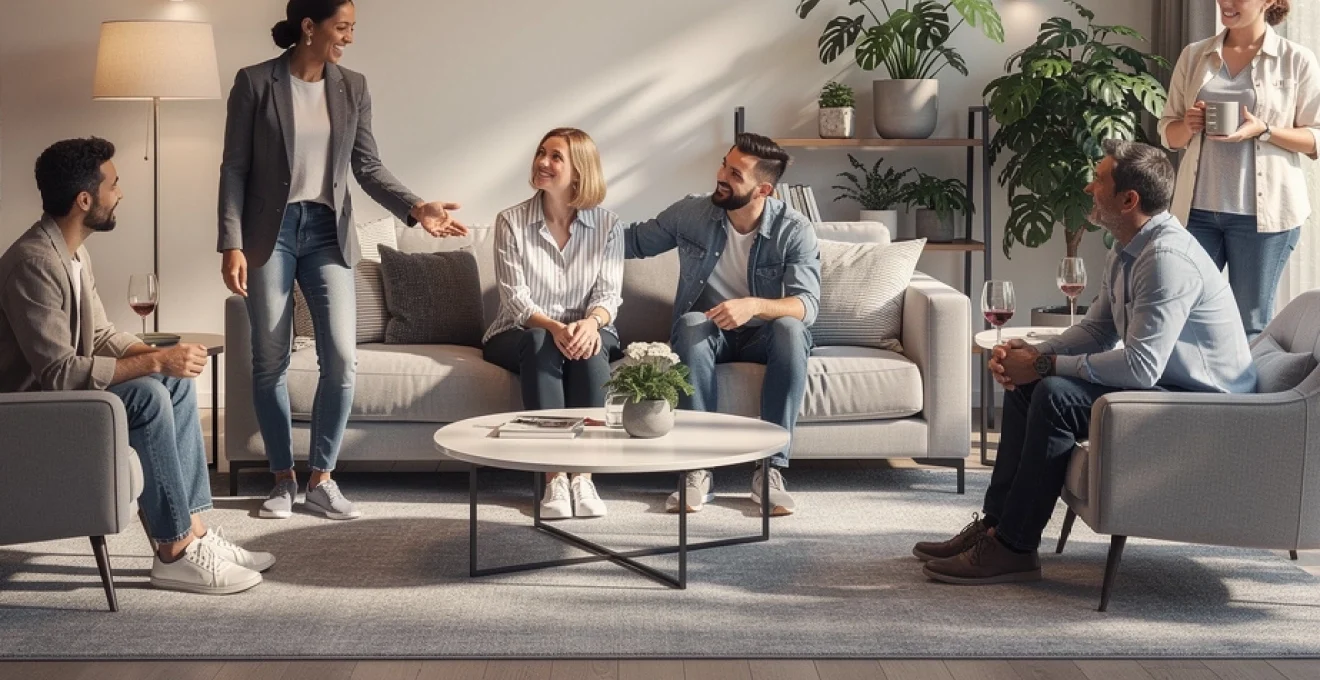
The atmosphere you create in your home has a profound impact on both your well-being and that of your guests. Whether you’re hosting an intimate dinner party, accommodating overnight visitors, or simply sharing your living space with family and friends, the environment you cultivate speaks volumes about your approach to hospitality. Research consistently demonstrates that thoughtfully designed spaces can reduce stress levels by up to 60%, enhance social interaction, and create lasting positive memories. In today’s world, where genuine human connection feels increasingly precious, understanding how to craft an atmosphere that nurtures both comfort and engagement has become an essential skill. The intersection of environmental psychology, sensory design, and social facilitation offers fascinating insights into transforming any space into a welcoming sanctuary that honours both personal preferences and the diverse needs of your guests.
Environmental psychology principles for spatial design and guest comfort
Environmental psychology examines the intricate relationship between people and their surroundings, providing evidence-based frameworks for creating spaces that support human flourishing. When you apply these principles to your home, you’re not simply decorating—you’re architecting experiences that profoundly influence mood, behaviour, and interpersonal dynamics. Studies from the Journal of Environmental Psychology reveal that individuals in well-designed spaces report 47% higher satisfaction levels and demonstrate measurably improved social engagement compared to those in poorly considered environments.
Proxemics theory and personal space configuration in social settings
Anthropologist Edward Hall’s proxemics theory identifies four distinct spatial zones that govern human interaction: intimate distance (0-45cm), personal distance (45-120cm), social distance (120-360cm), and public distance (beyond 360cm). Understanding these zones is crucial when arranging furniture and designing conversation areas in your home. You’ll want to create flexible configurations that allow guests to modulate their proximity based on comfort levels and the nature of their interactions. Research indicates that seating arrangements positioned at 90-degree angles facilitate more comfortable conversation than face-to-face configurations, which can feel confrontational to some individuals.
Consider the psychology of thresholds and transitions within your space. Doorways, archways, and distinct flooring changes create psychological boundaries that signal shifts in social expectation and behaviour. When guests cross from an entrance hall into a living area, for instance, they’re unconsciously processing environmental cues about appropriate behaviour, volume levels, and engagement expectations. Strategic placement of rugs, lighting changes, or subtle colour shifts can delineate these zones without creating harsh divisions that fragment the flow of social interaction.
Biophilic design elements: natural light optimisation and indoor greenery integration
Biophilic design—the integration of natural elements into built environments—has emerged as one of the most powerful tools for enhancing wellbeing and creating positive atmospheres. Natural light, in particular, serves as a fundamental component of human health, regulating circadian rhythms, vitamin D production, and serotonin levels. Spaces with abundant natural light see 15% increases in reported happiness levels among occupants. Maximise daylight penetration by keeping window treatments adjustable and reflective surfaces strategically positioned to bounce light deeper into your rooms.
Indoor plants contribute more than aesthetic appeal—they actively improve air quality, reduce ambient noise levels by up to 5 decibels, and lower stress hormones by an average of 37% according to recent environmental health studies. Snake plants, pothos, and peace lilies rank among the most effective air-purifying species whilst requiring minimal maintenance. When positioning greenery, consider sight lines from primary seating areas to ensure guests benefit from visual connection to nature without obstruction. Clustering plants at varying heights creates depth and visual interest whilst mimicking the complexity of natural environments that humans find instinctively comforting.
Colour psychology applications: warm versus cool palette effects on mood
Colour psychology research demonstrates measurable physiological responses to different hues. Warm colours—reds, oranges, and yellows—increase heart rate, stimulate appetite, and promote energy and conversation. These tones work exceptionally well in social spaces like dining rooms and gathering areas where you want to encourage interaction and conviviality. However, excessive warm tones can elevate anxiety in sensitive individuals, so balanced application remains essential. Cool colours—blues, greens, and purples—produce calming effects, reduce blood pressure, and facilitate focused conversation
and restfulness, making them ideal for bedrooms, reading nooks, and quiet corners where you or your guests may want to unwind. The most welcoming homes often combine warm and cool palettes strategically—for example, a predominantly neutral living room with warm accent cushions and a cool-toned artwork focal point—to create both energy and calm within the same space. Remember that saturation matters as much as hue: muted terracotta or dusty blue will feel far more soothing than their neon equivalents. When choosing colours to create a positive atmosphere for you and your guests, test paint samples at different times of day, as natural and artificial light can dramatically shift how a shade appears and feels.
Acoustic management through sound masking and ambient noise control
Acoustics are one of the most overlooked aspects of home hospitality, yet sound levels strongly influence how relaxed and welcome guests feel. Excessive echo or sharp noise can increase stress responses by up to 30%, whereas a soft soundscape supports longer, more meaningful conversations. Hard surfaces such as bare floors, large windows, and minimal furnishings tend to bounce sound around; adding textiles like rugs, curtains, and upholstered furniture helps absorb noise and reduce reverberation. Consider the paths of everyday sounds—footsteps, kitchen clatter, television—and how they travel into guest areas.
Sound masking involves introducing gentle background noise to make sudden or intrusive sounds less noticeable. You might use a low-volume playlist, a white noise machine in a guest bedroom, or even the subtle hum of an air purifier to smooth out your acoustic environment. Curated music at 50–60 decibels (roughly normal conversation level) has been shown to increase perceived comfort and dwell time, particularly when tempo and genre match the occasion. Ask yourself: do your current sound choices invite people to linger, or do they subconsciously push them to cut visits short?
Olfactory and sensory branding strategies for residential hospitality
While we often focus on what guests see and hear, the way your home smells plays a powerful role in shaping their emotional experience. Neuroscience research suggests that scent is processed in the same brain regions as memory and emotion, which is why a single aroma can instantly transport you back to a place or person. By intentionally designing the olfactory atmosphere in your home, you essentially create a subtle “scent brand” that guests come to associate with warmth, safety, and positive moments. The goal is not to overwhelm with fragrance, but to create a light, consistent background note that complements your overall hospitality style.
Essential oil diffusion techniques: lavender, citrus, and eucalyptus applications
Essential oils offer a versatile and natural way to curate the mood of different rooms, provided they are used thoughtfully and with consideration for sensitivities. Lavender is widely documented for its calming properties, lowering heart rate and supporting better sleep quality—ideal for guest bedrooms or evening gatherings where you want to encourage unwinding. Citrus oils such as sweet orange or bergamot can elevate mood and perceived energy levels, making them a good fit for daytime brunches or welcoming guests into your entryway. Eucalyptus, with its clean, spa-like profile, can create a sense of freshness in bathrooms or near the front door, especially during colder months.
When using diffusers, aim for subtlety. Ultrasonic diffusers allow you to control intensity and timing, often with intermittent settings that prevent scent fatigue. As a rule of thumb, if you consciously notice the fragrance a few minutes after entering the room, it may be too strong for sensitive visitors. For a softer approach, you can place a few drops of essential oil on wool dryer balls for linens, or dilute oils in a room spray to refresh textiles before guests arrive. Always check with regular visitors about allergies or respiratory conditions, and keep at least one fragrance-free zone, so everyone can find a comfortable spot.
Scent marketing psychology: memory triggers and emotional associations
Commercial hospitality spaces use scent marketing to influence dwell time, spending, and brand loyalty—and you can adapt the same principles at home for more meaningful, positive experiences. Research shows that congruent scents (those that match the visual and functional context of a space) boost satisfaction significantly more than random or overly complex blends. For instance, a warm vanilla or spiced scent aligns beautifully with a cosy winter dinner, while a crisp linen or green tea aroma suits a minimalist, light-filled living room. Think of scent as the soundtrack your nose hears: it should support the “story” your home is telling, not compete with it.
Because smell is such a strong memory trigger, using a consistent, gentle fragrance for special occasions can create an emotional anchor point for your guests. Over time, that particular aroma becomes intertwined with the feelings of connection and comfort they experience in your home. Have you ever caught a whiff of a certain dish or perfume and instantly recalled a relative’s house? You can intentionally build similar positive associations by selecting one or two signature scents and repeating them across different visits. Just like a favourite song that reminds you of a holiday, a familiar scent can make returning guests feel instantly at home.
Air quality monitoring systems: HEPA filtration and VOC reduction methods
A genuinely positive atmosphere starts with clean, healthy air. Indoor air can be two to five times more polluted than outdoor air due to dust, pet dander, cooking fumes, and volatile organic compounds (VOCs) from cleaning products and furnishings. Poor air quality has been linked to headaches, fatigue, and reduced cognitive performance—all of which undermine the relaxing, convivial environment you’re trying to cultivate for yourself and your guests. Investing in an air quality monitor can give you real-time feedback on particulate matter, humidity, and VOC levels, helping you make informed adjustments.
HEPA filtration systems, whether standalone purifiers or integrated into HVAC, can remove up to 99.97% of airborne particles as small as 0.3 microns, significantly improving comfort for allergy-prone visitors. To reduce VOCs, prioritise low- or zero-VOC paints, choose solid wood over composite materials where possible, and ventilate thoroughly when using strong cleaning agents. Opening windows for short bursts—even in colder weather—helps exchange stale indoor air for fresher outdoor air without excessively dropping the room temperature. Think of air quality as the invisible foundation of hospitality: guests may not comment when it’s excellent, but they will certainly notice when it’s not.
Circadian rhythm lighting design and temperature regulation techniques
Your body’s internal clock, or circadian rhythm, is highly sensitive to light and temperature cues. When these cues are aligned with natural day–night cycles, people tend to sleep better, feel more alert during the day, and experience more stable moods. When they are misaligned—through harsh lighting at night or stifling temperatures—guests may struggle to relax or get restorative rest. By designing your home’s lighting and climate with circadian principles in mind, you not only support your own wellbeing but also offer visitors a more rejuvenating experience, especially those crossing time zones.
Smart lighting systems: philips hue and LIFX programming for diurnal cycles
Smart lighting platforms such as Philips Hue and LIFX allow you to move beyond simple on/off switches and create dynamic light environments that mirror the natural day. Morning scenes can gently brighten with cooler, more energising tones, while evening scenes shift into warmer, dimmer settings that cue the body to wind down. Many systems now include “circadian” or “natural” modes that automatically adjust colour temperature and brightness over 24 hours, reducing the mental load on you as the host. This is particularly helpful in spaces that serve multiple functions, like an open-plan living area that acts as a home office by day and a social hub by night.
From a hospitality perspective, pre-programmed scenes make it easy to support different guest needs at the touch of a button. Hosting a dinner party? Activate a warm, intimate profile around the dining table while keeping task lighting stronger in the kitchen. Welcoming overnight guests? Create a “guest evening” scene in their bedroom that gradually dims over an hour, reducing exposure to intense blue light. Think of smart lighting as your invisible co-host, quietly adjusting the atmosphere in the background so you can focus on connection rather than constantly fiddling with switches.
Kelvin temperature adjustment: 2700K evening ambience to 5000K daytime alertness
Light colour temperature, measured in Kelvin (K), significantly influences how a room feels and how alert you and your guests will be. Warmer light (around 2700K–3000K) mimics the glow of sunrise, sunset, and candlelight, naturally signalling to the brain that it is time to relax. Cooler light (4000K–5000K) is closer to daylight at noon and supports concentration and activity. Many studies suggest that exposure to cool, bright light in the morning increases daytime alertness, while warm, dim light in the evening supports melatonin production and better sleep.
To create a positive atmosphere throughout the day, aim for cooler, brighter lighting in kitchens, home offices, and any space where you and your guests might be active or social during daylight hours. As night approaches, transition shared areas and bedrooms to 2700K bulbs or “warm white” settings for a softer experience. If you’ve ever felt oddly restless under stark, blue-white lighting late at night, you’ve already sensed how disruptive the wrong Kelvin can be. Treat colour temperature like the seasoning in your lighting recipe: a small adjustment can transform a room from sterile to soothing.
Thermostat zoning strategies and individual comfort preference management
Thermal comfort is another key ingredient in making guests feel truly at ease. Yet comfort is highly subjective; one person’s perfect temperature is another’s reason to reach for a blanket. Zoning your heating and cooling—using smart thermostats, radiator valves, or split systems—allows you to maintain different temperatures in separate parts of the home. This means you can keep communal areas slightly cooler and more energising while ensuring bedrooms and quiet zones are warmer or cooler, depending on season and preference.
Communication also matters. A simple question such as, “Do you prefer it a bit warmer or cooler at night?” gives guests permission to voice their needs rather than silently tolerate discomfort. Providing practical options—extra throws, breathable cotton bedding, a small fan or space heater with clear instructions—empowers visitors to fine-tune their own microclimate. Think of yourself as a climate concierge: you control the overall environment but give people the tools to customise their personal comfort bubble.
Blackout solutions and natural wake-up light simulation technology
Quality sleep is one of the greatest gifts you can offer overnight guests, and light control is central to that. Blackout curtains or blinds help block streetlights, early sunrises, and passing car headlights, especially in urban environments. However, complete darkness can sometimes disorient visitors, particularly if they are unfamiliar with the room layout. A balanced approach might pair blackout treatments with a low-level motion-sensitive night light in the hallway or bathroom, so guests can move around safely without being jolted fully awake.
Natural wake-up light simulators, which gradually increase brightness before a set alarm time, mimic sunrise and can significantly improve morning mood and alertness. These are especially valuable for guest rooms with limited natural light or for visitors struggling with jet lag. Imagine the difference between being yanked awake by a sudden high-pitched alarm and being gently nudged into wakefulness as the “sun” slowly rises in the room. By integrating blackout options with smart wake-up lighting, you create a sleep experience that feels more like a boutique hotel than a spare room.
Social facilitation through strategic furniture arrangement and conversation zones
How you arrange furniture can either encourage effortless connection or create awkward, stilted interactions. Social facilitation theory suggests that people’s behaviour changes in the presence of others, often becoming more engaged and responsive when the environment feels safe and supportive. In practical terms, this means positioning seating to promote comfortable eye contact and easy movement, without forcing guests into overly intimate or performative layouts. As mentioned earlier, 90-degree seating arrangements often feel less intimidating than directly opposite chairs, especially for new acquaintances or intergenerational gatherings.
To design effective conversation zones, think in layers. A primary gathering area might feature a sofa and two chairs arranged around a coffee table, with side tables within easy reach for drinks and personal items. Secondary perches—like a bench under a window or a single accent chair with a small table—allow introverted guests to participate from a slight distance. Circulation paths should be clear enough that people can move in and out of groups without interrupting conversation or squeezing behind seats. Ask yourself: where do people naturally gravitate when they visit, and how could you refine that area to better support lingering, laughter, and relaxed dialogue?
Hospitality service design: anticipatory needs assessment and personalisation protocols
Exceptional hospitality at home goes beyond décor; it lies in your ability to anticipate needs before guests have to voice them. Service design techniques—used in hotels and high-end restaurants—can be scaled down for residential use to create smoother, more intuitive experiences. Start by mapping a typical guest journey: arrival, settling in, shared activities, overnight routines, and departure. At each stage, ask what questions or frictions might arise and how you can proactively address them. For instance, instead of waiting for guests to ask for the Wi‑Fi password, you could display it on a small card in the living room and guest bedroom.
Personalisation protocols do not need to be elaborate to be impactful. Simple gestures like offering a selection of pillows with different firmness levels, stocking non-dairy milk for a lactose-intolerant friend, or providing a designated children’s play corner can dramatically elevate perceived care. Keeping a discreet note of regular visitors’ preferences—favourite tea, room temperature, or reading material—allows you to recreate a sense of familiarity every time they return. Just as a favourite café remembers your usual order, your home can develop a quiet reputation among friends and family as a place where they are seen, remembered, and genuinely welcomed.
Cultural sensitivity training and inclusive environment creation methodologies
In an increasingly diverse world, creating a positive atmosphere for you and your guests also means ensuring your home feels inclusive and respectful of different backgrounds, beliefs, and abilities. Cultural sensitivity at home begins with curiosity rather than assumptions: asking about dietary restrictions, religious observances, or accessibility needs rather than guessing. For example, offering both alcoholic and non-alcoholic drink options, or providing vegetarian and halal-friendly dishes when appropriate, signals that you have considered a range of guest experiences. Inclusivity is less about rigid rules and more about cultivating an attitude of openness and adaptation.
You can borrow methodologies from formal diversity and inclusion training and apply them in gentle, domestic ways. This might include avoiding décor or media that caricature or stereotype groups, ensuring your book and film collections reflect a range of voices, and being mindful of conversation topics that may marginalise or embarrass certain guests. Physical accessibility is equally important: clear pathways for those with mobility aids, seating at varying heights, and good lighting for those with visual impairments can make a profound difference. Ultimately, a truly positive atmosphere is one where everyone—regardless of culture, age, or ability—feels they have a genuine place at your table and in your home.