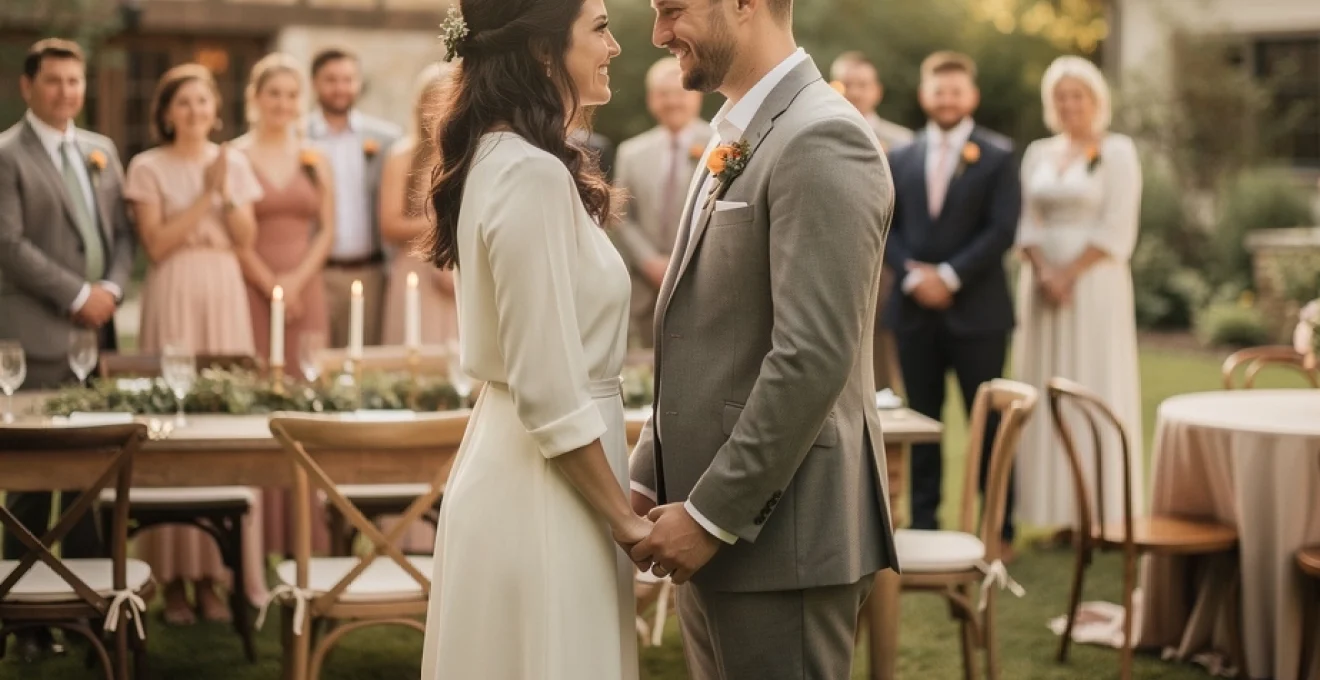
Modern couples increasingly recognise that wedding magnificence isn’t measured by complexity or extravagance, but by the depth of connection and authenticity experienced on their special day. The traditional approach of elaborate celebrations with hundreds of guests, intricate décor schemes, and packed timelines often leaves couples feeling overwhelmed rather than overjoyed. This shift towards simplicity represents more than just a trend—it’s a fundamental reimagining of what makes a wedding truly memorable and meaningful.
Research consistently demonstrates that couples who prioritise intentional simplicity over elaborate spectacle report higher satisfaction levels and stronger emotional connections to their wedding experience. When you strip away unnecessary complications and focus on core elements that genuinely matter, the resulting celebration becomes a more authentic reflection of your relationship and values. The most profound moments often emerge not from grand gestures, but from intimate exchanges, meaningful conversations, and the peaceful presence that simplicity allows.
Psychological impact of minimalist wedding design on emotional connection
The human brain processes visual information differently in minimalist environments compared to complex, stimulating spaces. Cognitive psychology research reveals that simplified wedding designs allow couples and guests to focus more deeply on emotional experiences rather than processing overwhelming sensory input. When your wedding features clean lines, thoughtful spacing, and intentional décor choices, attendees can direct their attention towards meaningful interactions and genuine moments of connection.
Cognitive load reduction through streamlined ceremonial elements
Cognitive load theory explains how our minds have limited capacity for processing information simultaneously. Traditional weddings often overwhelm this capacity with competing elements: elaborate floral arrangements, complex lighting schemes, multiple entertainment options, and bustling activity. Streamlined ceremonies reduce this cognitive burden, allowing you to be fully present during your vows, genuinely absorb your partner’s words, and create lasting memories without distraction.
Consider how ceremonial simplicity transforms the experience of exchanging rings. In a minimalist setting with fewer visual distractions, this moment becomes more profound and emotionally resonant. Guests can focus entirely on your expressions, your words, and the significance of the commitment being made, rather than being distracted by competing visual elements.
Enhanced guest AttentionSpan during intimate celebrations
Smaller, simpler celebrations naturally command better attention from attendees. Psychology studies indicate that attention spans decrease significantly in environments with multiple competing stimuli. When you limit your guest list to truly important relationships and create a focused ceremonial environment, each person present can engage more meaningfully with your celebration.
Intimate gatherings also facilitate deeper conversations and genuine connections between guests. Rather than superficial interactions at large receptions, smaller celebrations encourage meaningful dialogue and relationship building. Your wedding becomes a catalyst for strengthening the community around your relationship, rather than simply entertaining a crowd.
Stress hormone mitigation in Low-Complexity wedding environments
Medical research demonstrates clear correlations between environmental complexity and cortisol production. High-stress wedding planning and execution trigger elevated cortisol levels, which can actually impair memory formation and emotional processing. Simplified wedding environments naturally reduce these stress responses, allowing your body’s natural joy and bonding hormones to predominate.
When you’re not constantly monitoring multiple vendors, complex timelines, or elaborate logistics, your nervous system can remain in a relaxed state. This physiological calm allows you to experience deeper emotional connection with your partner and genuine enjoyment of your celebration. The stress-free environment also benefits your guests, creating a more pleasant and memorable experience for everyone involved.
Memory formation optimisation through focused experiential design
Neuroscience research reveals that memory consolidation improves dramatically when attention is focused rather than divided. Complex weddings with numerous simultaneous activities often result in fragmented memories, while focused, intentional celebrations create stronger, more cohesive memory formation. You’re more likely to remember specific conversations, emotional moments, and meaningful details when your attention isn’t constantly pulled in different directions.
The quality of wedding memories directly correlates with the depth of attention paid during the experience. Simple ceremonies allow for mindful presence, creating vivid, emotionally rich memories that couples cherish for decades. These clear, focused memories become foundational stories in your relationship narrative, strengthening your bond
In practical terms, this means a minimalist wedding day can feel less like a blur and more like a series of clear, vivid chapters. Instead of remembering your wedding as “a busy day that went too fast,” you recall the exact look on your partner’s face during your vows, your grandmother’s words during a toast, or the feeling of your first dance. By embracing simplicity, you are not only creating a beautiful event in the present; you are also investing in the quality of the story you will tell about your wedding for the rest of your lives.
Budget allocation strategies for maximum meaningful investment
A simple wedding is not automatically a cheap wedding; it is a strategic wedding. When you are not trying to fund every trend, every add-on, and a guest list of 200, you gain the freedom to allocate your budget towards what actually holds meaning. Recent surveys from leading wedding planning platforms show that couples hosting smaller, intentional celebrations often report higher satisfaction with how they spent their money, even when their overall budget is lower than average. The key is to create a clear framework that helps you channel your investment into the elements that matter most to you.
Priority-based spending framework for core wedding elements
One of the most powerful ways to simplify your wedding and make it more meaningful is to establish a priority-based spending framework. Instead of starting with a generic checklist of “must-haves,” you and your partner can identify three to five elements that you care about deeply—perhaps photography, an intimate venue, great food, or live music—and allocate a greater share of your budget to those. Everything else becomes supporting detail rather than the main event.
A helpful analogy is to think of your wedding like a home: you want to invest in the foundation and structure first, then decorate around it. For many couples seeking a more meaningful wedding, the core pillars include the ceremony itself, the people present, and the way the day is documented. Ask yourselves: If we looked back in ten years, which investments would still matter? A thoughtful celebrant, a gifted photographer, or a heartfelt meal shared with your closest people are all high-impact uses of your budget.
Vendor consolidation techniques for streamlined service delivery
Another way simplicity can make your wedding more meaningful is through vendor consolidation. Fewer suppliers means fewer contracts, fewer emails, and fewer moving parts to manage in the lead-up to your day. Many modern venues and boutique hotels now offer integrated packages that combine catering, basic décor, staffing, and sometimes even coordination. By working with providers who can cover multiple needs, you reduce the risk of miscommunication and create a smoother, less stressful planning experience.
Consider, for example, booking a venue that includes tables, chairs, linen, and an on-the-day coordinator, rather than sourcing each separately. Or choose a photographer who offers both engagement and wedding coverage, so you build trust with a single creative professional. This approach is a little like hiring a small, well-practised orchestra instead of assembling individual musicians who have never played together. The result is often a more harmonious, cohesive experience that leaves you free to focus on the emotional significance of your wedding rather than logistics.
DIY integration methods without compromising professional quality
DIY elements can absolutely complement a simple, meaningful wedding—when used thoughtfully. The danger lies in taking on too much and turning your engagement into a full-time crafting project. To keep your wedding simple and stress-free, focus DIY energy on a few select details that carry genuine emotional weight, such as handwritten vows, personalised place cards, or a family recipe for dessert. Leave structurally important or time-critical elements, like photography, sound, and legal paperwork, to trusted professionals.
Think of DIY as the handwriting in the margins of a book: it should add personality and warmth, not replace the pages themselves. Before committing to a project, ask: Do we have the time, skills, and support to do this well without burning out? Will this element noticeably enhance the experience for us and our guests? If the answer is no, simplicity suggests you either scale it back or outsource it. In a minimalist wedding, a single handmade detail with a story behind it can be far more impactful than a thousand rushed projects no one remembers.
Cost-per-guest analysis for intimate venue selection
When you are leaning into simplicity, looking at your wedding budget in terms of cost per guest can be eye-opening. Instead of asking, “How many people can we squeeze in?” consider, “How generously can we host the people who matter most?” With a smaller guest list, you often free up funds to choose a more characterful venue, upgrade your menu, or invest in experiences that create lasting memories—such as a long shared table dinner, a live acoustic performance, or a photographer whose work you adore.
For example, the total cost of hosting 120 guests at a large banquet-style venue might be similar to hosting 40 guests at a picturesque estate or boutique restaurant with a multi-course meal. The numbers on paper may match, but the experience feels very different. By analysing cost per guest, you gain clarity about where your money is going and whether those choices align with your values. This simple shift in perspective supports more meaningful decision-making and reinforces the idea that less can truly be more.
Ceremonial tradition curation and personal value alignment
Simplicity in weddings is not about discarding tradition altogether; it is about curating the rituals that genuinely resonate with you and letting go of those that feel performative. Many couples today are taking a more mindful approach to their ceremony, blending cultural or religious traditions with personalised moments that reflect their story. This might mean shortening a lengthy programme, rewording traditional vows to better suit your beliefs, or weaving in a small ritual—such as a handfasting, candle lighting, or family blessing—that feels deeply meaningful.
To decide which traditions to keep, you can start by asking a simple question: Why are we doing this? If the answer is rooted in shared values—honouring family heritage, expressing faith, or symbolising unity—then that tradition likely deserves a place in your ceremony. If the answer is “because we feel we should” or “because everyone else does,” it may be an opportunity to simplify. When every element of your ceremony is chosen with intention, the experience naturally feels more authentic, and both you and your guests are more emotionally engaged.
Venue selection criteria for authentic intimate celebrations
The venue you choose sets the tone for your entire celebration and can either support simplicity or work against it. Authentic, intimate weddings tend to flourish in spaces that feel human-scale, welcoming, and aligned with your personal style. Rather than searching for the largest or most impressive location, consider venues that naturally encourage connection: places where your guests can see and hear each other, where the flow between ceremony and reception is smooth, and where the surroundings feel like an extension of your personalities.
In recent years, there has been a noticeable rise in couples opting for smaller venues with character over vast, neutral spaces. From historic manor houses to city registry offices followed by private dinners, these choices often reduce logistical complexity and allow you to focus more on atmosphere and experience. As you consider options, think about what feels most you: rustic simplicity, urban chic, garden elegance, or cosy boutique comfort.
Historic manor houses and barn conversions for rustic simplicity
Historic manor houses and barn conversions offer built-in atmosphere that pairs beautifully with a simple wedding concept. Exposed beams, stone walls, established gardens, and period details mean you can often do less in terms of décor while still achieving an incredibly memorable setting. Rather than filling the space with elaborate installations, you might choose a few key elements—candlelight, seasonal flowers, and natural fabrics—to highlight the venue’s existing charm.
These venues are particularly suited to intimate guest lists, as many feature smaller ceremony rooms, courtyards, or barns that feel cosy rather than cavernous. Practical considerations still matter, of course: check accessibility, weather contingencies, and whether there is on-site accommodation for close family or your wedding party. But in general, spaces with a strong sense of history tend to support the kind of slower, more reflective wedding experience that simplicity seeks to create.
Registry office ceremonies with personalised reception spaces
For many couples, a registry office ceremony followed by a personalised reception is the perfect expression of “less is more.” The legal part of your marriage is handled efficiently and affordably, which can significantly reduce administrative stress. From there, you have the freedom to design a reception that feels like an extended, joy-filled gathering rather than a formal production. This might be a relaxed lunch at a favourite restaurant, a private room in a wine bar, or a beautifully styled space above a café.
This approach is particularly powerful if simplicity, budget-conscious planning, or a short engagement are priorities. With the ceremony logistics streamlined, you can pour more energy into the parts of the day that feel most meaningful to you: writing personal vows, creating a playlist that tells your story, or arranging seating so that conversations flow naturally. A registry office ceremony combined with a carefully chosen reception space proves that a wedding does not need to be grand to be deeply moving.
Garden party venues and private estate considerations
Garden parties and private estate weddings naturally lend themselves to a simple, relaxed feel. Surrounded by greenery, natural light, and open air, guests often feel more at ease, and the line between “formal event” and “family gathering” softens in the best possible way. Minimalist décor—string lights, linen tablecloths, and seasonal blooms—can be enough to create a magical atmosphere without overwhelming the senses or your budget.
However, garden and private estate weddings require thoughtful planning to maintain ease on the day. You will need to consider practicalities such as weather plans, restroom access, power supply for music and lighting, and neighbours or noise restrictions. Working with a coordinator or experienced marquee supplier can keep things running smoothly. When executed well, a simple garden celebration can feel like an elevated version of a favourite afternoon spent with the people you love most.
Boutique hotel wedding packages for streamlined planning
Boutique hotels are an excellent choice for couples seeking simplicity with a touch of luxury. Many offer curated wedding packages that include ceremony space, reception rooms, catering, basic styling, and guest accommodation under one roof. This consolidation dramatically reduces the number of decisions you need to make and can create a seamless flow from getting ready through to the final farewell the next morning.
Because boutique hotels are typically smaller than large resorts, they also support the intimacy that many modern couples value. You might even be able to book the entire property, turning your wedding into a relaxed overnight or weekend gathering. When much of the logistical work is handled in-house, you are free to focus on the meaningful details—your vows, your speeches, and the moments of connection that make the day uniquely yours.
Guest list optimisation and relationship quality assessment
One of the most transformative ways simplicity can make your wedding more meaningful is through an intentional guest list. Instead of asking, “Who might be offended if we do not invite them?” consider, “Who has genuinely walked alongside us in our lives and relationship?” This mindset shift often leads to a smaller, more focused group of guests, which in turn changes the energy of the day. With fewer people to greet and entertain, you have more time and emotional space to be present with each guest—and with each other.
A practical exercise many couples find helpful is to review potential names and ask: Can we imagine sharing a heartfelt conversation with this person on our wedding day? If the answer is no, it may be a sign that they belong to a different chapter of your life. This is not about being unkind; it is about honouring the significance of your wedding ceremony and protecting your emotional bandwidth. The result is often a room full of people who know you well, are genuinely invested in your happiness, and contribute to an atmosphere of warmth and authenticity.
Sustainable wedding practices through simplified resource management
Simplicity and sustainability often go hand in hand. By choosing a minimalist, intentional approach to your wedding, you naturally tend to reduce waste, limit unnecessary purchases, and make more conscious decisions about resources. This might look like a smaller guest list, local and seasonal flowers, a menu that minimises food waste, or décor that can be reused, repurposed, or donated after the celebration. In many cases, a more meaningful wedding is also a more environmentally considerate one.
Think of sustainable wedding planning as an extension of your values into the way you celebrate. Do you really need individual favours for 150 people, or would a shared experience—like a live musician or photo booth—be more memorable and less wasteful? Could you choose a venue that is accessible by public transport, or work with suppliers who prioritise eco-friendly practices? By simplifying your plans and focusing on a handful of high-impact elements, you not only create a calmer, more connected day but also leave a lighter footprint on the planet. This alignment between your celebration and your ethics can make your wedding feel even more significant and satisfying long after the day is over.