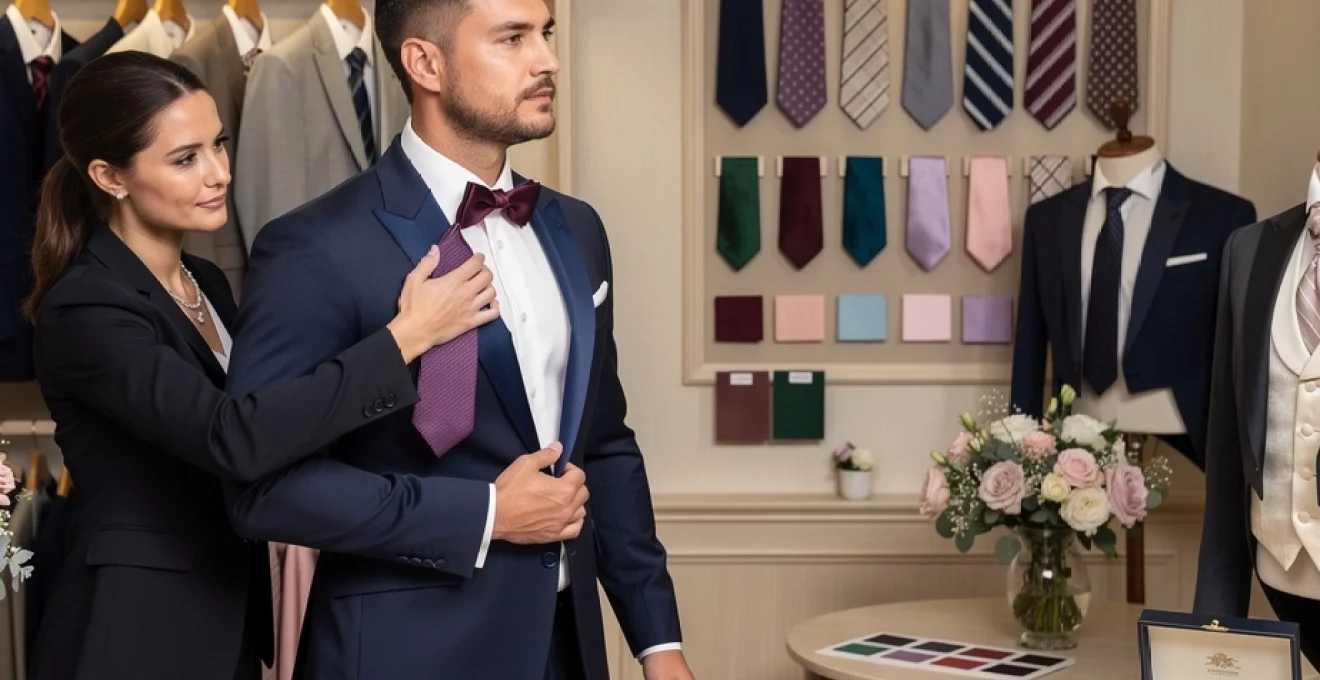
Selecting neckwear for a wedding represents one of the most personal yet technically demanding elements of formalwear styling. The choice between a tie and bow tie, along with considerations of fabric, colour, pattern, and proportion, can dramatically influence the groom’s overall appearance and confidence on his wedding day. Understanding the nuanced relationship between neckwear characteristics and factors such as suit style, venue formality, seasonal context, and individual physiology enables grooms to make informed decisions that enhance their wedding day aesthetic whilst ensuring comfort throughout extended celebrations.
The contemporary wedding landscape has evolved considerably beyond rigid dress code conventions, offering grooms unprecedented flexibility in expressing personal style whilst respecting traditional formality expectations. This expanded range of acceptable options, however, introduces complexity that requires careful navigation. A well-chosen tie or bow tie serves not merely as decorative embellishment but as a crucial element that balances facial proportions, complements suit tailoring, coordinates with wedding party attire, and establishes visual hierarchy within wedding photography.
Understanding neckwear fabric composition and weave structures for wedding day durability
The fabric from which neckwear is constructed fundamentally determines its drape characteristics, visual texture, durability throughout a wedding day, and suitability for different formality levels and seasonal contexts. Grooms frequently underestimate the importance of fabric selection, focusing predominantly on colour and pattern whilst overlooking how weave structure influences the final presentation and longevity of the neckwear piece.
Silk twill, satin, and grenadine weaves: technical characteristics and visual impact
Silk remains the gold standard for formal neckwear due to its exceptional drape, lustrous appearance, and ability to hold knots securely without slipping. Silk twill features a diagonal weave pattern that creates subtle texture and provides excellent resilience against wrinkles, making it ideal for grooms who will wear their tie throughout lengthy ceremonies and receptions. The twill weave typically employs a higher thread count, resulting in a heavier, more substantial feel that communicates quality and formality.
Silk satin, characterised by its smooth, glossy surface and lighter weight construction, offers maximum sheen and presents a decidedly formal aesthetic particularly appropriate for black-tie and white-tie weddings. The lustrous finish of satin-weave silk catches light beautifully in wedding photography, creating dynamic visual interest. However, this weave structure proves more susceptible to snagging and shows water marks more readily than twill alternatives, requiring careful handling throughout the wedding day.
Grenadine silk represents perhaps the most refined option for discerning grooms seeking understated elegance. This specialised weave creates a matte, textured surface with subtle dimensionality that reads as sophisticated and refined without the overt shine of satin. Grenadine weaves typically come in two varieties: garza grossa (coarse weave) and garza fina (fine weave), with the former offering more pronounced texture suitable for adding visual interest when paired with smooth-finished suiting fabrics.
Wool, linen, and cotton blend alternatives for seasonal wedding considerations
Whilst silk dominates formal neckwear, alternative natural fibres offer distinct advantages for specific seasonal contexts and stylistic approaches. Wool ties, particularly those crafted from fine merino or cashmere blends, provide exceptional warmth and texture appropriate for autumn and winter weddings. The matte finish of wool creates visual contrast against worsted wool suiting, whilst the fabric’s inherent structure allows ties to maintain their shape without excessive slipping during knot tying.
Linen neckwear embodies the essence of warm-weather wedding styling, offering breathability and a relaxed, textured appearance that complements garden ceremonies and outdoor celebrations. The natural slubs and irregularities characteristic of linen fabric contribute to a deliberately casual aesthetic, making these ties particularly suitable for semi-formal daytime weddings in spring and summer months. Grooms should recognise that linen’s propensity to wrinkle represents a feature rather than a flaw, contributing to the fabric’s relaxed charm.
Cotton ties occupy a middle ground between silk’s formality and linen’s casual character. High-quality cotton
Cotton ties occupy a middle ground between silk’s formality and linen’s casual character. High-quality cotton, especially when blended with a small percentage of silk or elastane, delivers a crisp knot, a clean matte appearance, and increased resistance to creasing. This makes cotton an excellent choice for daytime weddings, barn venues, and modern city ceremonies where you want the groom’s tie or bow tie to look sharp without appearing overly glossy. For grooms prone to overheating, a cotton or cotton-linen blend tie can feel noticeably cooler around the neck than a dense silk construction, contributing to all-day comfort during summer celebrations.
Jacquard weaving techniques and self-pattern integration for textural depth
Jacquard weaving refers to a method where intricate patterns are woven directly into the fabric rather than printed on the surface. For wedding neckwear, this technique allows for subtle self-patterns—such as tone-on-tone florals, geometric designs, or damask motifs—that deliver depth and sophistication without overwhelming the groom’s suit. Because the pattern is created through weave structure, jacquard ties and bow ties often catch the light differently from various angles, creating visual interest in photographs and video.
Self-patterned jacquard ties are ideal when you want a “plain” tie that still feels special for the wedding day. A navy silk jacquard with a micro floral motif, for example, coordinates effortlessly with navy or charcoal suits while looking richer and more considered than a flat solid. In more formal settings, a black or midnight jacquard bow tie can add dimension to a tuxedo without departing from black-tie etiquette. When selecting a jacquard, pay attention to pattern scale: smaller, tighter patterns tend to read more formal and versatile, whereas larger motifs lean more fashion-forward and are better suited to contemporary or themed weddings.
Another advantage of jacquard-weave neckwear lies in its structural stability. Because the fabric is often denser than printed silk, jacquard ties generally hold their shape over many hours of wear and multiple reties. This makes them practical for grooms who may remove and re-tie their neckwear between ceremony, portraits, and reception or who favour more substantial knots such as the full Windsor. Jacquard bow ties also benefit from this body, allowing the bow to maintain crisp, sculpted wings even as the evening progresses.
Microfibre and polyester blends: cost-effective solutions and their limitations
Microfibre and polyester blend ties have become increasingly common in wedding parties due to their affordability, stain resistance, and wide colour availability. For large groups of groomsmen, polyester neckwear offers a cost-effective solution that still photographs well, particularly in matte or lightly textured finishes. These synthetic fibres are less prone to wrinkling, which is advantageous when ties are transported, rented, or worn in humid conditions where natural fibres might show moisture more readily.
However, microfibre and polyester lack the natural drape and depth of colour associated with high-quality silk or wool. Under direct light or in close-up photography, cheaper synthetics can appear flat, overly shiny, or plasticky, potentially detracting from an otherwise refined groom’s outfit. They also tend to form bulkier, less elegant knots, especially in wider tie styles, which can disrupt the balance between the collar, lapels, and face. For this reason, many stylists recommend reserving synthetic ties for groomsmen and investing in a natural-fibre tie or bow tie for the groom himself.
When you do choose polyester or microfibre for a wedding, opt for designs with a subtle weave (such as basketweave or herringbone) or a low-sheen finish to minimise glare and create a more premium impression. Think of synthetics as the “workhorse” option: reliable, durable, and practical for group coordination, but less appropriate when the aim is a once-in-a-lifetime heirloom neckwear piece. A balanced approach is often best—let the groom wear a silk grenadine or jacquard tie that becomes a keepsake, while the bridal party coordinates in well-chosen microfibre alternatives in the same colour family.
Colour theory and palette coordination with wedding suit fabrics
Once the groom’s tie fabric is selected, colour becomes the next decisive factor in creating a cohesive wedding look. The tie or bow tie operates as a visual bridge between the suit, shirt, bridesmaids’ dresses, and floral arrangements. Understanding basic colour theory allows you to choose neckwear that complements rather than competes with these surrounding elements. By considering complementary and analogous schemes, Pantone matching, seasonal colour psychology, and skin undertones, you can ensure the groom’s neckwear feels intentional, harmonious, and flattering in every setting—from bright outdoor ceremonies to candlelit receptions.
Complementary and analogous colour schemes for navy, charcoal, and grey suits
Navy, charcoal, and mid-grey suits dominate modern weddings because they are universally flattering and offer an adaptable base for creative neckwear choices. Complementary colour schemes involve pairing colours opposite each other on the colour wheel, such as navy with burnt orange or charcoal with soft copper, to create a subtle contrast that stands out beautifully in photographs. For a groom in a navy suit, a tie in rust, burgundy, or deep marigold introduces warmth and personality while still reading as formal when chosen in silk or fine wool.
Analogous schemes, by contrast, combine colours that sit side by side on the wheel—think navy with steel blue or charcoal with deep teal. This approach yields a more understated, tonal look ideal for classic or minimalist weddings where you want the suit, shirt, and tie to blend seamlessly. For light grey suits, analogous neckwear in dove grey, silver, or ice blue exudes sophistication and works particularly well for spring and summer ceremonies. You can think of analogous colour palettes as different shades of the same mood, whereas complementary palettes are like a friendly conversation between two distinct but harmonious tones.
When coordinating complementary or analogous ties for the groom and groomsmen, consider using the same colour family with varying intensities. For instance, the groom might wear a rich burgundy tie with a navy suit, while the groomsmen wear lighter wine or dusty rose ties. This hierarchy maintains cohesion across the wedding party but still allows the groom’s neckwear to read as the focal point. A similar strategy works for bow ties, particularly when mixing suit colours between the groom and his attendants.
Pantone matching systems for bridesmaid dress and floral arrangement coordination
Modern weddings often begin with a carefully curated colour palette anchored by bridesmaids’ dresses and florals. To ensure the groom’s tie or bow tie aligns with this palette, many couples turn to Pantone or similar colour-reference systems. While you don’t need to know the exact Pantone code for every element, having a reference for the primary bridesmaid dress colour makes it far easier to source neckwear that coordinates rather than clashes. Many leading wedding and neckwear brands now publish shade names and swatch cards designed to approximate popular bridal colours.
In practice, it is rarely necessary—or even desirable—for the groom’s tie to match the bridesmaids’ dresses perfectly. A tie that is one or two steps darker or lighter than the bridesmaid colour typically looks more elevated and intentional, avoiding the “painted on” effect of exact matching. For example, if the bridesmaids wear a Pantone-style dusty blue, a deeper steel blue or slate tie on the groom will frame his face more effectively while still sitting comfortably within the overall palette. The same principle applies to blush, sage, or terracotta schemes.
To refine your selection, request physical fabric swatches from both bridesmaid dress suppliers and neckwear brands, then compare them in natural daylight and indoor lighting. Just as wall paint can look different in various rooms, ties and dresses may shift in tone depending on the setting. Evaluating swatches against bouquet samples or mood board images ensures that the groom’s neckwear harmonises not only with the bridesmaids but also with the floral arrangements, table settings, and venue decor. This extra step takes little time yet dramatically improves the visual coherence of your wedding imagery.
Seasonal colour psychology: jewel tones versus pastels in spring and autumn weddings
Colour choice for the groom’s tie also carries psychological and seasonal associations that influence how the overall wedding aesthetic feels. Pastel and softly muted tones—such as blush, pale blue, light sage, and champagne—tend to evoke freshness, romance, and lightness. These shades pair beautifully with spring and early summer weddings, especially in garden or coastal venues where natural light is abundant. A pastel necktie or bow tie in a matte or lightly textured weave can read as elegant without appearing overly bold, allowing other elements such as florals to take centre stage.
Jewel tones, by contrast, convey richness, depth, and a more introspective mood—perfect for autumn and winter celebrations. Deep burgundy, emerald, sapphire, and amethyst ties bring intensity to navy, charcoal, and black suits, standing up well against the heavier fabrics and lower light conditions typical of cooler seasons. When combined with velvety textures, metallic accents, or candlelight, jewel-toned neckwear creates a luxurious, sophisticated impression ideal for evening receptions or black-tie optional events.
Of course, seasonal colour “rules” are more guidelines than strict directives. You can absolutely use a jewel-toned tie for a spring wedding or a pastel bow tie for an autumn celebration if it suits your theme and personalities. The key is balance: a strong emerald tie may feel more at home with crisp white flowers and simple table settings, whereas a pastel blush necktie can be grounded with darker suits and richer foliage. Ask yourself: what mood do you want guests to feel when they see the groom at the top of the aisle—light and airy, or dramatic and opulent? The tie colour plays a larger role in that impression than you might think.
Undertone analysis: warm versus cool complexions and neckwear selection
Beyond suit fabrics and wedding palettes, the groom’s skin tone should guide neckwear colour selection to ensure he looks vibrant and well-rested in person and in photos. Warm complexions, which typically have yellow, golden, or olive undertones, tend to pair best with similarly warm colours—think burnt orange, mustard, terracotta, olive, and warm burgundy ties. Cool complexions, with pink, red, or blue undertones, usually look most flattering in cooler shades such as navy, ice blue, true red, plum, and charcoal.
If you are unsure of the groom’s undertone, consider the jewellery test: those who look better in silver often have cool undertones, while those who suit gold better are typically warm; if both metals look equally good, the undertone may be neutral, providing greater flexibility. You can also examine the veins on the inside of the wrist: bluer veins usually indicate a cool undertone, while greener ones suggest warmth. Once you have this information, choosing between a tie in cool sapphire versus warm teal, or blush pink versus peach, becomes much more straightforward.
It is also important to factor in hair colour and eye colour, especially for close-up wedding portraits. A groom with blue or green eyes will often find that a tie incorporating those hues makes his features appear brighter and more defined, while deep brown eyes harmonise beautifully with chocolate, burgundy, and forest green. In this sense, neckwear functions like a carefully chosen picture frame for the groom’s face—subtle, but transformative when done correctly.
Anatomical proportions and body type considerations for neckwear dimensions
Even the most beautiful tie or bow tie can look out of place if its proportions do not align with the groom’s physique and suit architecture. Neckwear dimensions should be considered in relation to lapel width, collar shape, shoulder breadth, and overall height. When these elements are in balance, the result feels cohesive and flattering; when they are mismatched, the eye immediately registers that something is “off,” even if you cannot pinpoint exactly what. Proportion, therefore, is a technical yet crucial component in selecting the perfect wedding tie or bow tie.
Standard, slim, and skinny tie width measurements: 7cm, 6cm, and 5cm guidelines
As a general rule, the width of the groom’s tie at its widest point should mirror the width of his suit lapel. For most modern wedding suits, lapels range from approximately 6.5cm to 8cm, making a standard tie width of around 7cm the most harmonious choice. This classic proportion suits average builds and traditional tailoring, offering a timeless appearance that will still look appropriate in photographs decades later. If your wedding brief leans “classic and elegant,” a standard-width tie is almost always a safe investment.
Slim ties, typically around 6cm wide, work well with narrower lapels and slightly more contemporary cuts. They are particularly flattering on slimmer or more athletic frames, where excessive width can overpower the torso. A 6cm tie is often considered the sweet spot for grooms wanting a modern look that still feels appropriate for a formal ceremony. Skinny ties of approximately 5cm, by contrast, are highly fashion-forward and best reserved for very slim lapels, casual weddings, or specific aesthetic themes such as retro, indie, or urban minimalist.
Height also plays a role. Taller grooms can comfortably wear slightly wider ties (7–8cm) without the neckwear appearing dominant, while shorter grooms often benefit from staying at or below the 7cm mark to maintain a streamlined silhouette. Regardless of width, ensure that the tie length is correct: the tip should land roughly at the midpoint of the belt buckle. A tie that is too short or excessively long disrupts vertical balance and can make even the best-chosen neckwear feel unfinished.
Collar spread and point length compatibility with windsor, Half-Windsor, and Four-in-Hand knots
The interaction between shirt collar shape and tie knot is another subtle but impactful detail in groom styling. A wide-spread or cutaway collar creates ample space for larger, symmetrical knots such as the full Windsor, making this combination ideal for more formal weddings where a powerful, structured look is desired. The Windsor knot, because of its bulk, suits medium to lightweight fabrics like silk twill or fine jacquard; using it with heavy wool can result in an overly large knot that dominates the collar area.
For standard point collars or semi-spread collars, the half-Windsor offers a balanced middle ground: slightly more substantial than the simple four-in-hand, yet not as voluminous as a full Windsor. It forms a neat, triangular shape that works well with most tie fabrics and widths, making it a reliable choice for grooms who want something refined but not overly formal. The half-Windsor also tends to sit well under lapels of moderate width, making it versatile across different suit styles.
The four-in-hand knot, long favoured in British tailoring, produces an asymmetrical, slightly elongated knot that complements narrow collars, slim ties, and more relaxed wedding aesthetics. Its understated character pairs particularly well with textured ties—such as grenadine or linen—where the intention is a “softly elegant” look rather than strict symmetry. When in doubt, you can think of Windsor knots as architectural columns (strong, formal, commanding) and four-in-hand knots as brushstrokes (organic, relaxed, and subtly expressive). The right pairing with the groom’s shirt collar will depend on the level of formality and the shape of his neck and jawline.
Butterfly, batwing, and diamond point bow tie shapes for facial structure balance
Bow tie selection involves more than simply choosing black or coloured silk. The shape of the bow—particularly in relation to the groom’s face and shoulders—determines whether the overall effect feels balanced. The classic butterfly bow tie, with its rounded wings and moderate height, suits most face shapes and remains the safest choice for black-tie or formal weddings. Its curved profile softens angular features and adds a timeless elegance that works well in both self-tie and pre-tied versions.
Batwing bow ties, identifiable by their straight, narrow wings, produce a slimmer, more minimalist silhouette. They are especially flattering on grooms with smaller faces, slender necks, or narrow shoulders, where a large bow might appear overwhelming. Because batwing styles read as slightly more contemporary and understated, they pair nicely with slim tuxedo lapels or modern lounge suits worn in lieu of a full tuxedo. In photographs, batwing bows often appear as a refined line under the chin rather than a prominent shape, which some grooms prefer.
Diamond point bow ties introduce a small yet distinctive twist: the ends of the bow finish in subtle points rather than straight or curved edges. This creates a dynamic, slightly playful outline that can be very effective for grooms with softer or rounder facial features, as the pointed tips add a hint of structure. Diamond point styles also work beautifully with vintage-inspired or garden weddings, where there is room for a touch more personality in the accessories. As with ties, proportion is key—taller, broader grooms can carry larger butterfly or jumbo styles, whereas more compact frames often look best with standard or slightly smaller bows.
Pattern selection and scale management for visual hierarchy
Once colour, fabric, and proportion are established, pattern becomes the final layer that defines the groom’s neckwear personality. The pattern you choose should create a clear visual hierarchy: when guests and photographers look at the groom, their eye should move comfortably from face to shirt to tie to suit, without any single element fighting for attention. Appropriate pattern selection and scale management ensure that the tie or bow tie enriches the outfit rather than distracting from it.
Repp stripes, mogador, and macclesfield patterns in traditional formal settings
For traditional or heritage-inspired weddings, classic patterns like repp stripes, Mogador, and Macclesfield designs provide elegance with historical gravitas. Repp stripes, characterised by diagonal ribs and bold yet orderly bands of colour, offer a refined nod to regimental and club ties. In a wedding context, a navy repp tie with subtle burgundy and gold stripes pairs beautifully with a navy or charcoal suit, signalling formality without feeling rigid. The ribbed weave also adds tactile interest, which photographs particularly well in close-ups.
Mogador ties combine silk with a cotton or wool warp, resulting in a slightly firmer hand and a matte finish. Often striped or subtly patterned, Mogador neckwear sits between glossy silk and textured wool, making it ideal for church weddings, city registries, or any setting where you want the groom to look serious yet modern. Macclesfield patterns, typically composed of small repeating motifs on a dark or muted ground, take their name from the English town historically associated with fine silk weaving. A Macclesfield tie in navy with micro medallions or geometric dots is an excellent choice for grooms who prefer a conservative aesthetic with a touch of old-world charm.
These traditional patterns excel in formal settings because they create visual rhythm without dominating the ensemble. Their regular, disciplined designs echo the structured lines of a well-tailored suit, reinforcing a sense of order and gravitas suitable for solemn ceremonies. If your wedding brief includes words like “classic,” “British-inspired,” or “timeless,” incorporating repp, Mogador, or Macclesfield ties into the groom’s look is a straightforward route to achieving that mood.
Paisley, floral, and geometric motifs for contemporary and garden wedding themes
For more relaxed, creative, or outdoor weddings, contemporary motifs such as paisley, floral, and bolder geometric designs can express personality and connect the groom’s outfit to the surrounding environment. Paisley ties, with their swirling teardrop shapes, bridge the gap between tradition and individuality: in muted tones, they feel sophisticated and slightly bohemian; in brighter colours, they become a focal point and conversation starter. A navy tie with a small ivory paisley motif, for instance, can mirror the bride’s lace detailing or bouquet shape in an understated way.
Floral ties are particularly well-suited to garden, vineyard, or rustic weddings. Depending on scale, they can either whisper or shout: micro florals in tone-on-tone palettes appear nearly solid from a distance but reward closer inspection, while larger botanicals immediately telegraph a playful, romantic mood. To avoid visual overload, consider matching the tie’s floral colours to one or two shades present in the bridal bouquet or table arrangements. This creates a subtle visual thread running through your entire wedding design.
Geometric motifs—such as microdots, hexagons, diamonds, or abstract shapes—offer a modern, often more masculine alternative to florals while still delivering pattern interest. They work especially well with clean-lined, contemporary venues or city weddings where architecture and minimalism take centre stage. As with all patterned neckwear, pay close attention to scale: large, high-contrast geometrics can easily overpower a slim groom or a finely patterned shirt, whereas micro geometric patterns behave almost like texture, adding depth without disrupting the formality of the ensemble.
Pattern mixing principles: combining windowpane suits with microdot and pin dot ties
Many grooms today opt for patterned suits—such as windowpane, Prince of Wales check, or subtle herringbone—raising the question: how do you successfully mix suit and tie patterns without clashing? The key principle is to vary both the scale and type of pattern. If the suit features a large-scale pattern like a bold windowpane, the tie should remain in a smaller scale, such as microdots, pin dots, or a tight geometric motif. This ensures that the patterns complement rather than compete, much like background music supporting a lead vocalist.
For example, a mid-grey windowpane suit pairs elegantly with a navy silk tie sprinkled with tiny white pin dots. From a distance, the tie reads as largely solid, allowing the suit’s check to be the star; up close, the dot pattern adds just enough interest to keep the eye engaged. Conversely, if the suit pattern is very fine—say, a subtle Prince of Wales check—a slightly bolder tie pattern in a larger floral or paisley can take centre stage without feeling chaotic, because the underlying suit reads almost as a texture.
When in doubt, remember the “two out of three” rule: of the three main elements (suit, shirt, tie), only one should carry a strong, prominent pattern, while the other two remain either solid or very lightly textured. This maintains visual hierarchy and keeps the groom’s face as the focal point. Mixing patterns successfully is a bit like arranging a bouquet—too many statement flowers vying for attention becomes overwhelming, but one hero bloom anchored by supporting foliage feels balanced and intentional.
Formal dress code interpretation and neckwear protocol
Dress codes still provide the framework within which the groom’s tie or bow tie choices sit, even as modern weddings embrace more individuality. Understanding what different codes traditionally require—and how you can interpret them with subtle contemporary twists—helps you avoid missteps while still expressing personality. From strict black-tie standards to the flexible world of lounge suits, neckwear decisions should respect the formality of the occasion and the expectations of your guests.
Black tie requirements: self-tie silk bow ties and acceptable pre-tied alternatives
For a true black-tie wedding, the gold standard remains a self-tie black silk bow tie worn with a tuxedo or dinner suit. Traditionally, this bow tie is made from the same or similar silk as the jacket’s lapel facing—typically satin or grosgrain—to maintain a cohesive, elevated look. A self-tie bow not only demonstrates sartorial care but also develops a unique character as the evening progresses, softening slightly and looking more natural in photographs than a perfectly rigid pre-tied version.
That said, not every groom has the time or inclination to master bow-tying before the big day. High-quality pre-tied bow ties are considered acceptable in many modern settings, particularly if they are proportionate to the wearer’s face and made from fine silk rather than synthetic satin. If you choose this route, ensure the band is properly concealed by the shirt collar and that the bow size complements, rather than overwhelms, your features. You might even consider a hybrid approach: wearing a pre-tied bow for the ceremony and portraits, then changing into a self-tie bow that you loosen artfully for the reception, achieving that “dapper yet relaxed” look seen on red carpets.
Colour-wise, classic black remains de rigueur for most black-tie weddings, but midnight blue is a subtle, historically rooted alternative that often photographs as deeper and richer under artificial light. Very formal events will expect strict adherence to black, while slightly relaxed black-tie weddings may allow for a velvet bow tie in burgundy or forest green, particularly in winter. When in doubt, prioritise restraint for the groom and explore more adventurous colours or fabrics for groomsmen if desired.
Morning dress conventions: ascot cravats and formal day wedding specifications
Morning dress, still favoured for certain British, European, and very traditional daytime weddings, carries its own neckwear expectations. The classic combination involves a morning coat, waistcoat, striped trousers, and either a formal necktie or an ascot-style cravat. Traditionalists often reserve the ascot for the groom and immediate wedding party, while guests wear standard ties in sober, elegant patterns such as Macclesfield designs or subtle repp stripes.
An ascot cravat, typically made from silk and secured with a pin, sits lower and fuller at the neck than a standard tie, creating a romantic, slightly Edwardian impression. It is particularly effective for historic venues, cathedral ceremonies, or weddings that lean into a “heritage” or “royal wedding” aesthetic. When styled correctly—usually with a high-collared shirt and waistcoat—it becomes a strong focal point, so surrounding elements like pocket squares and boutonnieres should remain relatively understated.
Grooms who appreciate the formality of morning dress but prefer a more contemporary look can opt for a well-chosen silk tie instead of an ascot. In this case, patterns like small geometrics, muted paisley, or classic houndstooth keep the outfit aligned with tradition without feeling costume-like. Neutral or pastel tones often work best for daytime, with bolder colours introduced through boutonnieres or pocket squares rather than the primary neckwear.
Lounge suit flexibility: long tie versus bow tie decision matrices
Lounge suits—essentially standard two- or three-piece suits—offer the greatest flexibility in tie versus bow tie decisions. For semi-formal and many formal weddings, a long tie remains the default choice, with bow ties used more selectively to convey a particular style message. A long tie in silk, grenadine, or fine wool will always read as appropriate with a navy, grey, or charcoal lounge suit, especially when coordinated thoughtfully with the shirt, pocket square, and other accessories.
Bow ties with lounge suits introduce an element of individuality that can feel charming in the right context: think rustic barn weddings, vintage-inspired celebrations, or chic city events where the groom wants to channel a bit of old-school dandyism. In these scenarios, textured bow ties—linen, cotton, or matte silk—often integrate more naturally with a lounge suit than high-sheen satin versions that might look too “tuxedo-adjacent.” The key is coherence: if other elements of the outfit, such as braces, pocket square, and shoes, support a slightly more playful or nostalgic vibe, a bow tie can be a perfect finishing touch.
When deciding between a long tie and a bow tie for a lounge suit, consider three factors: venue formality, personal comfort, and photographic impact. Will the groom feel self-conscious in a bow tie, or does he already wear them confidently? Does the venue lean more classic hotel ballroom or industrial loft? How do you want the images to feel when you look back in ten or twenty years? Thinking through these questions together will quickly clarify which direction best suits your wedding.
Boutique british haberdashers and luxury neckwear brands for wedding investment pieces
For many grooms, the wedding tie or bow tie becomes more than a one-day accessory; it turns into a tangible memento worn at anniversaries, important work events, or future family celebrations. In this context, investing in a high-quality piece from a reputable maker can be both emotionally and practically rewarding. Boutique British haberdashers and heritage neckwear brands, in particular, are renowned for their craftsmanship, fabric quality, and timeless designs that age gracefully.
When exploring investment options, look for brands that manufacture in small batches, use premium silks or wool-silk blends, and hand-finish details such as slip-stitching and bar tacks. Many of these makers have deep roots in traditional tailoring districts and continue to weave or assemble their ties in the UK or Italy. Their collections often include classic grenadines, Macclesfield prints, and understated jacquards that are perfectly suited to wedding formality yet versatile enough for future wear with business or smart-casual outfits.
Working with a specialist haberdasher also offers the benefit of expert guidance. Experienced staff can assess your suit, shirt, complexion, and wedding palette, then recommend specific widths, colours, and patterns that will serve you well beyond the big day. Some boutiques provide made-to-order or bespoke neckwear services, allowing you to select the exact fabric, length, and construction you want. This can be especially valuable for very tall grooms, those with larger neck sizes, or couples with a very particular colour brief.
Ultimately, selecting the perfect tie or bow tie for the groom comes down to aligning technical details—fabric, weave, proportion, and pattern—with emotional considerations such as personal taste, comfort, and the narrative you want your wedding style to tell. A thoughtfully chosen piece from a quality maker not only looks better in the moment but also becomes part of your shared wardrobe story, resurfacing on future occasions as a quiet reminder of the day you first wore it.