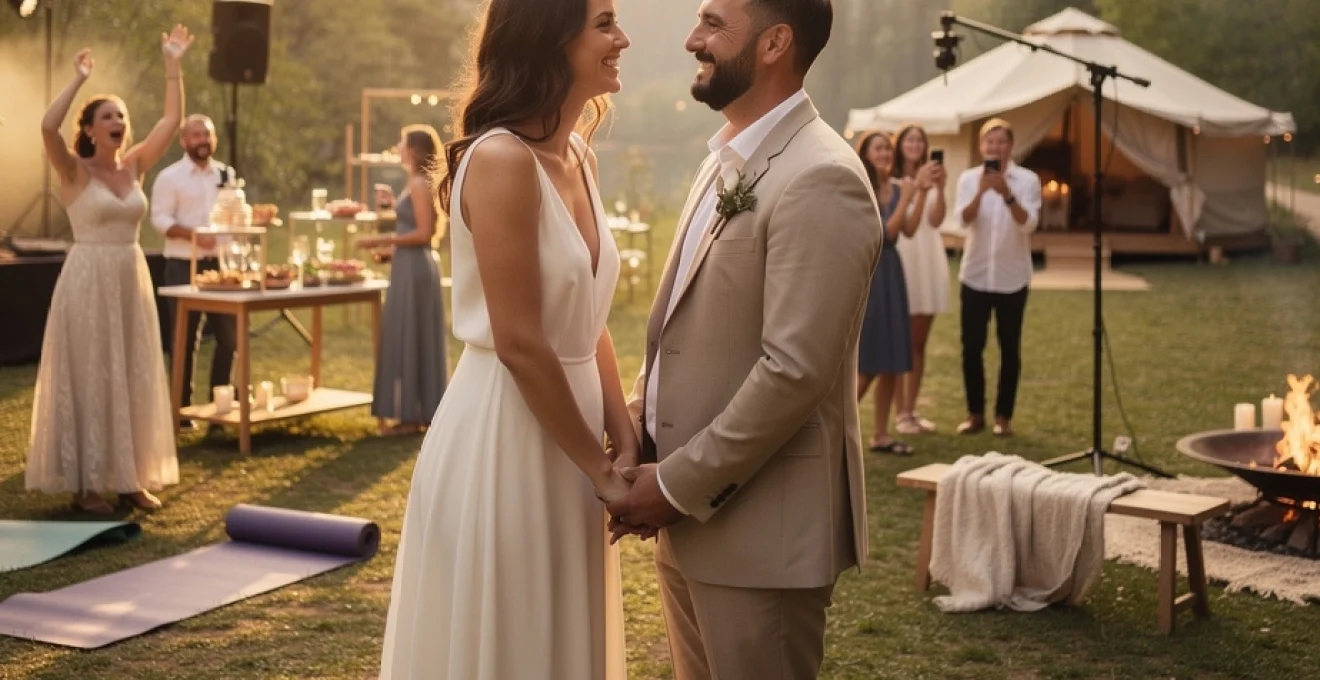
The landscape of wedding planning has undergone a seismic transformation over the past decade. Couples are fundamentally rethinking how they allocate their celebration budgets, with a decisive shift away from elaborate tablescapes, centrepiece extravagance, and decorative minutiae toward immersive, memorable experiences that resonate long after the confetti settles. This phenomenon isn’t merely a passing trend—it represents a profound philosophical repositioning of what constitutes wedding value. Research from leading universities shows that experiential purchases consistently deliver higher satisfaction than material ones, with couples reporting greater long-term happiness when they invest in moments rather than objects. In a post-pandemic world where connection and meaning have taken centre stage, wedding industry professionals are witnessing an unprecedented reallocation of resources toward entertainment, destination experiences, and technology-enabled guest engagement.
The traditional wedding formula—with its emphasis on expensive florals, intricate table settings, and decorative opulence—is giving way to a new paradigm. Today’s couples increasingly view their wedding as an opportunity to create collective memories rather than an exercise in aesthetic perfection. This shift is driven by multiple converging factors: generational value changes among millennials and Gen Z, behavioural psychology research demonstrating the superior returns of experiential spending, social media’s emphasis on shareable moments, and the profound impact of pandemic-era restrictions that taught couples to prioritise what truly matters. The result is a wedding industry recalibrating itself around experience architecture rather than decorative design.
Experiential wedding philosophy: understanding the shift from traditional matrimonial aesthetics
The philosophical underpinning of this transformation lies in a fundamental questioning of wedding priorities. Previous generations often measured wedding success by the visual impact of the venue, the elegance of table settings, and the quality of floral arrangements. These elements served as social markers, signalling status and demonstrating hospitality through material abundance. However, contemporary couples are challenging this framework, asking whether a £5,000 floral installation provides equivalent value to a £5,000 investment in live entertainment, interactive food experiences, or extended celebration timelines that allow for deeper connection with guests.
This recalibration reflects broader societal movements toward minimalism, authenticity, and meaningful consumption. The Kinfolk aesthetic movement and Scandinavian hygge philosophy have permeated wedding culture, emphasising simplicity, intimacy, and genuine human connection over performative displays of wealth. Couples are increasingly comfortable with sparse décor if it means their guests will enjoy a world-class band, participate in unique culinary experiences, or engage with creative entertainment installations. The Instagram generation, paradoxically, has contributed to this shift—while social media might seem to encourage visual excess, it has actually elevated the value of shareable experiential moments over static decorative elements that photograph beautifully but offer little interactive value.
Wedding planners report that initial consultations have changed dramatically. Rather than beginning with Pinterest boards of table designs and colour palettes, couples now lead with questions about guest experience: « How do we keep everyone engaged throughout the evening? » « What unique experiences can we offer that our guests haven’t encountered before? » « How can we make this feel less like observing a wedding and more like participating in one? » This represents a fundamental reorientation from couples as decorative curators to couples as experience architects.
Consumer psychology behind Experience-Driven wedding investments
The psychology underpinning this experiential shift is remarkably robust, with decades of research validating what couples intuitively understand: experiences deliver superior happiness returns compared to material purchases. When you invest in a premium entertainment experience, you’re not merely purchasing the performance itself—you’re buying the anticipatory excitement beforehand, the immersive engagement during the event, and the rich memories that compound in value over time. This represents a fundamentally different value proposition than purchasing decorative elements, which offer limited pre-event anticipation and rapidly depreciating post-event value.
Peak-end theory and memory formation in wedding event planning
Nobel laureate Daniel Kahneman’s peak-end theory provides crucial insight into why experiential wedding investments outperform decorative ones. According to this psychological principle, people judge experiences primarily by their most intense moment (the peak) and their conclusion (the end), rather than by the average of every moment. For wedding planning, this means that creating several extraordinary
high points and a strong, emotionally resonant finale. Couples are therefore funnelling more of their wedding budget into elements that maximise these peaks: a surprise musical performance during the ceremony, a dramatic first dance reveal, or an immersive late-night party experience that guests talk about for years. By contrast, incremental improvements in linen quality or the number of candle holders on each table rarely register in guests’ long-term memories.
Understanding peak-end theory helps couples reframe budget decisions: instead of asking, “Will this look good in the room?”, they increasingly ask, “Will this be one of the top three moments people remember?” Experience-led weddings prioritise emotional crescendo moments—such as a communal singalong, fireworks display, or interactive dessert reveal—over incremental decorative enhancements. In practice, this often means reallocating thousands from floral abundance to a carefully choreographed guest journey that ensures the energy builds steadily and closes on a memorable high.
Hedonic adaptation and the diminishing returns of material wedding decor
Hedonic adaptation—the human tendency to quickly return to a baseline level of happiness after positive or negative changes—also explains why lavish décor delivers diminishing returns. Guests initially notice an opulent floral arch or towering centrepiece, but within minutes the visual stimulus becomes background. The emotional impact fades rapidly, much like the excitement of a new smartphone that feels ordinary after a few weeks. In wedding contexts, this means that each additional decorative layer contributes less and less to overall guest satisfaction.
Experiences, however, disrupt hedonic adaptation by unfolding over time and involving multiple senses. A live band that improvises with the crowd, a chef who personally explains each course, or a surprise performance in the middle of the night keeps guests’ attention and resets their emotional baseline throughout the event. Couples who understand this psychological principle often cap décor spending at a strategic minimum and instead design a series of “experience beats” that maintain curiosity, delight and engagement from arrival to farewell.
Social currency theory: instagram-worthy moments versus physical centrepieces
Social currency theory suggests that people share what makes them look interesting, in-the-know, or emotionally moved. In the age of Instagram and TikTok, guests are far more likely to post about a dramatic sparkler tunnel, an aerialist performance, or a late-night taco truck than a perfectly balanced floral arrangement. As a result, couples are rethinking how to create “shareable moments” that generate organic buzz and digital word-of-mouth rather than investing in décor that only exists in professional photos.
This does not mean aesthetics no longer matter; instead, visual design is increasingly integrated into experiential activations. A 360-degree photo booth with custom backdrop, a neon-lit dance tunnel, or a live calligrapher creating personalised place cards all double as décor and content. From a social currency perspective, experiences that encourage participation—singing, tasting, moving, playing—deliver far greater return than static centrepieces, because they give guests a story to tell and an identity to perform online.
Emotional ROI metrics in modern wedding budget allocation
Couples are also becoming more analytical about the emotional return on investment (ROI) of each budget line item. Rather than simply accepting traditional allocations (10% on flowers, X% on stationery), they ask: “How many people will meaningfully engage with this element, and for how long?” A £3,000 floral installation that is admired during a 20-minute cocktail reception looks different when compared with £3,000 spent on a live band that shapes the atmosphere for five hours. Emotional ROI reframes value in terms of depth and duration of impact, not just price or visual scale.
Some planners now encourage clients to assign an “emotion score” to each category—anticipation, connection, surprise, nostalgia—and evaluate where experiences outperform décor. For example, a welcome party with interactive food stations may score higher on connection and anticipation than an additional ceremony floral upgrade. By explicitly prioritising experiences that foster togetherness, laughter and shared memories, couples align their spending with their core values rather than inherited expectations.
Immersive wedding entertainment formats replacing conventional décor budgets
As this experiential mindset filters into real-world planning, we are seeing a tangible rebalancing of wedding budgets. Large portions once reserved for elaborate flowers, ornate staging and layered tablescapes are now redirected into immersive entertainment that transforms guests from observers into participants. Instead of asking, “How do we fill the room?”, couples ask, “How do we fill the time with meaning?” This has led to a renaissance in live music, interactive gastronomy, playful gamification, and destination-focused celebration design.
Live music ensembles and DJ curation: allocating 25-35% of wedding budgets
Many modern couples are now dedicating 25–35% of their total wedding budget to music and entertainment—a significant increase compared with a decade ago. Rather than hiring a single DJ as an afterthought, they curate layered soundscapes across the entire day: string quartets for the ceremony, jazz trios for cocktails, high-energy bands for the reception, and specialist DJs for the after-party. The goal is not just background noise but an evolving soundtrack that shapes emotion and movement at every stage.
Professional music curation can transform the guest journey. Thoughtful transitions between genres, live mashups of the couple’s favourite tracks, and crowd-responsive playlists create a sense of co-created celebration rather than a pre-programmed playlist. Couples who previously might have invested heavily in elaborate centrepieces now choose to hire additional vocalists, percussionists or horn sections, understanding that a packed dance floor serves as its own form of décor—dynamic, joyful and instantly memorable.
Interactive food experiences: chef’s tables and molecular gastronomy stations
Catering has also shifted from static plated meals to interactive food experiences that feel more like theatre than service. Chef’s tables, live cooking stations, molecular gastronomy displays and roaming tasting carts all invite guests to engage with the culinary team, ask questions and customise their dishes. This moves dining from a passive to an active experience, turning the meal itself into a highlight rather than a break between speeches and dancing.
Couples are replacing additional floral arrangements or ornate charger plates with investments in premium ingredients and experiential formats—think oyster shucking stations, live pasta rolling, or nitrogen ice cream bars. Not only does this create memorable talking points (“Remember the flaming dessert station?”), it also accommodates diverse dietary preferences more gracefully than a rigid, pre-plated menu. In an era where many guests are food-savvy and well-travelled, interactive gastronomy often delivers a higher perceived value than another layer of visual decoration.
Gamification elements: escape rooms and bespoke entertainment installations
The rise of gamification in weddings reflects a broader cultural enthusiasm for play and participation. Instead of limiting entertainment to dancing and speeches, some couples are incorporating mini escape rooms, puzzle trails, custom arcade-style games, or immersive installations that reveal parts of their story. Imagine guests solving clues that lead to hidden cocktail bars, or a “relationship quest” where tables compete in light-hearted challenges to unlock a late-night snack station.
These bespoke entertainment elements are often financed by trimming non-essential décor items. A simpler centrepiece might free up funds for a caricature artist, tarot reader, silent disco, or interactive digital graffiti wall. Beyond novelty, gamification addresses a very practical issue: how do you help introverted guests, different generations and separate friend groups mingle comfortably? Shared games act as social lubricants, easing awkwardness and creating organic opportunities for connection.
Destination wedding economics: trading floral arrangements for travel experiences
Destination weddings epitomise the trade-off between static design and lived experience. Couples increasingly choose to host smaller guest lists in meaningful locations—historic towns, coastal villages, national parks—where the natural environment or cultural setting serves as the primary “decor.” Instead of spending tens of thousands transforming a blank-slate ballroom, they invest in guest travel, group excursions and extended weekend itineraries that turn the wedding into a shared holiday.
Economically, this often means reallocating funds from large-scale florals and rentals into boat trips, guided tours, welcome dinners and farewell brunches. Guests may spend more time bonding over a vineyard tasting or sunrise hike than admiring custom napkin rings. From an experience-design perspective, destination couples view the entire multi-day stay as their wedding canvas, focusing on how each activity contributes to collective memory rather than how each surface is visually styled.
Technology-enabled guest engagement strategies over static design elements
Technology has become a powerful tool for enhancing wedding experiences without necessarily increasing visual clutter. Rather than adding more physical objects to a space, couples are using digital platforms, interactive installations and streaming infrastructure to deepen participation and expand their celebration’s reach. The emphasis has shifted from “How can we fill this table?” to “How can we involve every guest, whether they are in the room or joining remotely?”
360-degree photo booths and augmented reality wedding activations
Traditional photo booths have evolved into high-production, 360-degree installations where guests step onto platforms and are filmed in cinematic slow motion. These activations, often branded with the couple’s monogram or wedding theme, generate instant social media content and double as entertainment. Augmented reality (AR) filters, accessed via QR codes, allow guests to overlay custom graphics or animations onto their photos and videos, creating a cohesive visual story across platforms.
From a budget standpoint, many couples now prefer to invest in one or two impactful tech-driven experiences rather than dozens of small décor items. A 360 photo booth, for instance, may replace elaborate escort card displays or additional lounge furniture, yet it keeps guests queuing, laughing and sharing throughout the night. AR activations can also subtly integrate design themes—botanical overlays for garden weddings, architectural line art for city loft events—without requiring extensive physical props.
Live streaming infrastructure investment for remote guest participation
The pandemic normalised hybrid celebrations, and live streaming has remained a priority even as guest counts rebound. High-quality audio-visual setups, dedicated streaming technicians and multi-camera angles ensure that remote attendees experience the ceremony and key moments in real time, rather than passively watching a grainy phone recording. For couples with international networks or vulnerable family members, this investment can feel more meaningful than, say, upgrading chair covers or adding extra aisle flowers.
Some couples are taking this further by creating interactive elements for virtual guests: live chat shout-outs, digital polls for song choices, or virtual toast opportunities. Allocating part of the décor budget to robust Wi-Fi, cameras and sound engineering can dramatically improve inclusivity and emotional connection. In essence, technology becomes another layer of guest hospitality—one that extends beyond the physical room.
Personalised digital wedding favours versus traditional physical keepsakes
Wedding favours are another area where couples are pivoting from objects to experiences. Instead of distributing trinkets that often get left behind, many are investing in personalised digital favours: curated playlists of the wedding soundtrack, photo galleries, custom illustrations sent by email, or even access to a short highlight film edited within days of the event. These digital mementos align with sustainability values and are usually revisited more often than a printed coaster or miniature bottle.
From a practical perspective, digital favours streamline logistics and reduce waste, while still delivering a sense of thoughtfulness. Couples can segment content—for example, creating a separate mini-album for the wedding party or a behind-the-scenes reel for close family—without incurring extra production costs. By reallocating favour budgets to professional photography, videography or editing, they ensure guests receive high-quality, emotionally resonant keepsakes that live on in devices and shared cloud folders rather than gathering dust on shelves.
Minimalist aesthetic movements: the kinfolk and hygge influence on wedding design
The rise of minimalist lifestyle movements such as Kinfolk and hygge has profoundly shaped how couples conceptualise wedding aesthetics. Rather than aspiring to maximalist “wow” moments in every corner, many are embracing clean lines, natural materials and negative space as deliberate design choices. A single sculptural floral installation, for example, can replace dozens of smaller arrangements, freeing up budget for live music, curated menus or guest experiences.
Hygge, with its emphasis on warmth, comfort and togetherness, encourages couples to prioritise candlelight, cosy textiles and communal seating over ornate decorative layering. The focus shifts from impressing guests to making them feel at home. Minimalist weddings often feature pared-back colour palettes, hand-crafted details and multipurpose elements—ceremony flowers repurposed for the reception, or simple ceramics used both as décor and serving pieces. This restraint is not about austerity; it is about ensuring every visual choice supports the atmosphere of calm, intimacy and connection.
Importantly, minimalist design aligns seamlessly with the experiential wedding philosophy. When visual noise is reduced, guests are more attuned to the sounds, tastes and interactions that define the day. The couple’s vows, the music, the conversation at each table—these become the focal points. In this way, Kinfolk-inspired simplicity and hygge-centred comfort create a stage on which meaningful experiences can unfold without distraction or excess.
Post-pandemic wedding priorities: collective celebration over decorative opulence
The Covid-19 pandemic acted as a global reset button for wedding priorities. After months—if not years—of postponed dates, restricted guest lists and virtual ceremonies, couples emerged with a sharpened sense of what truly matters: being together, safely and joyfully, with the people they love. Decorative opulence feels less essential when you have previously had to choose which relatives could legally attend your ceremony. As a result, many couples now view lavish décor as “nice to have” rather than central to the celebration’s success.
This realignment has accelerated the shift toward experience-led planning. Budgets are being channelled into longer celebration formats, multi-day gatherings, outdoor venues, wellness offerings and inclusive hospitality. Instead of chasing a magazine-perfect aesthetic, couples ask: “How do we maximise the quality time we have with our guests?” The answer, more often than not, lies in intentional guest experiences rather than another layer of styling.
Micro-wedding economics: redistributing saved guest costs into premium experiences
Micro-weddings—intimate celebrations with 20–50 guests—rose out of necessity during the pandemic and have remained popular by choice. When you invite fewer people, you significantly reduce per-guest costs for catering, rentals, stationery and favours. Many couples have taken those savings and reinvested them into premium experiences for their smaller group: multi-course tasting menus, bespoke cocktails, private estate buyouts or extended weekend stays.
From an economic viewpoint, micro-weddings illustrate the trade-off between scale and depth. Rather than feeding 200 guests a standard three-course meal, you might host 40 guests for an elaborate chef’s table dinner with wine pairings and live culinary storytelling. Instead of filling a vast ballroom with décor, you can transform a smaller space into an intimate, candlelit environment with live acoustic music. Micro-wedding couples often report feeling more present and less rushed, because their event is designed around quality interaction rather than crowd management.
Outdoor adventure weddings: glamping sites and national park ceremonies
Outdoor and adventure weddings have also surged, blending celebration with travel and nature immersion. Glamping sites, mountain lodges and national park venues offer built-in backdrops that reduce the need for heavy décor. A ceremony framed by cliffs, forests or ocean views requires little more than thoughtful seating and sound support. Couples are redirecting funds from elaborate florals and draping into guest cabins, guided hikes, stargazing sessions, campfire circles and outdoor activities.
These adventure-focused weddings often unfold over several days, with itineraries that might include kayaking, horseback riding, or sunrise yoga. The experience feels less like a formal event and more like a shared expedition, strengthening bonds between guests who might otherwise only exchange pleasantries at a hotel bar. For couples who value the outdoors, this format allows their wedding to genuinely reflect their lifestyle and priorities, rather than forcing their story into a conventional ballroom template.
Wellness-focused wedding weekends: yoga retreats and spa integration
Another post-pandemic trend is the rise of wellness-centred wedding weekends. After years of collective stress, couples are weaving rest, reflection and restorative practices into their celebrations. Venues with on-site spas, thermal suites, meditation gardens or yoga studios are in high demand. Instead of spending heavily on ornate ceiling installations or oversized floral chandeliers, some couples allocate budget to group yoga sessions, guided breathwork, sound baths or spa credits for guests.
Wellness-focused weddings often feature nourishing menus, alcohol-free cocktail options and gentle scheduling that allows ample downtime between events. The message is clear: this is not just a party, but a holistic experience designed to leave everyone feeling better than when they arrived. In this context, experiences that soothe, ground and connect people offer far greater perceived value than another layer of decorative embellishment. The wedding becomes a mini-retreat—an intentional pause in busy lives—rather than a single high-intensity evening.