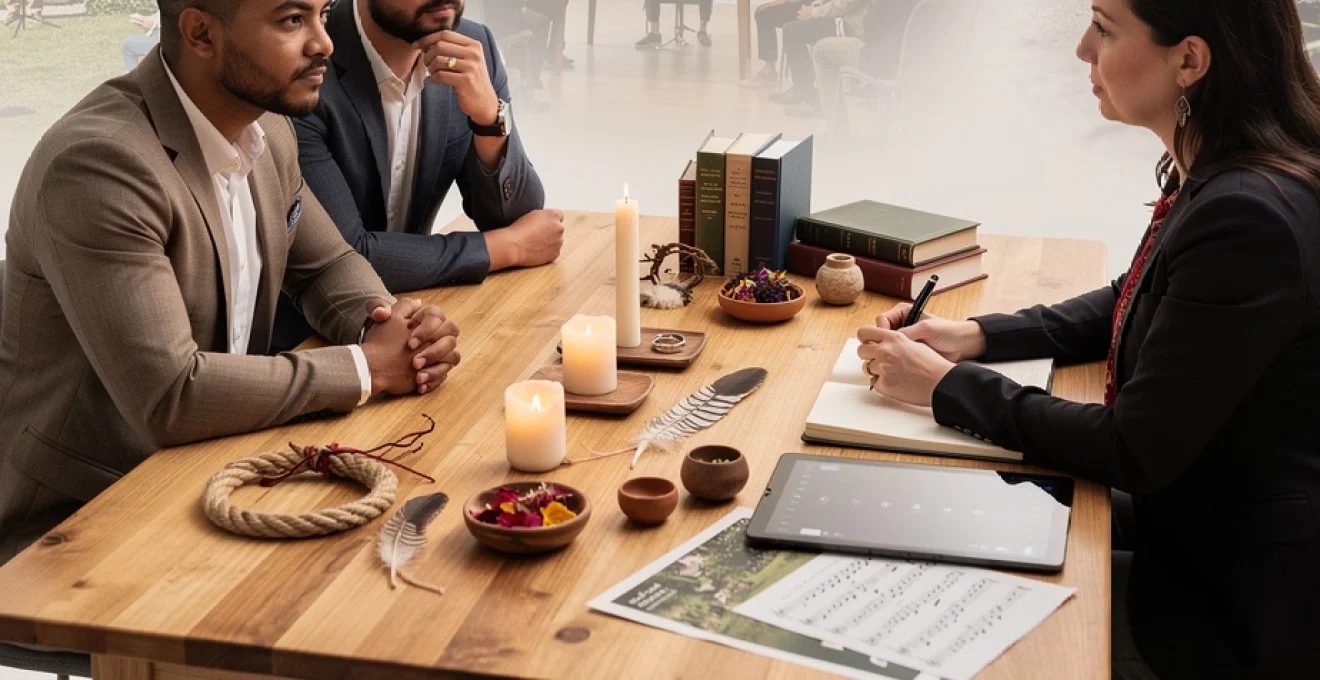
The modern ceremony landscape has shifted dramatically in recent years, with couples and families increasingly seeking celebrations that authentically represent their beliefs, ethics, and worldviews. Whether you’re planning a wedding, commitment ceremony, naming ceremony, or other significant life milestone, the desire to create something genuinely meaningful has never been more pronounced. Statistics from the British Humanist Association reveal that over 75% of UK couples now personalise at least one element of their ceremony, whilst nearly 40% opt for entirely bespoke celebrations that reflect their unique values rather than following prescribed formats. This movement towards personalisation represents more than a trend—it signifies a fundamental reconnection with the purpose of ceremonial gatherings: to mark transitions authentically and gather communities around shared principles. Creating a ceremony that genuinely reflects your values requires intentional planning, thoughtful self-reflection, and collaboration with skilled professionals who understand how to translate abstract beliefs into tangible, emotionally resonant experiences.
Defining your core values and ceremonial intentions through personal reflection
Before selecting ceremony elements or contacting officiants, you must first identify the fundamental principles that guide your life decisions. This foundational work ensures that your ceremony will feel authentic rather than performative. Many couples rush into ceremony planning by browsing Pinterest boards or visiting venues, but without clarity on underlying values, you risk creating an aesthetically pleasing event that feels emotionally hollow.
Conducting a values assessment exercise using the schwartz theory of basic values
The Schwartz Theory of Basic Values, developed by psychologist Shalom H. Schwartz, provides an excellent framework for identifying what truly matters to you. This model categorises human values into ten universal types: power, achievement, hedonism, stimulation, self-direction, universalism, benevolence, tradition, conformity, and security. To apply this framework to ceremony planning, spend time individually rating how important each value category is to you on a scale of one to ten. Then compare your ratings with your partner or family members who will be central to the ceremony. This exercise often reveals surprising alignments—and occasionally meaningful differences—that deserve acknowledgement in your ceremonial design.
Research from the University of Cambridge indicates that couples who complete structured values assessments before ceremony planning report 67% higher satisfaction with their celebrations compared to those who don’t. The exercise needn’t be clinical; consider it a meaningful conversation starter. You might discover that whilst you both value benevolence, one of you prioritises environmental sustainability whilst the other emphasises community support. Both values deserve representation in your ceremony, perhaps through charitable donations instead of favours or selecting vendors with ethical practices.
Mapping religious, cultural, and secular philosophies to your belief system
Your values don’t exist in isolation—they’ve been shaped by religious upbringings, cultural backgrounds, philosophical exposures, and life experiences. Creating a comprehensive map of these influences helps identify which ceremonial elements will feel resonant versus those that might feel obligatory but disconnected. Begin by listing the religious or spiritual traditions present in your family background, even if you no longer actively practice them. Then consider the cultural practices that have shaped your identity, from national heritage to regional customs.
Next, explore the secular philosophies that inform your worldview. Are you drawn to Stoicism’s emphasis on virtue and resilience? Does humanism’s focus on human dignity and rational inquiry resonate? Perhaps environmental philosophy or feminist ethics shape your decision-making. This mapping exercise isn’t about creating an exhaustive academic document—it’s about recognising the tapestry of influences that make you who you are. According to data from interfaith ceremony specialists, approximately 58% of UK couples now come from different religious or cultural backgrounds, making this mapping work particularly valuable for identifying common ground and celebrating diversity.
Identifying Non-Negotiable elements versus flexible ceremonial components
Not all values carry equal weight in ceremony planning, and distinguishing between non-negotiables and flexible elements prevents unnecessary stress whilst ensuring your core principles remain intact. Non-negotiables might include having a female officiant, incorporating a particular cultural ritual, ensuring full accessibility for guests with disabilities, or maintaining an entirely secular celebration. These elements directly connect to deeply held beliefs or practical necessities that cannot be compromised without fundamentally altering the ceremony’s meaning.
Flexible components, by contrast, are preferences that enhance the experience but aren
Flexible components, by contrast, are preferences that enhance the experience but aren’t essential to your integrity. These might include specific flower choices, music selections, dress codes, or whether you include certain readings. If you treat every detail as non-negotiable, planning quickly becomes overwhelming and can strain relationships with partners and family members. A practical approach is to limit yourselves to three to five non-negotiable values or elements, then hold the rest lightly. This balance allows your ceremony to stay rooted in what matters most while remaining adaptable to budget, logistics, and the needs of your guests.
Creating a values statement document for ceremony design reference
Once you have clarified your priorities, translate your reflections into a concise values statement that you can share with your officiant, planner, and key contributors. Think of this as a North Star for your ceremony: a short written document that articulates what you stand for and how you want your ceremony to feel. Aim for one or two paragraphs summarising your core values, non-negotiables, and the emotional tone you hope to create (for example, “inclusive, relaxed, hopeful, and joyful”).
Include bullet points of specific applications, such as “We want our ceremony to celebrate gender equality,” or “Environmental sustainability should guide all major decisions.” This values statement can be revisited whenever you feel stuck choosing between options or navigating conflicting opinions. Research from event psychology specialists suggests that written intention-setting reduces decision fatigue and increases perceived meaning and satisfaction after the event. In practice, this simple document helps ensure that each choice—from readings to rituals—serves your deeper purpose rather than just aesthetics or external expectations.
Selecting ceremony formats that align with contemporary and traditional value systems
With your values clearly defined, the next step is choosing a ceremony format that supports them. The legal and cultural landscape of ceremonies in the UK and across Europe now includes a wide range of options, from fully secular humanist celebrations to interfaith rituals and civil services. Each format comes with its own possibilities and constraints, so aligning your choice with your ethics, spirituality, and practical needs is crucial. Instead of asking, “What kind of ceremony should we have?” it can be more helpful to ask, “Which structure best reflects who we are and how we want to honour this moment?”
Humanist ceremonies officiated by celebrants from the british humanist association
For couples and families who identify as non-religious but still seek depth, symbolism, and warmth, humanist ceremonies offer a powerful alternative. Humanist celebrants accredited by Humanists UK (formerly the British Humanist Association) are specifically trained to create bespoke, story-led ceremonies rooted in human dignity, reason, and compassion. They are not bound by religious liturgy or rigid scripts, which means every word can be tailored to your values, from equality and inclusivity to environmental care or social justice.
In Scotland, humanist weddings have been legally recognised since 2005 and now account for around 23% of all marriages, outnumbering some religious ceremonies. In England and Wales, you currently need a separate civil registration for the legal component, but many couples happily treat the humanist ceremony as their “real” wedding and the legal signing as a simple formality. Humanist ceremonies can be held almost anywhere—outdoors, at home, in unique venues, or at unusual times of day—making them ideal if you prioritise freedom, creativity, and a non-religious yet deeply meaningful ceremony experience.
Interfaith and multifaith ceremonial structures for blended belief systems
If you and your partner (or your wider family) come from different faith traditions, an interfaith or multifaith ceremony can honour this diversity while highlighting shared values. Interfaith celebrants are experienced in weaving together prayers, readings, and rituals drawn from multiple religions, as well as secular elements, in a way that feels coherent and respectful. Rather than forcing a choice between “his” and “hers” (or “theirs”) traditions, you can co-create a ceremony that reflects the reality of your lives together.
One approach might involve a structure where each partner’s tradition is given space: perhaps a Jewish blessing alongside a Christian reading, followed by a secular exchange of vows framed around universal values such as love, responsibility, and mutual respect. According to data from interfaith networks, over 50% of marriages in some UK urban centres now involve partners from different religious or cultural backgrounds, making interfaith frameworks increasingly common. When thoughtfully designed, multifaith ceremonies can become powerful symbols of unity in diversity, modelling tolerance and shared humanity for everyone present.
Secular civil ceremonies versus registry office legal requirements
Civil ceremonies, conducted by registrars, provide a legally binding yet non-religious option for couples who prefer a straightforward framework. However, it’s important to understand both their strengths and limitations if you want your ceremony to fully reflect your values. Registry office ceremonies and civil weddings at approved venues must follow specific legal wording and cannot include religious content such as hymns, prayers, or overtly sacred readings. For some, these constraints align well with a preference for concise, no-frills formality.
If you dream of a highly personalised, values-rich ceremony, you might consider splitting your legal and symbolic elements. Many couples arrange a simple, low-cost legal registration at a register office (sometimes with just two witnesses), then hold a separate, longer ceremony led by a celebrant in their chosen style and location. This two-step process involves a little extra planning but can provide the best of both worlds: a legally recognised marriage and a fully bespoke celebration that expresses your ethics, beliefs, and personalities without restriction.
Incorporating indigenous and ancestral rituals into modern frameworks
For many people, honouring indigenous, ancestral, or heritage-based practices is a key part of a meaningful ceremony that reflects their values. This might include rituals from Celtic, African, South Asian, Caribbean, or other indigenous traditions that have been passed down through families. When thoughtfully integrated, these elements connect your ceremony to generations before you and affirm the continuity of culture and identity. Examples include smudging or cleansing rituals, traditional blessings, ancestral invocations, or ceremonial dress and music.
However, it is essential to approach these practices with cultural sensitivity and respect. If a ritual originates from a culture that is not your own, seek guidance from community members or cultural practitioners, and avoid superficial or tokenistic use. Think of it less as “borrowing something pretty” and more as entering into a conversation with history and identity. Done well, integrating ancestral rituals into a contemporary framework can feel like weaving a strong thread between past, present, and future, grounding your modern values in a long-standing lineage of wisdom.
Crafting symbolic rituals and ceremonial elements with personal significance
Once you have chosen a broad ceremony format, you can begin to design the symbolic details that will bring your values to life. Rituals, readings, vows, and music are the “language” through which your beliefs become visible to your community. Instead of adding rituals simply because they are fashionable, ask: What does this symbolise for us? How does it connect to our story or our ethics? When symbolism is chosen intentionally, even simple gestures can carry profound meaning.
Handfasting, unity candles, and ring-warming ceremonies as value-driven symbolism
Many contemporary ceremonies incorporate symbolic rituals such as handfasting, unity candles, or ring-warming because they offer powerful visual metaphors. Handfasting, with its origins in Celtic tradition, involves binding the couple’s hands with cords or ribbons to “tie the knot.” It can be adapted to reflect values such as equality, by ensuring both partners’ hands are bound together at the same time, or community, by inviting family members to place the ribbons.
Unity candles and sand ceremonies are often used to represent two lives joining as one. If environmental sustainability is a core value, you might choose reusable candles made from natural materials or replace unity candles with planting a tree or blending soil from meaningful places. Ring-warming ceremonies, where wedding rings are passed among guests to receive their silent blessings, are a beautiful expression of the value you place on community support. By framing each ritual with a short explanation from your celebrant, you help guests understand not just what is happening, but why it matters to you.
Writing personalised vows and declarations using the monroe motivated sequence
Personal vows are one of the most direct ways to express your values aloud, yet many people feel daunted at the thought of writing them. A helpful structure is the Monroe Motivated Sequence, a communication model often used in persuasive speaking, which you can adapt to shape vows that are both heartfelt and coherent. The sequence moves through five stages: Attention, Need, Satisfaction, Visualisation, and Action. Think of it as a roadmap rather than a strict formula.
You might begin with Attention by recalling a specific moment that captures your love story, then move to Need by naming what you have discovered you need from partnership (such as honesty, support, or laughter). In the Satisfaction stage, you affirm how your partner meets these needs and what you promise in return. Visualisation invites you to describe the future you want to build together, guided by your shared values. Finally, Action becomes your concrete vows: the commitments you are choosing to make, starting today. Using this structure helps you move beyond generic statements into vows that clearly articulate why this relationship matters and how you intend to live your values within it.
Selecting readings from philosophy, poetry, and literature that reflect your ethos
Readings are an elegant way to bring external voices into your ceremony, whether from philosophy, poetry, literature, or even your favourite films and songs. When chosen with care, they can articulate ideas that feel too big for our own words, reinforcing the values at the heart of your celebration. For example, a couple who prioritises equality and mutual respect might choose a passage from bell hooks on love as an ethic of care, while those drawn to environmental values may pick a poem by Mary Oliver or Wendell Berry.
As you explore potential readings, ask yourselves: Does this piece genuinely reflect how we see love, family, or community? Does it align with our spiritual or secular beliefs? Consider balancing well-known texts with lesser-known voices that resonate deeply with your specific story. You can also invite friends or family members to choose and deliver readings that speak to their relationship with you, turning this part of the ceremony into a co-created reflection of your shared ethos.
Commissioning original music or soundscapes for emotional resonance
Music is one of the most immediate ways to shape emotion in a ceremony, often expressing what words cannot. If music is important in your lives, commissioning original pieces or curated soundscapes can add a unique, value-driven layer to your celebration. This might mean asking a musician friend to compose a song that reflects your journey, or working with a sound designer to create an ambient soundtrack incorporating sounds from places that matter to you, such as ocean waves, forest birdsong, or city streets.
Think about how each musical choice supports your intentions. Do you want the processional to feel quietly contemplative, joyfully communal, or boldly unconventional? Are there cultural or ancestral musical traditions you would like to honour, such as specific instruments, rhythms, or chants? In a world where many ceremonies rely on the same playlists, bespoke music can be a powerful statement of individuality and shared meaning, turning the ceremony into something that feels more like a lived story than a scripted event.
Collaborating with officiants and ceremony designers to realise your vision
Even the clearest values and richest ideas need skilled guidance to become a cohesive, flowing ceremony. This is where collaboration with officiants, celebrants, and ceremony designers becomes invaluable. An experienced professional does more than read a script: they listen, interpret, and translate your beliefs into a structure that feels natural and engaging for everyone present. They understand pacing, emotional arcs, and the subtle choreography that helps a ceremony feel both relaxed and purposeful.
When choosing an officiant or celebrant, look for someone whose personal values, communication style, and outlook resonate with yours. During initial consultations, share your values statement and ask how they might reflect it in the ceremony design. Do they welcome your ideas about political, ethical, or environmental themes, and can they suggest ways to include them without alienating guests? Effective collaboration is a two-way process: you bring your story and principles, they bring expertise in ritual, language, and logistics. Together, you can refine drafts, rehearse key moments, and troubleshoot potential challenges so that on the day itself, you are free to be present rather than worrying about the details.
Involving family and community members in co-created ceremonial participation
For many people, a meaningful ceremony is not only about self-expression but about honouring the relationships that have shaped them. Involving family, friends, and wider community members in thoughtful ways can transform your ceremony from a performance to a shared experience. This involvement can range from formal roles—such as readings, music, or ritual participation—to more subtle contributions like writing blessings, sharing memories, or contributing to a communal artwork or time capsule.
It can be helpful to match people’s roles with their strengths and comfort levels. A confident public speaker might enjoy delivering a reading, while a quieter relative could help create a memory table or arrange symbolic items. If you are navigating complex family dynamics, your celebrant can help you design inclusive roles that honour important relationships without triggering tension. In many ceremonies, there is also a moment of collective affirmation, where guests are invited to verbally or silently pledge their support. This simple act can be deeply moving, especially if community and mutual care are central values for you.
Evaluating venue selection based on ethical, environmental, and accessibility values
The venue you choose is more than a backdrop; it is a physical expression of your priorities and an environment that can either support or undermine your values. If environmental sustainability is important to you, you might prioritise venues with strong green policies, such as renewable energy use, waste reduction, and local sourcing. Many eco-conscious venues now publish sustainability credentials, making it easier to assess their practices. You can also ask about options like plant-based catering, minimal single-use plastics, and support for public transport or car-sharing for guests.
Accessibility is another crucial consideration if you want your ceremony to be genuinely inclusive. When visiting potential venues, assess step-free access, accessible toilets, clear signage, lighting, and sound systems. Consider the needs of guests with mobility challenges, sensory sensitivities, or chronic health conditions. Ethically, you might also look into how the venue treats its staff, whether it supports local communities, and how it handles noise, land use, or cultural heritage. By choosing a venue that aligns with your ethical, environmental, and accessibility values, you ensure that the space itself reinforces the message of your ceremony: that your commitments extend beyond a single day and into the way you live in the wider world.