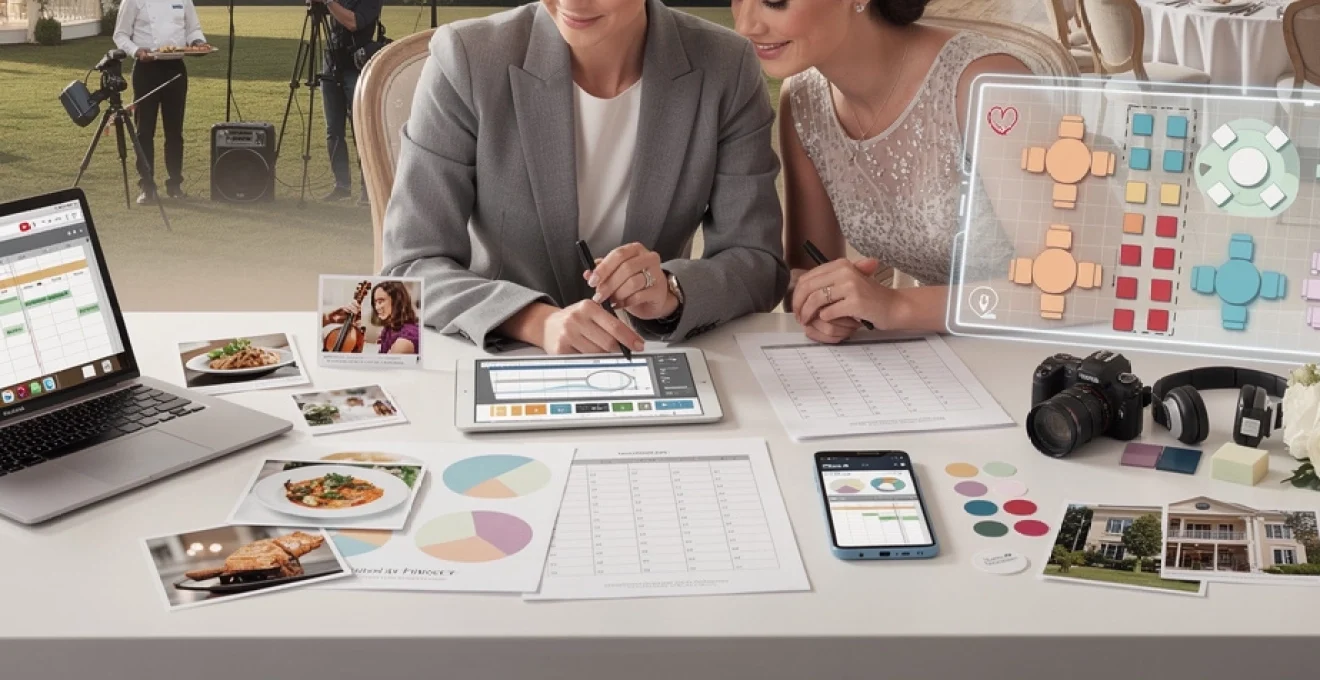
Planning a wedding represents one of life’s most significant undertakings, requiring meticulous coordination across dozens of moving parts whilst accommodating unexpected challenges that inevitably arise. Modern wedding planning demands a fundamentally different approach from traditional rigid structures, embracing adaptability as the cornerstone of successful event management. The contemporary wedding landscape presents couples with unprecedented variables, from supply chain disruptions affecting floristry to evolving social dynamics influencing guest attendance patterns.
Statistical evidence demonstrates that 78% of couples encounter at least three major changes to their original wedding plans during the planning process, highlighting the critical importance of building flexibility into every aspect of the celebration. This adaptability extends beyond simple contingency planning, encompassing a comprehensive mindset that views change as opportunity rather than obstacle. The most successful weddings combine careful preparation with strategic flexibility, creating memorable experiences that reflect couples’ authentic vision whilst accommodating real-world complexities.
Vendor coordination challenges and contingency planning strategies
Wedding vendor coordination represents perhaps the most complex logistical challenge couples face, requiring seamless integration between multiple service providers who may have never worked together previously. The average wedding involves coordination between 8-12 different vendors, each operating with distinct timelines, equipment requirements, and operational procedures. This complexity multiplies exponentially when considering the interdependencies between services, where delays or modifications in one area can create cascading effects throughout the entire event structure.
Professional wedding planners report that vendor-related issues account for approximately 65% of last-minute wedding complications, making robust contingency planning absolutely essential for event success.
Effective vendor management begins with establishing clear communication protocols that accommodate varying working styles and technological preferences. Some suppliers prefer detailed email correspondence, whilst others operate more effectively through direct phone communication or project management platforms. Creating standardised documentation templates ensures consistent information flow, reducing the likelihood of miscommunication that could compromise service delivery on the wedding day.
Multi-vendor timeline synchronisation for catering, photography, and entertainment services
Achieving precise timeline synchronisation across diverse service providers requires sophisticated project management techniques that account for each vendor’s unique operational requirements. Catering services typically require 4-6 hours of preparation time before guest arrival, whilst photographers often need exclusive access to venues during specific golden hour periods. Entertainment providers may require substantial setup periods that conflict with other vendors’ activities, necessitating careful schedule orchestration.
The most effective approach involves creating detailed timeline matrices that map each vendor’s requirements against venue constraints and guest expectations. These matrices should include buffer periods between critical activities, allowing for natural variations in service delivery without compromising overall event flow. Photography schedules must accommodate seasonal daylight variations, with winter weddings requiring significantly different timing strategies compared to summer celebrations.
Weather-dependent backup plans for outdoor wedding ceremonies and marquee installations
Weather contingency planning extends far beyond simple « Plan B » alternatives, requiring comprehensive risk assessment that considers multiple meteorological scenarios and their operational implications. Marquee installations present particular challenges, as weather conditions can affect not only guest comfort but also structural safety and vendor access requirements. Professional event managers recommend developing tiered response protocols that address varying degrees of weather disruption, from light precipitation requiring minor adjustments to severe conditions necessitating complete venue transitions.
Modern weather forecasting technology enables increasingly precise predictions, but couples must balance meteorological data with practical decision-making timelines. Many venues require weather-related decisions 24-48 hours before events, whilst some structural modifications may need confirmation up to a week in advance. This temporal complexity requires couples to establish clear decision-making frameworks that prioritise guest safety whilst preserving ceremonial significance.
Last-minute supplier substitution protocols for florists and musicians
Supplier substitution scenarios represent some of the most stressful wedding planning challenges, particularly when they occur within the final weeks before the celebration. Industry statistics indicate that approximately 12% of wedding suppliers experience circumstances requiring substitution, ranging from health emergencies to equipment failures or transportation disruptions. Establishing comprehensive substitution protocols during the initial planning phases provides couples with structured response mechanisms that minimise stress and preserve event quality.
Effective substitution protocols begin with maintaining detailed specifications for all supplier deliverables, including photographs, measurements, colour swatches, and technical requirements
that any replacement provider can follow without compromising the original vision. Building a shortlist of secondary florists and musicians during the early planning stages, ideally with tentatively confirmed availability, further enhances resilience. Couples should also negotiate flexible clauses within supplier contracts that outline substitution procedures, financial adjustments, and communication responsibilities if unforeseen issues arise. Maintaining open, collaborative relationships with primary and backup suppliers ensures that any transition feels seamless to guests, even if significant changes occur behind the scenes.
From a practical standpoint, it helps to document priority elements that must be replicated exactly and those that can be adapted. For florists, this might include specific colour palettes or key feature arrangements, while being more relaxed about secondary decor. For musicians, identifying non-negotiable songs for the ceremony or first dance allows replacement performers to prepare appropriately. By differentiating between essentials and optional extras, you give substitute suppliers room to work creatively whilst still protecting the emotional core of your wedding day.
Force majeure event management for wedding venue bookings
Recent years have highlighted the importance of robust force majeure planning in wedding venue contracts, particularly in the context of global health crises, extreme weather events, and transportation disruptions. Force majeure clauses exist to define how unforeseeable, uncontrollable events are handled, but their wording varies significantly between venues. Couples must approach this area with both flexibility and diligence, ensuring they understand exactly which scenarios are covered, what triggers apply, and what options are available if their wedding cannot proceed as planned.
Effective force majeure management begins with careful contract review, ideally before paying substantial deposits. You should clarify whether your venue offers date transfers, partial refunds, or credit notes if an event is postponed or cancelled due to circumstances beyond anyone’s control. Many modern venues have introduced tiered response frameworks that differentiate between minor disruptions (such as localised power cuts) and major incidents (such as government-imposed restrictions). Understanding these tiers enables couples to build flexible wedding planning strategies that align with venue policies.
Furthermore, force majeure planning should link directly with wedding insurance, guest communication strategies, and vendor agreements. Coordinated clauses across contracts help avoid situations where the venue allows postponement but key suppliers do not, or vice versa. By treating force majeure as a shared risk to be managed collaboratively rather than a legal footnote, couples, venues, and vendors can respond more calmly and coherently if the unexpected occurs. This holistic approach to contingency planning reinforces why flexibility is essential when organising a wedding in an unpredictable world.
Guest list management and RSVP tracking system optimisation
Guest list management has become increasingly complex, with modern weddings often involving blended families, international attendees, and evolving social commitments. Flexibility in managing invitations, RSVPs, and seating plans is crucial to prevent administrative overload and emotional strain. Digital tools now make it easier to implement dynamic RSVP tracking systems, yet these systems are only effective when underpinned by realistic expectations and adaptable processes. Couples who build change into their guest list strategy from the outset are far better equipped to handle inevitable fluctuations.
Rather than viewing guest confirmations as fixed from the moment RSVPs are submitted, it is helpful to anticipate a natural variance in final attendance. Industry data suggests that 5-10% of confirmed guests may be unable to attend due to last-minute health, childcare, or travel issues. Designing your seating chart, catering numbers, and budget allocation with this anticipated variance in mind protects you from stress and unexpected costs, while still ensuring that everyone who does attend is comfortably accommodated.
Dynamic guest count fluctuations and seating chart reconfiguration
Seating charts often represent one of the most time-consuming and emotionally charged aspects of wedding planning. Because guest availability can change right up to the week of the event, rigid seating plans can quickly become obsolete. A flexible approach treats the seating chart as a living document, updated in stages rather than finalised in one high-pressure session. This mindset shift mirrors agile project management, where plans are iterated rather than fixed, allowing you to respond calmly to new information.
To manage dynamic guest count fluctuations, many planners recommend creating several modular table configurations that can expand or contract as needed. For example, you might design layouts that work for 90, 100, and 110 guests, with a clear strategy for adding or removing a table without disrupting the overall flow. Using digital floor plan tools makes it easier to drag and drop guests between tables as RSVPs change. Have you considered assigning a trusted friend or coordinator to implement last-minute seating tweaks so you are not updating spreadsheets the night before your wedding?
Flexible seating strategies also extend to social dynamics. As relationships evolve, some guests may no longer feel comfortable sitting together, while others may wish to be closer to certain groups. Maintaining a calm, pragmatic attitude to these requests helps avoid unnecessary tension. When you balance respect for guests’ preferences with the logistical realities of your space, you can create a seating arrangement that feels thoughtful without becoming a source of overwhelm.
Dietary requirement accommodation and menu adjustment protocols
Guest dietary requirements have become increasingly diverse, reflecting ethical choices, religious practices, allergies, and medical needs. Rigid menu structures can make it difficult to respond to late disclosures, whereas a flexible catering strategy builds in capacity for adaptation. Most caterers now expect to handle a range of vegetarian, vegan, gluten-free, and allergen-conscious meals, but they need accurate, timely information. Your role is to create clear systems for gathering, confirming, and communicating these requirements without turning menu planning into a full-time job.
One effective method is to include specific fields for dietary needs on your RSVP forms, with examples to prompt detailed responses. Instead of a single “special requirements” box, consider separate tick-boxes for common categories and an additional notes section. This structure supports both guest clarity and data accuracy. You can then share a consolidated spreadsheet with your caterer, updated at agreed milestones (for example, eight weeks, four weeks, and two weeks before the wedding). This staged approach acknowledges that some guests only realise or disclose requirements closer to the date.
Flexibility also means agreeing in advance how many “floating” special meals your caterer will prepare to cover late changes or mistakes. Much like carrying spare umbrellas for an outdoor ceremony, having a small buffer of adaptable dishes protects guest comfort and your peace of mind. Clear labelling systems on the day, whether via discreet symbols on place cards or communication with serving staff, ensure that the right meals reach the right people. When guests feel seen and cared for in these details, it significantly enhances their experience of your celebration.
Plus-one policy implementation and reception capacity management
Setting and communicating a plus-one policy can be surprisingly complex, especially when venue capacity and budget constraints are tight. A flexible yet consistent approach helps you balance fairness, logistics, and personal relationships. Many couples choose criteria-based policies, such as offering plus-ones to guests in long-term relationships or those travelling from abroad, whilst explaining that numbers do not allow universal plus-one invitations. The key is to decide your principles early and then apply them as evenly as possible.
Reception capacity management begins with a realistic assessment of how many people your venue can comfortably accommodate for dining, dancing, and circulation. Fire regulations, accessibility requirements, and catering logistics all play a role. From there, you can determine how many guests you can invite, how many “conditional” invitations (for example, to evening-only guests) you can extend, and where plus-ones fit into the overall numbers. Have you thought about keeping a small “reserve list” of potential additional guests who can be invited if early declines create extra capacity?
Flexible plus-one policies also help manage the emotional side of guest expectations. When someone asks if they may bring a partner, having a prepared, honest response aligned with your agreed policy prevents on-the-spot decisions that could unbalance your numbers. Explaining that you have worked carefully within capacity and budget limitations usually garners understanding, especially if delivered with kindness. Ultimately, managing plus-ones with clarity and flexibility protects both your relationships and the practical structure of your wedding day.
International guest travel restrictions and visa processing delays
For weddings involving international guests, travel logistics introduce another layer of complexity that demands flexible planning. Visa processing times, airline schedule changes, and evolving travel restrictions can all impact who is able to attend in person. Couples may need to accommodate a range of scenarios, from guests arriving late due to flight disruptions to key attendees being unable to travel at all. Building hybrid participation options into your plans—such as live-streamed ceremonies—ensures that distant loved ones can still share in the moment.
When sending invitations to international guests, it is wise to do so earlier than for local attendees, allowing extra time for visa applications and travel arrangements. Providing clear information about nearest airports, recommended accommodation, and local transport links supports smoother planning on their side. Regular communication touchpoints, perhaps every few months, can help you track who is likely to attend and whether circumstances have changed. This ongoing dialogue feeds back into your guest list management, seating plans, and catering numbers.
Flexibility also extends to emotional expectations. Some couples choose to hold a smaller legal ceremony or symbolic blessing in another country at a later date, allowing those who could not travel to the main celebration to feel included. By viewing your wedding not as a single rigid event but as a meaningful series of connected moments, you can adapt creatively to global realities whilst still honouring your international relationships.
Wedding budget allocation flexibility and cost control mechanisms
Financial flexibility is one of the most powerful tools couples have when organising a wedding. Fixed, inflexible budgets that do not account for price increases, guest count changes, or evolving priorities can create significant stress. By contrast, a dynamic budget approach allocates funds across essential, important, and optional categories, allowing you to reassign spending as your plans develop. Industry surveys show that over 60% of couples adjust their original wedding budget at least once, underscoring the value of planning for change rather than resisting it.
One effective strategy is to establish a contingency fund of around 10–15% of your total budget. This reserve can cover unexpected costs such as additional transport, last-minute decor items, or vendor overtime. Rather than seeing this as “extra” money to be spent automatically, treat it as a safety net that protects you from financial anxiety if circumstances shift. If you do not need the full contingency, it can later be redirected towards honeymoon experiences or long-term financial goals.
Flexibility in budget allocation also means being prepared to adjust your priorities as planning progresses. You might begin believing that elaborate floral installations are essential, only to discover that live music or high-quality photography brings you more joy. Regular budget review sessions—perhaps monthly—allow you to compare initial assumptions with current feelings. Like tuning an instrument before a performance, these check-ins help keep your financial decisions aligned with what truly matters to you both.
Cost control mechanisms are particularly important when vendor quotes are subject to market fluctuations, such as rising food or energy prices. Requesting itemised proposals allows you to see which components can be scaled up or down to stay within range. For example, if catering prices increase, you might reduce canapé options while preserving a sit-down meal, or adjust bar offerings whilst maintaining a full guest list. Viewing each budget line as a slider rather than an on/off switch makes it easier to protect the overall experience of your day.
Venue selection criteria and layout adaptation requirements
Choosing a wedding venue is about far more than aesthetics; it is a strategic decision that will determine how flexible your planning process can be. Venues vary widely in their policies around minimum guest numbers, layout changes, supplier choice, and contingency plans. A visually stunning location with rigid rules may prove more stressful than a slightly simpler setting that allows you to adapt. When touring potential venues, it is helpful to ask not just “What does this look like on a perfect day?” but also “How easily can we pivot if something changes?”
Key venue selection criteria include capacity ranges, indoor and outdoor options, accessibility, and technical infrastructure for sound, lighting, and streaming. A flexible venue will often offer multiple ceremony and reception configurations, enabling you to downsize or expand the guest list without needing to change location. For example, some country houses provide both an intimate drawing room for smaller ceremonies and a larger hall for full receptions. This multi-space setup acts like a set of nesting boxes, allowing your wedding to grow or contract whilst remaining cohesive.
Layout adaptation is equally crucial once a venue is chosen. Floor plans should be treated as working drafts that respond to updated guest numbers, entertainment decisions, and catering formats. Do you plan to have a band, DJ, or both? Will you serve a plated meal, buffet, or food stations? Each of these choices has spatial implications that may require reconfiguring tables, dance floors, and staging areas. Collaborating with your venue coordinator to develop several layout options—daytime, evening, and bad-weather versions—provides the flexibility to make late adjustments without chaos.
Accessibility and inclusivity should also feature in your venue flexibility assessment. Ensuring that guests with mobility challenges, sensory sensitivities, or other specific needs can move comfortably through the space may require adjustable seating arrangements, quiet areas, or alternative ceremony formats. Venues that respond positively and creatively to these requests demonstrate a flexible mindset that often translates into smoother planning across all aspects of your wedding.
Timeline restructuring for ceremony and reception schedule changes
The wedding day timeline functions as the backbone of the entire celebration, coordinating vendors, guests, and key moments. However, real-life weddings rarely follow the schedule with military precision. Traffic delays, extended photographs, heartfelt speeches, or unexpected weather can all shift timings by minutes or even hours. A flexible timeline acknowledges this reality by building in buffers, alternative sequences, and clear decision points. Rather than clinging to a minute-by-minute script, you work with a framework that can bend without breaking.
Effective timeline restructuring starts in the planning phase, where you and your planner or coordinator identify which elements are fixed (such as registrar arrival times) and which are more fluid (such as informal mingling or dance sets). By understanding which dominoes matter most, you can make on-the-day adjustments without creating knock-on disruption. It is much like editing a film: key scenes must remain, but their exact placement can sometimes shift to better match the flow of the story.
Liturgical ceremony variations for different religious denominations
Religious or liturgical ceremonies often follow established structures, yet there is usually more flexibility than couples initially assume. Different denominations allow for variations in readings, music, symbolic rituals, and sermon length, all of which affect the overall wedding day timeline. Consulting early with your priest, minister, rabbi, imam, or celebrant enables you to understand which elements are mandatory and where you have room to personalise. This knowledge helps you build a ceremony that is both spiritually meaningful and logistically realistic.
For example, a full nuptial Mass in the Catholic tradition typically runs longer than a simple blessing, with implications for transport, photography, and reception start times. Similarly, incorporating additional rituals—such as signing a ketubah, lighting a unity candle, or performing cultural customs—may require extra minutes that need to be reflected in your schedule. Rather than guessing, ask your officiant for typical duration ranges and discuss how they handle overruns. Many are happy to adapt homily length or hymn choices to support a smooth transition to your next event segment.
Flexibility in liturgical planning also helps when coordinating with guests from varied faith backgrounds. Providing simple explanatory notes in your order of service, or a brief introduction from the officiant, can help everyone feel included even if the format is unfamiliar. When your ceremony timeline reflects both the depth of your tradition and the practicalities of the day, you create a balanced foundation for the celebrations that follow.
Civil partnership legal requirements and registrar availability
Civil ceremonies and partnerships come with their own set of legal requirements and scheduling constraints, particularly around registrar availability. Registrars often conduct multiple ceremonies in a single day, meaning your chosen time slot may be fixed within a narrow window. Flexibility becomes essential when aligning this legal framework with your preferred timeline for photography, travel, and reception activities. Starting your planning by confirming registrar availability—rather than building a schedule and hoping it fits—is usually the most efficient approach.
Legal requirements can also influence how you structure your day if you are combining a civil ceremony with a separate symbolic or religious one. Some couples choose a small legal signing on a weekday, followed by a larger celebration later; others schedule back-to-back ceremonies at the same venue. Each configuration demands careful timeline coordination, travel planning, and communication with guests and vendors. Have you considered how long it will take to move your entire wedding party between locations if your legal and ceremonial components are held separately?
To maintain flexibility, many couples build a 30–60 minute buffer around their civil ceremony slot, allowing for registrars running slightly behind schedule or extended photo opportunities. Clear communication with your registrar’s office about expected start and end times, witness arrangements, and documentation requirements reduces last-minute surprises. When you view the legal aspect as a cornerstone around which other elements flex, rather than a constraint to battle against, planning becomes far smoother.
Photography golden hour scheduling and seasonal daylight variations
Photography and videography timelines are heavily influenced by natural light, especially if you wish to capture “golden hour” portraits around sunrise or sunset. Because the timing of golden hour varies significantly across seasons and geographic locations, flexible scheduling is essential. A winter wedding in the UK, for example, may see daylight fade by mid-afternoon, whereas a summer celebration might enjoy usable light well into the evening. Aligning your ceremony and reception chronology with these patterns can dramatically enhance your visual record of the day.
Working closely with your photographer early in the planning process allows you to identify time windows for key shots: couple portraits, family groupings, and candid moments with the wedding party. You can then shape your overall timeline to protect these windows as far as possible. For instance, you might schedule speeches before sunset in winter so that outdoor portraits can occur immediately after the ceremony, or plan a brief sunset break during summer reception drinks. This is akin to choreographing a performance around the rising and falling of the stage lights.
Of course, weather and delays can disrupt even the best-laid photography plans. Flexible photographers will often prepare backup shot lists for indoor locations or use creative lighting techniques to simulate natural warmth. On your side, allowing for short pockets of unscheduled time in the afternoon or early evening provides opportunities to pivot if conditions suddenly become ideal. When everyone understands that the timeline can move slightly to capture extraordinary light, you increase the likelihood of images that feel both spontaneous and beautifully composed.
Reception flow management for speeches, dancing, and catering service
The reception is where timing flexibility is most visible to guests, as the flow of speeches, dining, and dancing shapes their overall experience. Rigidly timed programmes can feel rushed or disjointed if anything runs over, whereas a more elastic structure accommodates real human moments—laughter during toasts, emotional pauses, or guests lingering over conversation. The goal is to design a reception timeline that gives caterers clear service cues while still allowing natural rhythm to emerge.
One effective approach is to anchor the evening with a few key milestones—such as the first dance, cake cutting, and main speeches—and allow the intervals between them to flex. For example, you might agree that speeches will begin once the main course plates are cleared, rather than at a specific clock time. This event-based timing gives catering staff and the DJ or band a shared set of triggers, reducing stress if earlier elements run long. Have you discussed with your speakers an approximate time limit and agreed who will act as a gentle timekeeper if needed?
Flexible reception management also entails having contingency plans for dance floor energy. If guests are slow to begin dancing, you might move a fun group activity or interactive toast earlier to build momentum. Conversely, if the dance floor is thriving, you may ask the band or DJ to delay a quieter moment to maintain energy. Like conducting an orchestra, you and your coordinator subtly adjust tempo and transitions in response to the room. When your reception timeline bends gracefully rather than snapping under pressure, everyone is more likely to remember the evening for its joy rather than its schedule.