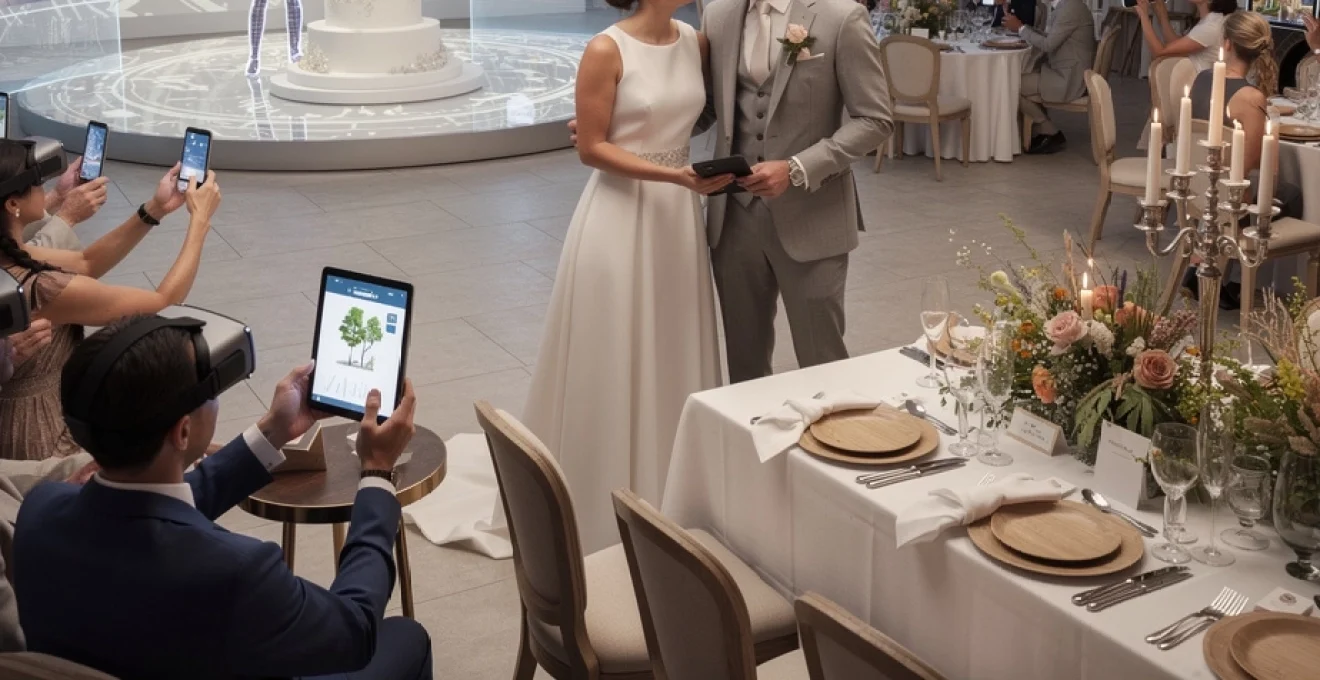
The wedding industry is experiencing a technological and cultural revolution that’s fundamentally reshaping how couples celebrate their special day. From immersive virtual reality experiences to blockchain-based digital keepsakes, today’s weddings blend tradition with innovation in ways that seemed impossible just a few years ago. These emerging trends aren’t merely about incorporating flashy gadgets—they represent a deeper shift towards personalisation, sustainability, and meaningful guest engagement that reflects the values of modern couples.
Today’s couples are demanding more than cookie-cutter ceremonies and standardised receptions. They’re seeking authentic experiences that tell their unique love story whilst creating memorable moments for every guest. Whether you’re planning a traditional church ceremony or a destination celebration, understanding these transformative ideas can help you craft a wedding that feels both contemporary and timeless, practical and magical.
Immersive technology integration: virtual reality venue tours and augmented reality guest experiences
Immersive technologies are fundamentally changing how couples plan their weddings and how guests experience the celebration. Virtual reality (VR) and augmented reality (AR) are no longer science fiction concepts reserved for gaming enthusiasts—they’ve become practical tools that solve real planning challenges whilst adding layers of engagement to the wedding experience. These technologies allow couples to visualise their dream wedding before committing to expensive decisions and enable guests to interact with the celebration in unprecedented ways.
Virtual reality Pre-Wedding venue walkthroughs using platforms like matterport and VRWeddings
Choosing the perfect venue is one of the most critical decisions you’ll make during wedding planning, yet visiting multiple locations can be time-consuming and expensive, particularly if your dream venue is in another city or country. Virtual reality venue tours have emerged as a practical solution to this challenge. Platforms like Matterport create high-definition 3D scans of wedding venues that allow you to explore every corner from the comfort of your home. These aren’t simple photo galleries—they’re fully immersive experiences where you can walk through reception halls, examine ceiling heights, and evaluate natural lighting conditions.
According to recent industry data, approximately 67% of couples now use some form of virtual tour technology during their venue selection process, a figure that has increased dramatically since 2020. The technology proves particularly valuable for destination weddings where multiple site visits aren’t feasible. You can share these virtual tours with your wedding planner, family members, or design team, ensuring everyone understands the spatial constraints and opportunities before you invest in deposits. Some venues now offer bespoke VR experiences that showcase different seasonal appearances, lighting configurations, and décor possibilities, helping you make informed decisions about timing and styling.
Augmented reality guest seating visualisation through allseated and social tables software
Creating the perfect seating arrangement has traditionally been one of wedding planning’s most stressful challenges. You need to consider family dynamics, friendship groups, conversation compatibility, and dozens of other subtle factors. Augmented reality seating visualisation tools have transformed this tedious task into an intuitive, even enjoyable process. Platforms like Allseated and Social Tables allow you to create digital representations of your venue and experiment with countless seating configurations before finalising your arrangement.
These sophisticated systems go beyond simple floor plans. You can input guest heights, mobility requirements, and relationship data, then visualise exactly what each guest will see from their assigned seat. Will Great-Aunt Margaret have a clear view of the ceremony? Can your university friends easily chat across their table? The software answers these questions instantly. Many systems now incorporate guest preference data from RSVPs, suggesting optimal arrangements based on shared interests or connections. Professional wedding planners report that AR seating tools reduce arrangement time by approximately 60% whilst significantly improving guest satisfaction scores.
Holographic entertainment displays and 3D projection mapping for reception venues
Projection mapping has evolved from a niche technology used at corporate events to an accessible option for couples seeking dramatic visual impact at their receptions. This technique transforms ordinary surfaces—walls, ceilings, even wedding cakes—into dynamic displays that can illustrate your love story, create atmospheric environments, or simply provide stunning visual entertainment. Unlike traditional projectors that simply cast images onto flat surfaces, 3D projection mapping accounts for the contours and dimensions of irregular surfaces, creating illusions of depth and movement that capt
ures guests and creates a sense of theatrical immersion.
Holographic displays are another emerging entertainment option, particularly for couples who want to surprise guests with something truly unexpected. Using specialised projection systems, you can create the illusion of floating images, animated monograms, or even a “virtual” performance that appears to materialise in mid-air. While still at the premium end of the market, prices have dropped as the technology becomes more accessible to smaller AV companies. When combined with 3D projection mapping on walls or architectural features, holograms can turn your reception into a cinematic environment that feels more like a curated show than a traditional party.
Couples considering holographic entertainment should work closely with experienced technicians, as the effect depends on careful planning around lighting, viewing angles, and guest flow. It is also vital to balance spectacle with intimacy; a short, high-impact holographic moment—such as revealing your names in light or showcasing a stylised version of your proposal—often works better than continuous visuals. Think of these tools as a sophisticated frame for your celebration, not the main event itself.
Interactive AR photo booths with real-time filter customisation and digital prop integration
Photo booths have become a staple of modern receptions, but augmented reality is propelling this popular feature into a new era. Interactive AR photo booths use depth-sensing cameras and real-time rendering to overlay digital props, animations, and backgrounds onto guests as they pose. Instead of juggling feather boas and cardboard moustaches, guests can experiment with virtual flower crowns, floating confetti, or themed scenes that perfectly match your wedding aesthetic.
Many AR photo booth providers now offer custom filter creation, allowing you to incorporate your wedding monogram, colour palette, or even stylised versions of your pets into the experience. Guests can instantly share their creations to social media, helping you build a cohesive visual story around your wedding day. From a practical perspective, AR props reduce physical clutter, minimise waste, and streamline setup time compared to traditional prop-heavy installations.
To get the most from this technology, couples should consider where the booth will sit within the guest journey. Placing it near the bar during cocktail hour or opposite the dance floor encourages organic use without creating bottlenecks. You may also wish to provide a subtle prompt—such as a small sign explaining how the AR filters work—so that less tech-savvy guests feel comfortable jumping in. The result is a playful, inclusive activity that appeals to all ages whilst showcasing how immersive tech can enhance, rather than overshadow, human connection.
Sustainable wedding design: carbon-neutral ceremonies and zero-waste event architecture
Sustainability has shifted from a niche concern to a central priority for many couples, with surveys indicating that over 70% now consider environmental impact when planning their wedding. Rather than treating “eco-friendly” as an add-on, emerging ideas in sustainable wedding design integrate green principles into every stage of the celebration. From carbon-neutral ceremonies to zero-waste reception layouts, the goal is to create a meaningful event that celebrates your relationship without compromising the planet’s future.
This new wave of sustainable wedding ideas focuses on systems as much as individual products. It is not simply about choosing recyclable invitations or organic wine; it is about designing an event architecture that reduces waste, lowers emissions, and supports local ecosystems. The good news? Sustainable wedding design often leads to more thoughtful, story-driven experiences that feel richer and more intentional for you and your guests.
Compostable tableware systems from bambu and biotrem for eco-conscious receptions
For couples aiming to reduce single-use plastics and landfill waste, compostable tableware systems provide a practical and stylish solution. Brands like Bambu produce plates, cutlery, and serving ware made from sustainably harvested bamboo, while Biotrem offers innovative products crafted from compressed wheat bran. These materials break down far more quickly than traditional plastics, and many can be industrially composted after the event, significantly cutting down your wedding’s environmental footprint.
Compostable tableware is particularly effective for outdoor receptions, festival-style weddings, or events with multiple food stations where reusable crockery is logistically challenging. When combined with clearly labelled waste stations and a partnership with a local composting service, you can divert a substantial proportion of reception waste away from landfill. Some eco-conscious venues now offer turnkey compostable systems, providing everything from plates to collection bins as part of a “green wedding” package.
Of course, aesthetics still matter. Modern compostable products come in refined shapes and neutral tones that complement a wide range of décor styles, from rustic chic to minimalist modern. If you are concerned about the “feel” of alternative materials, request samples from your caterer or supplier in advance. Treat it like a menu tasting: you would not serve a dish without trying it first, so do the same for your sustainable tableware to ensure it aligns with your vision.
Locally-sourced seasonal floristry using british flowers week guidelines and native species
Floral design has a profound impact on both the visual atmosphere and environmental footprint of a wedding. Importing out-of-season blooms often involves long-distance air freight, energy-intensive greenhouses, and excessive packaging. In contrast, locally sourced seasonal floristry embraces what is naturally available at the time of your celebration. Many florists now follow principles inspired by initiatives like British Flowers Week, which champions sustainable, home-grown flowers and foliage.
Working with native species and seasonal stems creates arrangements that feel grounded in place and time, mirroring the landscape around your venue. For a summer wedding in the UK, for example, you might see fragrant sweet peas, garden roses, and foxgloves, while an autumn event could feature dahlias, seed heads, and richly coloured foliage. This approach reduces transport emissions, supports local growers, and often results in longer-lasting arrangements because the flowers have not endured lengthy shipping.
To adopt this sustainable wedding design idea, begin by asking potential florists about their sourcing policies. Do they grow their own blooms, partner with local farms, or regularly import from overseas? Be open to flexibility: instead of insisting on a specific variety, share your preferred colours, textures, and overall mood. Think of your florist as a chef designing a seasonal menu; by trusting their expertise and the rhythms of nature, you will likely end up with florals that feel more authentic and more memorable.
Carbon offset wedding registries through terrapass and ecologi partnership programmes
As awareness of climate change grows, couples are increasingly seeking ways to balance the environmental impact of travel, catering, and event production. Carbon offset wedding registries have emerged as a meaningful option for those who want their celebration to leave a positive legacy. Platforms such as Terrapass and Ecologi allow you to calculate estimated emissions from your wedding—covering everything from guest flights to energy use—and then fund verified projects that reduce or remove carbon elsewhere.
Instead of, or alongside, traditional gifts, you can invite guests to contribute to a carbon offset fund via your registry. These contributions might support reforestation initiatives, renewable energy projects, or community-based climate solutions. Many couples appreciate the symbolism: as friends and family gather to celebrate the start of a new chapter, they also invest in a more sustainable future. Some programmes even provide digital certificates or impact dashboards you can share on your wedding website, making the results tangible.
That said, carbon offsets should be seen as one tool within a broader sustainability strategy, not a free pass for excessive consumption. Whenever possible, pair offsets with concrete reductions, such as choosing a venue accessible by public transport, offering plant-forward menus, or limiting single-use décor. Think of offsets like the final polish on a well-crafted ring—they enhance something that is already thoughtfully designed, rather than disguising underlying issues.
Vintage and rental-based décor sourcing from companies like something borrowed blooms
One of the most effective ways to reduce waste at weddings is simply to use what already exists. Vintage and rental-based décor sourcing has surged in popularity, with companies such as Something Borrowed Blooms offering high-quality faux florals, centrepieces, and statement pieces that can be used repeatedly. Instead of purchasing dozens of vases, candleholders, or backdrops that will gather dust after the big day, couples can rent curated collections that align with their theme.
This circular approach to décor has both environmental and financial advantages. Renting often costs significantly less than buying everything new, especially for on-trend items that may not age well. For sustainable wedding design, it also means fewer resources are consumed in manufacturing and far less waste is generated when the event ends. Many rental companies now provide lookbooks and virtual consultations, making it easier to visualise how curated pieces will work together in your chosen space.
To maximise impact, consider mixing rented items with a few meaningful heirlooms—perhaps your grandparents’ candlesticks or vintage picture frames featuring family wedding photos. This blend of borrowed and personal elements tells a richer story than a purely catalogue-based design. Ultimately, rental-based décor is like a well-edited wardrobe capsule: instead of buying a new outfit for every occasion, you assemble versatile pieces that can be reimagined for different looks, resulting in something more sustainable and more stylish.
Personalised guest journey mapping: bespoke itinerary curation and individual experience design
As weddings grow more experiential, couples are thinking less about a single timeline and more about the entire guest journey—from the moment the save-the-date lands to the final farewell. Personalised guest journey mapping borrows techniques from hospitality and UX design to craft tailored experiences for different attendee groups. Rather than assuming that everyone will engage with the event in the same way, you intentionally design touchpoints that consider age, interests, accessibility needs, and relationship to the couple.
In practice, this might mean creating multiple micro-itineraries within your overall schedule. Out-of-town guests could receive a welcome guide with local recommendations, QR codes linking to maps, and optional group activities. Children might have a dedicated programme with supervised games and quieter spaces, while older relatives are seated where sound levels are comfortable and walking distances are minimised. By thinking through each stage—from travel and accommodation to ceremony flow and reception entertainment—you transform your wedding into a coherent, guest-centric experience.
Digital tools are making this kind of bespoke itinerary curation far more manageable. Wedding websites and event apps can store individual preferences, send segmented notifications, and present personalised schedules based on RSVP data. For example, guests with dietary requirements can automatically receive menu notes, while members of the wedding party receive reminders about rehearsal times. Ultimately, personalised guest journey mapping is about empathy: when you design your wedding through your guests’ eyes, you create an atmosphere of care and consideration that people remember long after the flowers have faded.
Live-streaming infrastructure and hybrid wedding platforms for global guest participation
Hybrid weddings—where some guests attend in person and others participate remotely—have shifted from a pandemic-era necessity to a long-term feature of the industry. With families increasingly spread across continents and travel costs rising, live-streaming infrastructure allows you to include loved ones who cannot be there physically. When executed well, hybrid design ensures that virtual attendees feel genuinely part of the celebration rather than passive observers watching a static webcam feed.
To achieve this, couples are partnering with professional streaming teams, investing in robust connectivity at their venues, and using purpose-built hybrid wedding platforms. These setups provide reliable audio, high-quality video, and interactive features like live chat or digital guestbooks. The result is a wedding experience that transcends geography, bringing together global communities in real time.
Professional multi-camera broadcasting systems using vimeo livestream and StreamYard technology
Basic livestreams can struggle with poor sound, awkward angles, and unreliable connections. Professional multi-camera broadcasting systems address these issues by treating your wedding more like a live TV production. Using platforms such as Vimeo Livestream and StreamYard, technicians can switch seamlessly between cameras positioned at the aisle, altar, and back of the room, ensuring that remote guests always have a clear view of key moments.
High-quality microphones capture vows, speeches, and music with far greater clarity than a smartphone, while backup recording ensures you have a polished digital copy for later. Some teams even integrate subtle on-screen graphics—such as your names and wedding date—to create a cohesive broadcast aesthetic. While this level of production requires additional budget, it can be especially worthwhile for destination weddings or celebrations where a significant percentage of guests are tuning in from abroad.
When selecting a provider, ask about their internet contingencies, audio mixing capabilities, and experience with your chosen platforms. It is also wise to designate a “virtual host”—a friend or family member who monitors the stream, greets online guests in the chat, and communicates any issues to the on-site team. This small step helps remote attendees feel acknowledged and cared for, rather than like an afterthought.
Interactive virtual guest engagement through zoom webinar rooms and hopin event spaces
Livestreaming the ceremony is only part of the hybrid wedding equation. The real magic happens when virtual guests can interact with you and with one another. Platforms like Zoom and Hopin enable more dynamic participation through breakout rooms, moderated Q&A segments, and virtual reception spaces. Imagine hosting a brief “meet and greet” with online attendees during cocktail hour, or inviting them to share toasts via video that are then played on a screen at the venue.
Zoom webinar rooms can be used for structured segments—such as a virtual toast session for relatives who could not travel—while Hopin-style event spaces allow guests to move between digital “tables” or themed rooms. This structure mirrors the social flow of an in-person reception, making it easier for friends and family from different countries to connect. You might even set up a dedicated laptop and screen at one table, enabling in-person guests to chat live with those joining remotely.
To keep things smooth, share clear instructions and time zones on your wedding website, and consider appointing a tech-savvy MC to guide remote participants. Simple touches—like mailing small favour packs to key virtual guests or encouraging a coordinated dress code—help bridge the physical distance. When you design with both audiences in mind, a hybrid wedding stops feeling like a compromise and starts feeling like an inclusive, global celebration.
Real-time translation services integration for international attendee accessibility
As weddings become more international and intercultural, language accessibility is an increasingly important consideration. Real-time translation services can make your ceremony and speeches more inclusive for guests who are not fluent in the primary language being used. Tools range from professional interpreters streaming audio to guests’ devices, through to AI-powered captioning integrated with platforms like Zoom or dedicated translation apps.
For hybrid weddings, you might offer multiple language audio channels within your livestream, allowing remote attendees to select their preference. In-person guests can use discreet earpieces or follow along with live-transcribed captions displayed on a secondary screen. While automated translation has improved significantly, sensitive or highly personal parts of the ceremony—such as vows—may still benefit from human oversight to preserve nuance and emotion.
Planning for language accessibility sends a powerful message of respect to your international guests. Just as you might ensure physical access for wheelchair users, making your words understandable to everyone reflects a commitment to inclusion. When multiple cultures and languages are woven into a wedding with care, the event becomes not just a union of two people, but a celebration of the wider communities they bring together.
Hybrid reception design featuring large-format LED screens and spatial audio distribution
A well-designed hybrid reception does more than simply broadcast a video feed; it actively connects in-person and virtual guests. Large-format LED screens can display live footage of remote attendees, rotating messages from the chat, or pre-recorded video messages that play between speeches. Instead of feeling like faces trapped in tiny boxes, your online guests become part of the physical environment, visible to everyone on the dance floor.
Spatial audio distribution is equally important. Strategically placed speakers ensure that toasts from remote speakers are heard clearly without overwhelming conversation areas. Some venues now design zoned soundscapes, where different spaces feature varying volume levels and audio content—livelier music near the bar, softer ambient tracks in lounge areas, and focused speech audio near the head table. This considered approach makes the reception more comfortable and immersive for all attendees.
To maintain atmosphere, integrate the screens and speakers into your décor plan rather than treating them as afterthoughts. LED displays can be framed with florals or set within custom backdrops that echo your wedding palette. When hybrid elements are aesthetically integrated, the technology fades into the background, allowing the shared experience to take centre stage.
Experiential food and beverage concepts: interactive culinary stations and molecular gastronomy
Food has always been a highlight of wedding celebrations, but emerging trends are transforming it from a passive pleasure into an active experience. Experiential food and beverage concepts turn your menu into a form of entertainment, inviting guests to participate in the creation, presentation, or discovery of each dish. Rather than a single plated service, you might offer a series of interactive culinary stations that encourage exploration and conversation.
Molecular gastronomy techniques—once confined to high-end restaurants—are increasingly appearing at weddings in subtle, guest-friendly forms. Think nitrogen-frozen cocktails that billow with theatrical vapour, spherified drops of balsamic that burst on the tongue, or deconstructed desserts assembled tableside. When used thoughtfully, these elements add a sense of wonder without sacrificing flavour or comfort. The goal is not to turn your reception into a science experiment, but to sprinkle in moments of surprise that make the meal feel unforgettable.
Interactive stations can also highlight your story as a couple. Perhaps you create a “travel taste map” of dishes inspired by places you have visited together, or a DIY garnish bar for signature cocktails named after key milestones in your relationship. Dietary inclusivity is crucial: ensuring that plant-based, gluten-free, and allergy-friendly options are integrated into these experiences means that everyone can join in. When guests are invited to customise their plate or drink, they become co-creators of the celebration, deepening their emotional connection to the day.
Blockchain-based wedding registries and NFT digital memorabilia for commemorative keepsakes
The rise of blockchain technology is beginning to influence how couples handle gifts, contracts, and memories. Blockchain-based wedding registries offer a more transparent, secure way to manage contributions, particularly for couples requesting monetary gifts towards a home deposit, honeymoon, or joint investment. Because blockchain transactions are recorded on a decentralised ledger, guests can trust that their contributions reach the intended wallet address, and couples can easily track and document all gifts in one place.
Some platforms are experimenting with “smart contracts” that release funds when specific conditions are met—such as finalising a property purchase or booking a charitable donation. While this is still a niche area, it reflects a broader shift towards more intentional, values-driven gifting. For tech-savvy couples and guests, the ability to contribute in traditional currency or cryptocurrencies provides additional flexibility.
Another emerging idea is the creation of NFT (non-fungible token) digital memorabilia as modern wedding keepsakes. Instead of (or alongside) physical favours, couples can mint limited-edition digital artworks, animated invitations, or even short video loops from their first dance as NFTs. These tokens provide verifiable ownership and provenance, turning key wedding moments into collectible digital artefacts. Guests who value digital art or enjoy collecting unique items may find this approach particularly meaningful.
Of course, NFTs and blockchain are not for everyone, and environmental concerns around certain networks should be taken into account. If you choose to explore this space, look for platforms built on energy-efficient blockchains that use proof-of-stake rather than proof-of-work. You might think of blockchain-based memorabilia as the digital equivalent of an heirloom locket: its value lies not just in the asset itself, but in the story and emotion it represents, carried forward into future generations in a new medium.