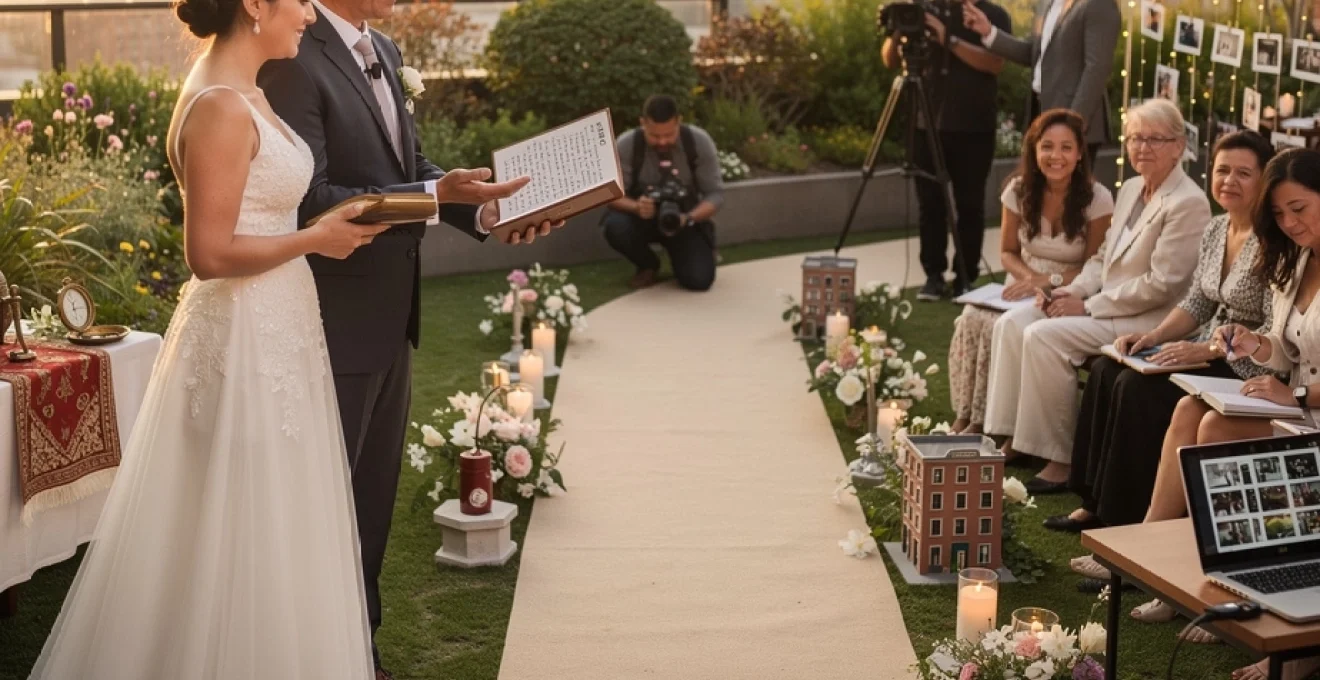
Modern weddings are experiencing a profound transformation, shifting from standardised ceremonies towards deeply personal narrative experiences. Couples today are rejecting cookie-cutter celebrations in favour of events that authentically reflect their unique love stories, values, and shared experiences. This evolution represents more than a mere trend; it signifies a fundamental change in how society views marriage celebrations and the importance of individual expression within traditional frameworks.
The rise of storytelling in weddings reflects broader cultural shifts towards authenticity, personalisation, and meaningful experiences. Rather than following prescribed formats, couples are collaborating with celebrants, planners, and vendors to create immersive celebrations that engage guests on emotional levels while honouring their personal journeys. This approach transforms weddings from formal ceremonies into compelling narratives that guests remember long after the last dance.
Narrative-driven wedding ceremony design and implementation strategies
Contemporary wedding design increasingly centres around narrative architecture, where every element serves the overarching story of the couple’s relationship. This approach requires careful consideration of how different components work together to create a cohesive experience that feels both intimate and celebratory.
Successful narrative-driven weddings begin with comprehensive story mapping, where couples identify key themes, milestones, and values that define their relationship. Professional wedding designers then translate these elements into tangible experiences through decor, lighting, music, and ceremony structure. The result is a celebration that feels distinctly personal whilst remaining accessible to all guests.
Personal heritage integration through cultural symbolism and family traditions
Modern couples are increasingly creative in blending their diverse backgrounds into unified celebrations that honour both families whilst creating new traditions. This integration often involves reimagining traditional ceremonies to reflect contemporary values while maintaining cultural significance.
Heritage integration might include incorporating ancestral music during key moments, displaying family heirlooms as decor elements, or adapting traditional rituals to reflect the couple’s modern relationship dynamics. Many couples choose to explain the significance of these elements to their guests, creating educational moments that deepen understanding and appreciation for different cultural backgrounds.
Sequential story arc development from engagement to reception finale
Professional wedding planners now approach celebrations as complete narratives with distinct chapters, each building upon the previous to create emotional momentum throughout the day. This sequential approach ensures that guests remain engaged whilst experiencing a natural progression from anticipation to celebration.
The story arc typically begins with the couple’s arrival and initial moments, progresses through the ceremony’s emotional peaks, transitions into cocktail hour socialisation, and culminates in reception festivities. Each phase requires careful timing and thoughtful transitions to maintain narrative flow whilst allowing for spontaneous moments that add authenticity to the celebration.
Venue selection based on couple’s origin story and relationship milestones
Location choices increasingly reflect significant moments in couples’ relationships rather than simply aesthetic preferences or convenience factors. Venues become supporting characters in the wedding narrative, providing context and deeper meaning to the celebration.
Some couples choose locations where they first met, had their first date, or shared significant milestones. Others select venues that reflect shared interests or future aspirations. This intentional venue selection transforms the physical space into a storytelling element that enhances the overall narrative whilst creating opportunities for meaningful conversations among guests.
Bespoke ceremony script writing with personalised vow storytelling elements
Traditional ceremony scripts are giving way to personalised narratives that reflect each couple’s unique journey and communication style. Professional celebrants now invest significant time in understanding couples’ relationships to craft ceremonies that feel authentic and emotionally resonant.
These bespoke scripts often include specific anecdotes, inside jokes, and references to shared experiences that create intimate moments for the couple whilst keeping guests engaged. The vow exchange becomes a storytelling highlight, where couples share their personal promises and commitments in their own words, creating emotional peaks that define the ceremony experience.
Interactive guest experience through immersive storytelling techniques
Modern wedding celebrations prioritise guest engagement through interactive storytelling elements that transform attendees from passive observers into active participants in the couple’s narrative. These techniques create memorable experiences whilst fostering connections between guests who may not know each other well.
Interactive storytelling recognises that weddings function as community gatherings where relationships are celebrated and new connections formed.
When guests are drawn into the story rather than simply watching it unfold, they feel a stronger emotional connection to the couple and to one another. This is why so many modern weddings now incorporate immersive elements that invite guests to discover, interact with, and even contribute to the love story as the day progresses.
Digital storytelling platforms: the knot, zola, and joy wedding timeline features
Wedding websites and planning apps have evolved from basic information hubs into powerful digital storytelling tools. Platforms such as The Knot, Zola, and Joy allow couples to build detailed wedding timelines, share their proposal story, and introduce their wedding party with personalised bios and photos. Rather than functioning as static pages, these digital spaces become the prologue to the wedding day narrative.
Couples are increasingly using these platforms to drip-feed their story in the months leading up to the celebration. Short blog-style updates, engagement photo galleries, and interactive RSVP questions invite guests into the journey early, building anticipation. On the day itself, integrated mobile timelines help guests follow the “chapters” of the celebration, understand the significance of rituals, and feel more present in each moment.
Physical story stations and memory lane installation concepts
In the physical venue, “story stations” and memory lane installations are becoming signature features of narrative-led weddings. These curated areas might include framed photos from the couple’s early days, travel memorabilia, love letters, or meaningful objects that highlight key milestones. Designed thoughtfully, they function like an exhibition of the relationship, guiding guests through different stages of the couple’s journey.
These installations work best when they are integrated into natural gathering points: near the entrance, along the route to the bar, or beside the guest book table. Instead of overwhelming guests with dense text, short captions, dates, and simple descriptions help them quickly understand why each moment matters. The effect is similar to walking through a biographical gallery: guests move from curiosity to recognition, often sparking conversations and shared memories.
QR code integration for multi-media love story documentation
To bridge the gap between physical decor and digital media, many couples now integrate QR codes into their wedding storytelling. Discreetly placed on signage, menus, or table cards, these codes can link to engagement videos, proposal footage, curated playlists, or extended photo galleries that would be impractical to display in print. This approach turns static elements into interactive portals, extending the story beyond what fits on a page.
Because most guests already have smartphones to hand, QR-enabled storytelling feels natural rather than intrusive. The key is intentionality: each code should lead to a specific chapter of the narrative, not a random collection of content. For example, a QR code on the bar menu might link to a short video about how the couple created their signature cocktails, while another near the cake table could reveal behind-the-scenes clips from the tasting and design process.
Guest participation through collaborative storytelling activities and memory books
Storytelling at weddings is no longer one-directional. Couples increasingly invite their community to add their own perspectives through collaborative storytelling activities. Memory books, advice cards, and audio guest books allow friends and family to share anecdotes, blessings, and even humorous stories that the couple may have never heard before. Over time, these contributions become part of the couple’s ongoing narrative archive.
Some celebrations go further by incorporating live storytelling moments into the schedule. Instead of (or alongside) traditional speeches, a few guests might be invited to share a short “chapter” of the couple’s story: how they witnessed the first meeting, supported the relationship through challenges, or saw it grow over the years. Managed well by a celebrant or MC, these shared memories turn the reception into a communal storytelling circle where many voices help complete the picture.
Professional wedding storytelling service providers and market evolution
The rise of story-driven weddings has given birth to a new category of specialised service providers. Beyond traditional planners and photographers, couples now work with wedding storytellers, narrative celebrants, content creators, and speechwriters whose primary focus is to capture and articulate the couple’s journey. This reflects a broader market evolution, where emotion and experience are valued as highly as aesthetics.
Story-focused celebrants devote significant time to interviewing couples, friends, and family to craft ceremonies that feel more like live narratives than formal scripts. Professional speechwriters help shy or overwhelmed relatives shape heartfelt, coherent toasts that support the overarching wedding story. Social media content creators and “wedding day content curators” capture behind-the-scenes moments on phones for real-time sharing, complementing the more polished work of videographers and photographers.
Industry research from major planning platforms suggests that personalisation is now a key decision factor when couples select vendors. Service providers who can articulate how they translate a love story into tangible experiences are often preferred over those who focus solely on technical skill. As a result, many traditional vendors are upskilling in narrative techniques, positioning themselves not just as executors, but as co-authors of the wedding day.
Visual storytelling through cinematography and photography direction
While words and rituals carry part of the narrative, visual media remains one of the most powerful tools for preserving a wedding story. Modern couples are increasingly discerning about the style of photography and videography they choose, prioritising approaches that feel cinematic, authentic, and emotionally honest. The goal is not just to document who was there, but to capture how the day felt.
Documentary-style wedding videography versus traditional highlight reels
Traditionally, wedding videography focused on formal coverage and short highlight reels set to music. Today, many couples favour documentary-style wedding films that follow a more detailed narrative arc. These films often include interviews, snippets of vows and speeches, ambient sound, and candid interactions that reveal the dynamics between people. The result feels more like a short documentary about a relationship than a montage of pretty moments.
This shift doesn’t mean traditional highlight reels have disappeared; rather, couples often request both. A concise, shareable reel works well for social media, while a longer documentary edit preserves deeper layers of the story. When choosing a videographer, it can be helpful to ask: how do they handle pacing, voiceover, and dialogue? Do they prioritise real audio and storytelling structure, or purely visual impact? The answers indicate how effectively the final film will function as a narrative keepsake.
Storyboard creation for key narrative moments and emotional beats
To ensure that important parts of the story are captured, many photographers and videographers now create loose storyboards or shot lists built around emotional beats rather than only formal events. Instead of simply ticking off “first look, ceremony, first dance,” they plan to document subtler chapters: a quiet moment of calm before the ceremony, a parent fixing a boutonnière, or the couple reading letters to one another.
This doesn’t turn the day into a rigid film set; rather, it functions like an outline for a book. By identifying the scenes that best express the couple’s relationship and family dynamics, the creative team can anticipate where to be and how to position themselves. Couples can support this process by sharing what matters most to them: is it the reactions during the vows, the energy of the dance floor, or the intergenerational connections among guests?
Drone cinematography for establishing shots and location context
Drone cinematography has become a valuable tool for adding context and scale to wedding storytelling. Aerial shots of the venue, surrounding landscape, or city skyline serve as visual “establishing shots,” much like the opening scenes of a film. They anchor the celebration in a specific place and time, which can be especially meaningful for destination weddings or venues tied to the couple’s history.
Used thoughtfully, drone footage can enhance rather than distract from the emotional core of the story. Wide, sweeping shots contrast with intimate close-ups to create a rich visual rhythm: we see both the grand setting and the small, tender moments within it. Couples should, however, ensure that their venue permits drone use and that their videographer complies with local regulations, particularly in urban or protected areas.
Same-day edit technology for real-time story compilation
Same-day edit films have transformed how stories are shared during the wedding itself. Using streamlined editing workflows, some videographers now compile a short narrative film during the reception, incorporating footage from the morning preparations, ceremony, and early festivities. When played later in the evening, this mini-film allows guests to watch a cinematic retelling of the very day they are still experiencing.
The impact of a same-day edit is both emotional and communal. Guests see moments they missed, such as behind-the-scenes preparations or private exchanges, and the couple experiences their story through an outside lens while surrounded by loved ones. This real-time storytelling can heighten the sense of connection in the room, reinforcing that everyone present has taken part in a meaningful chapter of the couple’s life.
Social media integration and digital storytelling amplification
Social media has become a parallel stage on which wedding stories unfold. Instead of waiting weeks or months to share professional images, couples and guests now document and amplify the narrative in real time. When approached intentionally, this digital layer can complement rather than compete with the in-person experience.
Custom wedding hashtags, private Instagram accounts, and shared album links make it easy for guests to contribute their perspectives. Some couples create “content moments” within the day—such as a dramatic confetti exit or a styled photo corner—that invite guests to capture and share. Others work with professional content creators who specialise in short-form video, ensuring a steady stream of polished, on-brand clips for platforms like Instagram Reels or TikTok.
Of course, there is a balance to strike. Too much focus on phones can pull people out of the moment, so many couples set boundaries: an unplugged ceremony followed by a highly shareable reception, or clear requests not to post certain parts of the day. By deciding in advance what they want their online narrative to look and feel like, couples can ensure that digital storytelling enhances their wedding rather than overshadowing it.
Cultural shift analysis: from traditional ceremonies to experiential celebrations
The growing emphasis on storytelling in weddings reflects a larger cultural shift from obligation-driven traditions to experience-led celebrations. Today’s couples are less interested in following a prescribed script and more focused on curating an event that feels aligned with their identity, values, and community. In many ways, the wedding has become a living memoir: one day that encapsulates the past, marks the present, and gestures toward the future.
Several societal trends underpin this change. Younger generations tend to value authenticity and emotional connection over formality and display, and are often more willing to adapt or omit rituals that don’t resonate. There is also a broader move towards “experience economies,” where people prioritise memorable, meaningful events over material excess. Story-driven weddings fit naturally into this paradigm, offering depth instead of mere spectacle.
As a result, traditional markers of a “successful” wedding—guest count, flower volume, or formality level—are being replaced by more subjective measures: Did the day feel like us? Did our guests understand our story? Did we create memories that we’ll want to revisit for decades? Storytelling sits at the centre of these questions. When every element, from the venue and vows to the music and media, is chosen to serve the narrative, the celebration becomes more than a single event; it becomes a defining chapter in a larger love story.