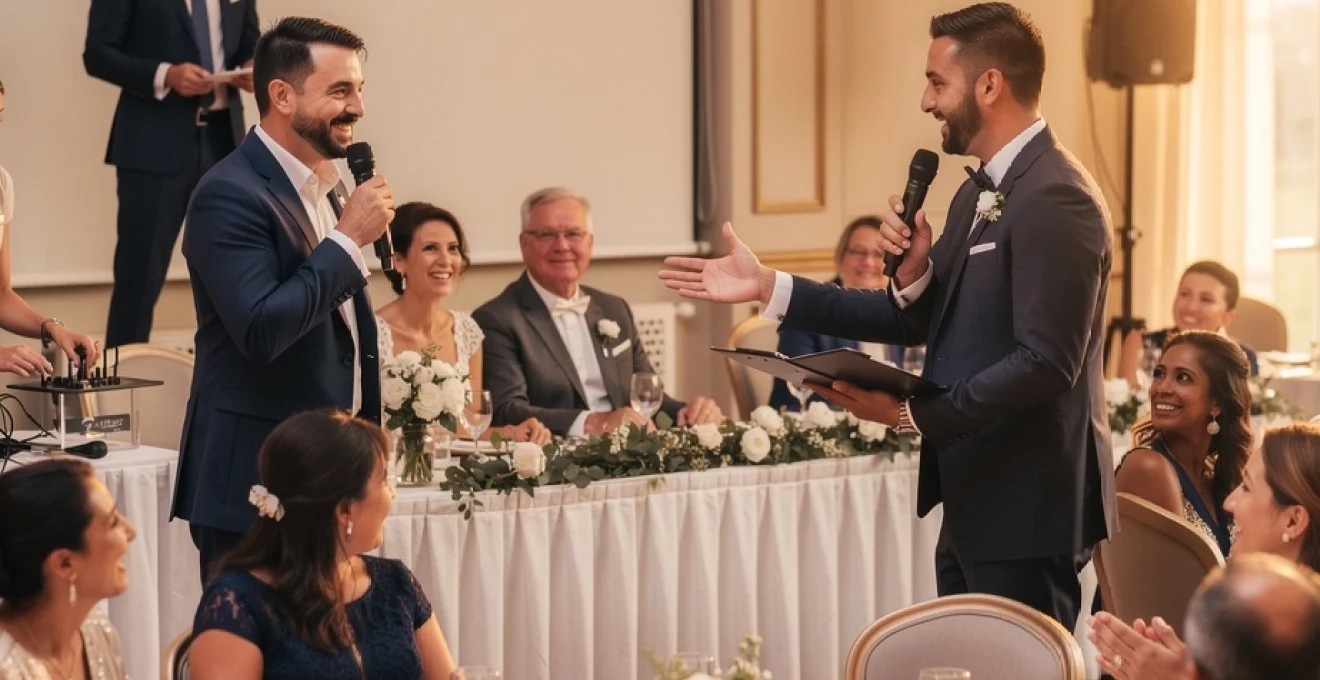
Wedding speeches represent one of the most emotionally charged moments during any reception, yet they’re also the element most prone to uncomfortable silences, technical mishaps, and timing disasters. The difference between a memorable celebration and an evening plagued by awkward pauses often lies in the meticulous planning and coordination that happens behind the scenes. Professional wedding planners understand that successful speech coordination requires a sophisticated understanding of human psychology, technical logistics, and cultural sensitivity.
Modern wedding receptions have evolved far beyond the traditional trio of father of the bride, groom, and best man speeches. Today’s celebrations often feature multiple speakers across diverse backgrounds, varying comfort levels with public speaking, and complex family dynamics that require careful navigation. The challenge lies not just in managing individual presentations, but in creating a cohesive experience that maintains audience engagement while honouring each speaker’s unique relationship with the couple.
The stakes couldn’t be higher when it comes to speech coordination. A poorly timed toast can disrupt catering schedules, whilst technical failures can derail emotional moments that couples have anticipated for months. Understanding the intricate balance between spontaneity and structure becomes essential for creating an atmosphere where genuine emotion can flourish without descending into chaos.
Strategic timeline development for wedding reception speech coordination
Effective speech coordination begins weeks before the actual wedding day, with careful consideration of how each speaking segment fits into the broader reception timeline. The most successful speech sequences follow a deliberate rhythm that accounts for guest attention spans, catering logistics, and the natural energy flow of wedding celebrations. Professional event coordinators recognise that timing isn’t merely about duration—it’s about creating momentum that carries guests through emotional peaks and valleys.
Pre-reception speech scheduling using the golden hour method
The Golden Hour Method involves identifying the optimal 60-90 minute window when guest engagement reaches its peak, typically occurring after the main course but before evening fatigue sets in. During this period, audiences remain attentive whilst speakers benefit from the relaxed atmosphere that follows a satisfying meal. This approach requires precise coordination with catering teams to ensure that service interruptions don’t fragment the speaking sequence.
Research indicates that guest attention spans decline significantly after 8 PM, making earlier speech scheduling increasingly popular. The pre-dessert slot offers particular advantages, as guests remain seated and focused whilst anticipating the sweet course ahead. This timing also allows nervous speakers to complete their presentations earlier, enabling them to fully enjoy the remainder of the celebration without anxiety.
Creating buffer zones between toast segments for natural transitions
Strategic buffer zones prevent the jarring transitions that often characterise poorly planned speech sequences. These intervals, typically lasting 3-5 minutes, allow for natural conversation flow, drink refills, and emotional processing between presentations. Professional coordinators use these moments to reset technical equipment, adjust seating arrangements, and ensure that subsequent speakers are prepared.
Buffer zones also provide essential breathing space for audiences, particularly during emotionally intensive presentations. The brief respite allows guests to absorb previous content whilst building anticipation for upcoming speeches. This technique proves especially valuable when managing speakers with varying presentation styles or emotional intensities.
Implementing the Three-Act structure for multiple speaker events
The Three-Act Structure adapts theatrical principles to wedding speech coordination, creating a narrative arc that maintains engagement throughout extended speaking segments. Act One features welcoming remarks and family acknowledgements, establishing the celebration’s tone. Act Two presents the emotional core through personal anecdotes and relationship stories. Act Three culminates in forward-looking toasts and collective celebration.
This framework proves particularly effective for weddings featuring six or more speakers, as it prevents the random ordering that often leads to audience fatigue. The structure also helps coordinators balance different speaking styles and energy levels, ensuring that quieter, more reflective presentations complement more animated, humorous speeches.
Coordinating with venue staff and wedding planners for seamless execution
Successful speech coordination demands close collaboration with venue staff, caterers, and technical teams. Professional coordinators establish clear communication protocols that include specific timing cues, backup plans for technical failures, and strategies for managing unexpected developments. This coordination extends beyond logistics to encompass atmospheric elements such as lighting adjustments and background music transitions.
Venue staff training becomes crucial for maintaining appropriate service levels during speeches. Well-briefed teams understand when to pause table
service, reduce noise, and avoid obstructing sight lines during key emotional beats. Clear, pre-agreed hand signals between the planner, MC, and catering lead help synchronise food service pauses with the start and end of each toast. When everyone understands the reception timeline and their role within it, speeches and toasts flow as a single, elegant sequence rather than a series of disjointed interruptions.
Master of ceremonies techniques for professional speech management
The Master of Ceremonies (MC) plays a pivotal role in preventing awkward moments during wedding speeches and toasts. Acting as both host and timekeeper, the MC manages the flow between speakers, keeps the audience informed, and subtly steers the room’s energy. Whether your MC is a professional, a confident friend, or the wedding planner, equipping them with specific techniques will significantly reduce the risk of uncomfortable silences or chaotic transitions.
Utilising the bridge and segue method for speaker introductions
The Bridge and Segue Method ensures that each transition between speakers feels intentional and smooth. Rather than abruptly calling the next person to the microphone, the MC briefly acknowledges what the previous speaker shared and then links it to the upcoming toast. This bridge might reference a theme—such as friendship, family, or shared history—that creates a natural continuity across speeches.
For example, after a heartfelt father-of-the-bride speech, the MC might say, “We’ve just heard about Emma’s childhood through her father’s eyes. Now, let’s hear from the person who’s been by her side almost every day for the last decade—her sister and maid of honour, Claire.” This kind of segue prepares the audience, calms the next speaker, and helps maintain the emotional thread. The result is a curated experience rather than a sequence of disconnected monologues.
Implementing crowd control strategies during emotional moments
Emotional peaks—such as a tribute to absent loved ones or a highly personal story—can easily shift the room’s energy. Without gentle crowd control, you risk side conversations, premature clapping, or guests trying to lighten the mood with jokes. A skilled MC reads these moments and modulates their own tone, using pauses, eye contact, and simple phrases like “Let’s take a moment” to guide collective attention.
Crowd control at a wedding reception is less about strict rules and more about subtle steering. The MC can encourage silence for a toast to a departed relative, then intentionally lift the mood afterwards with a warmer, slightly lighter introduction to the next speech. Think of the MC as the conductor of an orchestra: by signalling when to lean into emotion and when to release tension, they prevent uncomfortable extremes of either gloom or rowdiness.
Managing technical requirements: microphone handovers and audio cues
Many awkward wedding speech moments stem from technical issues rather than poor content. Feedback squeals, dead microphones, or fumbling handovers can break the spell of a beautiful toast. To prevent this, the MC should conduct a sound check with the venue or DJ before guests arrive, confirming volume levels, microphone range, and how to hold the mic correctly (about a fist’s distance from the mouth, aimed towards the chin).
During the reception, the MC should physically manage microphone handovers whenever possible, walking the mic to each speaker rather than asking them to approach a static stand. Clear audio cues—such as fading down background music as the MC stands or raising it briefly between speeches—signal to guests when to listen and when to chat. A simple, rehearsed routine around audio keeps attention on the words being spoken, not on the technology delivering them.
Emergency protocol development for handling speech disruptions
Even with careful planning, speech disruptions happen: an overenthusiastic guest interrupts, a child cries, or a microphone fails mid-sentence. Having a basic emergency protocol prevents these from becoming truly awkward moments. The MC should know in advance what to do if a speaker overruns, becomes too emotional to continue, or veers into inappropriate territory.
For technical failures, the MC can step in with humour and composure—“It seems even the microphone is speechless”—while the planner or DJ swaps equipment. For content-related issues, a pre-agreed signal between the couple, planner, and MC allows for a gentle redirection or early wrap-up. When everyone knows there is a respectful way to intervene if needed, the risk of a toast turning into a long, uncomfortable ordeal is dramatically reduced.
Speaker preparation frameworks: from father of the bride to best man protocols
One of the most effective ways to avoid awkward speeches is to support each speaker long before they stand up with a microphone. Rather than leaving them to search online for generic wedding speech templates, you can offer simple frameworks that reflect modern wedding reception speech coordination. These frameworks help each person understand their role, suggested length, and the emotional territory they should cover.
For the father of the bride (or equivalent parental figure), a useful structure might be: welcome and thanks to guests, a few warm childhood anecdotes, acknowledgement of the couple’s relationship, and a short, inclusive toast. The groom or partner’s speech typically centres on gratitude—thanking families, the wedding party, and particularly their new spouse—plus one or two meaningful stories rather than a long timeline of the relationship. The best man or person of honour can then focus on light, celebratory anecdotes that highlight the couple’s strengths, avoiding embarrassing or divisive jokes that alienate older family members or younger guests.
To reinforce these frameworks, share clear parameters: suggest 5–7 minutes per major speech and a maximum of 2–3 minutes for any additional toasts. Encourage speakers to write their remarks at least two weeks in advance and to rehearse them aloud. For especially nervous speakers, you might even schedule a short run-through at the rehearsal dinner, focusing not on memorisation but on pacing, clarity, and breathing. When each speaker knows what is expected, it becomes much easier to create a cohesive, non-awkward sequence of toasts.
Audience engagement psychology and attention management during toast sequences
Even the most polished speech can feel awkward if it’s delivered to a restless, distracted audience. Understanding basic audience engagement psychology allows you to organise wedding speeches in a way that works with, rather than against, natural attention patterns. Shorter segments, varied tones, and thoughtfully placed interactive moments help keep guests emotionally present from the first welcome to the final toast.
Reading room temperature: identifying restlessness and fatigue signals
How do you know when your guests are starting to disengage? Common signs include an increase in background chatter, people glancing at their phones, fidgeting with cutlery, or frequent trips to the bar or restroom. These subtle cues tell you that the “golden hour” of focused listening is slipping away, and it may be time to adjust the wedding speech order or compress remaining toasts.
Planners and MCs should periodically scan the room during each speech, noting posture and facial expressions. If you see many guests leaning back, crossing arms, or staring into space, consider shortening the next introduction or asking the upcoming speaker to trim their remarks. Just as a good DJ reads the dance floor, a good MC reads the listening floor. This responsiveness helps prevent the dreaded lull where everyone feels trapped in their seats, waiting for “the long speech” to end.
Strategic placement of interactive elements and call-and-response moments
Interactive moments act like small bursts of energy that reset attention during longer toast sequences. Call-and-response toasts—such as “To the bride and groom!” with guests repeating the final phrase—encourage participation and mark clear emotional beats. You might also incorporate simple interactive elements, like asking guests to raise their glasses in honour of parents, lifelong friends, or those joining via livestream.
Placed strategically, these interactive cues create natural high points in the reception timeline. For example, after two more serious speeches, you could ask the MC to lead a light-hearted group toast before a humorous best man speech. This works like a palate cleanser between emotional courses in a meal. The key is moderation: used sparingly, interaction boosts engagement; overused, it can feel forced or childish, especially with a multi-generational wedding audience.
Managing multi-generational audiences with varied attention spans
Wedding receptions often bring together grandparents, young children, professionals, and students—all with different expectations and attention spans. Organising speeches and toasts without awkward moments means designing a flow that respects each group. Older guests may tire quickly and appreciate concise, clearly spoken toasts, while younger guests may respond well to humour and visual storytelling.
One effective tactic is to front-load the most essential speeches earlier in the evening, while older relatives are still fresh, then reserve shorter, more relaxed toasts for later when the dance floor has opened. Encourage speakers to avoid in-jokes that only a small age group will understand and to choose anecdotes with universal themes: loyalty, resilience, shared adventures. By crafting content that resonates across generations, you prevent sections of the room from mentally checking out.
Crisis prevention strategies for common speech disasters
Most “speech disasters” at weddings fall into a few predictable categories: overlong toasts, inappropriate humour, excessive alcohol, and technical issues. The good news is that each of these can be significantly reduced with pre-emptive planning. Think of crisis prevention as installing guardrails on a scenic mountain road—you still enjoy the view, but you’re protected from going over the edge.
Start by setting expectations in writing. In the weeks before the wedding, send speakers a brief guideline document covering recommended length, suggested content, and clear red lines (no ex-partner stories, no inside jokes that humiliate the couple, no graphic stag or hen night references). Emphasise that your goal is a warm, inclusive atmosphere where every guest feels comfortable. You can even offer to review drafts for anyone unsure about tone.
Alcohol management is another crucial element of crisis prevention. If a key speaker is known to be nervous or prone to overindulging, consider placing speeches earlier in the reception before open bar access has peaked. The MC or planner can quietly check in with speakers an hour before the toasts, offering water and reassurance. For truly high-risk situations, agree in advance on a “plan B” backup speaker—such as a sibling or close friend—who can step in if necessary.
Technical back-ups are equally important. Have spare batteries for wireless microphones, a second microphone ready to go, and clear instructions for the DJ or AV team on what to do if sound suddenly cuts out. A simple printed running order with approximate timings helps everyone know where you are in the sequence, making it easier to adapt if one speech runs short or another needs to be skipped. With these safeguards in place, even unexpected hiccups turn into minor, often charming, moments rather than full-blown disasters.
Cultural sensitivity protocols for international and multi-faith celebrations
As weddings become increasingly global and multi-faith, speech organisation must reflect a deeper level of cultural sensitivity. What counts as an appropriate joke, acceptable toast, or “normal” family reference can vary dramatically across cultures and religions. Without careful thought, a well-meaning speech can unknowingly cause offence or discomfort, creating exactly the kind of awkward moment you are trying to avoid.
The first step is information gathering. During your planning meetings, ask the couple about cultural expectations, sensitive topics, and any specific protocols related to toasts and blessings. For example, some traditions include formal blessings from elders, while others may avoid direct references to alcohol. In certain cultures, public displays of affection between the couple may be celebrated, while in others they may be kept minimal during formal speeches.
Once you understand the cultural landscape, share this context with speakers in a tactful, supportive way. Encourage them to avoid stereotypes, political references, or jokes about cultural differences. Instead, suggest that they highlight shared values—such as family, hospitality, or perseverance—that bridge traditions. When multiple languages are involved, consider bilingual elements or brief translations of key toasts so that all guests feel included rather than sidelined.
Finally, be mindful of the order and presence of religious or spiritual elements within the speech timeline. If a blessing or prayer is part of the reception, decide where it fits most naturally—often at the beginning of the speech sequence or immediately before a significant toast. Briefly explaining the significance of these moments through the MC can prevent confusion and help guests of different backgrounds participate respectfully. By approaching cultural sensitivity as an opportunity for connection rather than a list of restrictions, you create a reception environment where every speech and toast feels intentional, inclusive, and free of awkward missteps.