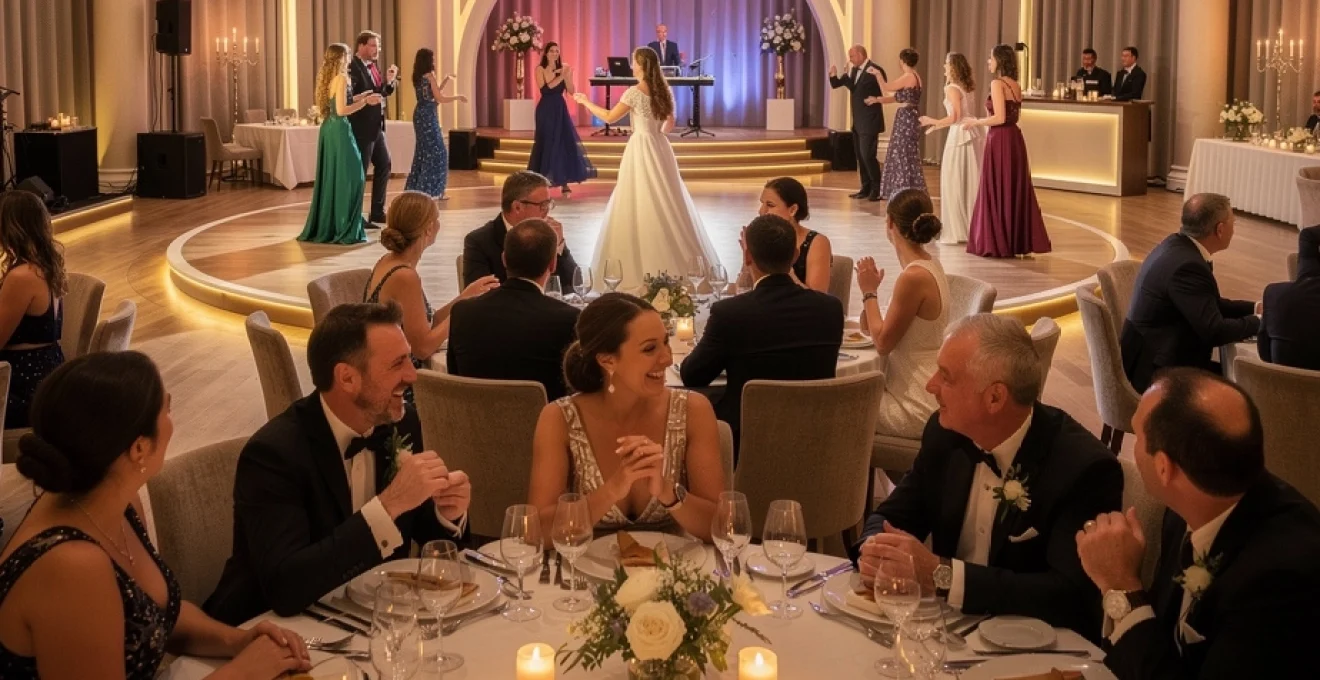
Wedding receptions create lasting memories through carefully orchestrated sensory experiences that extend far beyond traditional décor and menu choices. The atmosphere of your celebration influences every interaction, conversation, and emotional moment throughout the evening. Modern couples increasingly recognise that ambiance serves as the invisible thread connecting all elements of their reception, transforming ordinary venues into extraordinary experiences that guests remember for years to come.
Professional event designers understand that successful receptions depend on sophisticated environmental control techniques that engage multiple senses simultaneously. The interplay between lighting, sound, spatial design, and sensory elements creates immersive experiences that enhance guest satisfaction and emotional connection. Research indicates that carefully designed atmospheric conditions can increase guest engagement by up to 40% whilst reducing stress levels and encouraging natural social interactions amongst attendees.
Psychological impact of acoustic design on wedding guest behaviour
Sound design fundamentally shapes how guests experience and remember your wedding reception. The acoustic environment influences conversation patterns, energy levels, and overall comfort throughout the celebration. Professional acoustic consultants recognise that optimal sound design requires balancing multiple competing factors whilst maintaining speech intelligibility and musical clarity across diverse venue spaces.
Studies demonstrate that poorly managed acoustics can increase stress hormones by 15-20% amongst reception attendees, leading to earlier departures and reduced social interaction. Conversely, expertly designed sound environments encourage longer stays, increased participation in activities, and more meaningful connections between guests. The psychological impact extends beyond immediate comfort, affecting how couples and their families recall the celebration years later.
Sound pressure level management in reception venues
Effective sound pressure level control ensures comfortable listening conditions throughout different areas of your reception venue. Professional audio engineers typically maintain background music at 65-70 decibels during dinner service, allowing natural conversation whilst providing atmospheric enhancement. Dancing areas require higher levels of 80-85 decibels to create energy without causing hearing discomfort or forcing guests to leave prematurely.
Modern venues increasingly utilise zoned audio systems that allow different sound levels across distinct reception areas. Cocktail spaces benefit from subtle background ambiance at 60-65 decibels, whilst dance floors require dynamic range capabilities reaching 90 decibels during peak celebration moments. This approach ensures guests can choose their preferred acoustic environment throughout the evening.
Reverberation time optimisation for speech intelligibility
Reverberation time directly affects speech clarity during ceremonial moments, toasts, and announcements throughout your reception. Optimal reverberation times for wedding venues range between 1.2-1.6 seconds, providing warmth and richness without compromising intelligibility. Venues exceeding 2.0 seconds create muddy acoustic conditions that make speeches difficult to understand and reduce guest engagement.
Professional acoustic treatments can dramatically improve existing venue conditions through strategic placement of sound-absorbing materials. Fabric draping, carpeting, and decorative acoustic panels serve dual purposes as design elements and functional improvements. These modifications often reduce reverberation times by 20-30%, creating more intimate and comfortable listening environments for your guests.
Frequency response considerations for musical entertainment
Balanced frequency response ensures musical entertainment sounds natural and engaging across your entire reception space. Professional audio systems require careful calibration to accommodate both live performances and recorded music whilst maintaining consistency throughout different venue areas. Bass frequencies below 80Hz often require special attention in venues with hard surfaces to prevent overwhelming low-frequency buildup.
Modern wedding entertainment increasingly incorporates diverse musical styles requiring different frequency considerations. Classical ensembles benefit from extended high-frequency response showcasing string instrument detail, whilst contemporary bands require robust midrange reproduction for vocal clarity. Professional sound engineers adjust equalisation settings throughout the evening to optimise each entertainment segment.
Noise floor control and background ambience balance
Managing ambient noise levels creates foundation conditions that support all other acoustic elements at your reception. Background noise floors should remain below 45-50 decibels during quiet moments, allowing subtle musical elements and natural conversation to emerge clearly. Mechanical systems, catering activities, and external noise sources require careful coordination to maintain optimal acoustic conditions.
Professional venues invest in noise control measures including upgraded HVAC systems, sound-isolating construction techniques, and strategic equipment placement. These improvements reduce background noise by 10-15 decibels compared to standard commercial spaces
These technical improvements might not be obvious to guests, but they notice the result: a reception where they never have to shout to be heard, where speeches are clear, and where the dance floor feels energetic rather than overwhelming. When couples invest in professional sound design, they are not just paying for equipment; they are shaping how comfortable, connected, and engaged their guests will feel from arrival to last dance.
Lighting architecture’s role in creating memorable wedding experiences
If sound is the heartbeat of a wedding reception, lighting is its emotional language. Lighting architecture defines how guests perceive your venue, how they move through spaces, and how they remember key moments. Professional lighting designers combine technical precision with psychological insight to create visual environments that guide energy levels throughout the evening.
Research in environmental psychology shows that lighting can influence mood, social behaviour, and even perceived time. Warm, low-intensity light encourages relaxation and conversation, while brighter, cooler light increases alertness and activity. At a wedding reception, the most successful ambiance design transitions between these states in a planned, intentional way rather than relying on a single static lighting look all night.
Colour temperature psychology in reception space design
Colour temperature, measured in Kelvin (K), plays a critical role in how “warm” or “cool” a reception space feels. Warm white lighting in the 2,700–3,200K range creates intimacy and softness, making it ideal for dinner service, speeches, and romantic first dances. Cooler white light in the 4,000–5,000K range feels cleaner and more energetic, better suited to bar areas, buffets, and dynamic dance floors.
Professional wedding lighting often combines multiple colour temperatures within the same venue to subtly zone different experiences. You might see warm candlelight on tables, slightly cooler light at the bar to showcase drinks, and colour-adjustable fixtures on the dance floor ready to shift into more vibrant tones later in the night. This layered approach prevents the space from feeling flat while still maintaining a cohesive wedding ambiance.
Dimming control systems for mood progression throughout events
Static lighting locks your reception into a single mood, but weddings are emotional journeys that move from anticipation to celebration. Dimming control systems allow lighting levels to shift gradually as the event progresses, guiding guests through that journey without them ever noticing the technical changes behind the scenes. A subtle 15–20% reduction in overall brightness as dinner finishes, for example, can signal that the evening is transitioning into a more relaxed, celebratory phase.
Modern venues and production teams increasingly use programmable dimming systems that tie into an event timeline. These systems can recall pre-set lighting looks for moments such as speeches, cake cutting, and the first dance at the touch of a button. The result is a reception where the lighting always feels “right” for the moment—never too bright for romance, never too dark for photography, and never jarring when the mood shifts.
Architectural lighting techniques for venue enhancement
Architectural lighting focuses on using light to sculpt the existing features of a venue rather than fighting against them. Techniques such as wall washing, uplighting, and accent lighting highlight textures, arches, trees, or ceiling beams, transforming an ordinary room into a visually layered environment. This is especially powerful in venues that serve multiple purposes, where the right wedding lighting design can completely redefine how the space feels.
Effective architectural lighting also helps orient guests by subtly indicating focal points and pathways. A softly lit backdrop behind the top table, a slightly brighter wash near the bar, or illuminated floral installations can all draw the eye and suggest where attention should go next. When executed well, guests never feel lost or unsure where to look; the light itself gently directs their experience.
LED technology integration for dynamic atmosphere creation
LED technology has revolutionised wedding reception lighting by offering energy-efficient, colour-changeable, and programmable fixtures. High-quality LEDs provide rich, consistent colour without the heat output of traditional lamps, making them safer around fabrics and florals and more comfortable for guests over a long evening. They also allow designers to shift from soft ivory tones during dinner to vibrant jewel tones on the dance floor without physically changing equipment.
Advanced LED systems can be integrated with sound and control software, enabling synchronised lighting effects that respond to music. While full concert-style programming is not necessary for every wedding, subtle changes in hue and intensity that follow the rhythm of the party can dramatically enhance dance floor energy. For couples seeking modern wedding ambiance, LED technology makes it possible to create a truly dynamic visual experience that evolves throughout the night.
Spatial flow design and guest movement psychology
Even the most beautiful wedding reception can feel uncomfortable if spatial flow is poorly planned. Spatial flow design considers how guests move through the venue—from entrance to bar, from tables to dance floor—and how those movement patterns affect social interaction, comfort, and perceived crowding. Well-designed layouts reduce bottlenecks, encourage mingling, and support a natural progression from one part of the celebration to the next.
Environmental behaviour studies show that people tend to follow lines of least resistance, gravitating toward visible, easy-to-reach spaces and avoiding areas that feel blocked or confusing. At a wedding reception, this means that bar placement, dance floor location, and table arrangement all need to be considered together. A bar hidden in a corner may remain underused, while a dance floor squeezed between tables can feel intimidating rather than inviting.
Sensory marketing applications in wedding reception planning
Although we often associate “marketing” with brands and retail spaces, the same principles apply to creating a memorable wedding reception. Sensory marketing focuses on designing experiences that engage multiple senses simultaneously—sight, sound, smell, touch, and even subtle taste cues—to shape how guests feel and what they remember. When you treat your reception as a curated sensory journey, ambiance becomes a strategic tool rather than a happy accident.
Couples increasingly work with planners and stylists who think beyond visual styling to consider full sensory integration. This might involve aligning the colour palette with signature scents, choosing textiles that match the desired mood, and coordinating lighting and music for each phase of the event. The goal is to create a cohesive “story” that guests experience with their whole bodies, not just their eyes.
Olfactory branding through strategic scent placement
Scent is one of the most powerful triggers of memory, making olfactory design a subtle but impactful way to elevate wedding ambiance. Strategic scent placement involves introducing gentle, consistent fragrances in key areas of the reception—such as the entrance, lounge spaces, or restrooms—without overwhelming guests. Light floral blends, citrus notes, or soft woody tones can each support different emotional atmospheres.
Some couples now create a “signature wedding scent” that appears in candles, diffusers, or even small favours. Years later, encountering that same fragrance can instantly bring back memories of the day. The key is restraint: low-intensity diffusers, unscented candles near food, and careful consideration of allergy-sensitive guests ensure scent enhances rather than distracts from the experience.
Tactile experience enhancement via textile selection
Guests interact physically with your wedding reception more than you might realise. They feel the weight of linen napkins, the texture of chair fabrics, the softness of lounge cushions, and even the surface of menus or place cards. Thoughtful textile selection transforms these everyday touchpoints into part of your overall ambiance strategy, supporting either a luxurious, relaxed, or playful feel.
For example, heavy, textured linens and velvet cushions communicate opulence and formality, while natural cottons, linen blends, and raw silks create a more organic, relaxed aesthetic. Even small details like ribbon choices, table runners, and draping fabrics contribute to the tactile story. When what guests touch aligns with what they see and hear, the entire reception feels more intentional and immersive.
Temperature zoning for optimal guest comfort
Thermal comfort is one of the most underestimated aspects of wedding ambiance. If a room feels too hot or too cold, guests become distracted, less social, and more likely to leave early. Temperature zoning acknowledges that different areas of a reception require different conditions: a packed dance floor needs cooler air than a seated dining area, and outdoor lounges may require heaters or blankets even in warmer months.
Professional planners work with venues to monitor and adjust temperatures throughout the evening, often targeting a comfortable 20–22°C (68–72°F) for seated spaces and slightly cooler settings near active zones. Portable heaters, fans, or silent air movers can be strategically placed to maintain comfort without drawing attention. When guests forget about the temperature altogether, you know the ambiance is working in your favour.
Cultural atmosphere authenticity and guest emotional connection
For many couples, a wedding reception is not just a party; it is a cultural expression. Cultural atmosphere authenticity involves more than adding a few traditional songs or decorative motifs. It means designing an environment where heritage, family traditions, and personal identity are woven into the ambiance in a respectful, meaningful way. When done well, this creates a powerful sense of belonging for guests and deepens emotional connection to the celebration.
Authentic cultural ambiance considers music choices, lighting palettes, textiles, rituals, and even food presentation. For example, using colours significant in a particular culture, integrating traditional instruments into the entertainment, or reflecting regional architecture through décor can all contribute to a reception that feels rooted rather than generic. Guests often describe these weddings as “so them” because the atmosphere mirrors the couple’s story and background.
Professional event production techniques for atmosphere control
Behind every seamless wedding reception is a network of professional event production techniques designed to manage ambiance in real time. Production teams coordinate sound, lighting, staging, and timing with military precision, yet their work is intentionally invisible. The goal is not to draw attention to the technology, but to create a stable foundation where emotional moments can unfold naturally.
Key techniques include pre-event site visits, detailed production schedules, live monitoring of sound and light levels, and contingency planning for weather or technical issues. Many teams now use centralised control systems that allow them to adjust audio, lighting, and sometimes even temperature from a single point during the event. This level of control ensures that if the dance floor needs more energy, speeches need more clarity, or a lounge area needs softer light, changes can happen instantly without disrupting the flow.
When you choose to work with experienced production professionals, you are investing in more than equipment hire. You are gaining partners who understand how ambiance shapes guest behaviour and who have the tools to fine-tune that atmosphere throughout the night. The result is a wedding reception that feels effortless on the surface precisely because so much expertise is working quietly behind the scenes.